AI feedback for sales conversations is software that reviews a recorded or practice call and returns specific, behavior-level coaching in seconds. It reads measurable moments - talk-to-listen ratio, how an objection was handled, whether a next step was set - and scores them against your playbook, so every rep gets the same standard without waiting on a manager's calendar.
Most managers review a small fraction of their team's calls, and by the time feedback lands the conversation is days old. AI closes that gap. It scores every call the same way and returns guidance while the moment is still fresh. The part that changes behavior, though, is not the score. It is what happens before the rep sees it. This guide covers how AI feedback works on a call, what good feedback actually measures, how live-call analysis differs from practice, and how to roll it out so reps act on it instead of skimming a number.
What is AI feedback for sales conversations?
AI feedback for sales conversations lets a rep run a real or simulated call and then receive instant, behavior-specific coaching on how it went. The system reads measurable signals - whether pricing came up and how it was handled, whether a next step was set, how often filler words crept in - and returns guidance the rep can act on, not just a grade against a benchmark.
It covers two related jobs. Call analysis reviews recorded conversations with real buyers after the fact, the work most people mean when they search for AI for sales calls. Practice feedback scores a rehearsal against an AI buyer before the live call. Both run on the same scorecard, and that shared standard is what lets a team compare a rep's practice to their live performance and coach the gap between them.
The distinction that matters most is not the technology. It is whether the feedback tells a rep something they can repeat tomorrow. A grade of 78 does not. "You pitched before asking a second discovery question" does. The rest of this guide is about getting to that second kind.
Start with the AI Coach, not the score
The fastest way to waste a session is to flash a number the second it ends. A rep reads "78," feels judged or relieved, and moves on. Nothing changes.
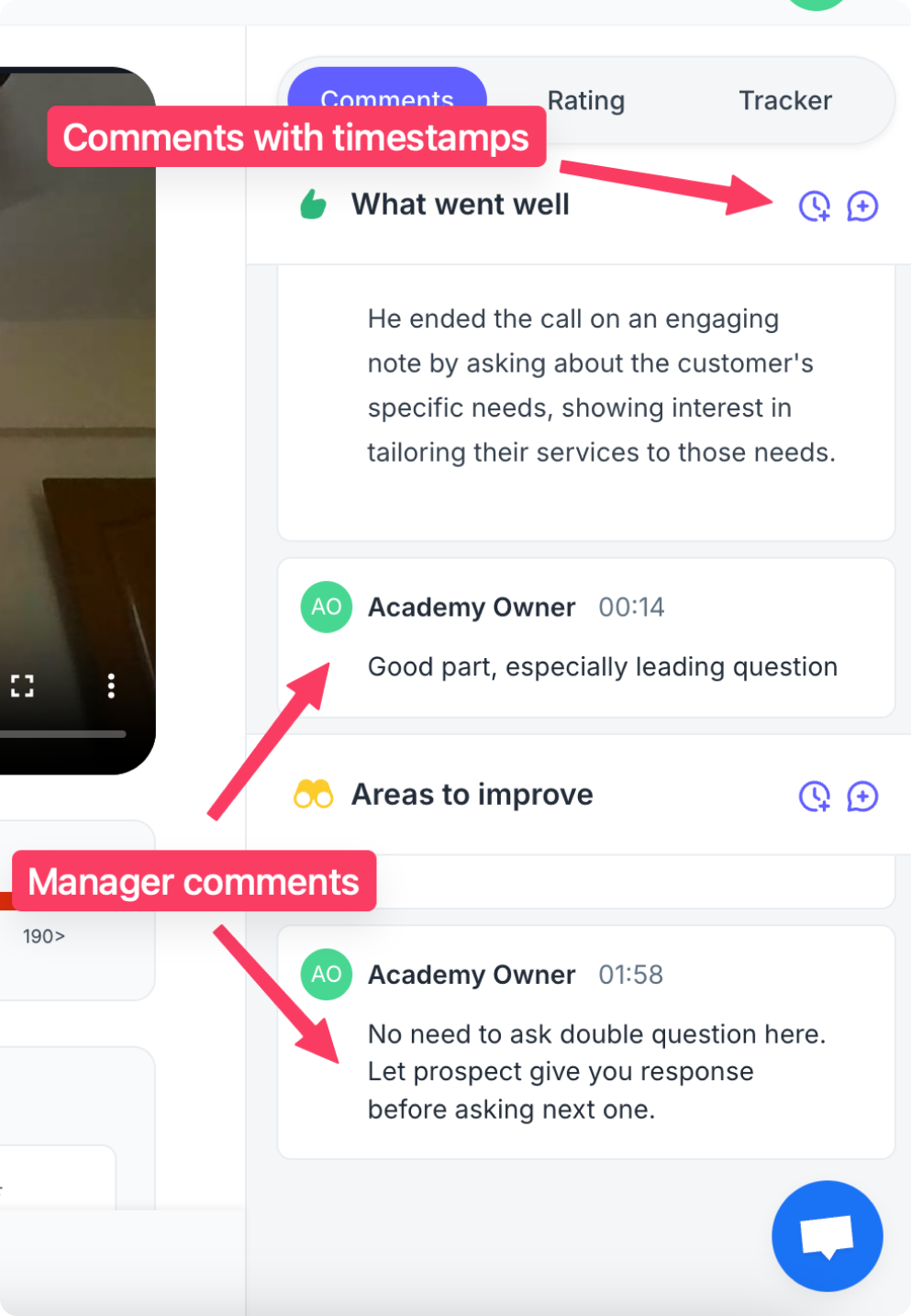
PitchMonster's AI Coach works the other way around. After a conversation, it opens a short Socratic exchange: what felt off in that call, where did you lose the buyer, what would you try next time. The rep diagnoses their own performance before any score appears. By the time the scorecard shows up, they have already reached the insight, so it reads as confirmation instead of correction. This is the part of the loop where reps change behavior, and no other tool in the category ships it.
The difference sounds small and is not. Below is the same moment - the seconds right after a call - handled by a generic scoring tool and by a Socratic coach.
The seconds after a call | Generic AI scoring | PitchMonster AI Coach |
|---|---|---|
Opening move | Shows a number and a list of misses | Asks the rep what they would change about that call |
Who reaches the insight | The tool announces it | The rep reaches it first, then the score confirms it |
Availability | A report sits on screen | A back-and-forth exchange, 24/7, after every session |
How the rep reacts | Feels graded, clicks away | Owns the gap, remembers it |
The manager's one-on-one | Re-explains what went wrong | Starts at "how do I fix this" |
Self-diagnosis first also changes the manager's job. Reps walk into coaching already aware of the gap, so the conversation starts at "how do I fix this" instead of "here is what you did wrong." One customer put the reaction plainly.
"I think I really like the AI coach. That part was, to me, the most impressive. That's definitely going to save us a lot of time." - Wendy Mateo De Perkins, Senior PM and Instructional Designer, One Park Financial
How AI feedback works on a call
The process starts with a transcript and ends with a scorecard the rep can act on. The steps are the same whether the conversation was a live call or a practice rep against an AI buyer, which is what makes AI sales call analysis and practice feedback comparable.
First, the system transcribes the audio. Then it reads the conversation for observable signals: talk-to-listen ratio, discovery questions asked, how an objection was isolated and answered, whether the rep confirmed a timeline, whether a clear next step was set. It scores each against the criteria you defined and flags where the rep met or missed them.
The output ties feedback to a moment, not a mood. Instead of "good discovery," a rep sees that they asked two open questions before pitching, or that they conceded on price without isolating the objection first. That specificity is what makes the feedback repeatable. A rep cannot practice "be more confident," but they can practice setting a next step before the call ends until it is automatic.
What good AI feedback measures
A scoring tool is only as useful as the signals it reads. Good AI sales feedback measures actions a rep controls and can repeat. Weak feedback measures impressions that two reviewers would never grade the same way.
The signal set worth scoring on almost any sales call looks like this:
- Discovery questions asked before the first pitch, and how many were open rather than yes or no.
- Whether the rep isolated an objection before answering it, or jumped straight to a rebuttal.
- Talk-to-listen ratio, and the length of the rep's longest uninterrupted monologue.
- Whether a specific next step and date were confirmed before the call closed.
- Filler words and hedging language that undercut a strong point.
Three marks separate feedback reps act on from feedback they ignore. It is specific to a moment they can replay, not a summary of the whole call. It is tied to a behavior they can change, not a personality trait. And it arrives fast, while the call is fresh enough to matter. Miss any one of those and the score becomes wallpaper.
What AI feedback catches that sampling misses
A manager reviewing a handful of calls sees a snapshot. AI reads every conversation, which surfaces three things a sample tends to miss.
The first is a pattern. A manager might catch a rep fumbling a pricing objection on one call and never learn it happens on every call. Scoring all of them shows whether a rep consistently asks fewer discovery questions than the team's top performers, which a sample-based review cannot confirm.
The second is consistency. Reps drift from the agreed value proposition or quietly skip a qualification step, and that drift is invisible when only a few calls get heard. Applying the same criteria to every conversation flags the skipped step the first time, not three deals later.
The third is the middle of the team. Managers tend to spend their review time on the loudest problem cases and the standouts, leaving the solid-but-unremarkable majority uncoached. Those reps are the largest pool of improvable performance, and even light scoring gives them a clear target to work on.
AI feedback vs traditional call review
Most teams still review calls the manual way: a manager picks a few recordings, listens, and shares notes in a weekly one-on-one. The intent is right, but the method does not scale, and the contrast below shows where it breaks.
Factor | Traditional call review | AI feedback |
|---|---|---|
Coverage | A handful of calls per rep each week | Every call and practice session |
Timing | Days later, once the context has faded | Seconds after the conversation ends |
Consistency | Varies by reviewer and mood | One scorecard for every rep, every time |
Manager focus | Re-listening for basic fumbles | Strategy, complex deals, careers |
Best at | Judgment, deal context, motivation | Volume, pattern tracking, fast loops |
Read the table as a division of labor, not a contest. AI carries the repetitive scoring so a manager spends their hours where a human actually moves a deal. The point is not that AI judges better than a manager. It is that a manager cannot review 300 calls a week, and AI can.
Live-call feedback vs practice feedback
Live-call analysis and practice feedback both score conversations, but they catch the rep at different moments, and that timing decides how much the feedback changes.
Live Call Analysis reviews what already happened with a real buyer. You upload the recording and it is scored against the same playbook your role-plays use, so a manager sees where the rep won, lost, or missed. This is honest data from the field, and it is the only way to verify how a rep performs when revenue is on the line. The limit is timing. The deal moment has passed, so the lesson applies to the next buyer, not the one the rep just lost.
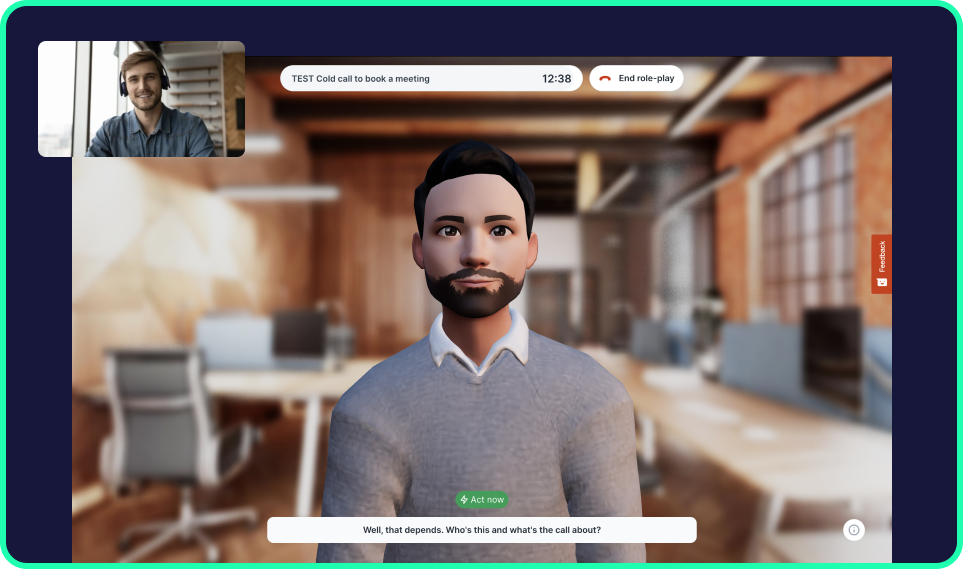
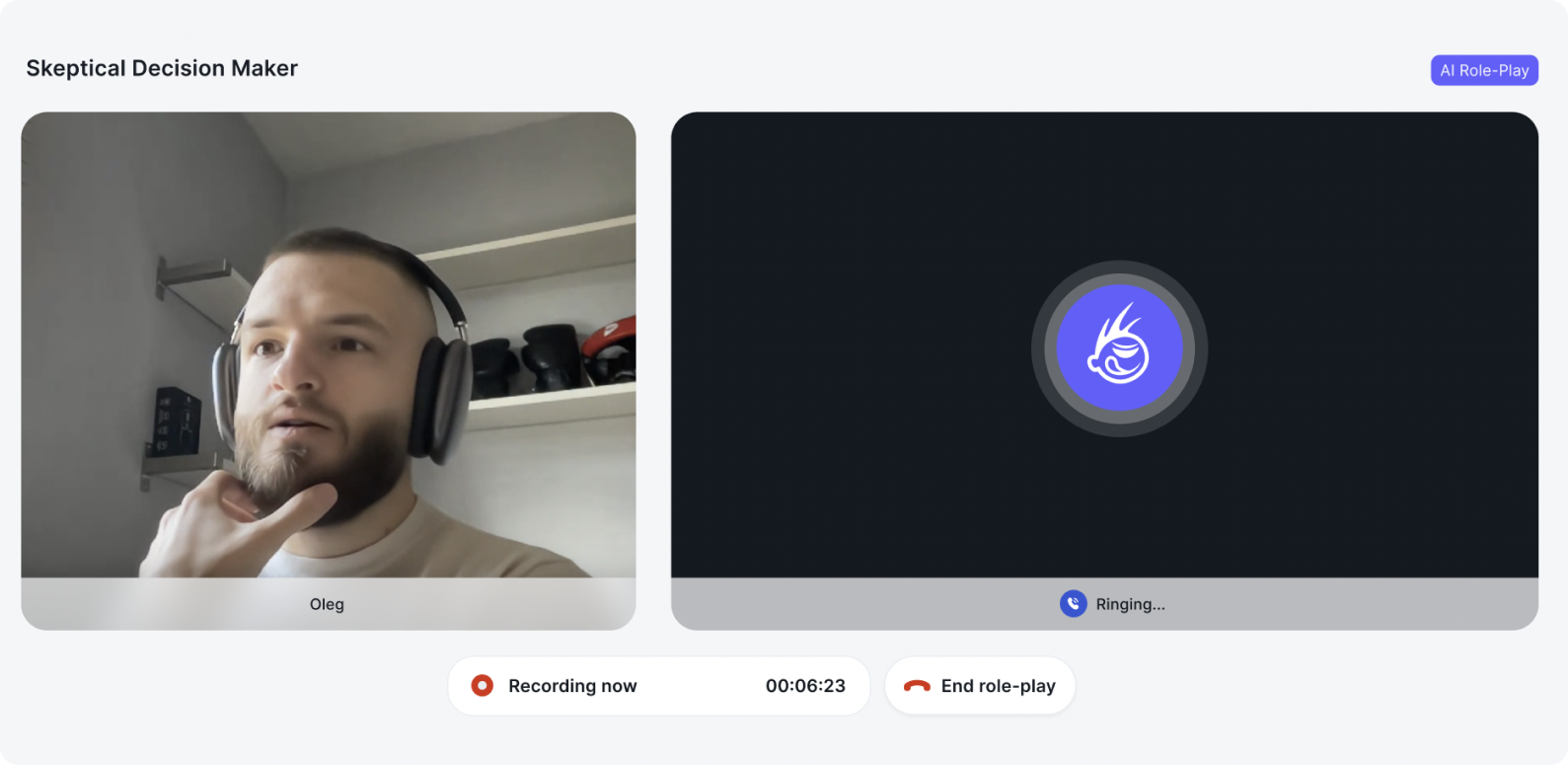
Practice feedback runs before the call. A rep rehearses against an AI buyer built from your own ICP and call recordings, then gets the same scorecard treatment. They can run the price push, the "just send me an email," or the stakeholder who goes dark after the demo, and repeat the hard moment ten times in an afternoon. Because the scorecard matches the one used on live calls, the habit a rep builds in practice is the same one measured in the field.
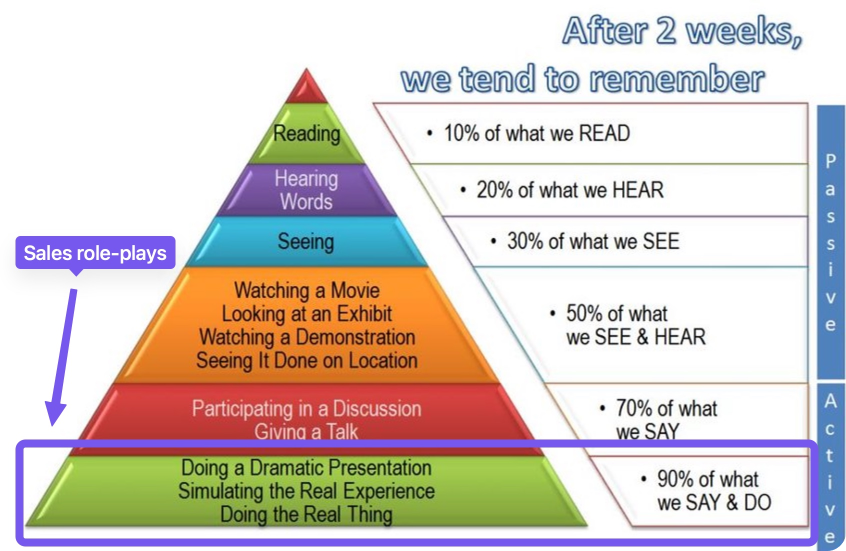
Repetition is the reason practice moves numbers. People forget most of what they hear once and remember most of what they do repeatedly, which is why a rep who rehearses an objection ten times outperforms one who read the objection-handling doc once.
For the practice side specifically, see our guide to AI sales role-play feedback best practices. The teams that improve fastest pair the two: practice to build the habit, live analysis to confirm it held.
When AI feedback is not the fix
AI feedback measures how a rep executes a conversation. It does not fix problems that sit outside the call. Set that expectation early or the tool takes blame it does not deserve.
If deals stall because the offer is wrong for the market, or the leads are a poor fit, or the comp plan pulls reps toward the wrong behavior, no scorecard will move the number. Those are strategy and operations problems, and a manager owns them. AI feedback also stops working the moment reps stop trusting it, which happens when scores feel like surveillance instead of coaching. Introduce it as a practice aid the rep controls, not a monitoring dashboard for leadership, and the trust holds.
Used for what it is good at - measuring repeatable execution and doing it at volume - AI feedback earns its place fast. Point it at a problem it cannot see and it just adds noise.
How to roll it out without overwhelming reps
A scoring tool only works if reps trust it and act on it. Four habits separate the rollouts that stick from the ones that gather dust.
Score behaviors, not adjectives
Build the scorecard from observable actions. "Did the rep set a clear next step?" beats "Was the rep confident?" every time, because the first is a behavior a rep can repeat and the second is a feeling two reviewers will never grade the same. Build a separate scorecard for each conversation type, since the actions that win a cold call are not the ones that win a renewal.
Vague criteria (avoid) | Behavior-based criteria (use) |
|---|---|
"Showed confidence" | Held price without an unprompted discount |
"Good communication" | Talk-to-listen ratio stayed under 50/50 |
"Handled objections well" | Isolated the objection, then reframed it with value |
"Built rapport" | Asked at least three open discovery questions |
"Strong close" | Confirmed a specific next step and date |
Behavior-based criteria give a rep something to practice. Adjectives give them something to feel bad about.
Ground feedback in real scenarios
Feedback is only as good as the conversation behind it. If reps practice against a generic, agreeable persona, the coaching will not survive a real buyer. Preload the objections your team actually hears, built from your own call recordings, so the feedback reads as practical rather than theoretical. For a full walkthrough, see how to create AI role-plays for sales training.
Keep each session short
Drop a dozen corrections on a rep after one call and they retain none. Cap each session at one or two behaviors plus a single next step. This matters most during onboarding, when reps are still forming basic habits and extra notes crowd out the signal. Short and frequent beats long and rare.
Connect scores to numbers a leader cares about
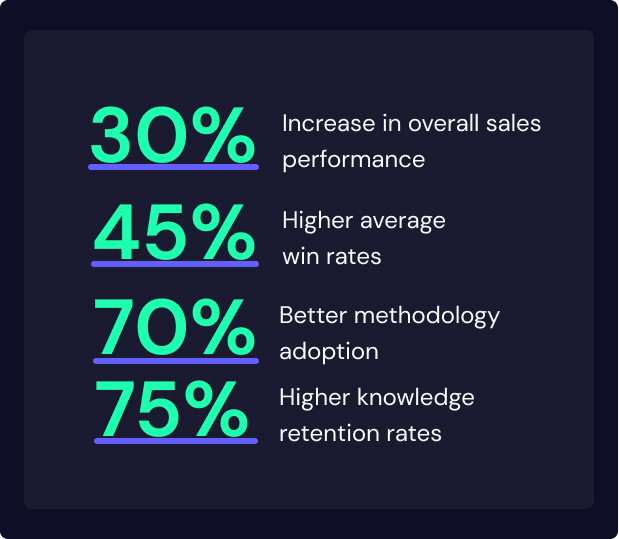
Feedback has to tie back to the pipeline. Track how practice and call scores line up with meeting-set rate and win rate, and feed that into manager coaching. When scores export to Salesforce or Gong, a manager can see which skill gap is denting revenue and coach there first. One customer, Mentor Group, ran this full loop and reported a 37% average performance increase, a 28% win-rate improvement, 30% faster ramp, and twice the opportunities booked.
Want AI feedback built around your scorecard and your buyers? Book a demo to see the AI Coach, Live Call Analysis, and role-play practice scored the same way, or see pricing for a quote sized to your team. PitchMonster has trained 300,000+ reps, holds a 100% enterprise renewal rate since spring 2024, and rates 4.9 out of 5 on G2. For a leader's view of the rollout, explore PitchMonster for sales leaders or sales enablement teams.
FAQ
What is AI feedback for sales conversations?
AI feedback for sales conversations is software that reviews a recorded or practice call and returns specific, behavior-level coaching in seconds. It reads measurable moments - talk-to-listen ratio, how an objection was handled, whether a next step was set - and scores them against your playbook, so every rep gets the same standard without waiting on a manager's calendar.
How does AI score a sales call?
The system transcribes the audio, then scores observable actions against criteria you define: discovery questions asked, objection isolated and reframed, timeline confirmed, next step set, talk-to-listen ratio, filler words. It reports where the rep met or missed each one. The output is guidance tied to a moment in the call, not a single grade with no context.
What should AI feedback measure on a sales call?
Measure observable actions, not feelings. Track discovery questions asked before pitching, whether the rep isolated an objection before answering it, talk-to-listen ratio, whether a specific next step and date were set, and monologue length. Each one is a behavior a rep can repeat, which is what makes the feedback fixable rather than vague.
Is AI feedback for live calls the same as role-play feedback?
They share a scorecard but solve different problems. Live-call feedback reviews what already happened with a real buyer, so the lesson lands after the deal moment passed. Practice feedback runs before the call, so a rep can repeat a hard moment ten times and fix the habit first. The strongest programs run both and score them the same way.
Is there free AI feedback for sales conversations?
Free and freemium tools exist for transcription, call summaries, and basic talk-time stats. What they rarely include is coaching scored against your own playbook, or a Socratic coach that has the rep self-diagnose before a number appears. Playbook-scored feedback and practice simulation are paid features. PitchMonster prices by quote, so book a demo for a figure sized to your team.
Does AI feedback replace sales managers?
No. AI handles the high-volume layer: scoring every conversation and flagging patterns across the team. A manager reads what a scorecard cannot - ties a weak habit to a specific stalled account, adjusts for the territory, and handles strategy and careers. AI finds the pattern; the manager decides what to do about it. Programs that get results run both.
How do I roll out AI feedback without overwhelming reps?
Limit each session to one or two behaviors and one clear next step. Have the AI Coach ask the rep what they would change before any score appears, so they self-diagnose instead of skimming a number. Show reps how to read a scorecard before you expect results, and save broader pattern reviews for a manager's one-on-one.