Conversation intelligence software
Conversation intelligence that scores every call against your playbook
Most tools record live calls and hand reps a number. PitchMonster scores real calls and practice role-plays on the same scorecard, so managers get a skill map grounded in your sales data.
- Custom scorecards you write, weight and update
- Skill-gap analytics by rep and scenario
- AI call scoring on live calls and role-plays alike


Trusted by 300K+ reps from World’s leading teams





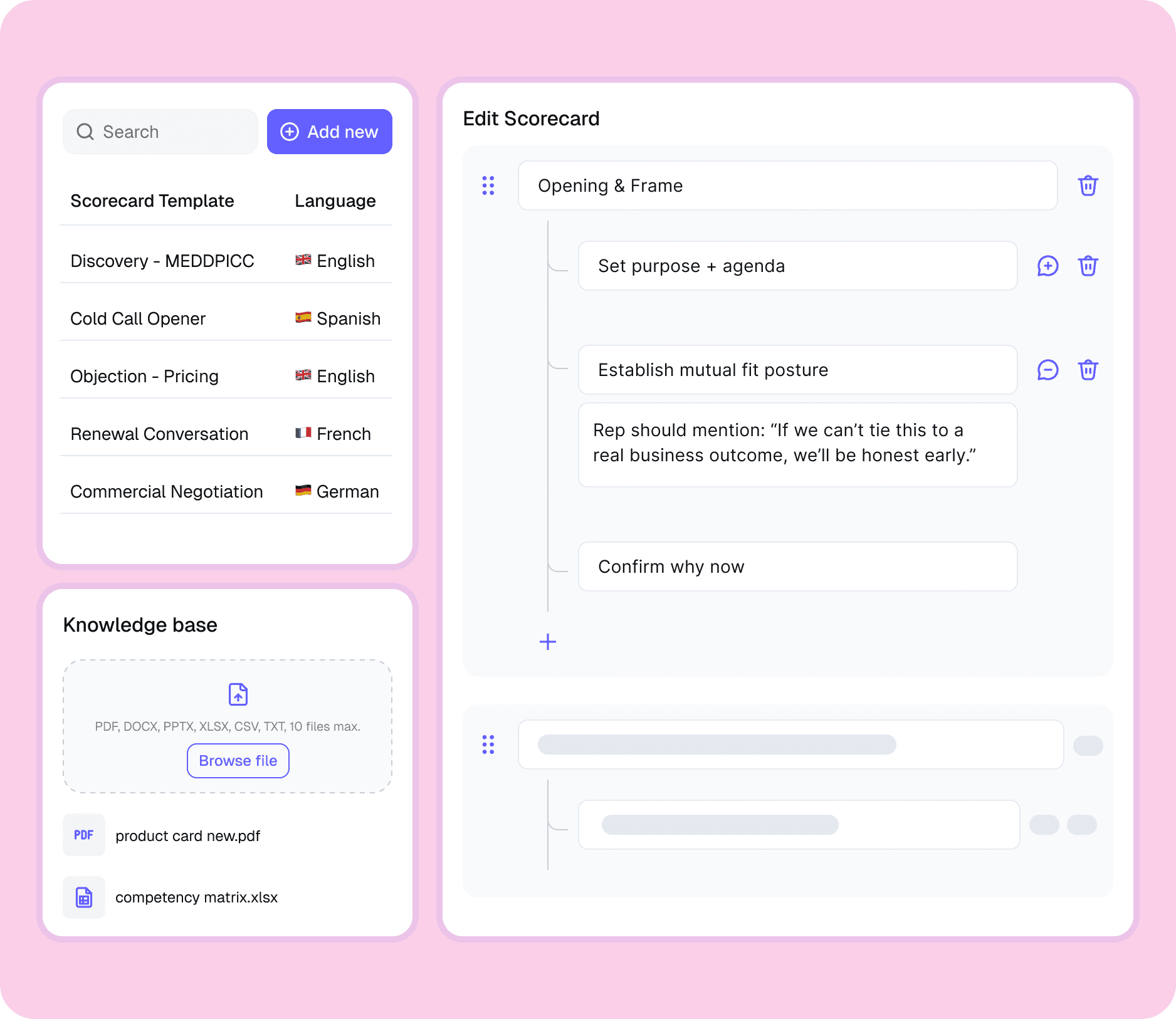
Custom scorecards you control
You write the criteria, set the weights, and decide what counts as passing.
- A different scorecard per scenario, stage, or ICP segment
- Update criteria when your playbook changes
- Historical scores stay intact; new sessions use the new bar
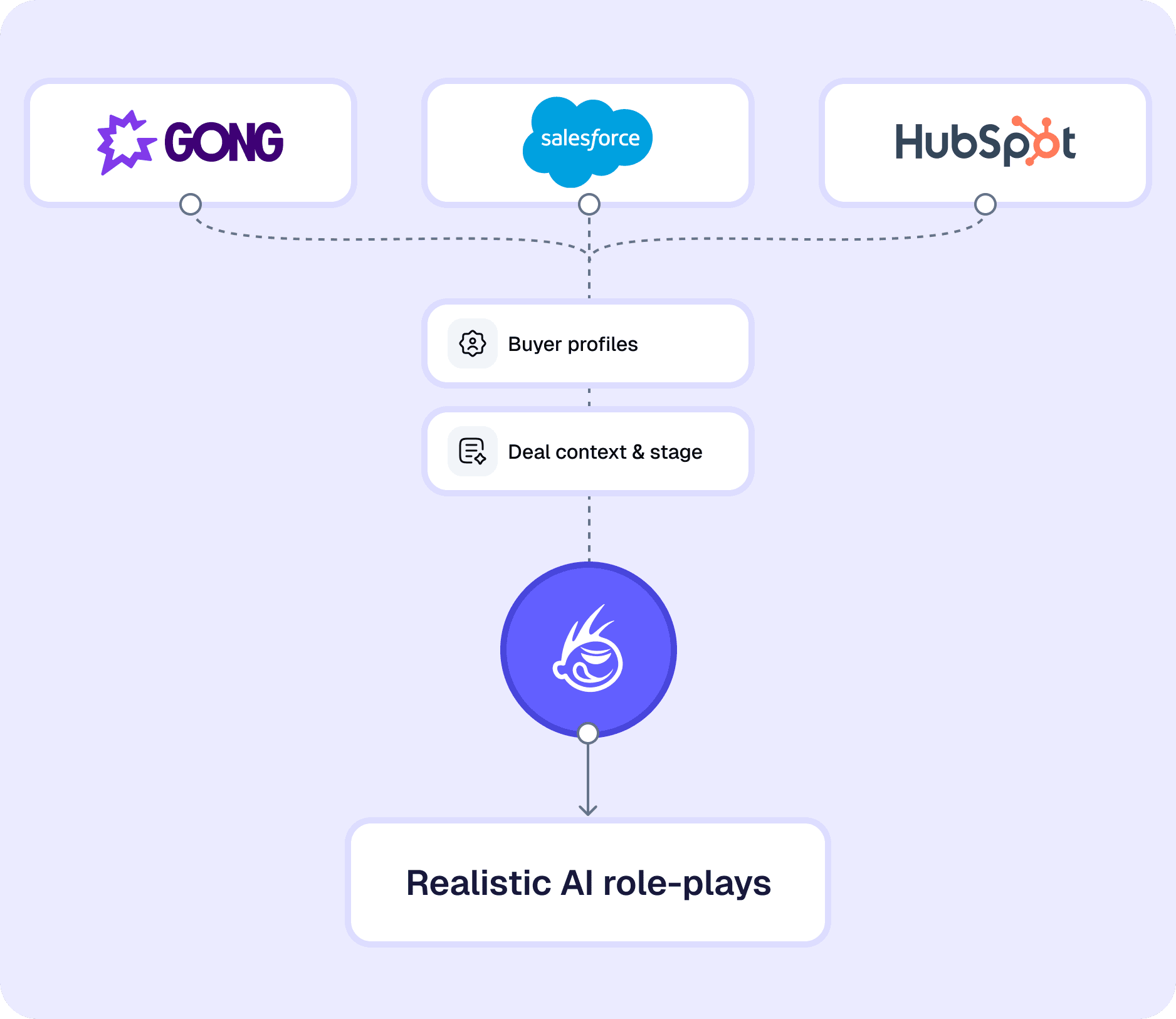
Score real calls, not just practice
Upload recordings or sync your call library - scored on the same scorecard your role-plays use.
- See the drift between simulation and live calls
- Wins and misses tied to specific moments
- No listening to hours of calls
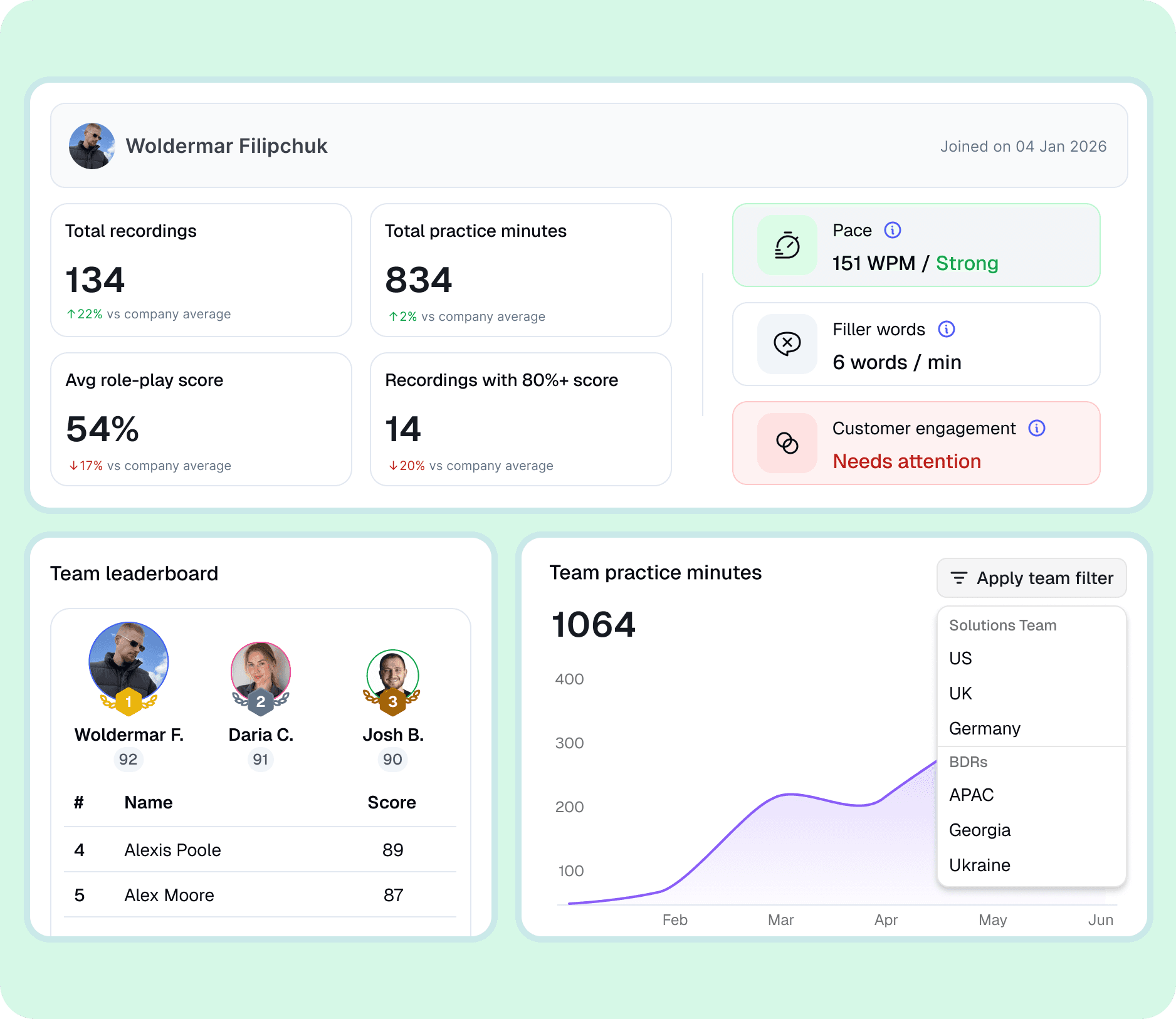
Skill-gap analytics for managers
After a batch of sessions, the dashboard shows where coaching time should go.
- Which skills are dropping, which reps sit below threshold
- Which scenarios cause the most repeat failures
- One view for the people who run the program
Compliance scoring built in
Load approved messaging and forbidden claims as Knowledge Base.
- The AI flags deviations on real calls
- Pass/fail certification before a rep goes live
- Built for finance, pharma and insurance teams
What better scoring visibility changes
When managers see real skill gaps, coaching time goes to the right rep, the right skill.
22%
Better live-call quality (PRN Health Services)
+8.3%
Higher conversion after scored onboarding (JustSchool)
4.9
PitchMonster rating on G2





Built for teams that need
to move fast and stay compliant
PitchMonster is the only AI sales roleplay platform in the top 5 – built for teams where data residency and compliance aren’t optional. Enterprise clients renew at 100% – because once manual coaching stops, it doesn’t come back.

29 languages,
40+ countries
Train global teams against local-language AI buyers without on-the-ground trainers.

Strong encryption & enterprise SSO
Single sign-on, data encryption at rest and in transit. Full security documentation on request.

GDPR Compliant
European data residency. Data processing agreements available for complex organisations.

99% uptime
SLA
Infrastructure built for enterprise deployment at scale.


See what your team's skill map looks like
Book 15 minutes. We will show you the scorecard editor, run a sample session against a scenario from your playbook, and walk through what the manager dashboard surfaces.
Book a DemoCommon questions
Conversation intelligence software analyzes sales conversations - calls, meetings, and role-plays - and turns them into coaching signals. PitchMonster scores each conversation against your own playbook, then surfaces skill gaps by rep and scenario so managers know where to coach.