AI vs manual sales KPI tracking comes down to one question: who does the measuring, and how much do they see. Manual tracking has people log activity and review a sample of calls, so it captures a fraction of conversations on a weekly lag. AI tracking reads CRM, call recordings, and email automatically, scores every interaction the same way, and surfaces behavioral metrics in near real time.
That gap matters most where deals are won or lost: in the conversation itself. This guide compares the two approaches on coverage, speed, and the metrics each can reach. It maps the leading-versus-lagging split that decides which KPIs you can act on, then shows when manual still fits and how practice closes a tracked gap.
What is AI vs manual sales KPI tracking?
AI vs manual sales KPI tracking is the choice between two ways of measuring how a sales team performs. Manual tracking uses people: reps log activities in the CRM, a manager pulls reports, and someone compiles a weekly or monthly summary. AI tracking uses software that reads CRM data, call recordings, and email continuously, calculates the same KPIs in the background, and flags patterns as they happen.
The split shows up most clearly in two places. The first is coverage. A manager reviewing calls by hand gets through a small share of them, because listening back takes real time, so most conversations go unscored. The second is speed. Manual reporting describes last week; by the time a missed buying signal reaches a spreadsheet, the deal has moved on. AI tracking changes both: it scores the full set of interactions and returns the read quickly enough to do something about it.
Neither approach is automatically right. The fit depends on team size, call volume, and which KPIs you need, which is what the rest of this comparison works through.
AI vs manual KPI tracking: side by side
The clearest way to see the trade-off is dimension by dimension. Manual tracking wins on simplicity and human judgment at low volume. AI tracking wins on coverage, consistency, and the speed of the feedback loop as a team grows.
Dimension | Manual KPI tracking | AI KPI tracking |
|---|---|---|
Call coverage | A sample of calls, limited by manager hours | Every recorded call analyzed |
Feedback timing | Days or weeks after the conversation | Near real time |
Metric type | Outcome metrics; behavioral signals are subjective | Outcome plus behavioral metrics, measured directly |
Consistency | Varies by which manager scores it | Same scorecard applied to every rep |
Setup effort | Low: a spreadsheet and a recurring review | Higher: connected CRM, recordings, clean data |
Best fit | Small teams, simple KPIs, single complex deals | Scaling teams, behavioral coaching, many reps |
The pattern holds across rows. Manual tracking is cheaper to start and reads context a model can miss, but it trades away coverage and consistency. AI tracking asks for clean inputs up front and returns a complete, repeatable picture once it has them. The next section shows the split that decides which of these KPIs you can coach, and which only tell you the score after the whistle.
Leading vs lagging sales indicators: the split that decides what you can coach
Most sales KPIs fall into one of two groups, and the difference explains why AI tracking earns its keep. A lagging indicator reports a result that already happened: win rate, revenue, quota attainment, average deal size. A leading indicator moves earlier and predicts that result: how a rep handles objections, whether they book a real next step, how much of the call the buyer spends talking.
Lagging indicators are easy to track by hand because they sit in your CRM as closed records. The problem is timing. By the time win rate drops, the quarter is mostly spent and the coaching moment is gone. Leading indicators give you a read while the deal is still live, but almost all of them live inside the conversation, which is where manual review runs out of hours.
Indicator type | Examples | Answers | Manual reach |
|---|---|---|---|
Lagging (outcome) | Win rate, quota attainment, revenue, average deal size, cycle length | What already happened | Easy from CRM |
Leading (behavioral) | Objection response, next-step reliability, talk-to-listen ratio, buying-signal detection, methodology adherence | What is about to happen | Hard: needs every call analyzed |
The practical takeaway is short. The KPIs worth coaching are the leading ones, because they are the behaviors a rep can change before the next call. Those are also the KPIs manual tracking is worst at, since scoring them needs every call reviewed the same way, not a sampled few. That is the case for AI tracking in one line: it makes leading indicators measurable, so coaching can happen while it still moves the number.
Which sales KPIs are hardest to track by hand
Not every metric is hard to track manually. The difficulty depends on whether the number already sits in your CRM or has to be pulled out of the conversation.
KPIs that work fine with manual tracking
Outcome metrics are straightforward by hand because they come from CRM fields and timestamps. Win rate and quota attainment calculate directly from closed-deal data. Pipeline coverage reads off the open pipeline against quota. Average deal size and sales cycle length come from deal values and dates. A spreadsheet and a steady process keep all of these honest for most teams.
The catch is that these are the lagging indicators from the last section. They tell you the result, not the behavior that produced it, so they are useful for forecasting and weak for coaching.
Behavioral KPIs that need automation
The metrics that get hard are the ones inside the call. A manager might sense a rep talked too much, but only a model returns "you spoke 68 percent of the time, and top performers here average closer to 45." Objection response, filler-word frequency, monologue length, buying-signal detection, and methodology adherence to a framework like MEDDIC or SPIN all need every call analyzed, not a sampled few. Reviewing a small slice of calls by hand cannot produce these numbers reliably, which is why behavioral tracking is where AI earns its place. For the drills that turn each of these signals into a repeatable rep skill, see our sales role-play exercises mapped to methodology.
KPI | Manual tracking | AI tracking |
|---|---|---|
Win rate | Easy from CRM | Easy from CRM |
Quota attainment | Easy from CRM | Easy from CRM |
Talk-to-listen ratio | Subjective estimate | Exact percentage per call |
Objection response | Hard to measure by hand | Flagged and timed per call |
Buying-signal detection | Often missed in review | Surfaced across every call |
Methodology adherence | Spot-checked on a few calls | Scored on every call |
Behavioral KPIs are also the ones that predict the quarter, so tracking them early is what turns a dashboard into a coaching tool rather than a scoreboard.
When manual KPI tracking still makes sense
AI tracking is not the answer for every team, and treating it as one wastes money and attention. There are real situations where a manual process is the better call.
A small team with low call volume rarely needs more than a shared spreadsheet and a weekly pipeline review. An early-stage company still working out which KPIs matter is better off keeping the process manual than automating a definition it will change next quarter. And a single large, intricate deal with many stakeholders and shifting priorities often turns on judgment that a dashboard does not capture.
The signs that manual tracking has run its course are usually clear once you look. Watch for managers spending more time cleaning data than coaching, forecasts that miss without a clear reason, pipeline reviews that drag past an hour over questionable numbers, new hires taking longer than four to five months to hit quota, or managers reviewing only one or two calls per rep a week. When several of those show up together, the manual model has stopped keeping up with the team. The goal is not to remove human judgment but to give it better inputs, so managers spend their time on the conversations that move deals.
How to move from manual to AI KPI tracking
Switching from spreadsheets to AI tracking goes wrong when teams buy a dashboard first and figure out the KPIs later. A cleaner order keeps the focus on coaching, not screens. This is the sequence most teams that get value follow.
- Write the coaching scorecard first. Define what good looks like on a call - discovery depth, objection handling, multi-threading, and a committed next step - before you pick any tool. That scorecard decides which KPIs matter.
- Audit your inputs. AI tracking reads CRM records, call recordings, and email, so check that deals are logged, calls are recorded, and speakers are separated cleanly. Messy inputs produce misleading numbers.
- Start with three to five leading KPIs. Pick the behavioral signals tied directly to revenue, not everything a dashboard can show. Get those working before you add more.
- Score practice and live calls the same way. Use one scorecard across both, so a rep's practice number and their live-call number speak the same language.
- Close the loop. Route each tracked gap into a coaching action, a role-play or a targeted drill, so the metric changes behavior instead of sitting on a screen.
The order matters more than the tooling. Teams that define the scorecard first end up tracking fewer metrics and acting on more of them, which is the point of moving off manual in the first place.
From KPI to coaching: closing the loop with practice
Tracking a KPI is only half the job. A number nobody acts on changes nothing, and most KPI tools stop at the dashboard. The harder problem is turning a tracked weakness into a rep who handles that moment better next time. This is the part every ranking KPI-tracking guide leaves out, and it is where the metric finally pays for itself.
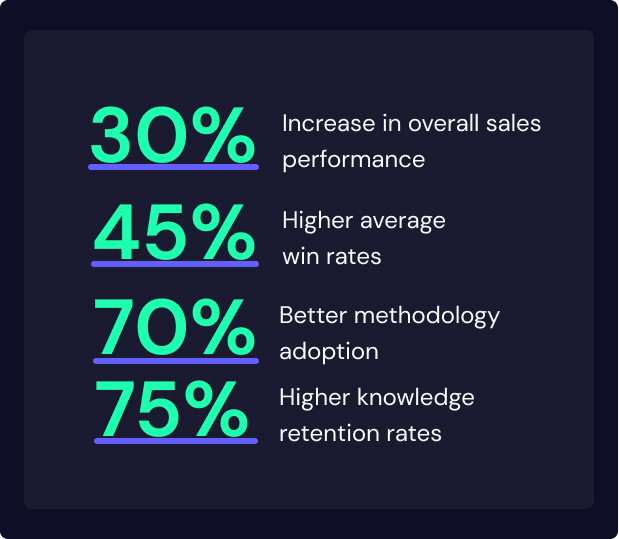
Start with the coaching gap the numbers usually expose. Across the industry, 73 percent of front-line sales managers spend fewer than 30 minutes per rep per week on real coaching, and fewer than one in three reps get coached weekly at all, per 2026 sales-coaching benchmarks. Gong's revenue research found that managers who coach at least an hour a week win 19 percent more deals. So the constraint is rarely the data. It is manager time, and a dashboard on its own does not give any back.
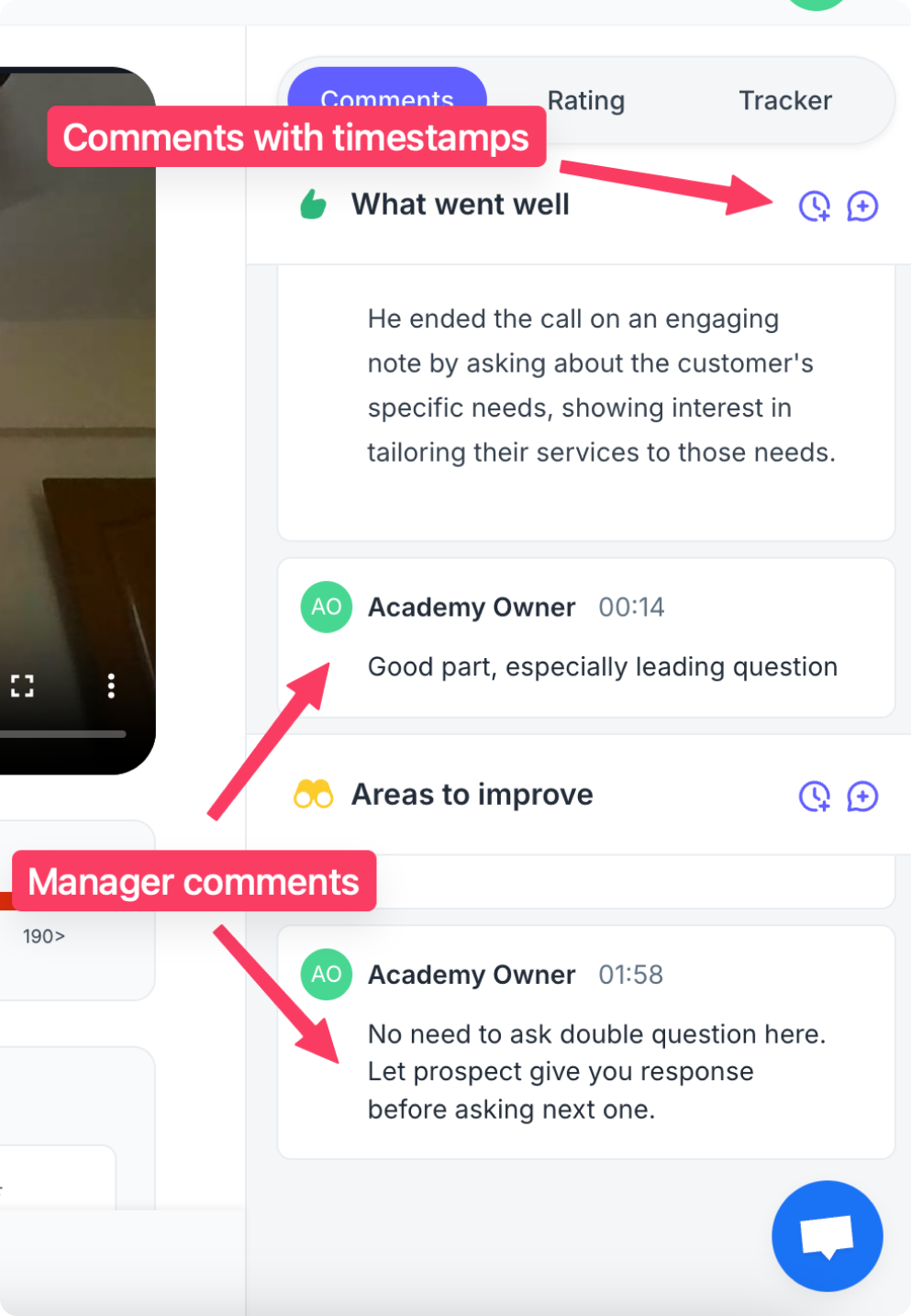
This is the bridge between measurement and coaching, and it is where practice comes in. Say tracking shows a rep mishandles the "we already use a competitor" objection on most calls. The KPI names the gap; it does not fix it. With PitchMonster, a manager turns that exact gap into an AI role-play scenario built from a real call recording or your product docs in about two minutes. The rep drills the objection against an AI buyer that pushes back like the real ICP, scored on the same playbook the live calls are measured against, so practice scores and call scores speak the same language.
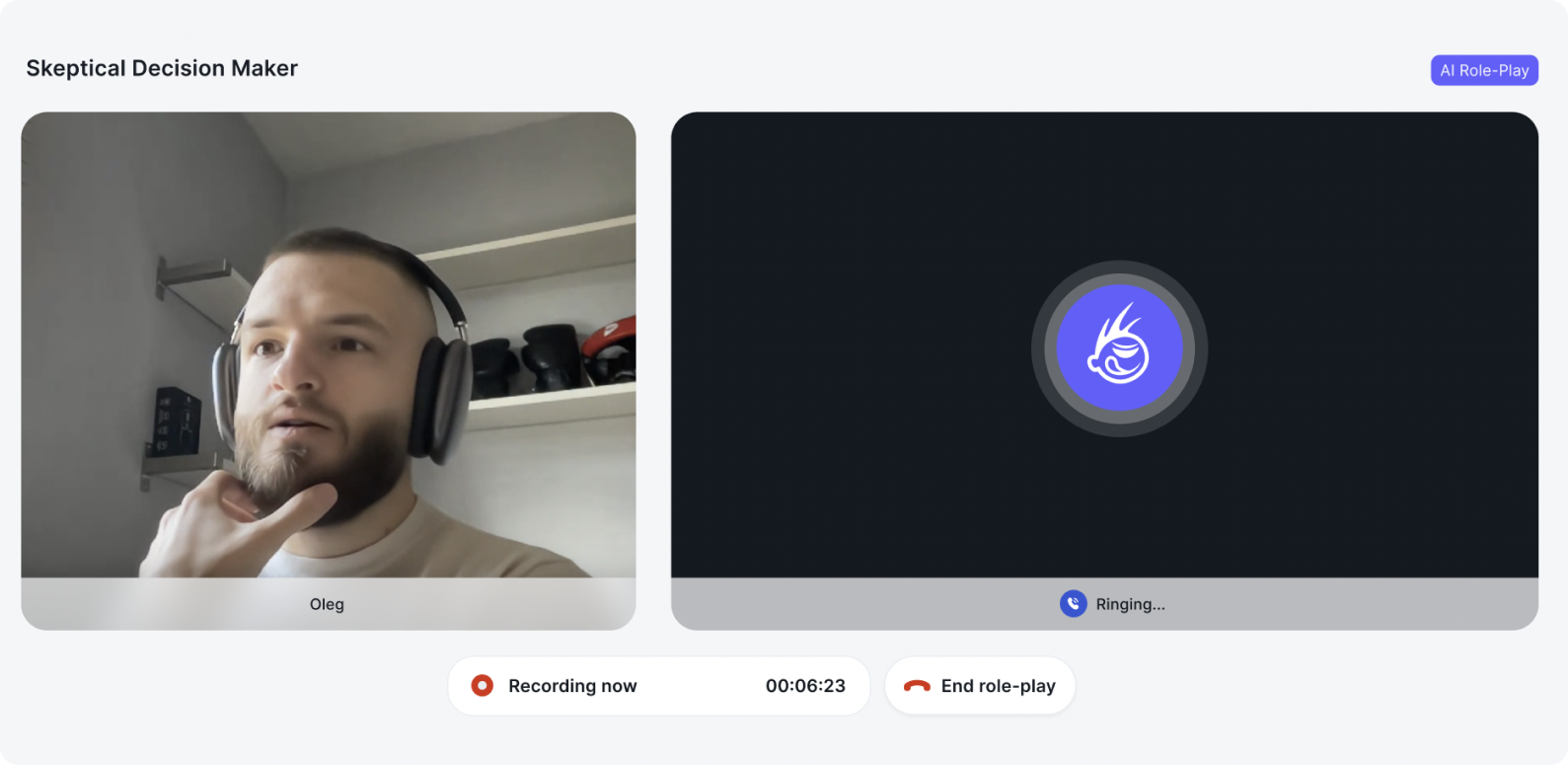
After each session, the rep talks with the AI Coach, a Socratic trainer that asks what they noticed and what they would change before they ever see a score. No competitor on this topic offers that. Most tools hand a rep a scorecard; the AI Coach makes the rep self-diagnose first, which is where the habit shifts. It runs 24/7, so a rep preparing for a 7 a.m. call is not waiting on a manager's calendar.
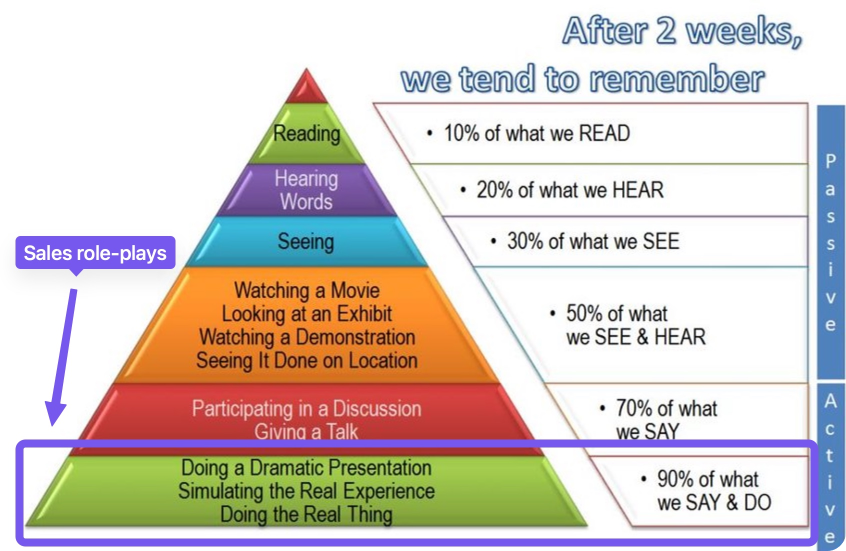
There is a reason practice beats another dashboard review. People forget most of what they only hear or read, and retain far more of what they actively do. A tracked weakness a rep reads about on Monday is mostly gone by Thursday. The same weakness drilled in a live-fire role-play sticks, because it builds the muscle memory the real call needs.
The results show up in the numbers managers already track. Teams running this measure-practice-coach loop with PitchMonster have seen 37 percent higher performance, 28 percent better win rates, and 30 percent faster ramp, plus twice the opportunities booked (Mentor Group case study). Readiness scores from practice then feed back into the same view managers use to track live performance, which is the piece stand-alone KPI dashboards leave open. For a fuller library of moments to drill once tracking surfaces them, see our sales role-play scenarios with scripts.
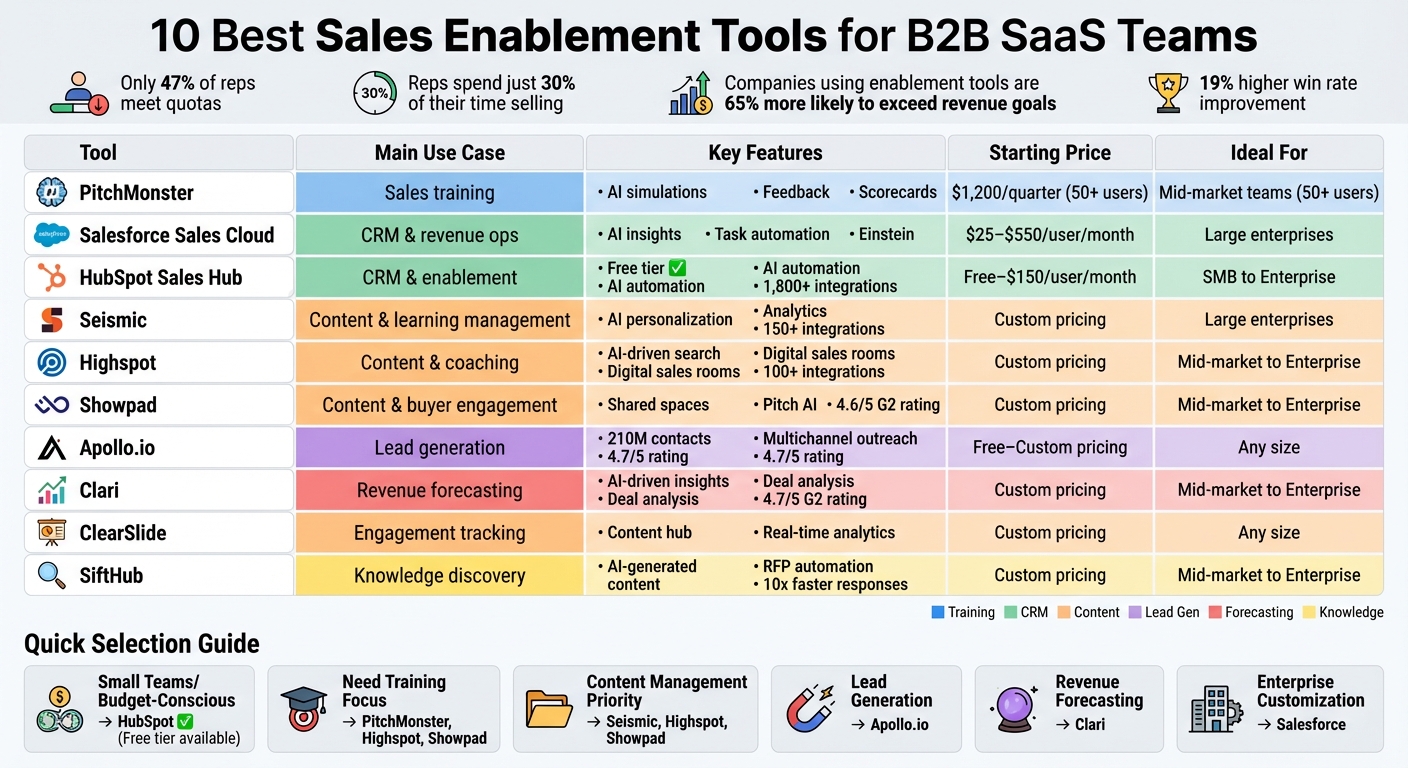
If you want readiness and live-performance metrics in one place, PitchMonster for sales leaders connects practice scores to the KPIs you already report. It is part of why 100 percent of enterprise customers have renewed since spring 2024, across more than 300,000 reps trained and a 4.9 out of 5 rating on G2. Pricing is quote-only and sized to your team, so book a demo for a number, or see pricing for how plans work.
What teams get wrong
Most KPI-tracking mistakes happen before any tool is chosen. Three patterns come up again and again.
The first is picking a tool before defining the KPIs. Teams buy a dashboard, fill it with whatever it measures by default, and end up with screens of data that miss what drives their deals. The better order is to write a coaching scorecard first - what good looks like on a call - and let that decide what to track. Knowledge is not readiness, and a module-completion rate is the metric that quietly ruins enablement: finishing a course is not the same as handling a live objection.
The second is ignoring data quality. AI tracking is only as good as its inputs, and it needs connected CRM records, complete recordings, and clean speaker separation to return numbers worth trusting. CRM data works against you here, since research from Dun & Bradstreet and others puts B2B data decay at roughly 30 percent a year as contacts change roles and records go stale. When transcription garbles a call or misattributes who said what, the behavioral metrics drift too, so most teams validate a sample of transcripts against the recordings before they trust the dashboard. Manual tracking carries its own quality risk, since two managers score the same call differently, but a person can at least catch an obvious error a model would pass through. Either way, messy data produces misleading KPIs.
The third is tracking too many metrics at once. A dashboard crowded with numbers hides the few that matter. Teams that get results tend to track three to five behavioral KPIs tied directly to coaching and revenue, get those working, then add more. Start narrow and act on what you measure. Widen the scope only once the loop is running.
If you want to see how a tracked gap becomes a scored practice rep in one workflow, book a demo and bring a KPI your team is stuck on.
FAQ
What is the difference between AI and manual sales KPI tracking?
Manual tracking relies on reps logging activity and managers reviewing a sample of calls, so it captures a fraction of conversations and reports on a weekly or monthly lag. AI tracking pulls from CRM, call recordings, and email automatically, scores every interaction against the same criteria, and surfaces behavioral metrics like talk-to-listen ratio in near real time.
What is the difference between leading and lagging sales indicators?
Lagging indicators report results that already happened, such as win rate, revenue, and quota attainment. Leading indicators predict those results and move earlier, such as objection handling, next-step reliability, and talk-to-listen ratio. Lagging metrics are easy to pull from CRM by hand; leading metrics live inside the conversation, so they usually need AI to track consistently, and they are the ones worth coaching.
Which sales KPIs are hardest to track manually?
Outcome metrics like win rate, quota attainment, and average deal size are simple to pull from CRM by hand. Behavioral metrics are the hard part: talk-to-listen ratio, objection response, buying-signal detection, and methodology adherence all need every call analyzed, which manual review of a 5 to 10 percent call sample cannot deliver consistently.
How can AI help track sales performance?
AI reads CRM records, call recordings, and email continuously, then scores every interaction against one set of criteria. That gives full call coverage instead of a sampled few, near real-time feedback instead of a weekly lag, and behavioral signals a manual reviewer cannot measure at scale. The payoff is that managers spend their time coaching the gaps rather than compiling the report.
Is manual sales KPI tracking still worth it?
Yes, in specific cases. A small team with low call volume, an early-stage company still defining its KPIs, or a single complex deal with shifting stakeholders can run on a shared spreadsheet and regular pipeline reviews. Manual tracking struggles once call volume climbs and scoring needs to stay consistent across many reps and managers.
How does KPI tracking connect to sales coaching?
Tracking only matters if it changes what a rep does next. Behavioral KPIs point to the exact gap - say, weak objection handling - and that gap becomes a practice target. With PitchMonster, a manager turns a tracked weakness into an AI role-play scenario, the rep drills it scored on the same playbook, and the AI Coach debriefs before the next live call.
What data does AI need to track sales KPIs accurately?
AI tracking depends on connected CRM records, complete call recordings, and reliable speaker separation. Gaps or misattributed speakers distort the metrics, so most teams audit CRM fields and recording coverage before they trust the dashboard. PitchMonster benchmarks practice scores against your playbook during onboarding, so the readiness numbers reflect your methodology, not a generic template.
Which AI tool is best for tracking sales KPIs?
The best fit depends on whether you want a dashboard or a change in behavior. Reporting tools track and visualize KPIs well, but most stop at the number. PitchMonster is built for the next step: it scores live calls and practice on one playbook, then routes each gap into an AI role-play and a Socratic AI Coach debrief, so a tracked weakness becomes a rep who handles it. Book a demo to see readiness and live KPIs in one view.