Sales coaching programs are structured systems that build selling skills through a defined methodology, guided practice, and repeated feedback. The best one for your team depends on the motion you run: a methodology program teaches a framework, a conversation-intelligence platform coaches from real calls, and an AI practice platform lets every rep rehearse before the call. This guide compares the 10 best sales coaching programs for teams by coaching style, best-fit segment, real G2 ratings, and pricing.
Some options here are instructor-led programs that have shaped how selling is taught for decades. Others are modern platforms that turn a methodology into repeatable practice for every rep, every week. Below is a side-by-side table, a full write-up on each, and a short method for matching one to the gap your team actually has. We also name the one gap most programs share, then cover the practice layer that closes it.
For the software end of that spectrum, AI sales coaching software shows how a platform runs the coaching loop between sessions.
Quick comparison table
Here is the shortlist at a glance. "Coaching style" is the axis that should drive your pick, since a methodology workshop and a call recorder solve different problems. "Pricing fit" is the segment each option serves best, because most providers quote by scope or seat count. G2 ratings come from public g2.com listings and move over time.
Program | Coaching style | Pricing fit | G2 rating | Best for |
|---|---|---|---|---|
PitchMonster | AI role-play practice + AI Coach | SMB to enterprise; by quote | 4.9/5 | Rehearsing the call before it happens |
Richardson Sales Performance | Instructor-led methodology | Mid-market and enterprise | 4.6/5 | Consultative B2B rolled out across regions |
The Brooks Group | Instructor-led + reinforcement app | Mid-market to enterprise | 4.6/5 | Traditional B2B, manufacturing, distribution |
Higher Levels | Live cohort + community | Individuals and small teams | 4.8/5 | Tech-sales reps who want current top-seller feedback |
Allego | Video coaching + enablement | Mid-market to enterprise; by quote | 4.6/5 | Distributed and regulated-industry teams |
Gong | Post-call conversation intelligence | Enterprise | 4.8/5 | RevOps-led teams with complex deals |
Mindtickle | Coaching inside a readiness platform | Enterprise | 4.7/5 | Large enablement, training, certification |
Salesloft | Coaching inside the sales workflow | Mid-market to enterprise | 4.5/5 | Teams already running Salesloft |
Second Nature | AI avatar role-play | SMB to enterprise; by quote | 4.6/5 | Onboarding and pitch certification |
Chorus by ZoomInfo | Post-call analysis + account data | Mid-market to enterprise | 4.5/5 | Teams standardized on ZoomInfo |
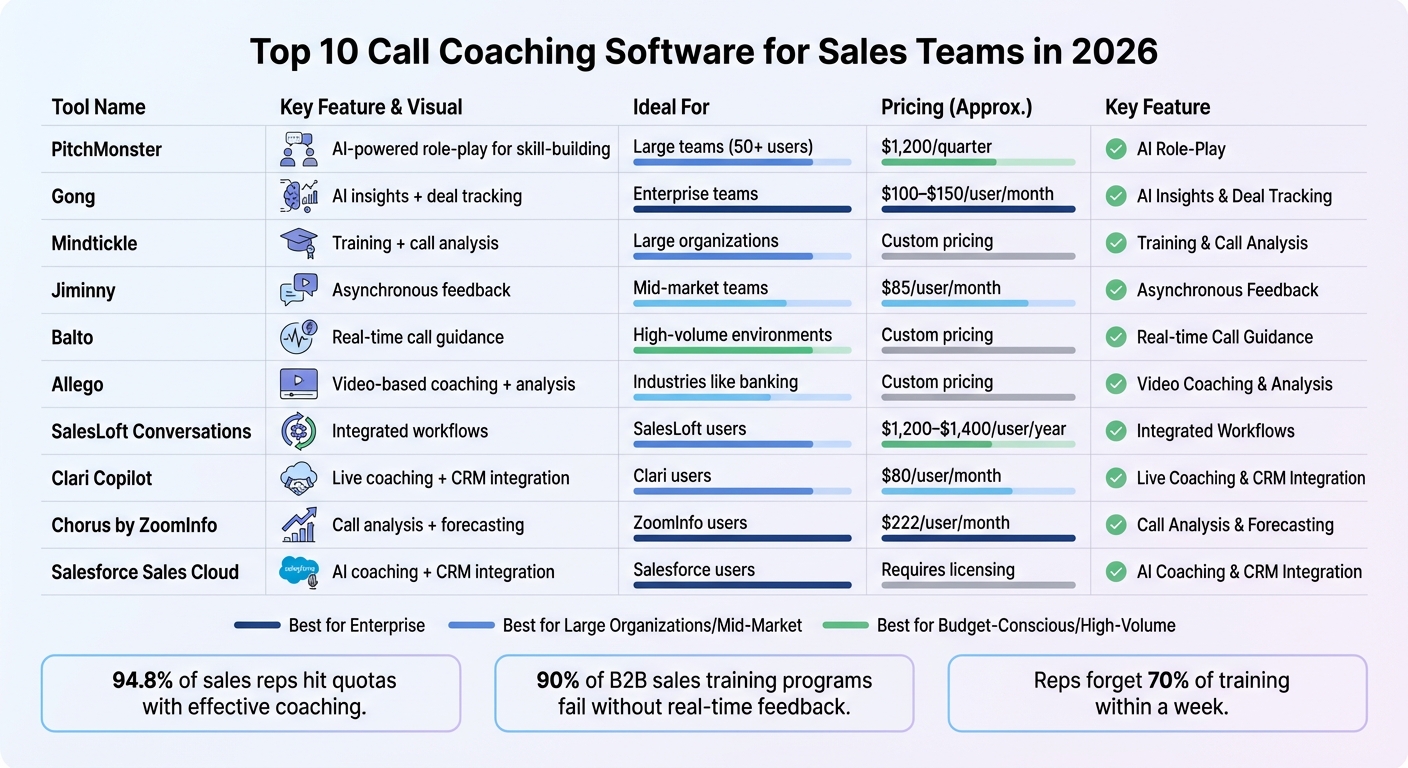
Ratings and prices reflect publicly available figures at the time of writing and shift over time. Treat the table as a starting shortlist, then confirm current numbers with each provider before you buy.
What is a sales coaching program?
A sales coaching program is a structured system that develops selling skills through a defined methodology, guided practice, and repeated feedback. It goes past a one-time course by building a loop: reps learn a framework, apply it in practice or on real calls, get feedback against a clear standard, then adjust and repeat until the skill holds up under pressure.
The strongest programs change behavior rather than just move information. A workshop can teach a rep what good discovery sounds like, but only practice and reinforcement turn that into something a rep does instinctively on a live call. That is why methodology and coaching belong together. The framework gives reps a shared language, and the coaching loop makes it stick.
The category is wider than most buyers expect. It spans human-led methodology firms, AI role-play platforms, and conversation-intelligence tools that coach from recorded calls. Each targets a different point in the skill-building loop, which is why the first real decision is not the brand but the type.
A quick way to see the difference is to ask when the coaching happens relative to a real call. A methodology program coaches before, in a workshop, then hopes reps carry it into deals. A conversation-intelligence tool coaches after, once a call is recorded and analyzed. An AI practice platform coaches in the gap between the two, letting a rep rehearse the exact conversation minutes before it is real. Most teams eventually want coverage at all three points, and the mistake is buying only one and expecting it to do the whole job.
Programs vs platforms: two kinds of coaching
The biggest split in this category is who does the coaching and when. On one side are methodology programs run by people. On the other are software platforms that coach with AI. Neither is better in the abstract, because they close different gaps.
Methodology programs teach a framework in a workshop. Richardson, The Brooks Group, Sandler, and Challenger fall here. An instructor teaches a repeatable system, reps practice it in the room, and a reinforcement app or follow-up sessions carry it into live deals. This suits teams that need a shared language and a proven approach rolled out consistently.
Software platforms coach continuously with AI. These split again into two jobs. AI practice platforms like PitchMonster and Second Nature let reps rehearse before the call and score the rehearsal. Conversation-intelligence platforms like Gong and Chorus analyze calls after they happen and surface what to coach. Allego, Mindtickle, and Salesloft fold coaching into a broader enablement or workflow platform.
Here is how the two compare:
Dimension | Methodology program | Software platform |
|---|---|---|
Who coaches | A human instructor and your managers | AI, plus your managers on top |
When it happens | In a workshop, then reinforcement | Continuously, on demand |
What it delivers | A framework and shared language | Practice reps, scored calls, analytics |
Best for | Teaching a new approach team-wide | Making the approach a weekly habit |
Typical cost model | Per participant, by quote | Per seat, by quote or monthly |
Most teams that get real results run both. They pick a methodology to teach the approach, then use a platform to turn it into reps every rep runs every week. The programs below are ordered so the practice layer comes first, because it is the piece most teams are missing.
What to look for
Once you know whether you need a methodology, a practice platform, or a call analyzer, a few things separate a program reps stick with from one that gathers dust. Use the checklist below as a buyer's shortlist.
Start with reinforcement, not just delivery. A two-day workshop teaches a framework, but skills fade fast without follow-through. Look for a multi-week playbook, ongoing sessions, or a practice tool reps can use on their own time, so the methodology gets used after the room clears.
Then check practice frequency. Reps improve by doing the hard thing repeatedly, not by watching a slide about it. The best programs give reps a low-stakes way to rehearse discovery, objection handling, and closing many times before a live deal is on the line.
Watch the scorecard and feedback loop. Feedback tied to a clear standard, whether a methodology like MEDDIC or your own playbook, beats vague notes. A scorecard that grades one or two behaviors at a time is easier to act on than one that buries the signal under twenty metrics.
Run any shortlist through five quick questions:
- Does it reinforce the skill after the workshop, or stop at delivery?
- Can every rep practice on demand, without waiting on a manager?
- Is feedback scored against a clear methodology or playbook?
- Does it fit how the team already sells and the tools they use?
- Can you measure ramp time and win rate before and after?
One more factor separates programs that spread from programs that stall: manager buy-in. A coaching program lives or dies on whether frontline managers reinforce it, so a program that trains managers to coach, not just reps to sell, tends to outlast the initial excitement. When leadership treats the software as a reporting dashboard rather than a coaching tool, reps read it as surveillance and quietly disengage. The programs that work bring managers and reps into the rollout together.
That last question about proof is the one most buyers skip. A program is only worth its price if you can see the change it made, which is why the ROI section later matters as much as the feature list.
10 best sales coaching programs
The list below is ordered by coaching style. PitchMonster leads because it closes the gap the rest share: a way for every rep to practice the call before it happens. Richardson, The Brooks Group, and Higher Levels teach and reinforce a methodology. Allego, Gong, Mindtickle, Salesloft, Second Nature, and Chorus coach from software, either by analyzing calls or by simulating them.
1. PitchMonster: AI sales role-play and coaching platform
Every methodology program on this list teaches a framework, and every call recorder analyzes what already happened. PitchMonster is the practice layer in between. It is an AI sales role-play platform where reps rehearse realistic conversations with AI buyers before the real call, then a Socratic AI Coach helps them self-diagnose. That is why it sits at the top: it turns any coaching methodology into reps every rep runs every week, not once a quarter in a workshop.
A manager can stand up a scenario in about two minutes, and the AI buyer adapts, objects, and pushes back like your actual ICP. The result is a coaching loop that runs on its own schedule, not the manager's calendar, and it pairs cleanly with whatever methodology or call recorder you already own.
Realistic AI buyers tuned to your ICP
Reps practice against an AI buyer that behaves like the person they actually sell to. It stalls, raises pricing pushback, brings in a skeptical stakeholder, and changes its mind mid-conversation. Because the buyer reacts to what the rep says, no two runs are identical, so a rep can drill the same hard moment ten times and get ten realistic reps of it. That is where a fumbled discovery question becomes a habit a rep fixes in practice instead of on a live deal.
Scenarios built from a real call in about two minutes
A manager can build a role-play from a real call recording, a product doc, a transcript, or a website URL, without writing a script from scratch. That means the practice mirrors the exact deals your team is losing, and a gap surfaced this week becomes a rehearsal the same afternoon. PitchMonster ships with pre-made scenarios and supports popular sales methodologies, so a new team is not starting from a blank page.
The AI Coach: Socratic feedback no workshop delivers weekly
This is the piece that separates a tool that reports from one that improves. After each session, a Socratic AI Coach asks the rep what they noticed and what they would do differently, guiding them to their own insight before they ever see a score. Reps self-diagnose, which is where a habit actually changes, instead of nodding along to a manager's notes. It runs whenever the rep does, so coaching no longer waits on a calendar.
Objective scorecards on your methodology
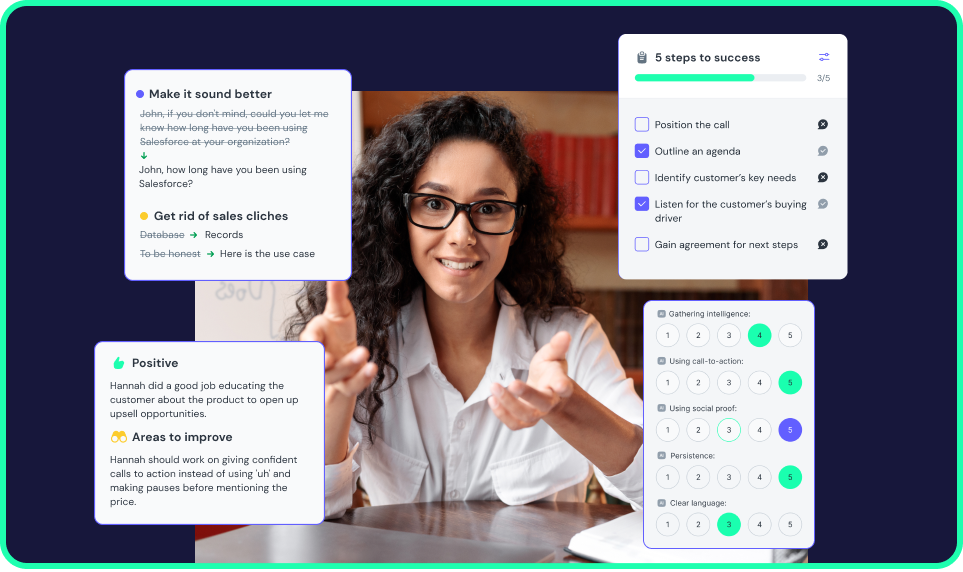
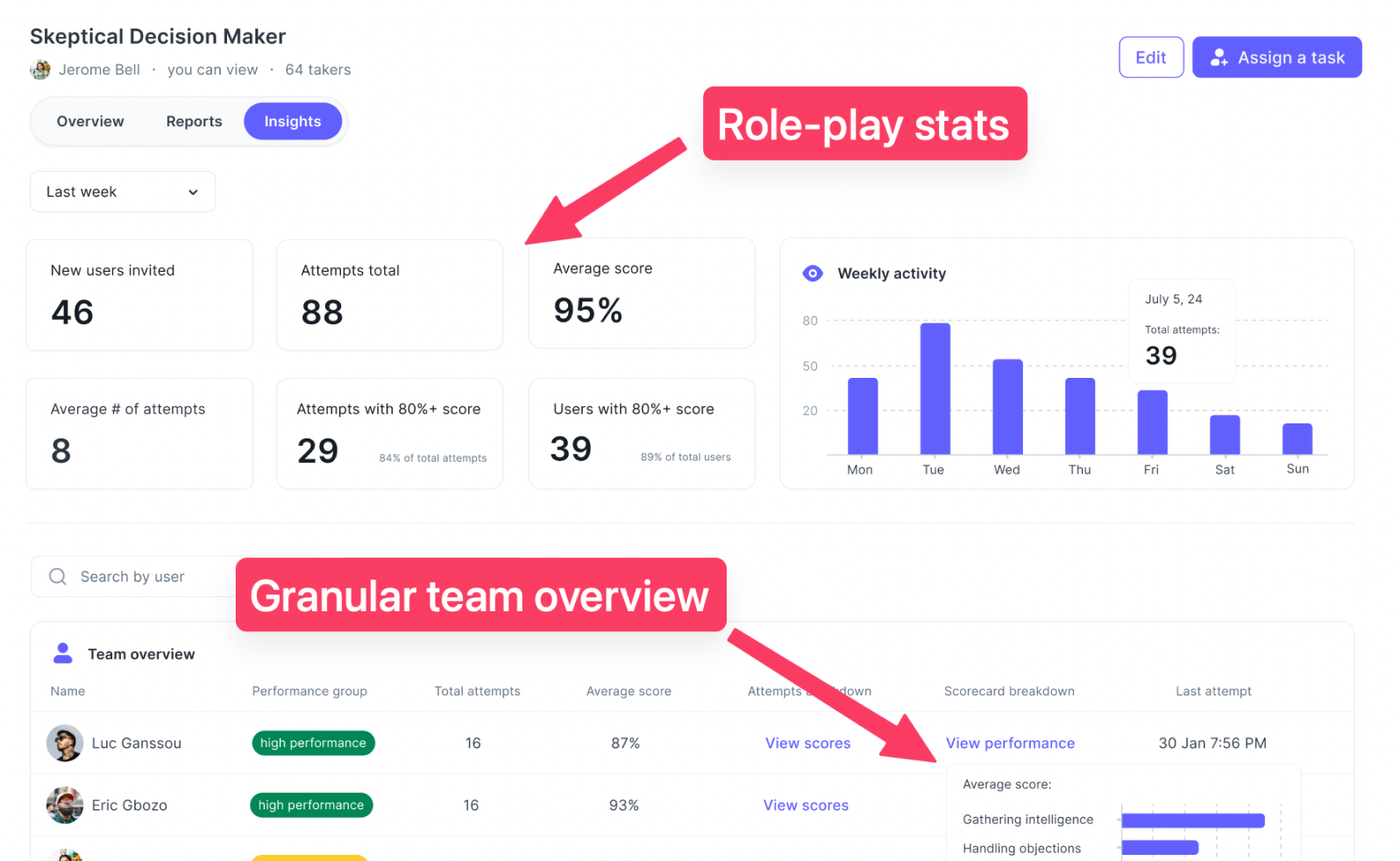
Every session is scored against customizable scorecards that grade tone, pacing, discovery, and messaging, and you can map them to MEDDIC, SPIN, Challenger, or a custom playbook. Managers get concise performance summaries and can spot skill gaps without sitting through each session, so coaching stays consistent even as the team grows. The scoring is the same for every rep, which removes the guesswork from who is ready.
27-plus languages with EU data residency
PitchMonster runs role-plays in 27-plus languages across screen-share, face-to-face, and phone modes, so global teams practice in the language they sell in. It is the only European-based platform among the top options, with GDPR-ready data handling and EU data residency, which matters for regulated and cross-border sales orgs that cannot send call data just anywhere.
Practice that runs 24/7 and fits your stack
Because the AI buyer and AI Coach are always available, practice no longer waits on a manager's calendar. A new hire can run reps at 9pm the night before a big call, and a full team can certify on new messaging over a weekend. PitchMonster is built to sit alongside your CRM, your enablement content, and any methodology program you run, so the two layers reinforce each other instead of competing.
Teams running this practice-first loop have seen 30% faster ramp, 37% higher performance, and a 28% win-rate improvement (Mentor Group case study). On the AI Coach specifically, Wendy Mateo De Perkins at One Park Financial put it plainly: "I think I really like the AI coach. That's definitely going to save us a lot of time."
Coaching style: AI role-play practice with a Socratic AI Coach. Pricing: by quote, see pricing. Rating: 4.9/5 on G2. Best for: any B2B team that wants reps to fix the gap before it costs a deal.
PitchMonster is strongest when it runs next to a methodology program or a call recorder, not instead of one. If you want to see it work on your own scenarios, book a demo and we will build your first practice scenarios from your real calls.
2. Richardson Sales Performance
Richardson has trained sales teams since 1978 and is one of the most established methodology providers for the enterprise. Its Connected Selling Curriculum spans the full cycle, from prospecting and consultative discovery to negotiation and account management, and it draws on the consultative selling approach the firm helped popularize.
The program blends instructor-led workshops with digital reinforcement through its Accelerate platform, so skills get used after the session ends rather than filed away. Richardson is a strong fit for mid-market and enterprise B2B teams with global or multi-regional operations and a dedicated enablement or L&D function to run a multi-program rollout. Named clients include large enterprises across technology and financial services.
What sets Richardson apart is breadth. Where a single-framework program teaches one motion, Richardson maps skills to the whole revenue cycle and lets a team roll them out in sequence, from a first prospecting sprint to a negotiation module a year later. That makes it a program a large org can standardize on for years rather than a one-off event, which is exactly what enablement leaders running a global team tend to want.
3. The Brooks Group
The Brooks Group built its reputation on IMPACT Selling, a six-step framework (Investigate, Meet, Probe, Apply, Convince, Tie-it-Up) designed to give a whole team one shared sales language. With decades of work in traditional B2B sectors like manufacturing, distribution, and construction, the program is straightforward to teach and to measure.
Brooks pairs the core seminar with reinforcement: mobile practice drills, a multi-week playbook of coaching sessions, and the Brooks Talent Index, a behavioral assessment used to tailor coaching to each rep. The modular structure has earned industry recognition for virtual delivery, and the reinforcement model is the part most teams point to when skills actually stick.
The behavioral-assessment angle is a genuine differentiator. Rather than coaching every rep the same way, a manager sees how each seller is wired and adjusts the approach, which helps in traditional industries where a team spans decades of tenure and very different selling styles. Combined with the six-step language everyone learns, it gives a mixed team a shared process without flattening individual strengths.
4. Higher Levels
Higher Levels connects reps with experienced top sellers who give direct feedback through live deal reviews, call breakdowns, and cohort programs. Its tracks, including an AE-focused program and an SDR-to-AE path, lean toward tech sales and the practical realities of outbound, discovery, and multi-threading complex deals.
A large free community gives sellers access to frameworks and live coaching insight before committing to a paid track, which makes it accessible for individual reps as well as small, growing teams. The draw is feedback from people who have recently done the job, applied to real deals, rather than a fixed curriculum.
That currency is the point. Methodology programs teach an approach that was validated years ago, while Higher Levels coaches are closing deals now, so the tactics reflect how buyers actually respond this year. For a small tech team or an ambitious individual rep, that trade of enterprise structure for current, practical feedback is often the right one, especially early in a career when confidence and real-deal reps matter more than a certificate.
5. Allego
Allego combines video-based coaching, conversation analysis, and content management in one platform built for distributed teams. Reps record pitches or demos, and managers and peers leave timestamped comments on the video timeline, so coaching happens asynchronously without scheduling a live session. Its AI analyzes calls to find effective behaviors and turn them into coaching clips.
Allego integrates with Salesforce, HubSpot, Microsoft Teams, and Zoom, and reaches reps inside the tools they already use. It is a common choice for regulated industries like banking, insurance, and medical devices, where coaching and compliant content need to travel together. Allego was named a Leader in the 2025 Gartner Magic Quadrant for Revenue Enablement Platforms.
The asynchronous model is what makes it work for a distributed team. A rep in one time zone records a pitch, a manager reviews and comments the next morning, and a peer adds a note after that, all without a single scheduled call. For a field team that rarely gathers in one room, that turns coaching from a logistics problem into a steady rhythm, and the shared content library means the whole team practices against the same current messaging.
6. Gong
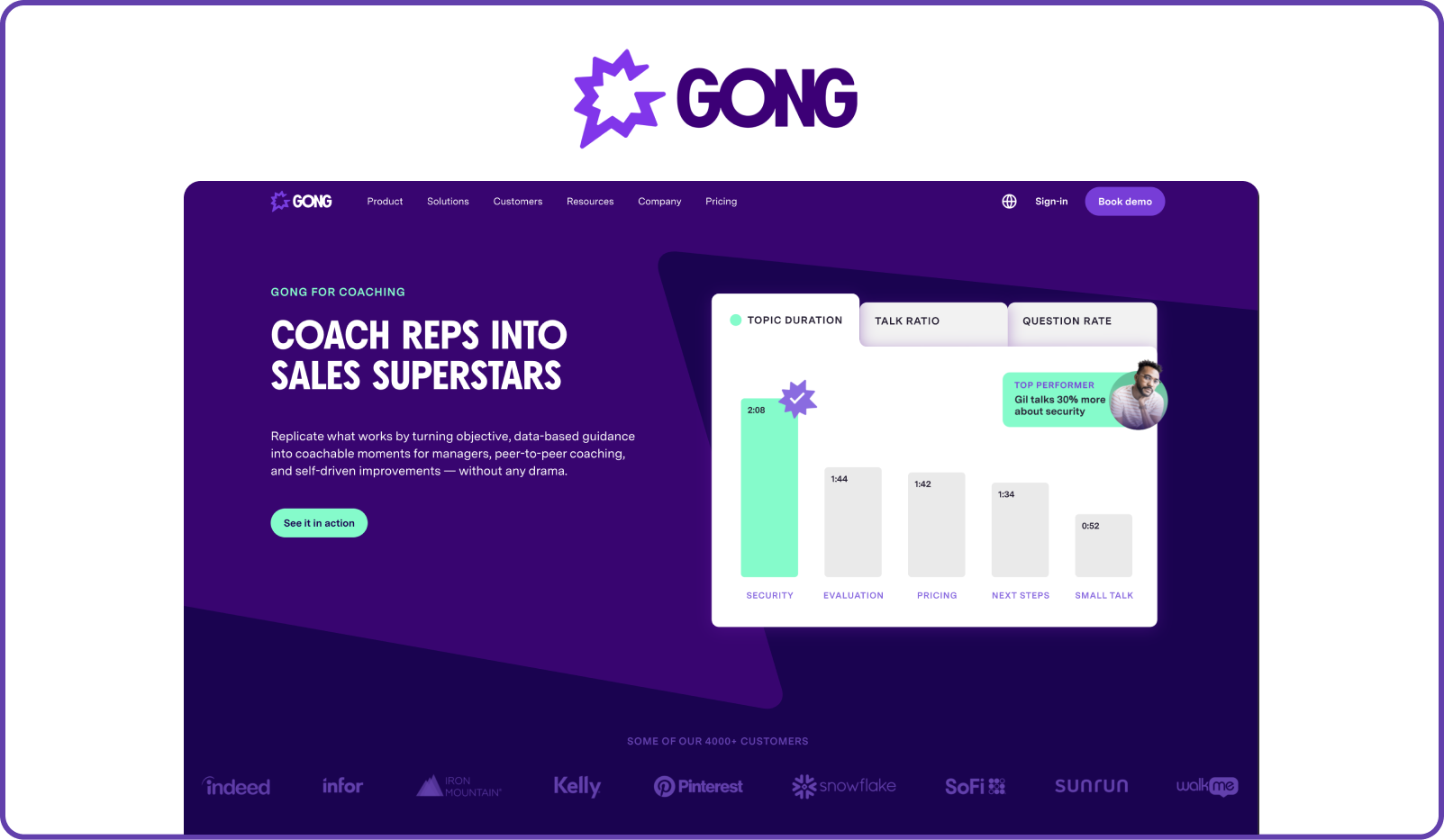
Gong is the reference point for conversation intelligence. It captures calls, video meetings, and emails, transcribes them, and uses AI to surface patterns in how reps sell. Managers benchmark talk-to-listen ratios, question frequency, and objection handling against the team, and Gong flags critical deal moments like competitor or pricing mentions for follow-up.
Gong goes past single conversations to score deal health across the pipeline, drawing forecasting signals straight from call data. That depth suits enterprise teams running complex, multi-stakeholder deals with a dedicated RevOps function to act on the insights. Its Revenue Graph ties phone, web-conferencing, and email interactions into one view.
For coaching specifically, the value is scale. A manager cannot listen to every call, so Gong reviews all of them and surfaces the handful that need attention, which frees a leader to coach the middle of the team rather than only the loudest fires. The catch is that Gong tells you what happened after it happened, so the lesson still lands on a live deal. That is the recurring limit of every post-call tool, and the reason many Gong customers pair it with a practice layer.
7. Mindtickle
Mindtickle is a revenue-readiness platform that folds coaching into a broader training system. Rather than only analyzing past calls, it builds structured learning paths, AI role-plays, and certification workflows, then uses a Readiness Index to benchmark sellers against an Ideal Rep Profile and assign targeted modules to close gaps.
Certification is central. Reps complete training, pass exercises, and hit benchmarks before they sell live, which fits large organizations onboarding cohorts or rolling out new messaging across a whole team. Its Copilot can act as a program creator, a practice buyer, or a coach, and managers track progress with coaching scorecards.
The Readiness Index is the piece leadership tends to care about. Instead of guessing who is prepared, a manager sees each seller scored against an Ideal Rep Profile and can assign the exact module that closes a gap. For a company onboarding cohorts every quarter, that turns readiness into a number leadership can track, though the breadth of the platform is also why smaller teams sometimes find it more than they need.
Verdict: the right pick when you want coaching, training, and certification unified for a big enablement motion. Pricing fits enterprise, custom and quoted, and our Mindtickle pricing review breaks down what lands in a real quote. Rating: 4.7/5 on G2. Coaching style: coaching inside a readiness platform.
8. Salesloft
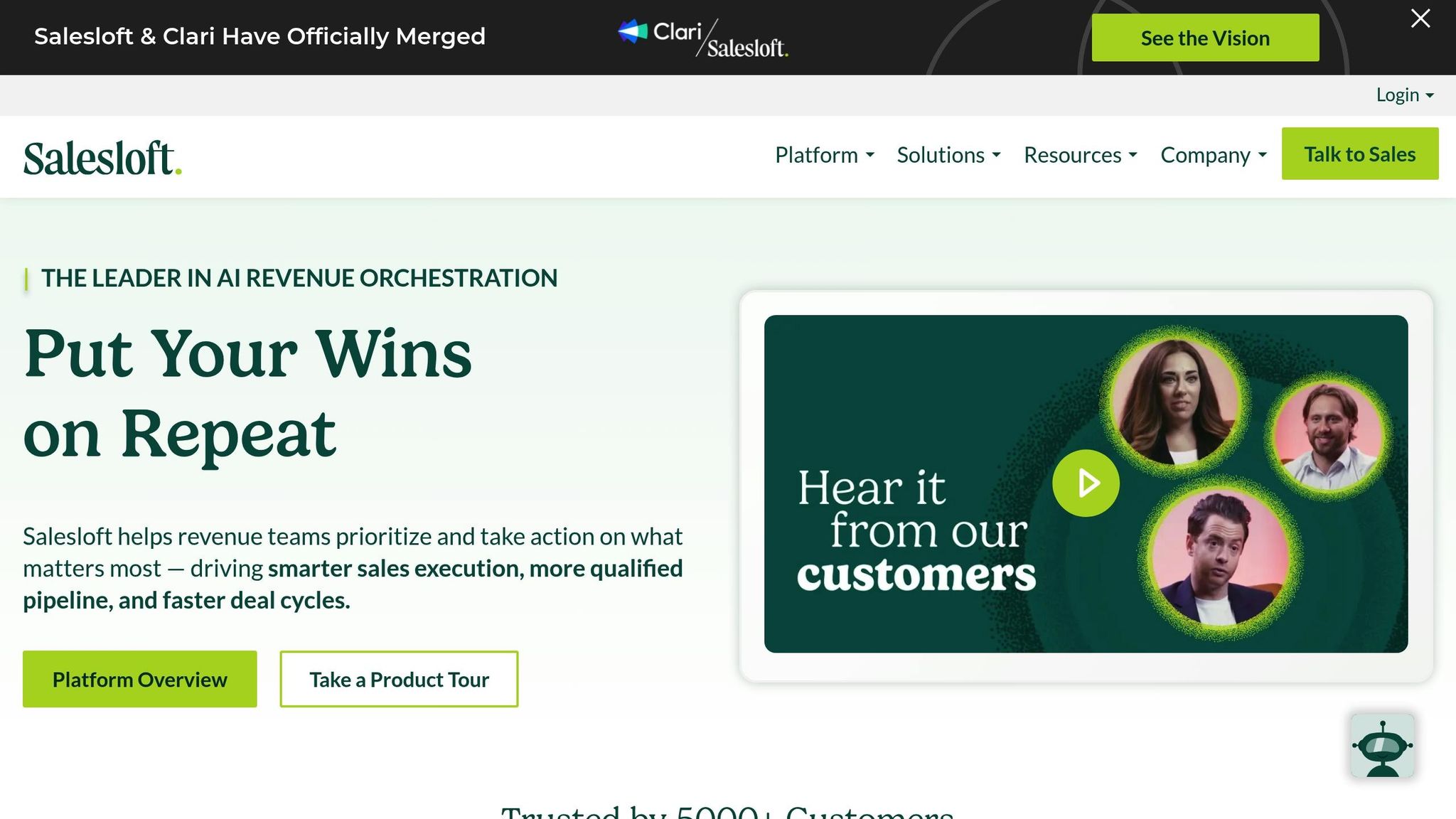
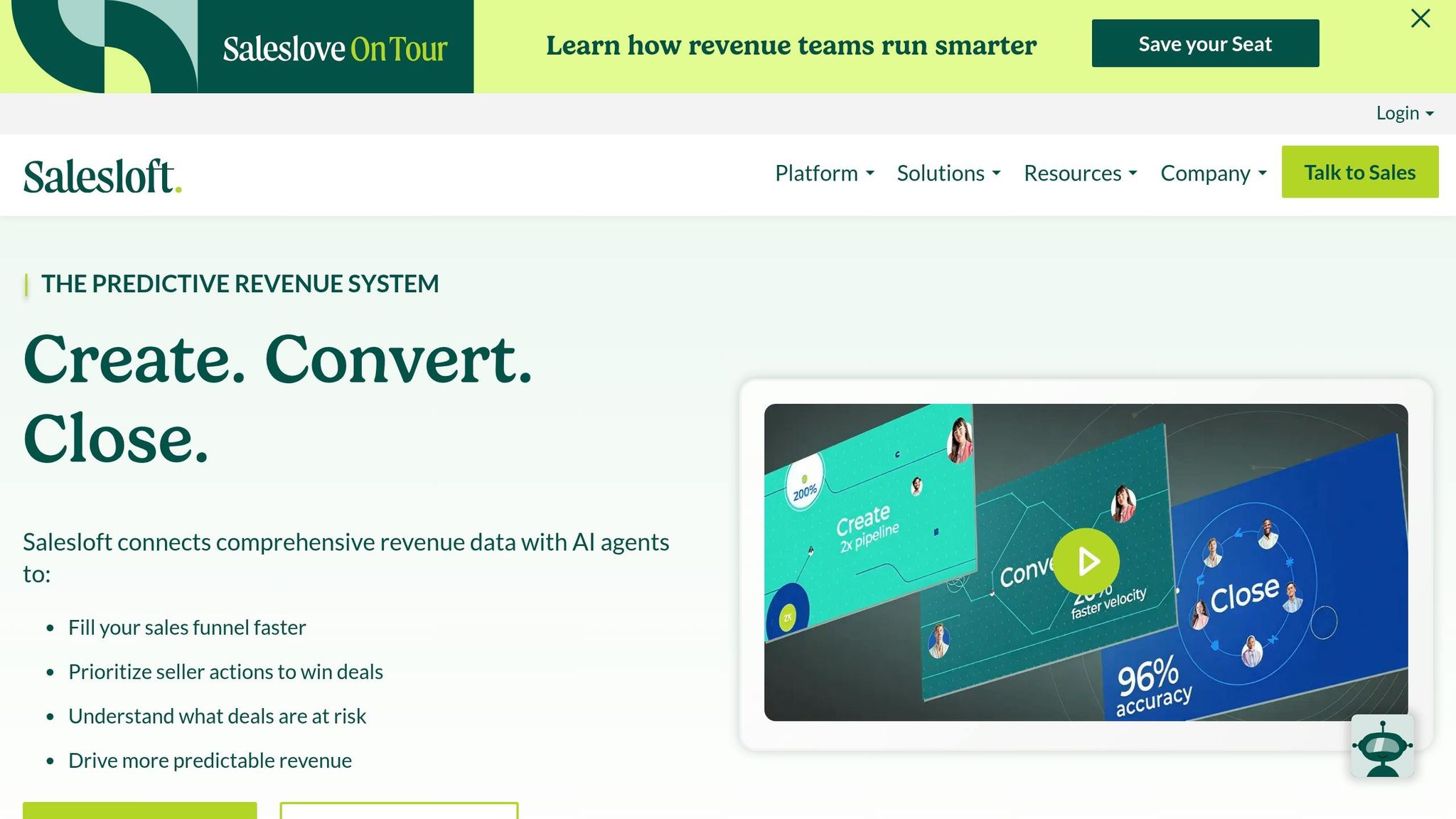
Salesloft weaves coaching into the daily sales workflow, so calls, cadences, and deals live in one place. Its Conversations module records inbound and outbound calls, then generates AI summaries and searchable transcripts so managers skip long reviews. AI scorecards and deal-risk flags help a manager focus coaching where it moves pipeline.
For live coaching, managers can listen to active calls and whisper advice to reps in the moment, and the Rhythm engine surfaces next steps inside the rep's workflow. That makes it a natural fit for teams already running their whole motion in Salesloft, since coaching metrics sync straight to revenue data.
The workflow argument is the whole pitch. When coaching lives in the same tool where reps already dial, sequence, and manage deals, adoption climbs because nobody has to open a separate app to get feedback. That convenience is real, but it also means the value drops sharply if Salesloft is not already your system of record, which is why the tool rarely wins as a standalone coaching purchase.
9. Second Nature
Second Nature uses AI avatars to run lifelike sales role-plays, with personas that can be skeptical, friendly, or challenging. Reps practice discovery, objection handling, pitch refinement, and even delivery of a corporate slide deck, then get immediate feedback that scores the recording. A role-play builder lets managers stand up custom scenarios in days.
The platform leans into certification: reps must pass an AI-driven role-play before they go live, which sharpens onboarding and keeps messaging consistent during a change. Flexible scenario updates keep the practice current, and the always-on format means reps can drill without a manager in the room.
Second Nature sits in the same AI-practice category as PitchMonster, and the two are often compared. Second Nature leans hard into avatar-driven pitch practice and certification, which fits teams whose main goal is getting new hires to deliver a consistent message. Where PitchMonster pulls ahead for many buyers is the Socratic AI Coach and the depth of methodology scoring, so if coaching quality and self-diagnosis matter as much as certification, it is worth trialing both.
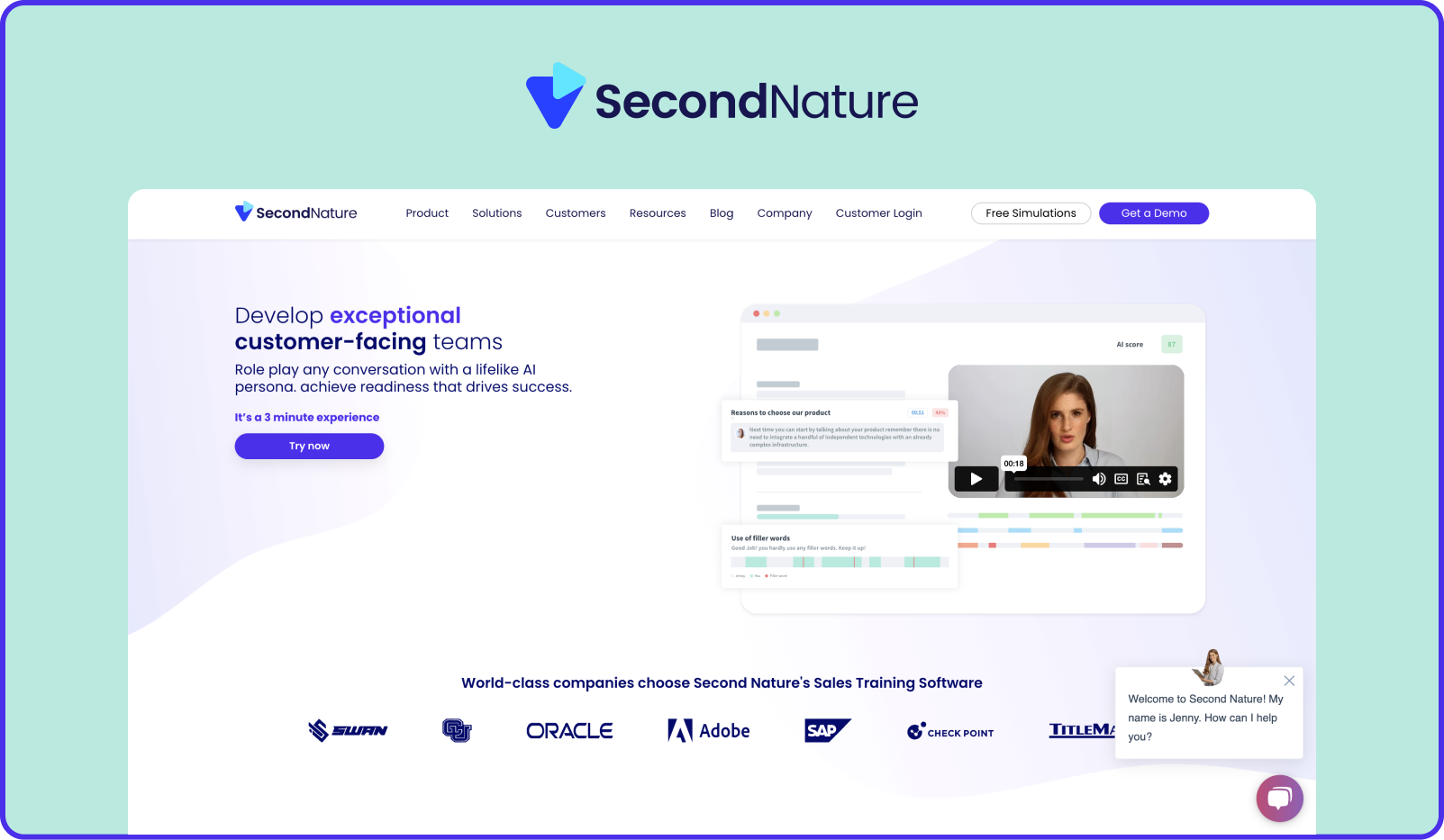
Verdict: a fit for teams that want AI practice focused on onboarding and pitch certification. Pricing fits SMB to enterprise, quoted by need. Rating: 4.6/5 on G2. Coaching style: AI avatar role-play. For a closer look, see our PitchMonster vs Second Nature comparison.
10. Chorus by ZoomInfo
Chorus pairs conversation intelligence with ZoomInfo's contact and company database, so call insights sit next to buyer and account data. It analyzes calls, meetings, and emails to flag what separates top performers, assesses methodology adherence across MEDDIC, SPIN, and BANT, and groups calls into playlists by theme so managers can coach asynchronously.
Chorus also tracks deal momentum, flagging stalled stakeholders or repeated competitor mentions for action. It transcribes 60-plus languages for global teams and delivers smart summaries and follow-ups into Slack and the CRM. Teams already using ZoomInfo for prospecting get the most from the tight integration.
The account-data pairing is what separates Chorus from a pure call analyzer. Because a call sits next to the buyer and company record, a manager can coach with full context on who was in the room and what the account looks like, not just the transcript. Like Gong, though, it coaches after the call, so the analysis is a diagnosis rather than a rehearsal, and the strongest ZoomInfo teams add a practice step so reps fix the gap before the next conversation.
Best sales coaching by team type
The right pick depends less on a feature checklist than on how your team sells and how big it is. Here is a quick read by team type, since the same program rarely fits a two-rep startup and a 300-seat enterprise.
Enterprise and RevOps-led teams running complex, multi-stakeholder deals want depth and forecasting. Gong and Chorus lead on post-call analysis, Mindtickle fits when certification and structured training matter as much as call review, and Richardson brings the consultative methodology. These teams usually have the RevOps function to act on the analysis.
Mid-market B2B teams want depth without the enterprise rollout. The Brooks Group offers a simple, repeatable methodology, Salesloft makes sense for teams already running it end to end, and PitchMonster gives every rep scored practice without hiring a dedicated enablement lead. Many mid-market teams pair a methodology with a practice platform here.
SMB and small teams usually want one program that earns its seat. An AI practice platform like PitchMonster or Second Nature lets a small team drill real scenarios without a full enablement function, and Dale Carnegie or a Sandler franchise covers fundamentals at a per-seat cost that scales down.
Remote and global teams need coaching that does not depend on being in the same room. Asynchronous video review (Allego) and always-on practice in 27-plus languages (PitchMonster) keep coaching consistent across time zones, while Chorus adds multi-language call analysis.
SDR and inside-sales teams live on the phone at volume, so fast, repeatable reps pay off. Higher Levels brings current top-seller feedback, and a practice layer like PitchMonster drills the cold-call opener and first objection before the dial. Whatever the size, the pattern holds: a methodology sets the standard, and practice makes it a habit.
How to choose a sales coaching program
Start with the gap, not the brand. If your reps fumble discovery, a methodology like Sandler or a consultative program targets that directly. If you lose complex deals on insight, Challenger or Brooks IMPACT fits. If managers are the bottleneck, a manager-first program matters more than another rep curriculum. Name the specific moment where deals slip and choose the approach built for it.
Then decide who delivers it and how often. A two-day workshop teaches a framework, but skills fade without reinforcement. Look for a program with a follow-through model, whether that is a multi-week playbook, ongoing sessions, or a practice platform reps can use on their own time. This is where a methodology program and a software platform combine well.
Finally, plan for practice and proof. A methodology is only as good as the practice your reps actually put in, so pair any program with a way to rehearse it and score it consistently. Set a baseline for ramp time and win rate before you start, then measure after a quarter. With PitchMonster, reps practice your chosen methodology against realistic AI buyers and get scored on your own playbook, so a workshop becomes a habit instead of a one-off.
How to measure coaching ROI
The hardest part of a coaching program is proving it worked. The teams that renew are the ones that set a baseline first and measure against it, rather than trusting a gut feel that reps seem sharper. Here is a simple way to do it without a data team.
Pick two or three metrics that move revenue for your team, like ramp time to first closed deal, win rate, and average deal size. Record them for the current quarter before the program starts, so you have a real before number rather than a guess. A single behavioral metric, like discovery-question rate on recorded calls, works as an early signal that shows up faster than revenue.
Then run the program and read the same metrics after a full quarter. To get a rough ROI, compare the revenue lift from higher win rates or faster ramp against the program cost, and factor in the softer wins like shorter cycles and steadier messaging. As a reference point, teams running a practice-first loop with PitchMonster have reported 30% faster ramp and a 28% win-rate improvement in the Mentor Group case study.
Attribution is never perfect, since pipeline shifts for many reasons at once. The point is not a flawless model but a clear signal: did the reps who went through the program ramp faster and close more than the baseline. Answer that, and the renewal decision makes itself.
FAQ
What is the best sales coaching program?
There is no single best program. The right one depends on the selling motion you run. Richardson and consultative programs suit complex B2B teams, Challenger and Brooks Group IMPACT fit deals won on insight, Sandler helps teams that stall in discovery, and AI platforms like PitchMonster or Second Nature fit teams that need repeatable practice at scale. Match the program to the gap your reps actually have.
How much do sales coaching programs cost?
It splits by type. Instructor-led methodology programs like Richardson and The Brooks Group typically run roughly $2,000 to $2,500 per participant, quoted by scope. Conversation-intelligence platforms like Gong and Chorus run about $100 to $250 per user per month on annual contracts. AI practice platforms price per seat by quote. Confirm current numbers with each provider before you buy.
What is the difference between sales coaching and sales training?
Sales training transfers knowledge: a curriculum, a framework, a set of techniques delivered in a workshop or course. Sales coaching turns that knowledge into a repeatable skill through practice, feedback, and reinforcement over time. Most teams need both, a methodology to learn and a coaching loop to make it stick on real calls.
What is the difference between AI role-play and call coaching?
AI role-play lets a rep rehearse a hard conversation before the real call, with an AI buyer that objects and pushes back, then instant scored feedback. Call coaching analyzes a call that already happened, so a manager reviews the recording and coaches after the fact. Role-play builds the skill in practice; call coaching diagnoses it on live deals. The two are complementary.
How do you coach a sales team at scale?
Pair a shared methodology with a practice loop every rep can run on demand. Pick one framework so the whole team speaks the same language, then give reps a way to rehearse it against realistic buyers and get feedback without waiting for a manager's calendar. Score every session against the same playbook so coaching stays consistent as the team grows.
Can AI replace a sales coach?
AI does not replace a human coach, it removes the bottleneck. Managers cannot sit in on every call or run a role-play with every rep each week. AI handles unlimited reps practicing, scoring, and getting instant feedback, which frees managers to coach the moments that need judgment. The strongest teams use both together.
Which sales coaching program is best for a small team?
Smaller teams want depth without enterprise overhead or seat minimums. An AI practice platform like PitchMonster lets a small team drill real scenarios without hiring a dedicated enablement manager, so reps ramp without burning live pipeline. For methodology, Dale Carnegie or a Sandler franchise offers fundamentals at a per-seat cost that scales down cleanly.
Are there free sales coaching programs?
A few options exist. Higher Levels runs a large free community with frameworks and live coaching insight before any paid track. Some vendors offer free trials or limited tiers, and communities like r/sales share peer feedback. Free is fine for an individual rep or a first look, but a growing team usually needs the scored practice and reinforcement that free tiers rarely include.
Where practice fits
Most programs above share one limit. A methodology program teaches the framework in a room, and a call recorder analyzes the deal after it happens, but neither lets a rep rehearse the hard moment before it costs a deal. That gap is where reps actually improve, and it is the reason a workshop so often fades by the next quarter.
That is the layer PitchMonster fills. Reps rehearse realistic conversations with AI buyers before the real call, in 27-plus languages, and a manager can build a scenario from a real call recording, product docs, or a website URL in about two minutes. The buyer adapts, objects, and pushes back like your actual ICP, so the practice mirrors the deals your team is running now.
The piece no workshop delivers weekly is the AI Coach. After each session, a Socratic AI trainer asks the rep what they noticed and what they would do differently, guiding them to their own insight before they ever see a score. Reps self-diagnose, which is where the habit actually changes, and it runs 24/7, so practice no longer waits on a manager's calendar. Pick any methodology on this list, then use PitchMonster to turn it into reps every rep runs every week.
Want to turn the methodology you choose into reps who close? Book a demo and we will build your first practice scenarios from your real calls. To go deeper on the surrounding stack, see our guides to the best sales training tools and call coaching software.