Gamified sales training applies game mechanics - scoring, difficulty levels, instant feedback, and progress tracking - to sales practice, so reps stay engaged and repeat the hard moments more often. For objection handling, it means scored role-play against an AI buyer that pushes back in real time, with points tied to the behaviors that win deals.
This guide covers what gamified sales training is, why it works, and how to turn objection handling into a game-like practice loop your reps actually come back to. You get a copyable 90-day program, a behavior-scoring rubric, the setup traps that quietly sink these programs, and how an AI Coach turns a scored drill into a skill that holds up on a live call.
Gamification works on top of a practice habit that already exists. Our sales role-play training guide covers how to build that habit first.
What is gamified sales training?
Gamified sales training takes the elements that make games engaging - points, levels, instant feedback, and friendly competition - and applies them to how reps practice selling. Instead of sitting through a workshop and a slide deck, a rep runs a scored scenario, sees exactly where the points came from, and tries again. The aim is more reps on the skills that decide deals, not a higher score for its own sake.
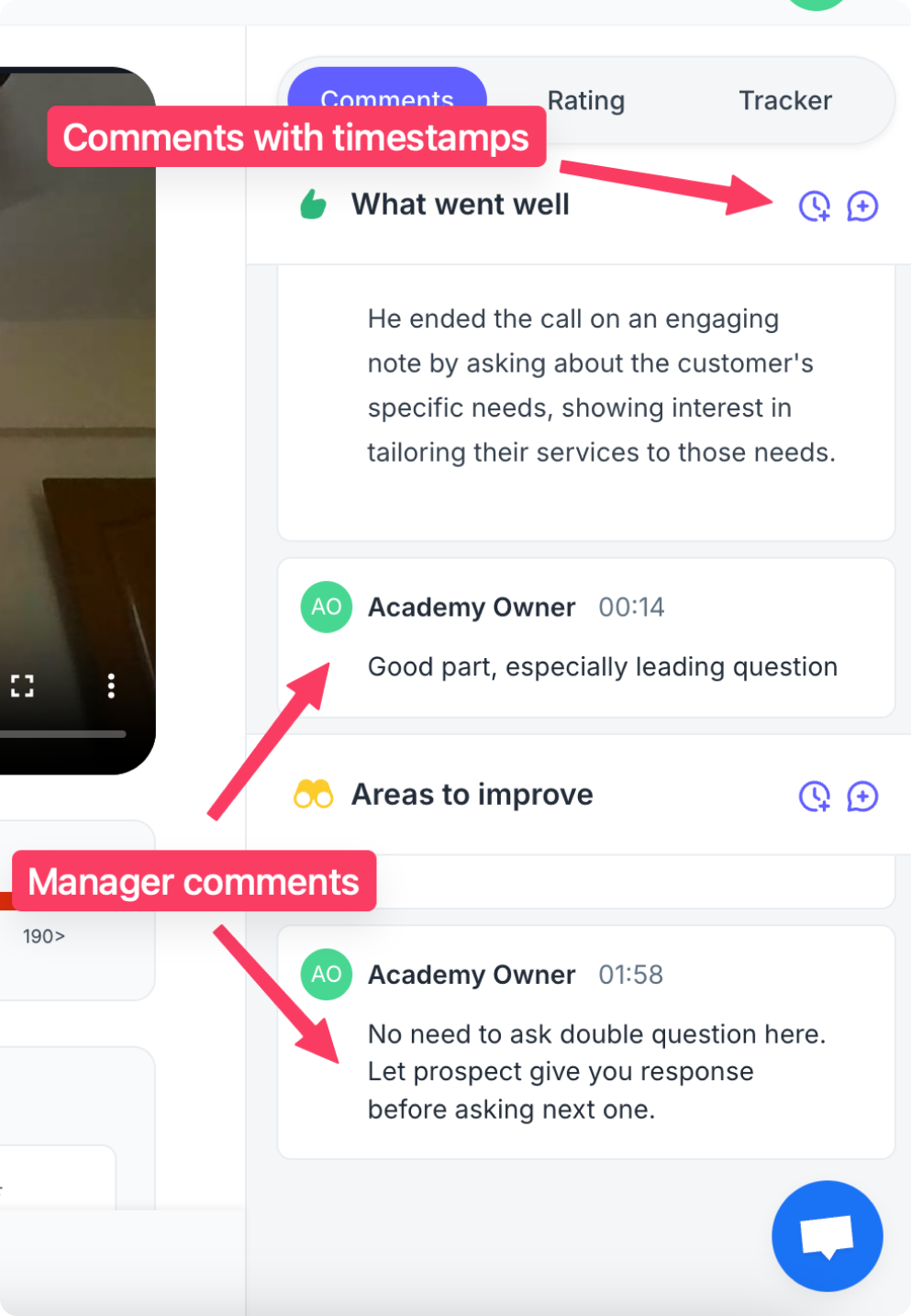
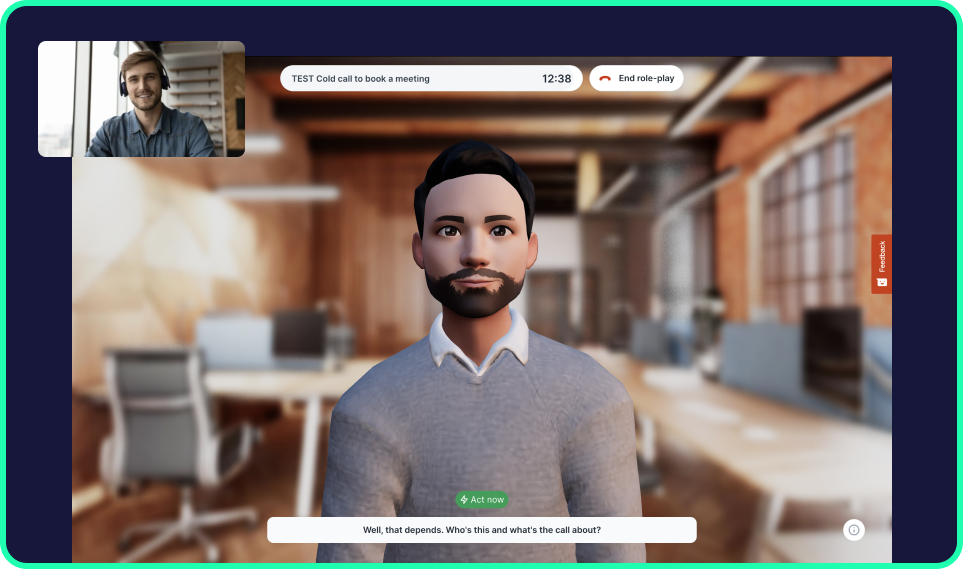
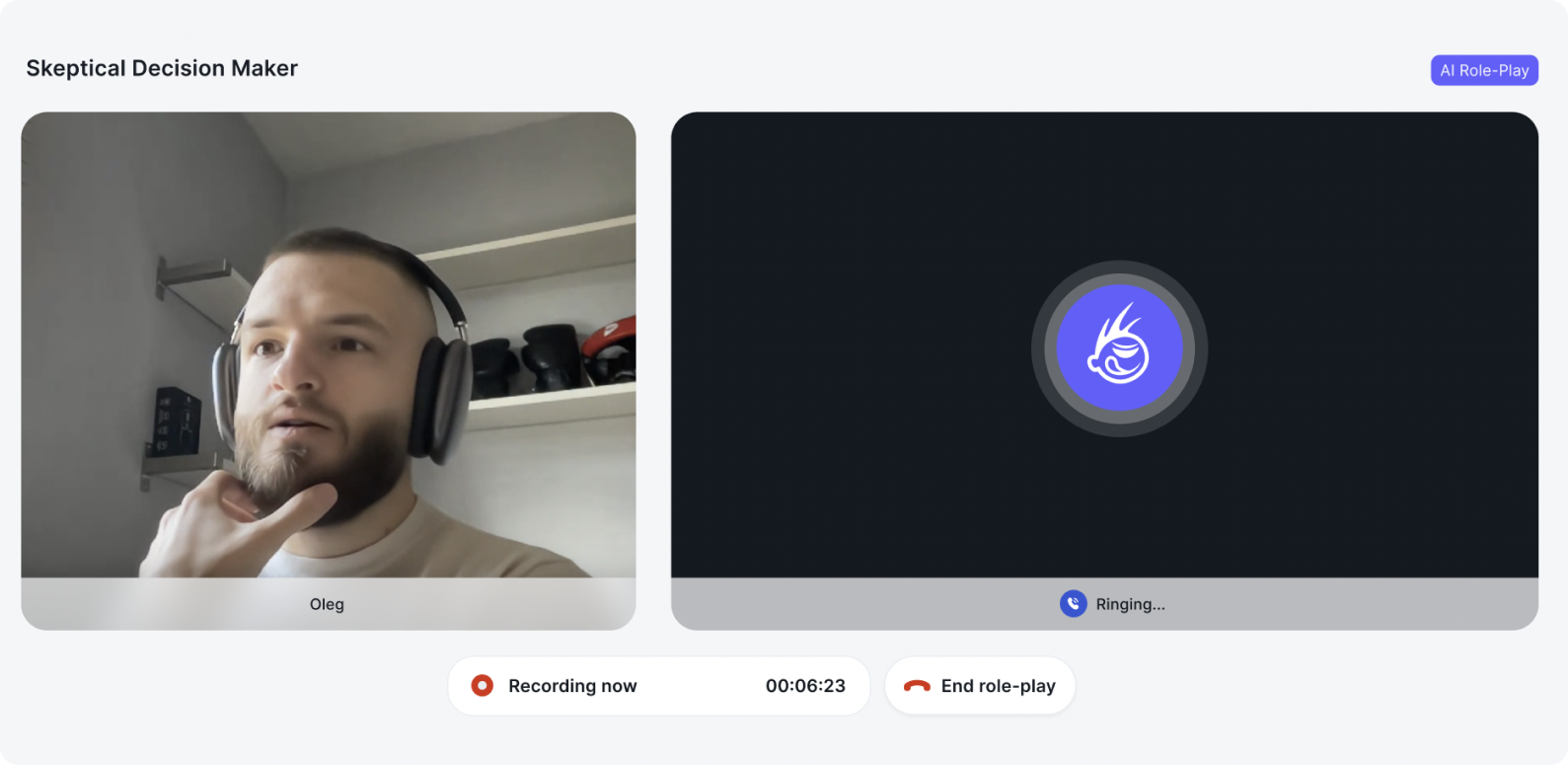
For objection handling, the format is gamified role-play. A rep holds a simulated conversation with an AI buyer that interrupts, pivots, and pushes back the way a real prospect would. After the call, a scorecard breaks down specific behaviors - did the rep isolate the objection, quantify the cost of the problem, reframe to value - and the rep reruns the same moment until the response is automatic.
With PitchMonster, the AI Coach goes one step further. Before the score appears, it asks the rep what they noticed and what they would change, so reps self-diagnose first. That Socratic reflection, available 24/7 after every session, is the mechanic that changes behavior, and it is the piece no leaderboard tool has. The points get reps to practice. The coaching is what makes the practice count.
Why gamified sales training works
Gamified sales training works because it fixes the feedback problem at the center of sales practice. Games give fast, clear signals: you act, you see the result, you go again. Ordinary training gives almost none of that. A rep sits through content, then waits days for feedback that often never comes.
Motivation is the visible part. A rep who watches a score climb across attempts has a reason to run the drill again, and repetition is what builds fluency under pressure. Push that further and you reach the real mechanism: spaced repetition. Hermann Ebbinghaus showed more than a century ago that people forget most of what they learn within days unless they revisit it. Short, frequent scored reps keep an objection response fresh in a way a single workshop cannot.
The quieter benefit is safe failure. Objection handling is uncomfortable to practice, because getting it wrong in front of a manager or a live buyer carries a cost. Strip that cost away, let a rep fumble a pricing objection in private and try again straight away, and practice volume climbs. Reps stop protecting their ego and start working the hard moment.
None of this rides on natural talent. It comes down to how many low-pressure reps someone gets before the call that counts, and whether the format makes them want to keep going.
Why objection handling is the skill to gamify
Objection handling is one of the hardest sales skills to build and one of the easiest to lose without practice. Most reps never get enough low-pressure reps at it. They refine the skill live, on calls where a stumble can cost the deal, which is the worst possible place to learn.
The skill also hides a trap. Handling an objection well is rarely about the rebuttal. A "we don't have budget" often means a missing internal champion. A "your timing is off" can be a competitor quietly working the account. Reading what sits under the words takes repetition against a buyer who does not go easy, and that is exactly what gamified role-play supplies.
There is a fluency gap on top of that. Knowing the right response and delivering it cleanly at the right moment are two different skills, and only the second one shows up on quota. A rep can recite the LAER steps in a workshop and still freeze when a CFO cuts in mid-sentence. Scored repetition against an AI buyer that interrupts is what closes the gap between knowing and doing.
It fixes the realism problem as well. When a peer plays the prospect, they tend to be too nice: no interruptions, no hard follow-ups, none of the edge a real decision-maker brings. Practice stays comfortable, so it never prepares anyone for the moment that counts.
How to gamify objection-handling role-play
You do not need a game studio to gamify objection handling. You need a repeatable loop: a clear target, a score, rising difficulty, and a reason to come back. Here is how to build it around role-play.
Start by picking one objection your team actually loses on. A price objection or a late-stage stall, say - choose the specific moment, not "objections" in general. A narrow target gives every rep the same thing to practice and the same thing to be scored on.
Next, turn it into a scored scenario. Write a short rubric of the behaviors that resolve that objection well: avoid discounting first, isolate the concern, quantify the cost of the problem, reframe to value, set a next step. Points go to the behavior, not to a polished-sounding line. This step is what keeps the game honest.
Then stage the difficulty. Run the objection at an easy setting first, where the buyer is cooperative, and raise it as the rep improves. PitchMonster ships four difficulty levels, including an Insane mode where the AI buyer interrupts early, stacks objections, and gives nothing away. Levels give reps somewhere to climb, which is most of what makes practice feel like a game.
Add challenge and progress you can see. A best score to beat, a weekly streak of completed reps, a visible climb through the difficulty levels - each gives a rep a reason to run one more attempt. Keep it light. The point is repetition, not a badge economy.
Finish every rep with review, not just a number. This is where PitchMonster's AI Coach comes in. It asks the rep what they noticed and what they would try next before the score lands, so the rep reasons through the miss instead of only reading it. That reflection is what turns a scored drill into a skill that transfers to the live call.
Game mechanics that build real skill
Every mechanic in a gamified program should point at one question: did this make the rep better at the objection? Four earn their place.
Start with scoring tied to behavior. A price-objection rubric might look like this:
Behavior | Points |
|---|---|
Did not offer a discount first | 20 |
Quantified the cost of the problem | 25 |
Asked an isolating question | 20 |
Reframed to value or ROI | 20 |
Advanced to the next step | 15 |
A rubric like this does double duty. It scores the attempt and shows the rep exactly where the gap sits, so the next run has a target.
Difficulty levels come next. A single setting gets boring fast and stops stretching the strong reps. Tiered difficulty, from a cooperative buyer up to one who interrupts, stacks objections, and refuses to be led, gives everyone somewhere to climb. PitchMonster's four levels, topped by Insane mode, mean a rep who aces the easy setting still has a wall to hit.
Then there are streaks and visible progress. A weekly streak of completed reps, or a chart of scores rising over a month, turns an abstract "practice more" into something a rep can watch move. Progress they can see is what pulls them back for the next session, and frequency is the whole game.
The last mechanic is speed of feedback. Role-play on Monday and hear back on Thursday, and the moment is gone. Gamified practice closes that loop to seconds. AI scoring checks the attempt against a framework like LAER - Listen, Acknowledge, Explore, Respond - and flags the step the rep skipped or the spot where they answered too fast. Fast, specific feedback is also what keeps reps coming back, which is the only way the reps add up.
A 90-day objection-handling program
A single scored drill helps. A sequenced program is what turns objection handling into a habit. The most effective setups pair two methods: standard drills introduce a framework, and gamified role-play supplies the repetition that turns the framework into muscle memory. Teach the model in a live session, then hand reps a scored scenario to grind it in.
A phased 90-day plan keeps reps from drowning. Start narrow, raise the difficulty as confidence builds, and tie each phase to the objections your team actually loses on.
Phase | Weeks | Focus | What reps drill |
|---|---|---|---|
1 | 1-2 | Price and budget | Avoid discounting first, quantify the cost of the problem, reframe to value |
2 | 3-4 | Stalls and delays | Surface the real reason for hesitation, isolate the objection, set a next step |
3 | 5-6 | Competitive objections | Hold value against a rival offer, handle "we're already using X" without trashing the competitor |
4 | 7-9 | Multi-stakeholder pushback | Manage conflicting priorities, equip a champion, keep the group moving |
5 | 10-12 | Mixed live-deal prep | Run blended scenarios pulled from current pipeline language at higher difficulty |
In a tool like PitchMonster, a manager sets the framework and the scoring rubric once, and reps practice on their own from there, with no live session to coordinate for every rep. Managers build each scenario from a real call recording, a product doc, or a website URL in about two minutes, so the buyer in week five sounds like the buyer your team met last Tuesday. That is what makes the repetition transfer to real calls.
What most teams get wrong about it
The concept is sound. Most failures come from setup, so it is worth naming the traps before you roll anything out.
Rewarding points instead of skill
The first trap is letting the score become the goal. When points reward a polished-sounding answer, reps learn to chase the number with rehearsed lines instead of working the objection. Credit diagnostic behavior instead: pausing, asking a clarifying question, isolating the real concern before responding. Strong objection handlers slow down right after a buyer pushes back, and that pause is active listening, not hesitation. It is why PitchMonster has reps reflect with the AI Coach before the score lands - the reflection rewards the thinking, not just the output. Building scenarios this way takes a deliberate approach, which we cover in how to create AI role-plays for sales training.
Overcomplicating the mechanics
The second trap is too much game. Stacked badges, tiers, and unlock trees pull attention away from the one thing that matters: practicing the objection. If a rep spends more time decoding the system than rehearsing, the point is lost. The best setups are boring in the right way - jump into a scenario, get feedback, try again, all inside a few minutes. The best sales role-play tools keep that loop short on purpose.
Ignoring psychological safety
The third trap is the public leaderboard. It looks motivating, but for a rep who is already struggling it can be a reason to stop trying. Private scoring or team-based goals create room to fail and retry without an audience. When reps can fumble a pricing objection in private and run it again, they keep practicing, and the reps are what build the skill.
Gamified role-play vs. standard sales drills
Both have a place. Standard drills are strong for onboarding and teaching a framework cold. Gamified role-play is strong for repetition and live-deal prep. The differences come down to who controls the session and how fast feedback arrives.
Dimension | Standard drills | Gamified role-play |
|---|---|---|
Scenario source | Manager's memory or a static playbook | Real call recordings, product docs, or live pipeline language |
Feedback speed | Delayed, waits on a manager review | Instant, scored after every attempt |
Scalability | Low, capped by human schedules | High, available on demand |
Engagement | Often passive, low participation | Higher, driven by scoring, levels, and self-competition |
Best use | Onboarding and foundational frameworks | Live-deal prep and ongoing skill refinement |
The biggest limit of standard drills is that they need a manager in the room. No manager, no practice, and reps meet real objections underprepared. Gamified role-play lets a rep practice whenever they need to, and it pulls scenarios from real buyer language rather than a manager's memory, so practice objections match pipeline objections. Run the two together: teach the framework live, then let reps grind it in scored scenarios until the response is automatic.
How AI role-play makes gamified training scalable
Gamification only helps if reps can actually get the reps. A manager-run program caps out fast, since there are only so many hours and every rep needs many attempts. AI role-play removes that ceiling. Reps practice on demand, at any hour, in 27+ languages, and every attempt is scored the same way against your rubric.
The AI Coach is what separates practice from a video game. After each session it works like a Socratic sales trainer, asking the rep what they noticed and what they would change before showing the score. Reps self-diagnose first, which is where the learning actually happens. No leaderboard tool on the market does this, and it is the reason teams treat PitchMonster as a coaching layer rather than a scoreboard.
Voice realism carries the rest. The AI buyer uses natural pacing and filler words and raises context-aware objections, so a rep who has run the drill ten times walks into the real call having already heard the pushback. Practice that sounds real is the only practice that transfers.
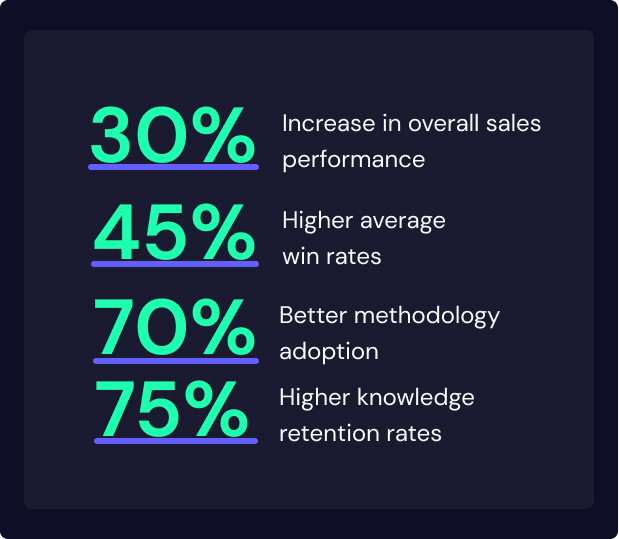
The numbers back the loop. In the Mentor Group case study, teams that built this practice habit with PitchMonster saw a 30% faster ramp, a 28% higher win rate, a 37% lift in performance, and 2x more opportunities booked. PitchMonster has trained more than 300,000 reps, holds a 4.9 out of 5 rating on G2, and has kept 100% enterprise renewal since spring 2024.
Want a gamified objection-handling program tuned to your product and your buyers? Book a demo to see it scored against your own playbook, or explore PitchMonster for sales enablement. Sales leaders sizing a rollout can check pricing or the sales-leaders solution.
Why standard training loses reps
Most objection-handling training follows a familiar shape: a workshop, a deck, maybe a cheat sheet of canned responses. Reps absorb what they can and return to the day job, and much of the material fades within the week. The deeper issue is not retention, though. The format teaches reps what to say without giving them the reps to say it under pressure.
Generic scenarios make it worse. A rep about to discuss pricing with a CFO at a mid-market SaaS company needs practice tuned to that exact moment, not a one-size script. Without context, the training never connects to the calls reps actually take, and engagement drops. Add peer role-play that stays too soft, and consistent objection practice becomes rare. That gap is the opening gamified role-play is built to close: relevant scenarios, real pushback, and a loop short enough that reps keep using it.
For ready-made situations to drill - discovery, price pushback, last-minute objections, and more - see our 12 sales role-play scenarios with scripts. To go deeper on the practice habit itself, the guide to mastering sales role-play training covers how to make it stick.
FAQ
What is gamified sales training?
Gamified sales training applies game mechanics - scoring, difficulty levels, instant feedback, and progress tracking - to sales practice, so reps stay engaged and repeat the hard moments more often. For objection handling, it usually means scored role-play against an AI buyer that pushes back, with points tied to the right behaviors rather than to finishing the exercise.
How is gamified role-play different from traditional sales role-play?
Traditional role-play relies on a peer or manager playing the buyer, which tends to stay too comfortable and depends on someone being free. Gamified role-play runs against an AI buyer that interrupts and objects, scores every attempt the same way, and gives feedback in seconds. Reps can repeat one objection ten times in an afternoon instead of waiting for the next session.
Does gamification actually improve objection handling?
Gamification helps mainly by raising practice frequency and tightening the feedback loop, which is what objection handling needs. The risk is rewarding points over skill. It works when scoring credits diagnostic behavior - pausing, asking an isolating question, quantifying the cost of the problem - instead of just a correct-sounding rebuttal.
How often should reps practice gamified role-play?
Short and frequent beats long and rare. A weekly cadence of brief, targeted sessions of five to fifteen minutes keeps skills sharp without pulling reps off the floor. On-demand AI practice lets a rep drill a specific objection right before a call, so the repetition lands when it matters most.
What should an objection-handling scorecard measure?
Score observable behaviors, not vibes: did the rep avoid discounting first, isolate the objection, quantify the cost of the problem, reframe to value, and advance to a next step. Tailor the rubric to the call type, since a cold call and a late-stage demo reward different moves. Consistent scoring is what surfaces real skill gaps.
What are some sales gamification ideas for objection handling?
Keep the ideas simple and tied to practice. Score specific behaviors instead of finishing the drill, stage difficulty from a cooperative buyer up to a hostile one, set a personal best score to beat, and track a weekly streak of completed reps. Skip elaborate badge trees - the goal is more repetition on the objections you lose deals to, not a points economy.
Do you need special software for gamified sales training?
For dashboards and contest leaderboards, CRM-based tools work. For objection handling you need scored role-play, which means an AI buyer that pushes back plus a rubric that grades behavior and returns instant feedback. A platform like PitchMonster runs that loop on demand and adds an AI Coach that has reps reflect before the score, so practice builds skill rather than just tracking activity.