An objection handling role-play is a practice conversation where one person plays a buyer who pushes back on price, timing, or a competitor while the rep rehearses a response in a low-risk setting. A coach or an AI buyer raises the objection, the rep works through it, and both debrief on what to change before the next real call.
This guide is the tactics-and-scripts layer. It covers the four moves to drill in every session, the frameworks buyers ask about, word-for-word scripts for the six objections that decide deals, how to match scenarios to SDR, AE, and CSM roles, and a 90-day plan to build the habit. For the numbers side of the same skill, see how to measure objection handling success. For the mindset side, see how to build confidence in objection handling. For the full scenario library, see our 12 sales role-play scenarios.
These strategies sit inside a wider skill. Our objection handling guide covers what an objection signals, the metrics that show progress, and how to practise the hard ones.
What is an objection handling role-play?
An objection handling role-play is a structured practice conversation that recreates a moment of buyer pushback so a rep can rehearse a response before facing a live prospect. One person plays the buyer with a persona, a goal, and a specific objection. The other plays the rep and works toward a clear outcome, usually advancing the deal without caving on price.
The format is old and it works. What changed is who plays the buyer and how the session gets scored. A coach can run it across a desk, or an AI buyer can run it on demand and score every attempt against the same rubric. Either way, the point is the same: give reps reps, in the exact spots where deals stall.
Most reps stumble on objections not because they lack product knowledge, but because they have not practiced under pressure. Knowing the answer in a quiet room is different from delivering it when a buyer is pushing back and the deal is on the line. That gap between knowing and doing is what an objection handling role-play closes.
Four tactics to drill in every session
Good objection handling is not one skill. It is a short sequence of moves, and each one is worth isolating in practice. Drill them separately first, then string them together in a full objection handling role-play.
Isolate the real objection
A buyer's stated concern often hides the real one. "It's too expensive" can mean the budget is genuinely tight, or it can mean the rep has not yet shown enough value to justify the number. Jumping straight to a rebuttal answers the wrong question.
The isolating question slows the rep down and surfaces what is actually blocking the deal. In a session, a rep might ask, "If we could solve this concern, would you feel ready to move forward?" A yes means the objection is real and worth addressing. A wandering answer means there is a deeper issue to find. Reps who get good at this stop wasting time on objections that were never the point.
Pause and acknowledge
The simplest move after hearing an objection is to stop talking. It feels unnatural, which is exactly why it is worth rehearsing. A short pause signals that the rep is listening rather than waiting for a turn to speak, and it often prompts the buyer to keep going and reveal more.
In role-play, reps practice holding that silence instead of filling it. A buyer's first objection is usually a surface reaction. Give them room and the real concern tends to surface on its own. Once the rep acknowledges what they heard, the conversation can move somewhere useful.
Reframe value against the buyer's goals
Once the real objection is on the table, the job is to tie the response to what the buyer said they cared about. This is not dismissing the concern. It is connecting the answer to their stated priority. If a buyer raises budget after saying they want to lift win rates, a rep might say, "You mentioned wanting to improve win rates. Here is how this maps directly to that pipeline." Reframing keeps the conversation anchored to outcomes the buyer already named, instead of an abstract feature debate.
Ask clarifying questions with LAER
Clarifying questions are how reps get from the surface objection to the root cause, and they improve fast with practice. The LAER model gives the sequence a structure: Listen, Acknowledge, Explore, Respond. The Explore step is where clarifying questions live, and it is the step most reps skip.
In a session, reps practice questions like "Can you tell me more about why that is a concern?" or "On a scale of one to ten, how well does your current setup handle this?" The answers do two things at once. They uncover the real issue, and they keep the exchange feeling like a conversation rather than a rebuttal contest.

The objection-handling frameworks reps ask about
Reps and managers search for the named frameworks, so it helps to know what each one means before you build a drill around it. They are memory aids, not magic. Pick one, make it the standard for your team, and rehearse it until the steps are automatic.
The 5 steps of objection handling
A common five-step version runs Listen, Acknowledge, Clarify, Respond, and Confirm. It is the LAER model with one addition: a final check that the answer actually landed. The rep listens without interrupting, acknowledges the concern, clarifies the root cause with questions, responds with evidence tied to the buyer's goals, then confirms with a simple "Does that address it?" before moving on. That last step is the one most reps rush.
The 4 P's of objection handling
The version most trainers teach is Pause, Probe, Provide, and Prove. The rep pauses instead of reacting, probes to find the real concern, provides a response tied to the buyer's goal, then proves it with evidence or a relevant example. A second version, Personalization, Perceived value, Performance value, and Proof, describes what you communicate rather than the steps you follow. Either works as a drill checklist.
The 3 F's: Feel, Felt, Found
Feel, Felt, Found is a classic acknowledgment pattern: "I understand how you feel. Others felt the same way. Here is what they found once they started." Used well, it shows empathy and adds social proof in one line. Used lazily, it sounds scripted, so role-play is where reps learn to make it land naturally instead of reciting it word for word.
The 3-3-3 rule and the three golden rules
In objection handling, the 3-3-3 rule is a learning habit: take three minutes after a call to write three observations, then review those notes every three objections or every three days to spot patterns. As for the three golden rules, there is no single official list, but three principles show up in every solid framework: do not interrupt the objection, acknowledge before you answer, and never argue. Role-play is where those principles stop being posters on a wall and become habits.
Match scenarios to the role: SDR, AE, CSM
The same objection lands differently depending on where a rep sits in the cycle. An SDR meets resistance before any value has been shown. An AE handles it mid-deal with budget and competitors in play. A CSM faces it at renewal, when the relationship is already on the line. Generic drills miss this. Tailor the scenario to the role, and the practice transfers to real calls.
Role | Stage of the relationship | Objections to drill | What a strong response looks like |
|---|---|---|---|
SDR | Cold outreach, first contact | "Not interested," "We already use a competitor," "Send me an email" | Earns thirty more seconds, asks one sharp question, and books a next step instead of pitching |
AE | Active deal, evaluation to close | "It's too expensive," "Your competitor does X," "Let me think about it" | Isolates the real blocker, reframes against stated goals, and advances to a concrete next action |
CSM | Renewal and expansion | "We're not seeing the value," "Budget got cut," "We're considering switching" | Reconnects to outcomes delivered, surfaces the real risk early, and protects the account before it churns |
Pull the objection language straight from your own deals. Lost-deal notes, call recordings, and CRM comments hold the exact phrasing buyers use, which makes the role-play feel real instead of generic.
Which objections to practice first (with scripts)
Not every objection carries the same weight. Some end deals; others just slow them down. Start reps on the high-frequency, high-impact ones, then build toward the rare curveballs. Each script below is a short skeleton, not a word-for-word rule. Rehearse the shape, then let reps make the lines their own.
Price objections
Price is the objection reps hear most, and it is rarely about the number alone. The real issue is usually that value has not been tied to a measurable return yet. Practice should train reps out of the reflex to discount. The first response to a price objection should be a question or a value statement, never a concession.
Buyer: "Honestly, your price is higher than we planned to spend." Rep: "Appreciate you being direct. Before we talk numbers, can I ask, if price were not the issue, would this be the right fit for your team?" Buyer: "Probably, yeah." Rep: "Good. Then the question is value, not budget. You said win rate was the goal, so let me show what teams your size usually recover in the first two quarters, and we can put that next to the spend."
The isolating question tells the rep fast whether the blocker is budget or something else. If the answer wanders, the price was never the real problem.
Competitor comparisons
When a buyer raises a competitor, the instinct is to get defensive or rattle off features. Neither works. The better move is to steer toward gaps in the buyer's current experience. The scale question is worth drilling here, because it opens a door without attacking the incumbent.
Buyer: "We already use [Competitor] and it's fine." Rep: "That's fair, and I'm not here to talk you out of a tool you chose. On a scale of one to ten, how would you rate it today?" Buyer: "Maybe a seven." Rep: "What would make it a ten?" Buyer: "The reporting is thin, and onboarding took forever." Rep: "Those are the two reasons teams move to us. Can I show you how we handle reporting in about five minutes?"
Role-play helps reps ask the scale question calmly, then listen for the gap instead of pouncing on it.
Timing and urgency stalls
Stalls hide the deeper problems. "Let me think about it" and "not a priority right now" usually mean the cost of waiting is not clear, or the buyer is avoiding a decision. Sessions should train reps to quantify the cost of inaction without piling on pressure.
Buyer: "Let me think about it and circle back next quarter." Rep: "Of course. So I use your time well, is it the fit you're weighing, the rollout, or the budget timing?" Buyer: "Mostly rollout. We're slammed right now." Rep: "Understood. If we phased the rollout so it did not add to your team's load, would a smaller start this quarter beat waiting three months to begin from scratch?"
The table below gives reps a pivot to rehearse for each of the common stalls.
Stall | What it often means | A pivot to practice |
|---|---|---|
"Let me think about it" | Avoiding a decision | "Is there something specific you are weighing: fit, pricing, or rollout?" |
"Not a priority right now" | Buried under other projects | "Is your top priority tied to revenue? This maps directly to that." |
"Send me some information" | Pain is not sharp enough yet | "Happy to. Before I do, what would you need to see to feel this is worth your time?" |
Authority: "I'm not the decision maker"
When a buyer points to someone above them, the goal is not to go over their head. It is to turn them into an internal champion who can sell the idea when you are not in the room.
Buyer: "I'd have to run this by my VP anyway." Rep: "Makes sense, most decisions like this involve a few people. What does your VP care about most when they look at something like this?" Buyer: "Cost, and whether the team will actually use it." Rep: "Then let's build the case around those two. Would a short summary you can forward help, and would it be useful if I joined the call to answer questions directly?"
Need: "We're fine with what we have"
A no-need objection is often complacency, not a closed door. The move is to find one area the buyer would quietly like to improve, without implying they are doing it wrong today.
Buyer: "We're fine with how we do this today." Rep: "Good to hear. Out of curiosity, if 'fine' became 'noticeably better' in one area, what would you want it to be?" Buyer: "I guess ramp time for new reps." Rep: "That's exactly where teams like yours see the fastest change. Can I show you what that looked like for a team about your size?"
The brush-off: "Not interested" or "Just send info"
This one shows up most for SDRs on cold outreach. The aim is to earn thirty more seconds by being useful, not to push through the no.
Buyer: "Not interested, just send me some info." Rep: "Happy to send something useful instead of generic. So I send the right thing, what's the one problem worth solving for your team this quarter?" Buyer: "Reps ramp too slowly." Rep: "Then I'll send the ramp-time piece, not the brochure. If it lands, worth fifteen minutes next week?"
Close on these three first and reps will handle most of what stops a deal. The rare curveballs are worth drilling too, but only once the common ones are automatic.
A reusable objection handling role-play script template
Once reps have seen a few scripts, give them a template so managers can build a new drill in minutes. A good objection handling role-play script has five parts. Fill each one and you have a scenario a rep can run today, or an AI buyer can run on demand.
- Start with the persona: who the buyer is, their role, seniority, industry, and mood, such as a skeptical VP of Sales at a 200-person SaaS company who is short on time.
- Add the trigger objection, the one line the buyer opens with, pulled from a real lost deal: "We looked at tools like this last year and nobody used them."
- Define the rep's first move, the tactic under test, whether that is isolate, pause and acknowledge, reframe, or a scale question. Name it so the debrief has something to grade.
- Script the escalation, or how the buyer pushes back when the first answer is weak. If the rep discounts, the buyer asks for more. That is what turns a script into a real test.
- End on a debrief prompt, the single question that closes the session: "What would you change about your first response, and why?"
Keep the whole thing to half a page. A script that reads like a novel never gets used. Store the good ones in a shared library so a new hire in month one runs the same certified scenarios as your top closer.
A 90-day objection-handling practice plan
Repetition is what makes the skill stick. Without it, most of what reps learn in a workshop fades within a week. A 90-day plan turns one-off sessions into a build, moving from single objections to full, unscripted calls. Reps generally need ten to fifteen repetitions of a scenario before it feels natural, with noticeable gains showing up inside two to four weeks.
Phase | Weeks | Focus | Format | What good looks like |
|---|---|---|---|---|
Foundations | 1 to 4 | One objection type per week: price, then competitor, then timing | Short solo drills, single objection, fixed rubric | Rep delivers the core tactic without freezing or discounting on the first move |
Combinations | 5 to 8 | Two to three objections in one call; add the isolating and scale questions | Paired role-play, seller and buyer rotate | Rep isolates the real blocker and reframes to value under mild pressure |
Live pressure | 9 to 12 | Full unscripted calls; buyer stacks objections and pushes back hard | Manager-observed or AI buyer on a harder difficulty | Rep handles the full flow, holds composure, and advances to a clear next step |
Run the plan as short, frequent reps rather than one long block. A fifteen-minute drill twice a week beats a half-day workshop nobody remembers by Friday. Score each session the same way so progress is measurable, and pull the objection language from real lost deals so the practice never drifts into the abstract.
Mistakes role-play fixes fast
Role-play is not only for rehearsing the right moves. It surfaces the habits that quietly kill deals, in a place where a misstep costs nothing.
Talking over the buyer
Many reps jump in within a few seconds and cut the buyer off. High performers wait. Role-play trains reps to hold a strategic pause and let the buyer finish, which often surfaces the real concern behind the first objection. Drilling the Listen step of LAER builds the habit until silence stops feeling awkward.
Generic or defensive responses
Canned answers are easy to spot, and they read as scripted. A defensive reply signals the rep cares more about the close than the concern, and trust drops. Role-play pushes reps to build specific, value-tied responses instead of reaching for "Let me check on that" or "I'll send more information." The fix is rehearsing real answers to real objections until the specific response is the default.
Rushing the close
Quota pressure tempts reps to push for the close before the buyer's concerns are settled. Buyers who feel rushed pull back. Role-play lets reps practice the full arc of an objection, not just the rebuttal, so they learn to slow down, probe the root, answer with evidence, and check back with a simple "Does that address it?" before moving on.
How to run these drills: solo, with a peer, or with AI
Manual role-play works, but it has a ceiling. A manager can only sit in on so many sessions, and feedback shifts from one coach to the next. That is why most teams cap practice at a few rounds a quarter, well short of the ten to fifteen reps a scenario actually needs. Here is how the four common ways to practice compare.
Way to practice | Availability | Feedback consistency | Realistic reps per week | Best for |
|---|---|---|---|---|
Solo, mirror or recording | Anytime | None, self-judged | Many, low quality | First read-throughs of a new script |
With a peer | Scheduled | Varies by peer | One or two | Feeling the objection from both sides |
With a manager or coach | Manager's calendar | High but scarce | A few per quarter | Certifying readiness on hard cases |
With AI, on demand | 24/7 | Same rubric every time | Ten to fifteen or more | Volume reps plus instant scored feedback |
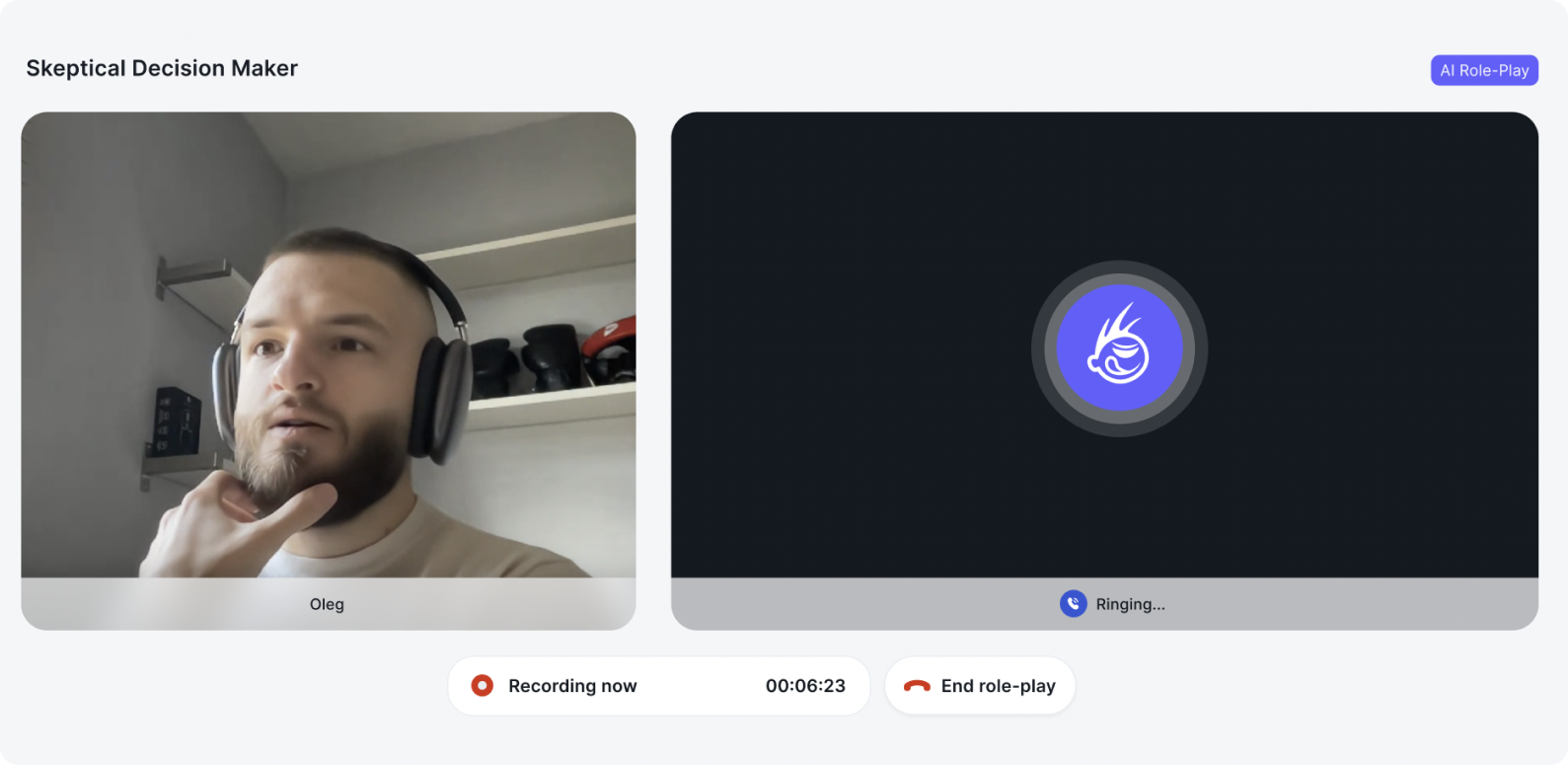
AI sales role-play lifts the ceiling. With PitchMonster, reps practice any objection on demand, and the AI buyer pushes back like a real prospect: if a response is weak, the difficulty climbs. Managers can build a scenario from a call recording, a competitor name, or product docs in about two minutes, then assign it to the whole team. Every session is scored against the same playbook, so feedback stays consistent whether a rep runs it on a Tuesday morning or a Friday night.
See the objection handling training page for how those drills, levels, and scorecards run in PitchMonster.
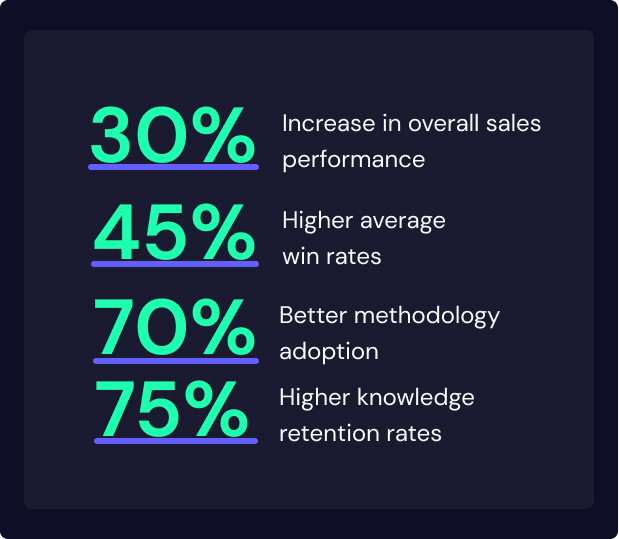
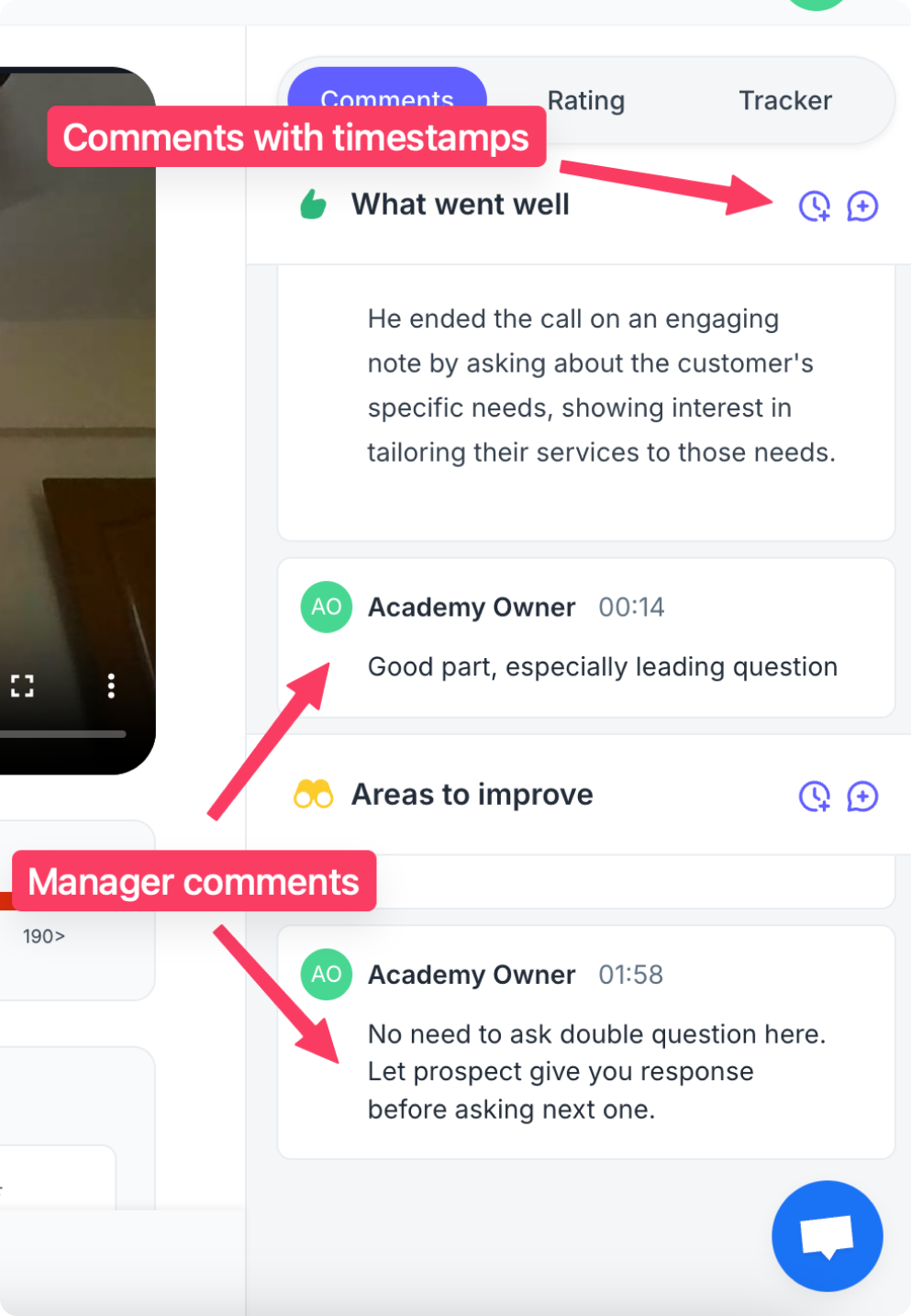
What sets the loop apart is what happens after the session. The AI Coach asks the rep what they noticed and what they would change before showing any score, so reps self-diagnose first instead of waiting on a manager. No competitor offers that Socratic post-session coach, and it is where the real change happens: reps who reach the answer themselves keep it. Teams running this loop have seen 37% higher performance, 30% faster ramp, a 28% lift in win rate, and 2x more opportunities booked (Mentor Group case study).
The proof shows up in retention, not just early wins. PitchMonster has held a 100% enterprise renewal rate since spring 2024, has trained more than 300,000 reps, and holds a 4.9 out of 5 rating on G2. To pair these tactics with the way you measure them, read our guide on objection handling metrics.
Want these drills tailored to your product and your buyers? Book a demo and we will build your first objection-handling library with you, or see pricing for a quote sized to your team.
FAQ
What is an objection handling role-play?
An objection handling role-play is a practice conversation where one person plays a buyer who pushes back on price, timing, or a competitor, and the rep rehearses a response in a low-risk setting. A coach or an AI buyer raises the objection, the rep works through it, and the two debrief on what to change before the next real call.
How do you run an objection handling role-play?
Pick one objection and one tactic, brief the buyer on the persona and the pushback, set what a good response looks like, run the exchange for five to ten minutes, then debrief. Rotate seller and buyer roles so reps feel the objection from both sides, and score against a fixed rubric so feedback stays consistent.
What is the LAER model in objection handling?
LAER stands for Listen, Acknowledge, Explore, Respond. The rep listens to the full objection without interrupting, acknowledges the concern, explores the root cause with clarifying questions, then responds with evidence tied to the buyer's goals. The Explore step is where most reps fall short, which makes it the part worth drilling in role-play.
How often should a team role-play objections?
Short, frequent sessions beat occasional long ones. Many teams run a weekly or twice-weekly drill of fifteen to twenty minutes on one objection type. Reps usually need ten to fifteen repetitions of a single scenario before the response feels natural, so spacing reps across weeks works better than one marathon workshop.
How is AI objection handling role-play different from manual role-play?
AI role-play runs on demand and scores every rep against the same playbook, so practice no longer waits on a manager's calendar. A rep can repeat the same price objection ten times in an afternoon, get instant feedback on each attempt, and only loop in a coach once the response holds up. PitchMonster adds a Socratic AI Coach that has the rep self-diagnose before seeing any score.
What are the 5 steps of objection handling?
A common five-step version runs Listen, Acknowledge, Clarify, Respond, and Confirm. It is the LAER model with a final check that the answer landed before you move on. Listen without interrupting, acknowledge the concern, clarify the root cause with questions, respond with evidence tied to their goals, then confirm with a simple "Does that address it?"
What are the 4 P's of objection handling?
The version most trainers teach is Pause, Probe, Provide, and Prove. Pause instead of reacting, probe to find the real concern, provide a response tied to the buyer's goal, then prove it with evidence. A second version, Personalization, Perceived value, Performance value, and Proof, focuses on what you communicate rather than the steps you follow.
What is the 3-3-3 rule in sales?
In objection handling, the 3-3-3 rule is a learning habit: take three minutes after a call to note three observations, then review those notes every three objections or every three days to spot patterns. A separate 3-3-3 rule describes a follow-up cadence of three calls, three emails, and three social touches over three weeks.