Closing sales training teaches reps to move a prospect from interest to a signed decision in the final stage of the sales process. It covers reading buying signals, handling late-stage objections like price or internal approval, and re-engaging stalled deals before they leak out of the pipeline. The five programs below take different paths to that goal, and each one ends with a clear best-for verdict.
Most teams already know the closing techniques. What they lack is a way to practice them often enough that reps do not freeze when a real buyer pushes back. This guide compares the five best closing sales training programs for reps in 2026, walks through the core closing techniques and what a strong program should include, then helps you match one tool to the gap your team actually has.
The 5 programs at a glance
Five tools, five different bets on how reps get closing reps. PitchMonster, Hyperbound, Yoodli, and Second Nature center on AI role-play, where reps rehearse live conversations and get instant feedback. Mindtickle takes a readiness-platform approach, pairing guided learning paths with real-call analysis. The table compares closing focus, feedback, pricing fit, and a best-for verdict so you can scan the field first.
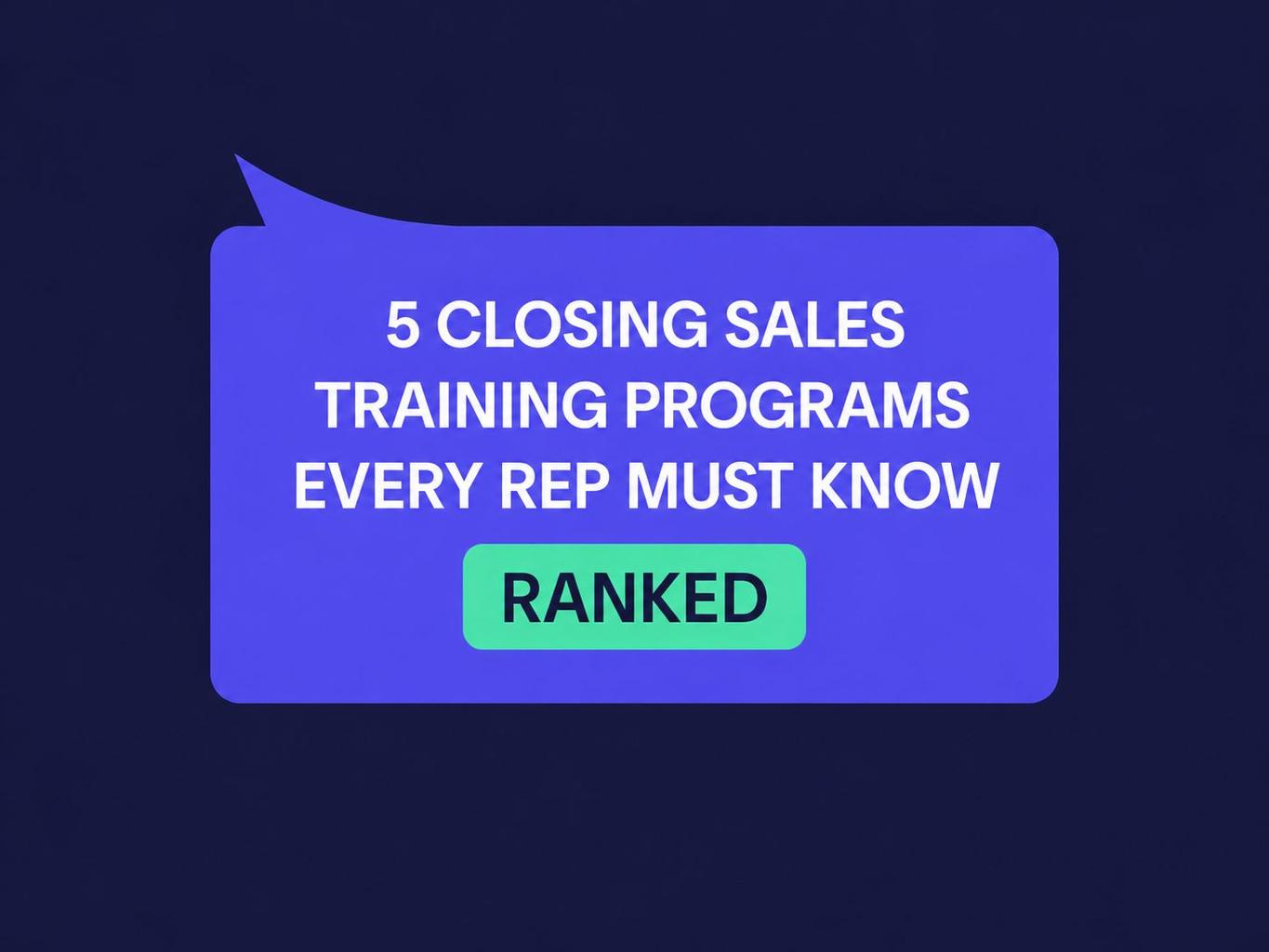
Program | Best for | Closing focus | Feedback | Pricing fit |
|---|---|---|---|---|
PitchMonster | AI practice plus a real coaching layer, EU data residency | Objection handling and close, built from your ICP | Real-time scoring plus a Socratic AI Coach after each session | SMB to enterprise (quote-only, pricing) |
Hyperbound | Reps drilling buyer-signal recognition in self-serve practice | Buyer signals and named closing frameworks | Instant AI analysis of the role-play | Mid-market to enterprise |
Yoodli | Improving delivery, pacing, and filler words | Communication during the close, not deal mechanics | Real-time speech coaching | SMB to mid-market (free tier available) |
Second Nature | Large teams needing consistent simulation practice | Conversational practice with a scripted AI persona | Automated scoring against a rubric | Mid-market to enterprise (~$30-$40 per user/mo, per vendor) |
Mindtickle | Enterprises standardizing methodology and call review | Methodology adherence plus real-call analysis | AI insights combined with manager review | Enterprise |
Pricing fit shows the company size each tool serves best. Most vendors quote per seat on request, so match the "best for" to your team's gap first, then confirm current pricing with each vendor. The full write-up on each program follows below.
What is closing sales training?
Closing sales training equips reps with the language, timing, and tactics to secure a deal in a way that feels natural rather than pushy. It teaches them to spot buying signals, address last-minute objections like pricing concerns or internal approval delays, and steer the conversation toward a decision with confidence.
The aim is not to pressure a prospect into a premature "yes." It is to recognize when a buyer has already made the decision and help them confirm it. Reps learn techniques such as the assumptive close, where next steps are presented as already agreed, and the summary close, which recaps the value discussed before asking for the commitment. They also practice reading the verbal and nonverbal cues that signal a prospect is ready to move.
Good training shifts from theory to repetition. The strongest programs build in role-play, simulations, and scenarios drawn from real deals, so reps rehearse objection handling and delivery before they ever face a live prospect. For a library of practice situations, see our 12 sales role-play scenarios.
The main sales closing techniques
Reps rarely lose deals because they do not know a closing technique. They lose because they pick the wrong one, or reach for it at the wrong moment. A closing program should teach the handful of techniques below, then drill when each one fits, since the timing is the skill.
Closing technique | How it works | When to use it |
|---|---|---|
Assumptive close | Talk about next steps as if the decision is already made | The buyer has shown strong signals and just needs a nudge |
Summary close | Recap the value and fit before you ask for the commitment | Complex deals where the buyer needs the pieces tied together |
Question close | Ask what would need to be true for them to move forward | You sense hesitation and want to surface the real blocker |
Sharp-angle close | Turn a buyer request into a commitment ("if I can do that, are we set?") | The buyer asks for a concession or a specific term |
Urgency close | Point to a real deadline or a consequence of waiting | There is a genuine reason to act now, not a fake one |
Soft close | Test the water with a low-pressure question before the ask | Early or cautious buyers who resist a hard push |
The list is short on purpose. A rep who can run three of these cleanly, and read which one a moment calls for, closes more than a rep who memorized ten and freezes choosing. That is why the training that works is built around practice, not a longer glossary.
Why most closing training fails
Most closing training fails for one reason: teams treat it as an event instead of a habit. A rep sits through a workshop, nods along, and is back to old patterns within weeks. Without repeated practice on realistic scenarios, even a strong closing framework stays theoretical and collapses the moment a buyer pushes back.
Skipping role-play makes it worse. Manual role-play depends on a manager being free, so it rarely happens at scale. Reps understand the assumptive close in a slide deck, then go quiet when a CFO questions the ROI timeline on a live call. The technique was never drilled under pressure, so it does not surface when it counts.
Feedback is the third weak spot. When role-plays do happen, the feedback tends to be subjective and shifts from one coach to the next. Peer practice leans on generic scenarios that miss the specific objections a team loses deals to, and subtle habits, like a rep filling the silence right after asking for the deal, go uncorrected.
The cost shows up as stalled deals. A deal stalls when a rep misses a buying signal or leaves an objection unaddressed, and it quietly leaks out of the pipeline weeks later. Training that only covers theory never teaches a rep to spot the stall and re-open it. The fix is a tighter loop: frequent, realistic practice with objective feedback, built from the objections your reps actually hear. That is the lens to read the five programs through. Teams that ran this loop with PitchMonster saw 37% higher performance and 30% faster ramp (Mentor Group case study).
Catching those moments is what sales QA and deal assessment is for: managers score real deals and calls against one rubric before the quarter gets away.
What a strong closing sales training program includes
The best closing programs share the same backbone, whatever tool delivers them. If you are building or buying one, these are the parts that decide whether close rates actually move. Judge any program on how well it covers all five, not on the length of its feature list.
- A closing framework reps can name. A shared language for the techniques above, so coaching is consistent and every rep knows which close fits which moment.
- An objection library from your real deals. The specific pushbacks your team loses on, not generic scripts, so practice targets the moments that cost you revenue.
- Realistic practice against those objections. Role-play or simulation where a buyer pushes back and the rep has to respond live, because reading about a close does not build the reflex.
- Objective, repeatable feedback. Scoring against the same criteria every time, so a "good closing call" means the same thing across reps and new hires.
- A reinforcement cadence. Short, frequent practice on a schedule, since a one-off workshop fades within weeks and reinforcement is what makes the skill stick.
The programs below are different answers to the same question: how do you make reps practice the closing moments they lose deals on, often, with feedback they can act on. Read each one against that backbone.
1. PitchMonster
Best for: teams that want reps to practice realistic closing conversations and get coached, not just complete a course.
PitchMonster is an AI sales role-play platform. Reps rehearse the closing moments they fumble - pricing pushback, approval delays, competitor comparisons, stalled deals - against AI buyers that adapt and object like your real ICP, then get scored against your own playbook. Managers get the skill-gap data to coach at scale, without hiring more trainers or burning real pipeline on unready reps. It fits SMBs through enterprises running consultative, B2B motions.
What makes it different for closing work is the coaching. Most tools on this list serve content or report a score. PitchMonster runs the full loop: realistic practice, a Socratic AI Coach that helps the rep self-diagnose, and analytics a leader can act on. It is also the only European-based platform among the leaders, which matters for GDPR alignment and EU data residency. The five subsections below cover how that plays out feature by feature.
Closing role-plays built from your own material
Effective closing practice depends on scenarios that mirror your real late-stage calls. PitchMonster lets your team run tailored simulations, either from a template library or from scratch. Reps rehearse the objection-heavy negotiation, the discount request, and the "let me check with my boss" stall in settings that closely replicate the real thing.
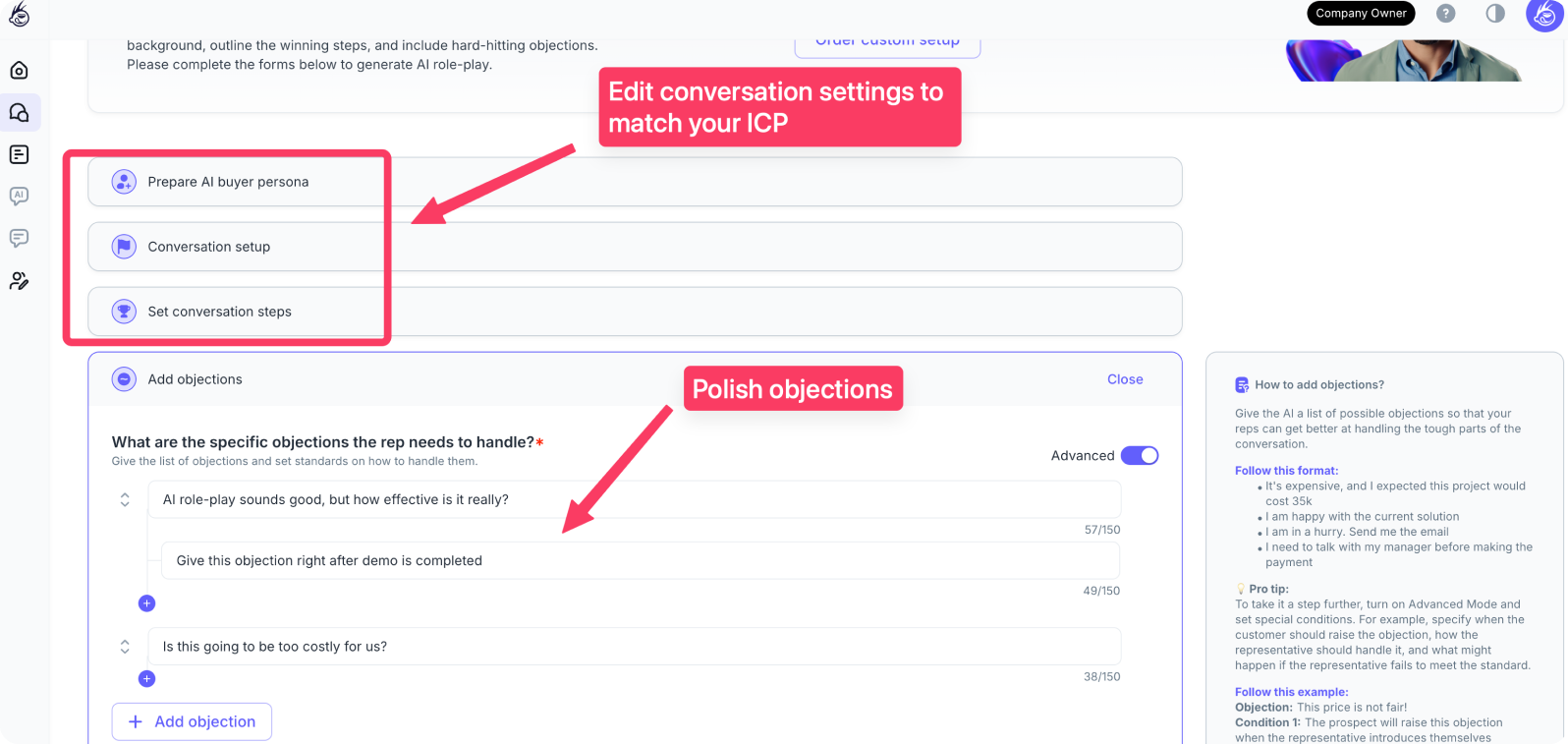
A manager can build a closing scenario from a call recording, product docs, or a website URL in about two minutes. There are four difficulty levels, up to and including Insane, plus 40+ customization parameters and support for 27+ languages. A new hire can start against a buyer who engages easily, while a senior rep takes on a hostile, late-stage negotiation. Each session generates a full transcript and AI feedback, so leaders can reinforce winning closing behavior across the team.
Feedback on every closing attempt
Practice only pays off with feedback that drives improvement. After each simulation, PitchMonster delivers detailed, AI-generated insights on what the rep did well and where the close slipped. Whether the goal is sharper objection handling, cleaner framing before the ask, or better talk-time balance, every session feeds the rep's growth.
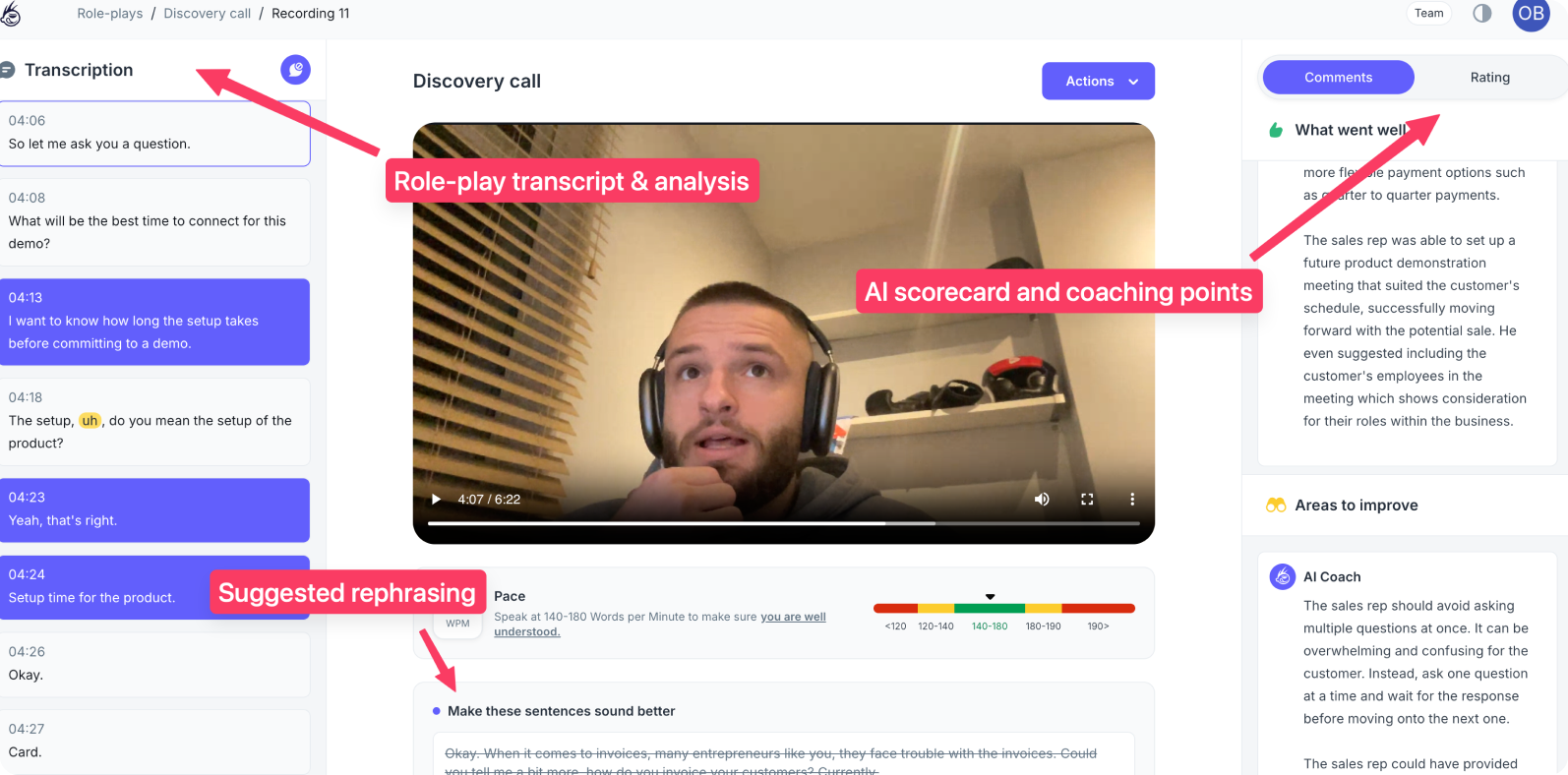
Each interaction is analyzed for the moments that decide a close, like the pricing discussion, the next-step commitment, and sentiment shifts. The platform highlights what worked and flags where the rep hesitated, so coaching targets the exact gap rather than a vague "be more confident." Sentiment and vocabulary analysis let it act as a virtual coach between real calls.
The Socratic AI Coach
The AI Coach is the reason teams pick PitchMonster over a straight practice tool. After each session, a Socratic AI sales trainer asks reflective questions that guide the rep to their own insight before they ever see a score. It is available 24/7, so reps can debrief on their own time. No other tool on this list does this.
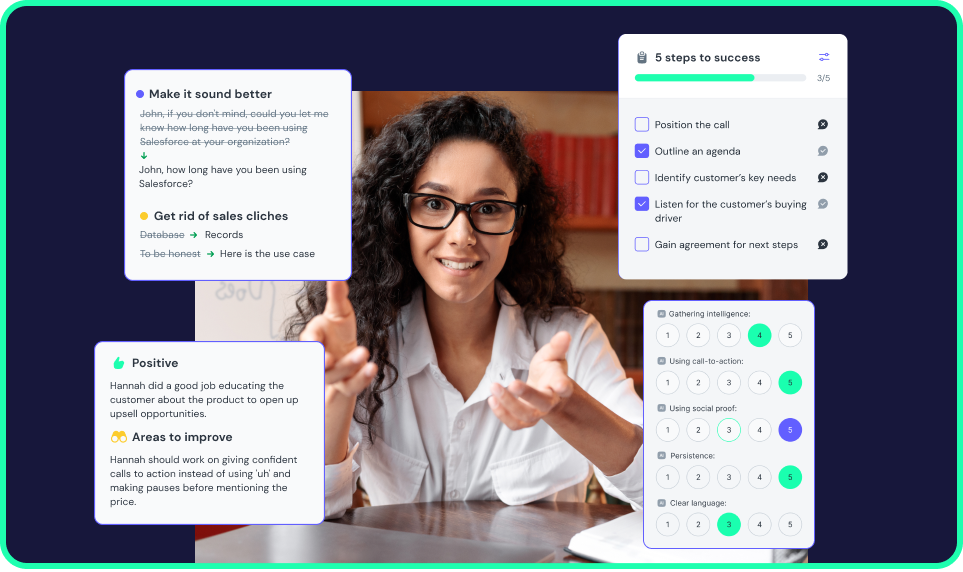
This matters because self-diagnosed lessons stick. When a rep reasons their way to why they backed off the close, the fix holds on the next live call in a way a handed-down score rarely does. Wendy Mateo De Perkins of One Park Financial summed up the reaction: "I think I really like the AI coach. That's definitely going to save us a lot of time."
Your own closing scorecard
Scoring should match how your team actually closes. PitchMonster's AI Scorecard lets leaders set evaluation criteria that fit their process, either by uploading their own metrics or starting from the scorecard library. You can assess reps on the factors that decide deals, like objection handling, talk time, and how cleanly they ask for the commitment.
Because scoring is consistent, feedback stays objective and every rep is measured the same way. The scorecard analyzes each session automatically and produces clear scores that simplify performance reviews and surface the closing behavior worth copying. With that data in one place, leaders can prove what is working to leadership.
Manager visibility and team practice
For teams, PitchMonster adds customizable scorecards, pre-built scenarios, leaderboards, and self-coaching tools, so closing practice runs without constant manager oversight. Leaders see who practiced, where the team is weak on late-stage objections, and how readiness trends over time.
That visibility is what turns practice into a program rather than a one-off. A head of enablement can assign a closing scenario to the whole team, watch the scores come in, and target coaching where the gaps are, all from one dashboard.
Where it fits: SMBs to enterprises running consultative, B2B motions with a manager, team lead, or L&D owner for training. Pricing is quote-only, sized per seat, with onboarding, a dedicated CSM, and support included and no setup fees. See pricing for a figure for your team size, or compare it directly against a scripted-simulation tool on our PitchMonster vs Second Nature page.
Proof: Mentor Group recorded 30% faster ramp, 37% higher performance, and a 28% win rate improvement after rolling out PitchMonster.
See it on your own closing scenarios. Book a demo and run your first AI role-play, built from your product and your ICP, in about two minutes.
2. Hyperbound
Best for: reps who want fast, self-directed practice at recognizing buyer signals and rehearsing named closing frameworks.
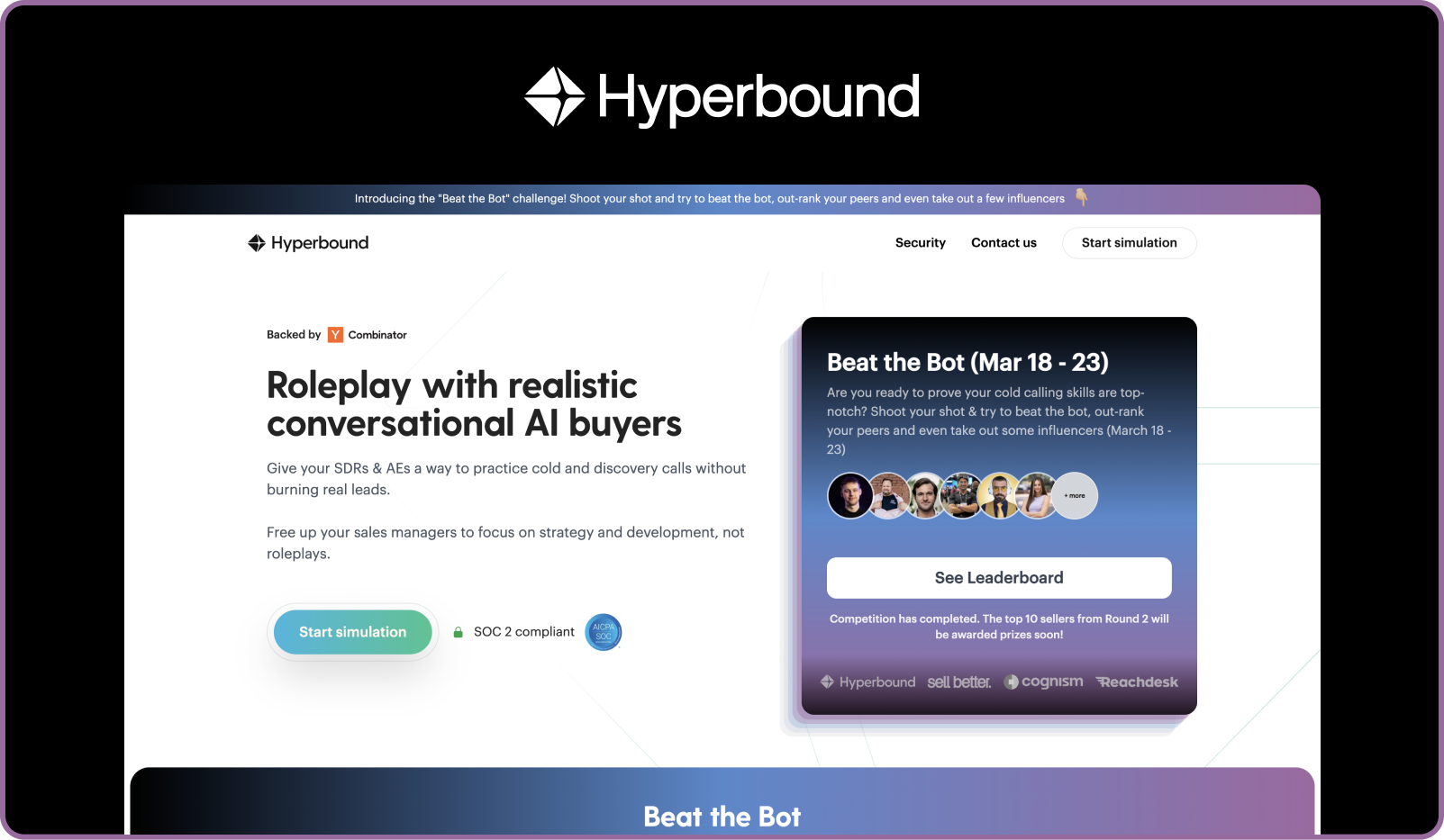
Hyperbound focuses on helping reps recognize the subtle signals that a buyer is ready to close, tone changes, recurring objections, shifts in the power dynamic, then adapt their approach mid-conversation. It bakes in closing frameworks like the assumptive close and the sharp-angle close, and lets reps drill them repeatedly against different buyer personalities. Cold-call practice is a particular strength.
Where it fits: mid-market to enterprise teams that want reps drilling buyer-signal recognition and named frameworks on their own time. For a deeper side-by-side, see our Hyperbound alternative comparison.
3. Yoodli
Best for: teams that want to sharpen delivery, pacing, and on-camera confidence rather than negotiation tactics.
Yoodli works on a different axis: how a rep sounds when it is time to close. It analyzes speech patterns, clarity, and delivery in real time, flagging filler words, pacing problems, and moments where the message loses its punch. The premise is that a clear, confident delivery can decide a close that strong strategy alone would not.
Reps practice pitches and closing statements in scenarios that mimic real interactions, then get real-time coaching that flags issues as they happen, so they can adjust on the spot. Yoodli is strongest for soft skills and speaking clarity rather than deal mechanics or complex objection handling.
Where it fits: SMB to mid-market teams where reps know what to say but stumble on how they say it. If your closing problem is delivery and nerves rather than tactics, this is Yoodli's lane. For a practice-and-coaching alternative built around deal mechanics, see this Yoodli alternative.
4. Second Nature
Best for: large teams that want consistent, scored simulation practice and can work within a more scripted persona model.
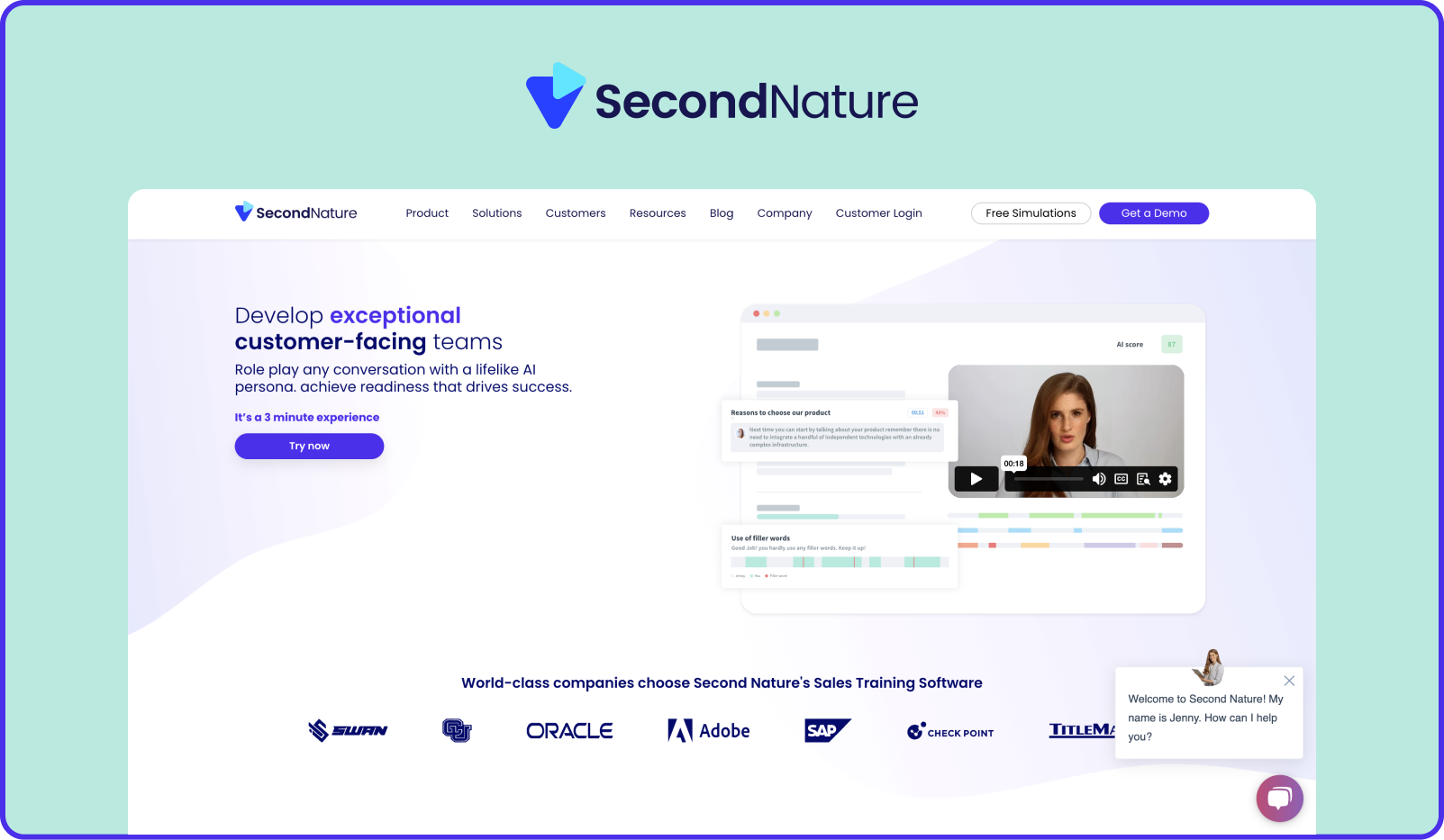
Second Nature offers avatar-based simulations where reps practice full conversations with a scripted AI persona acting as the customer. The persona gives reps a low-pressure setting to refine their pitch, handle objections, and rehearse closing techniques without the cost of a real call. The lifelike avatar responses are the platform's headline feature.
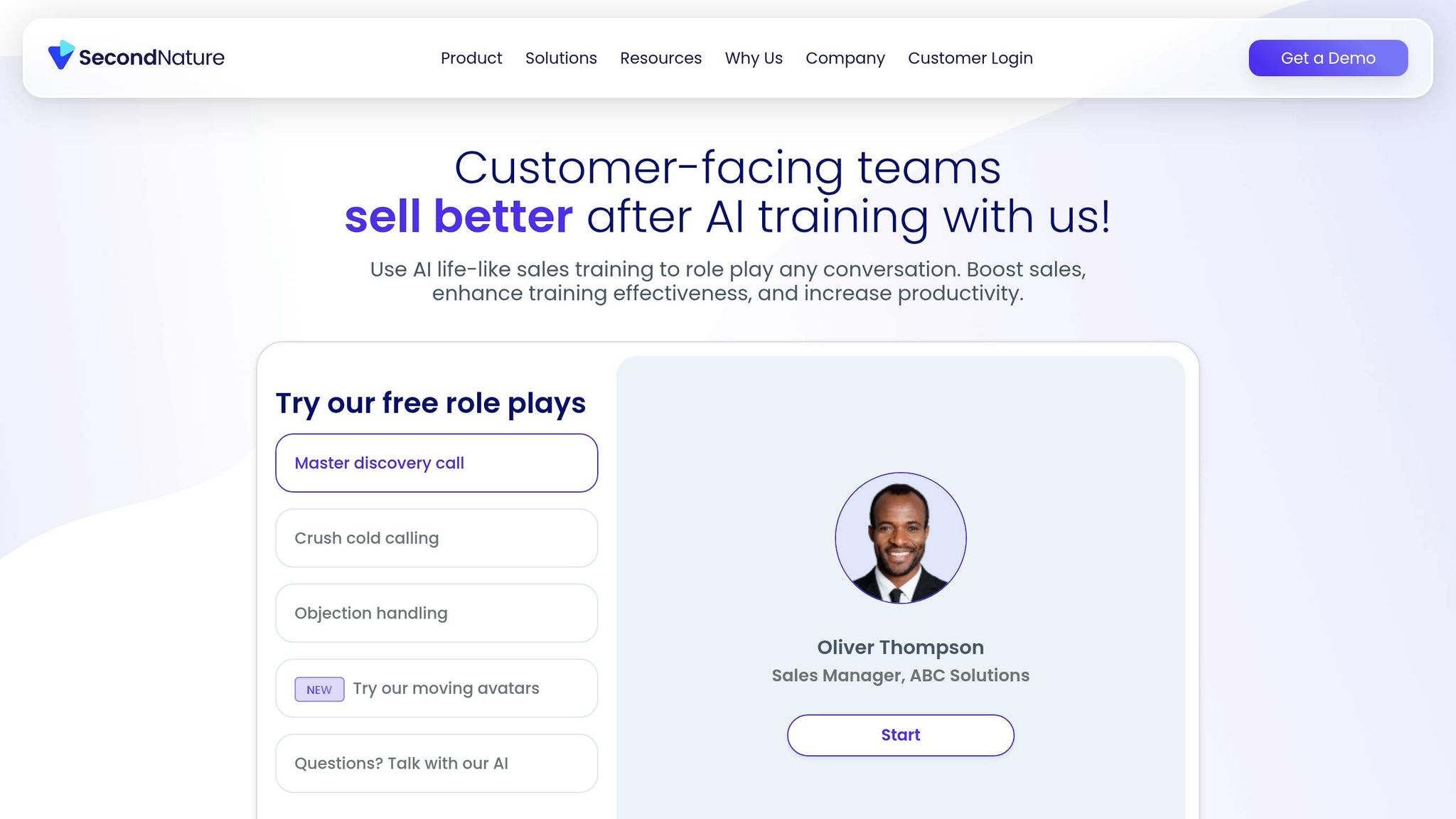
Where it fits: mid-market to enterprise teams standardizing practice across many reps. Vendor pricing generally runs $30 to $40 per user per month. If you want more conversation realism and a coaching layer, our PitchMonster vs Second Nature page lays out the trade-offs.
5. Mindtickle
Best for: enterprises that want to standardize methodology and combine role-play with real-call review across large, distributed teams.
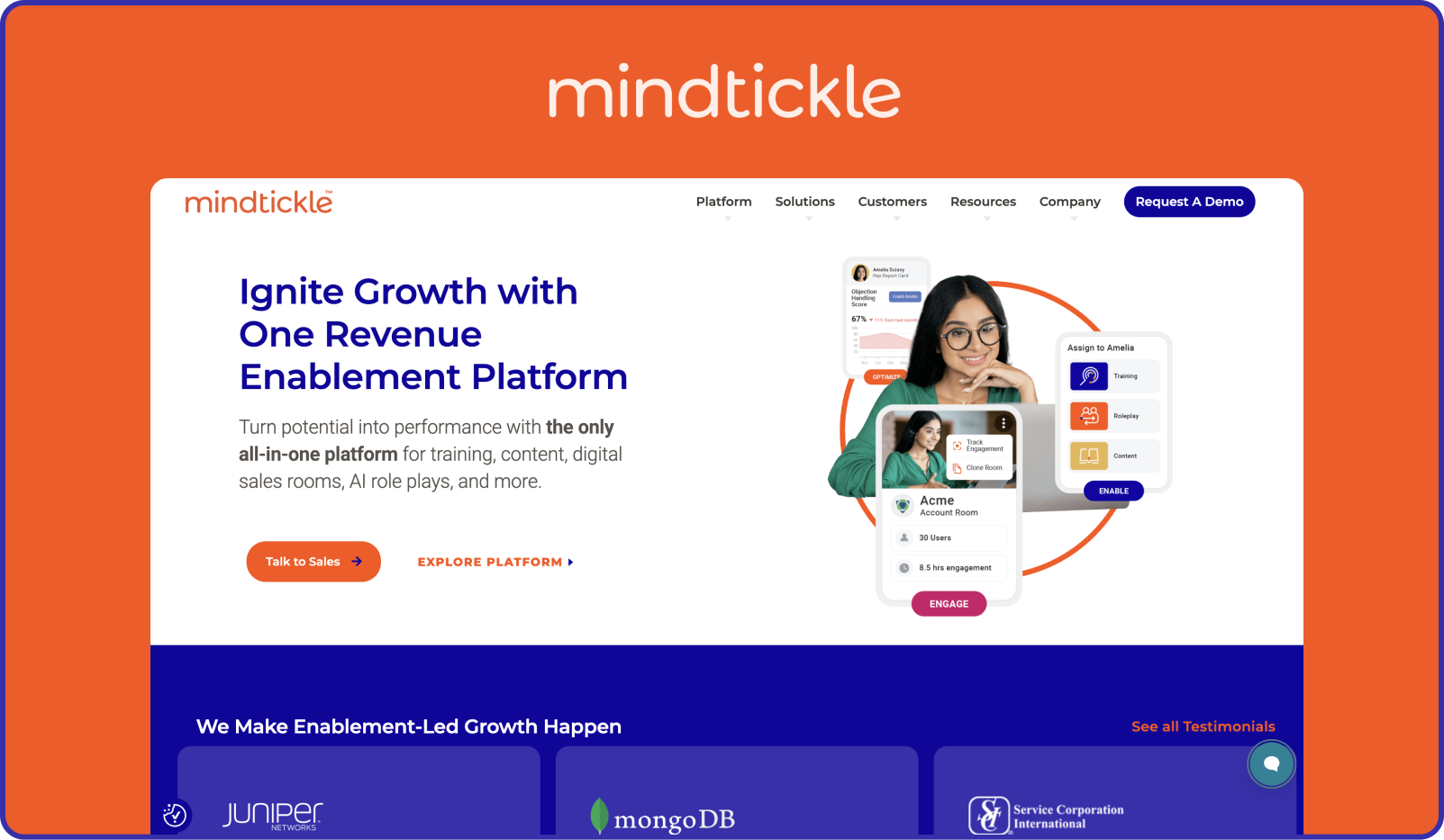
Mindtickle is a sales readiness platform rather than a pure practice tool. It blends content enablement, conversation intelligence, and AI role-play, and its closing strength comes from pairing simulated practice with analysis of real calls. By reviewing recordings, it pinpoints missed opportunities, an unaddressed objection or an overlooked chance to close, and directs coaching to those specific gaps.
Where it fits: enterprise teams standardizing methodology across many reps; smaller teams often find it more suite than they need. If practice and coaching depth is your real goal, compare a Mindtickle alternative built for it.
How to train reps to close
Whatever program you pick, the training loop that moves close rates looks the same. You can run it with a dedicated tool or with a manager and a calendar, but the steps do not change. Use this as the method any of the five programs above should support.
Start by naming the closing framework your team will use, drawn from the techniques earlier in this guide, so everyone shares a language. Then pull the objections your reps actually lose on from recent lost deals, since generic scripts teach the wrong reflexes. Next, run short role-plays where a coach or an AI buyer pushes back with those exact objections, and make the rep respond live rather than recite.
After each run, debrief on one thing: what would you change next time. A rep who reasons their way to the answer holds the fix longer than one who is handed a score. Then repeat the same hard moment until the response gets clean, because the value is in the reps, not the first attempt. Finally, put it on a cadence, a short weekly or bi-weekly session, so the skill does not fade between the workshop and the next big deal.
The team that drills the discount objection ten times in practice is the team whose rep does not freeze when a live buyer opens with it. That is the whole point of closing training: turn the moment a rep used to dread into one they can handle on the first real call.
How to choose
Match the tool to where your closing actually breaks. If reps freeze on live objections, prioritize realistic AI practice with a coaching layer that makes them reflect, which is PitchMonster's core. If the problem is delivery and nerves, Yoodli is the tighter fit. If you need methodology consistency and call review across a large org, Mindtickle leans that way, while Hyperbound and Second Nature sit in between with self-serve and scripted-simulation practice respectively.
Whatever you choose, judge it on the loop from earlier in this guide: does it let reps practice the closing moments they lose deals on, often, with objective feedback? Tools that clear that bar move close rates. Set a baseline for close rate and ramp time before you roll anything out, then run a real closing scenario on your own use case before you commit.
For a wider field of practice platforms, see our comparison of top sales training tools, or book a demo to see your own closing scenarios built in PitchMonster.
FAQ
What is closing sales training?
Closing sales training teaches reps to move a prospect from interest to a signed decision in the final stage of the sales process. It covers reading buying signals, handling late-stage objections like price or internal approval, and re-engaging stalled deals so they do not leak out of the pipeline. Modern programs replace one-off workshops with repeated practice on realistic scenarios.
What should a comprehensive closing sales training program include?
A strong closing program includes a closing framework, a library of the objections your team actually loses on, realistic practice against those objections, objective feedback on each attempt, and a reinforcement cadence so the skill sticks. The practice matters most: reps need to rehearse the hard closing moments repeatedly, not just study them in a slide deck once.
How do you train reps to close a sale?
Give reps a closing framework, then make them rehearse it against realistic objections until the response holds up under pressure. Start with the buying signals and objections your team actually meets, run short role-plays where a coach or AI buyer pushes back, and debrief on what to change. Repetition on real scenarios, not theory, is what moves close rates.
What are the main sales closing techniques?
The most used closing techniques are the assumptive close (treating next steps as agreed), the summary close (recapping the value before asking), the question close (asking what would make them ready), the sharp-angle close (turning a buyer request into a commitment), and the urgency close (a real deadline). Training matters more than the list: reps need to practice picking the right close for each moment.
How can closing training help reps handle stalled deals?
Stalled deals usually stall because a rep missed a buying signal or left an objection unaddressed. Closing training that uses realistic practice teaches reps to spot the stall early, name the real blocker, and re-open the conversation with a next step the buyer will agree to. Practicing that exact moment before it happens live is what keeps deals from leaking out of the pipeline.
How much do closing sales training programs cost?
Pricing ranges from a one-off online course around $35 to per-seat platform subscriptions. Among the AI practice tools here, Second Nature runs roughly $30 to $40 per user per month, and PitchMonster is quote-only, sized per seat with onboarding and a dedicated CSM included. See PitchMonster pricing for a figure for your team, and confirm other vendor numbers directly, since most quote per seat on request.
How often should reps practice closing role-plays?
Short and frequent beats long and rare. A weekly or bi-weekly 10-minute role-play on a specific closing moment keeps the skill sharp and surfaces gaps before a live call. AI role-play makes that cadence realistic, since reps can run the same hard scenario on demand instead of waiting for a manager to free up time.