PitchMonster vs Brainshark comes down to scope and focus. Brainshark is a legacy sales enablement and readiness suite built around content authoring, video coaching, and training scorecards, now folded into Showpad. PitchMonster is a modern, independent AI sales role-play platform with adaptive AI buyers and a Socratic AI Coach. This guide compares both on features, pricing, and fit.
If you are shortlisting the two, the difference is generational. Brainshark has been acquired twice, first by Bigtincan in 2021, then absorbed again once Bigtincan and Showpad combined. PitchMonster is an independent product built for adaptive, live-conversation practice rather than presentation-based readiness.
For the summary table, see the Brainshark alternative page. The sections below unpack each row.
Verdict at a glance
Here is the short answer before the detail:
The verdict. Choose Brainshark if your team already runs on Showpad and wants content authoring, video-based practice, and readiness scorecards inside that broader suite. Choose PitchMonster if your sales, CS, enablement, or product team wants adaptive AI role-play against buyers built from your ICP, a Socratic AI Coach that debriefs every session, a European base with GDPR compliance, and a guided rollout with a dedicated CSM. Brainshark is built for content and readiness tracking. PitchMonster is built for live-conversation practice and coaching, which is why teams comparing a Brainshark alternative for adaptive role-play often land on PitchMonster. To see how it fits your sales motion, book a demo.
PitchMonster vs Brainshark at a glance
The table below sums up how the two compare for a sales buyer searching brainshark vs pitchmonster. The headline difference is what each product is built to do: content and readiness tracking versus adaptive live-conversation practice.
Factor | PitchMonster | Brainshark |
|---|---|---|
Best for | Sales, CS, enablement, and product teams practicing real customer conversations | Teams standardizing content authoring and readiness tracking inside Showpad |
Core job | Sales role-play scored on your methodology | Content authoring, video coaching, and readiness scorecards |
Signature feature | Socratic AI Coach that debriefs every session | Turns PowerPoint and video into interactive training content |
AI buyer setup | From calls, docs, or a URL in about 2 minutes | Not applicable; practice is presentation and video-based |
Scoring | Your own playbook and scorecard | Readiness scorecards tracking completion and skill gaps |
Deployment speed | Fast, guided onboarding | Enterprise implementation inside a broader suite |
Industry focus | Broad B2B, consultative selling | Broad enablement, presentation-led training |
Data residency | European-based, GDPR, EU data residency | US-based origin (Waltham, Massachusetts), now under Showpad |
Service model | Dedicated CSM, guided onboarding | Enterprise deployment through its parent company |
Pricing model | Quote-only, onboarding included | Quote-only through its parent, no public pricing |
Proof | 4.9 on G2, 100% enterprise renewal since spring 2024 | Legacy readiness suite, now part of Showpad |
Read the table as a scope question. Brainshark packages content authoring and readiness tracking into a wider enablement suite. PitchMonster is a focused platform for live-conversation practice with a coaching layer built in. The sections below unpack each so you can match it to your team.
What Brainshark is built for
Brainshark is a sales enablement and readiness platform founded in 1999 in Waltham, Massachusetts. Its core is content authoring: teams turn PowerPoint decks, documents, and video into interactive presentations with quizzes and surveys built in. Reps and managers use it to package training material once and track who has consumed it.
Video coaching is the second pillar. Reps record practice pitches inside the platform, and the system returns automated AI feedback or routes the recording to a manager for review. Readiness scorecards then track training completion and skill gaps across a team, so a manager can see who has finished a module rather than who can hold a live conversation.
Ownership has moved twice. Bigtincan acquired Brainshark in August 2021, folding it into its own enablement suite. In 2025, Bigtincan and Showpad combined, and Brainshark is now part of Showpad. Brainshark's own LinkedIn page states the product is officially part of Showpad, so a buyer evaluating it in 2026 is evaluating a module inside a larger, twice-acquired platform rather than a standalone company.
For a team that wants to convert existing slide decks and videos into trackable training content, that packaging is useful for a content-library job, not a live-conversation rehearsal one. The trade-off is that the practice loop is built around presentation and video review rather than a live conversation that pushes back and objects like a real buyer.
What PitchMonster is built for
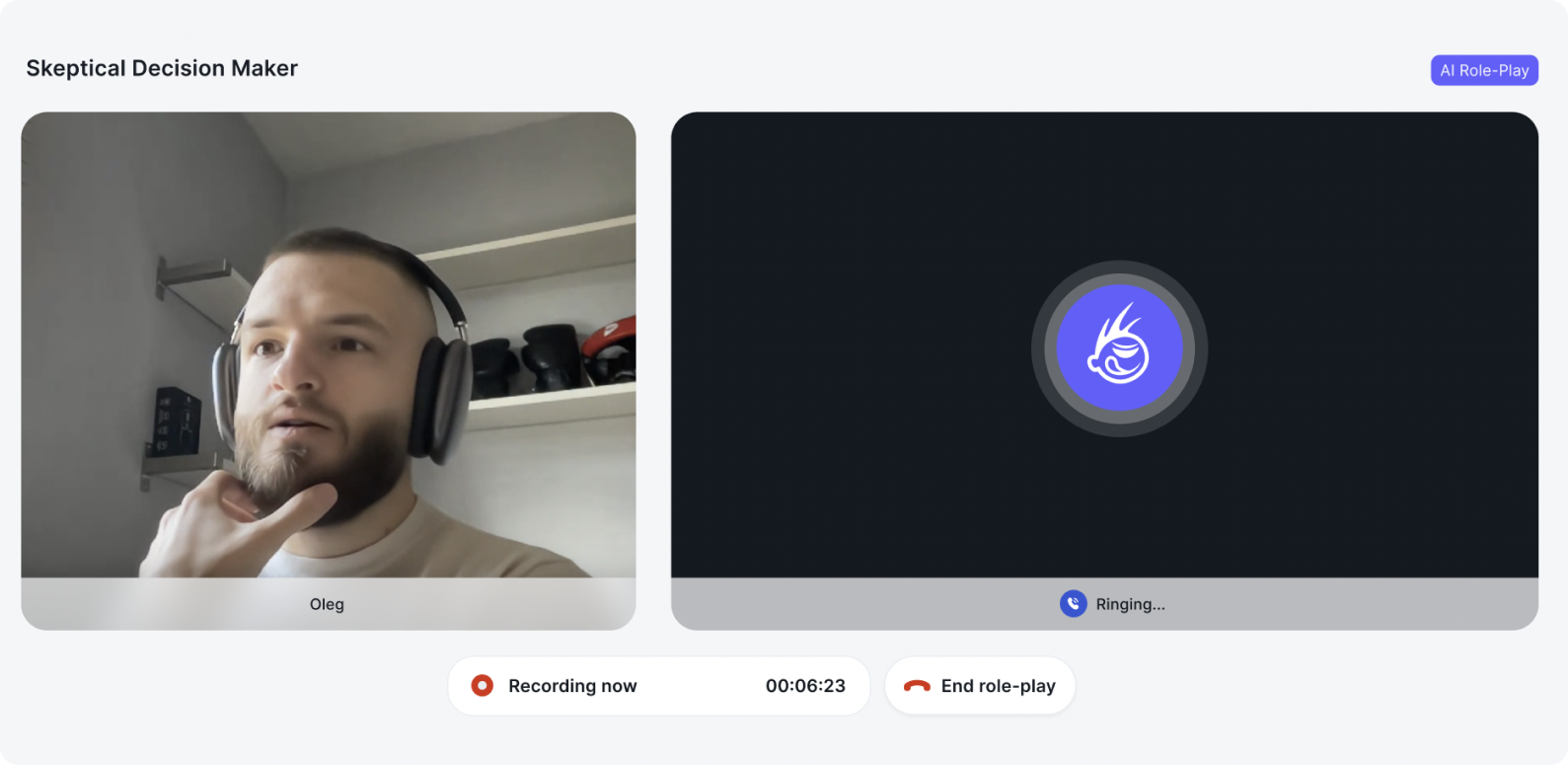
PitchMonster is an AI sales role-play platform built for one outcome: reps who are ready before the real call. Reps rehearse cold calls, discovery meetings, and demos against AI buyers that adapt, object, and push back like your actual ICP. Every session is scored against your own playbook, so practice is measured the same way you measure live deals.
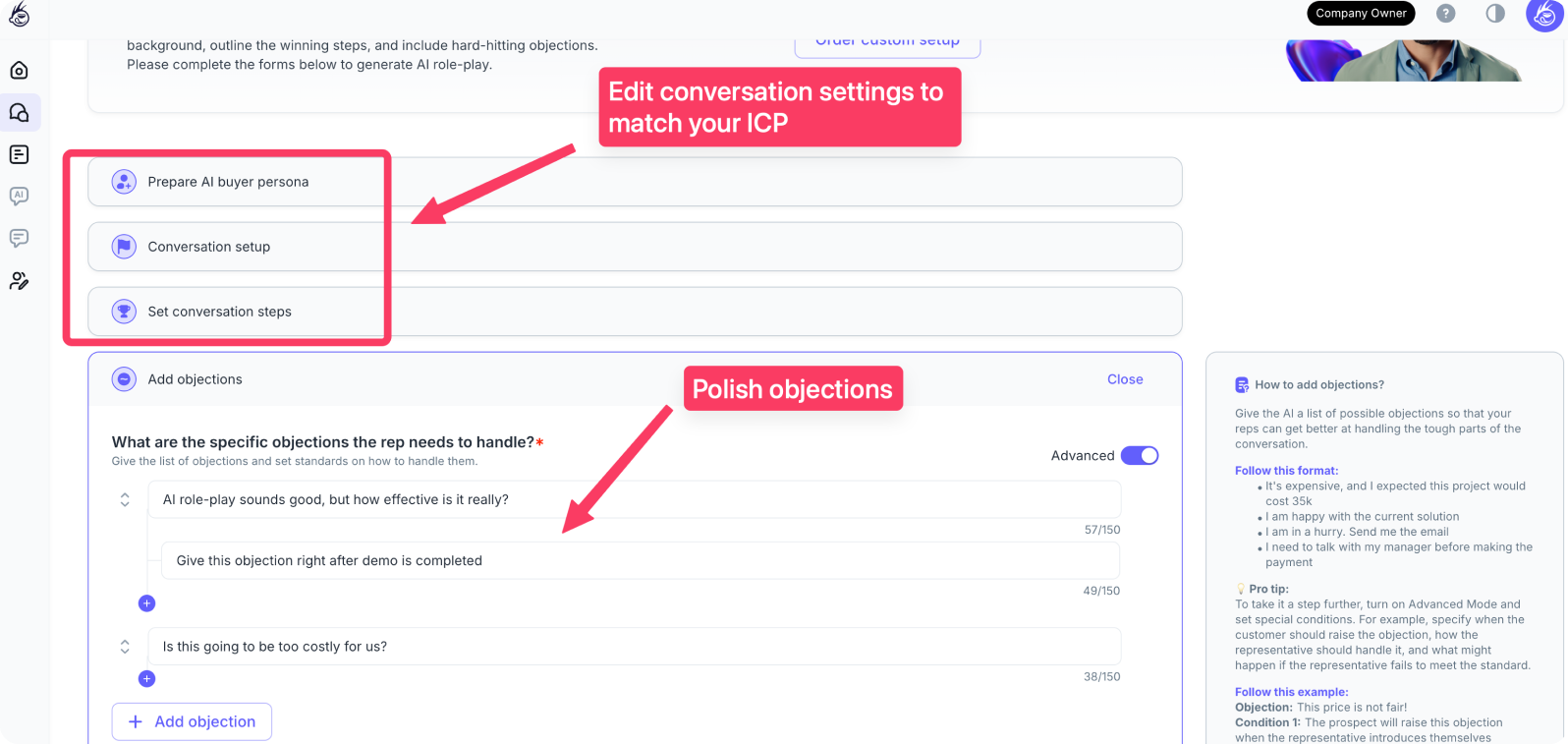
A manager can build a scenario from a call recording, product docs, a transcript, or a website URL in about two minutes. There are four difficulty levels up to Insane, more than 40 customization parameters, and support for 27-plus languages, so a global team practices on scenarios that mirror its real buyers. Reps can practice by phone, face-to-face, or over screen-share, matching how they sell.
What separates PitchMonster from a content and readiness suite is the AI Coach. After each session, a Socratic AI sales trainer asks reflective questions that guide the rep to their own conclusion before they ever see a score. It runs 24/7, so a rep debriefs on their own time, and no competitor on the sales role-play shortlist offers this. Self-diagnosed lessons stick harder than a handed-down score or a manager review queue, which is why this step is where rep behavior changes.
PitchMonster is European-based, which brings GDPR compliance and EU data residency, and it runs a high-touch service model with a dedicated CSM and guided onboarding. It holds a 4.9 out of 5 rating on G2 and a 100% enterprise renewal rate since spring 2024, and customers include Lenovo, Adobe, Salesforce, Land Rover, and Coupa.
Feature comparison
Both products help a team get ready to sell, but the mechanism is different. The table below lays out the head-to-head.
Capability | PitchMonster | Brainshark |
|---|---|---|
Adaptive live role-play | Yes, AI buyers adapt and object like your ICP | No, practice runs on recorded video review |
Post-session coaching | Socratic AI Coach guides self-diagnosis | Automated AI feedback or manager review of recordings |
Scoring model | Your sales methodology and scorecard | Readiness scorecards tracking completion and skill gaps |
Content authoring | Not the core product | Turns PowerPoint, docs, and video into interactive content |
Video coaching | Available via Live Call Analysis on real calls | Core feature: reps record and submit practice pitches |
Scenario building | From calls, docs, or a URL in about 2 minutes | Built from uploaded slides, documents, and video |
Languages | 27+ | Not published |
Data residency | EU-based, GDPR, EU residency | US-based, now under Showpad's infrastructure |
Service model | Dedicated CSM, guided onboarding | Enterprise deployment through its parent company |
The line that matters most is what kind of practice each platform runs. Brainshark is built around content and video review, so it fits a team that wants to package existing material and track completion. PitchMonster is built around adaptive, live-conversation practice with a coaching layer that debriefs every rep before a manager gets involved.
Pricing compared
Neither company publishes standard pricing, so this is a comparison of models. Brainshark is quote-based through its parent company. Since the Showpad combination, pricing runs through that broader enterprise sales process, and any third-party brainshark pricing figure you see should be treated as unofficial rather than a published rate.
PitchMonster is also quote-only, and the model bundles onboarding, a dedicated CSM, and support with no setup fees. Because both are custom-quoted, compare them on what the quote buys rather than a headline number.
Weigh the quote against the outcome it buys. Teams running PitchMonster's practice-and-coach loop report a 28% win-rate improvement, 37% higher performance, and 30% faster ramp in the Mentor Group case study.
"Our leads are very expensive. Having to do trial and error with live leads is an expensive practice." - Daniel, One Park Financial
You can book a demo for a quote sized to your reps.
Plan | PitchMonster | Brainshark |
|---|---|---|
Entry | Guided demo, then a team-sized quote | Quote through Showpad's sales process |
Team / Enterprise | Custom quote; onboarding, CSM, support included | Custom quote, bundled with the broader suite |
Public per-seat price | Not published (quote-only) | Not published (quote-only through its parent) |
What shapes the quote | Team size and seats | Suite scope and company size |
Pricing should not be the tiebreaker here, since both are custom-quoted. The real question is whether you need a broad enablement suite or a focused role-play tool, which the fit section covers next.
Which one fits your team
Because the two solve different problems, the choice comes down to what your team practices on. Use the table as a starting point, then confirm it in a demo with your own scenarios.
If you are... | Lean toward |
|---|---|
Already running on Showpad or Bigtincan | Brainshark |
Wanting to convert existing slide decks into trackable training | Brainshark |
Standardizing readiness scorecards across a large content library | Brainshark |
Running a broad B2B motion across sales, CS, enablement, or product | PitchMonster |
Wanting adaptive AI buyers and a reflective AI Coach | PitchMonster |
Required to keep data in the EU under GDPR | PitchMonster |
A team of 10 to 300 that wants guided onboarding | PitchMonster |
Prioritizing live-conversation practice over presentation review | PitchMonster |
Two questions settle most decisions. First, do you already run Showpad or Bigtincan and want one more module inside that suite? If so, Brainshark's content and readiness tools slot in directly. Second, does your team need to practice a live conversation that pushes back, not just record and submit a pitch? If so, PitchMonster's adaptive role-play and AI Coach are built for that.
If you want live-conversation practice with a coaching layer, the next section covers where PitchMonster pulls ahead.
Where PitchMonster pulls ahead
Brainshark packages content authoring and readiness tracking well, and that is a real fit for a team standardizing training inside Showpad. For a team that wants reps rehearsing an actual conversation, the deciding factors are adaptive practice and coaching depth, and that is where PitchMonster is built to pull ahead.
It starts with the AI Coach. After every role-play, PitchMonster runs a Socratic debrief that asks the rep what they noticed and what they would change before they see a score, so they self-diagnose instead of waiting on a manager review queue. This is the piece a content and video-review platform does not offer, and reflection is where behavior shifts.
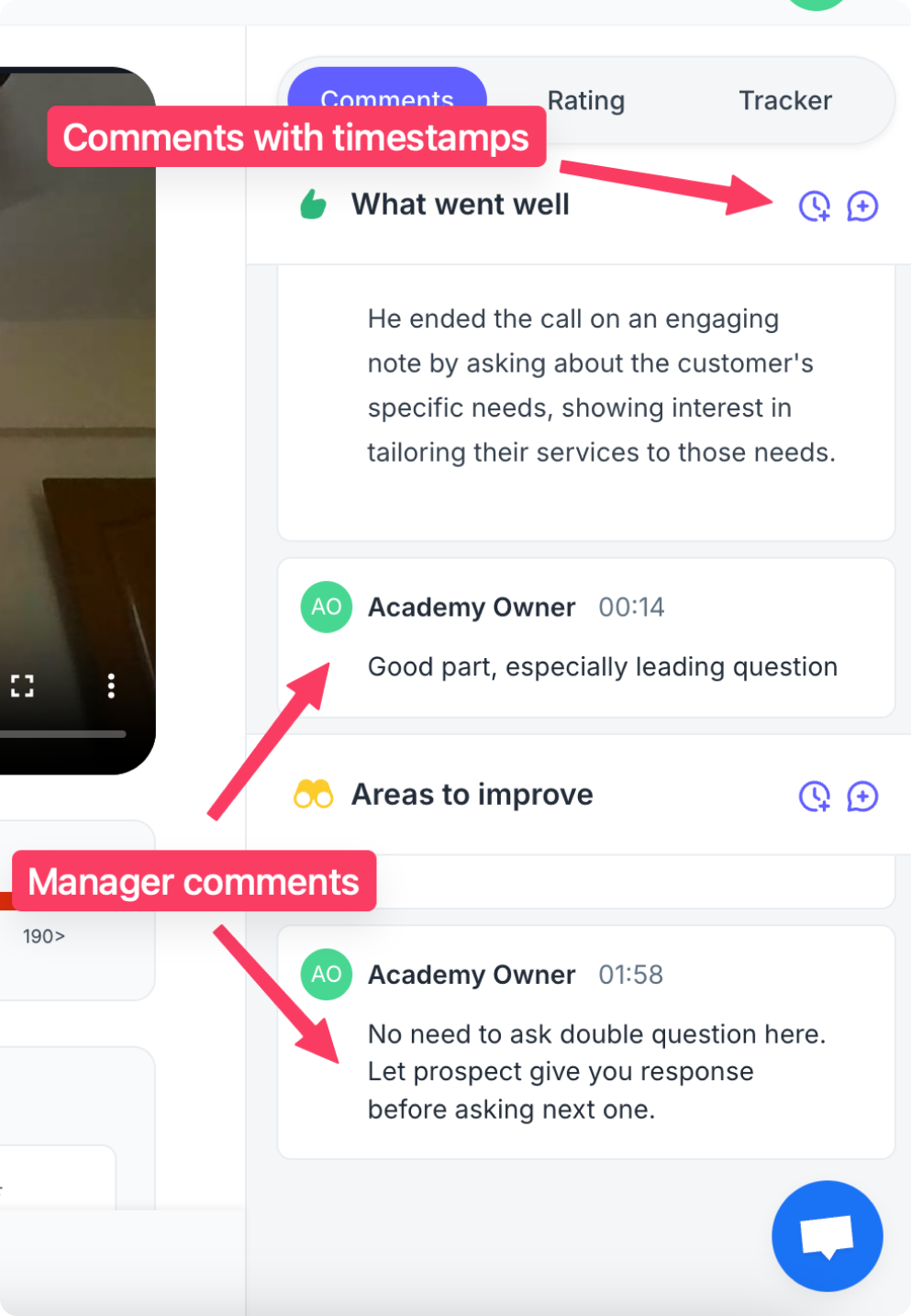
"I think I really like the AI coach. That's definitely going to save us a lot of time." - Wendy Mateo De Perkins, One Park Financial
Around the Coach sits practice built for a broad B2B motion. AI buyers object and push back like your real ICP, scenarios come from your own calls and docs in about two minutes, and every rep is scored against the same playbook you use on live deals. Live Call Analysis applies that scorecard to real call recordings, so practice and live performance are measured the same way, and managers get skill-gap dashboards to see who is ready before the call.
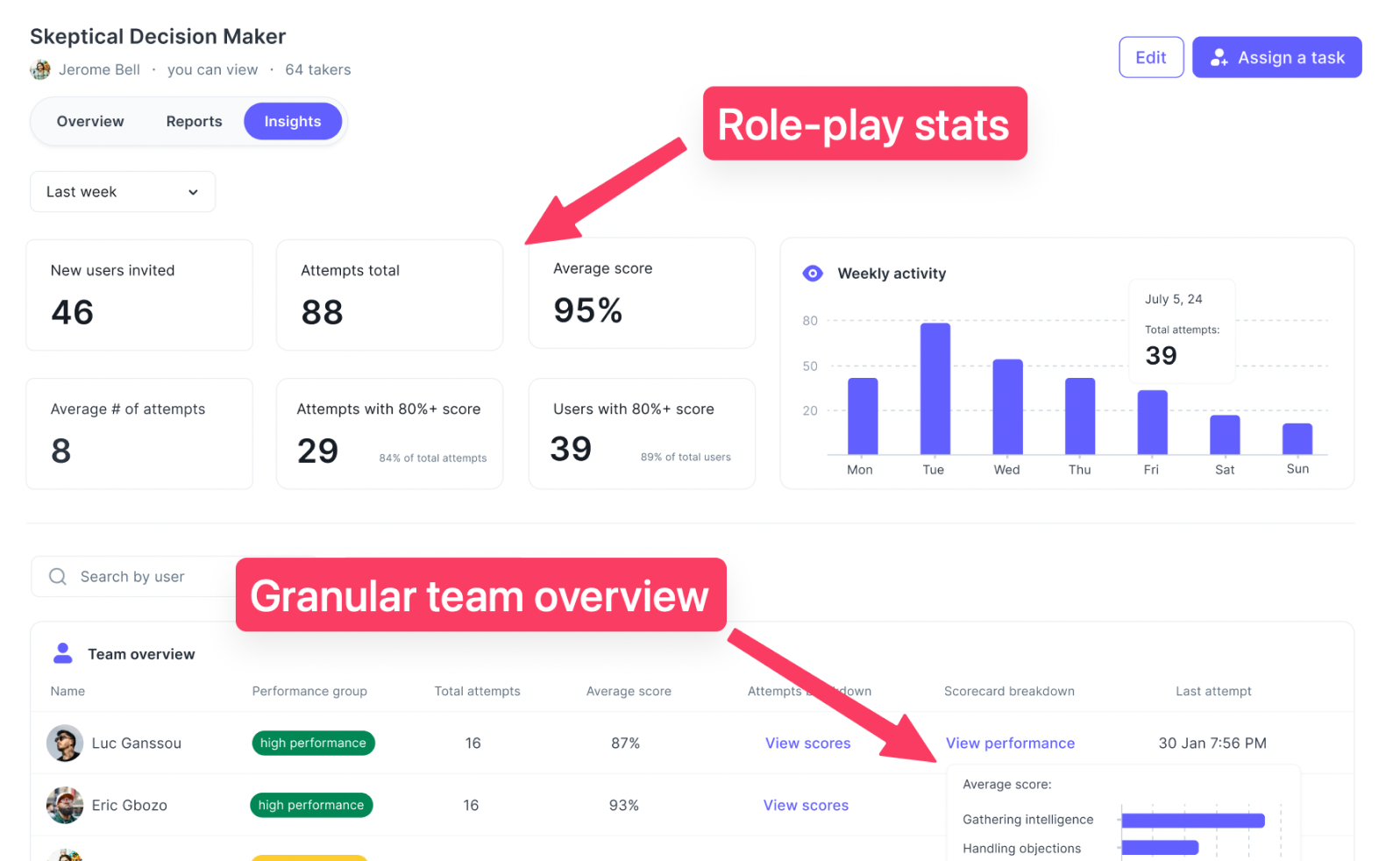
Speed and reach round it out. PitchMonster deploys fast with guided onboarding and a dedicated CSM, supports 27-plus languages, and runs on European infrastructure with GDPR compliance and EU data residency. Teams running the practice-and-coach loop report a 28% win-rate improvement, 37% higher performance, and 30% faster ramp in the Mentor Group case study.
If you want reps rehearsing real conversations instead of recording pitches for review, that is the gap to close. Book a demo and we will build your first sales role-play with you, or see pricing sized to your team. You can also browse 12 sales role-play scenarios to see the kind of practice reps run.
FAQ
What is Brainshark used for?
Brainshark is a sales enablement and readiness platform. Teams use it to turn PowerPoint decks, documents, and video into interactive presentations with quizzes and surveys, record and review practice pitches through video coaching, and track training completion and skill gaps with readiness scorecards. It is built around content and presentation-based training rather than live-conversation practice.
What happened to Brainshark?
Brainshark was founded in 1999 in Waltham, Massachusetts. Bigtincan acquired it in August 2021 and folded it into its own enablement suite. In 2025, Bigtincan and Showpad combined, and Brainshark is now officially part of Showpad, as its own LinkedIn page states. So is Brainshark still around? Yes, but as a module inside Showpad rather than a standalone company.
How much does Brainshark cost?
Brainshark does not publish standard pricing. It is quote-based through its parent, Showpad, so there is no public per-seat rate. Any brainshark pricing figure you find on a third-party site should be treated as unofficial rather than a published number. PitchMonster is also quote-only, with onboarding, a dedicated CSM, and support included in the quote.
What is the difference between Brainshark and PitchMonster?
Brainshark is a content-authoring and readiness platform: it turns slides and video into training material and tracks completion. PitchMonster is an AI sales role-play platform: reps practice live conversations against adaptive AI buyers and debrief with a Socratic AI Coach. Brainshark fits a team standardizing content inside Showpad. PitchMonster fits a team that wants reps rehearsing real conversations before the call.
What is the best Brainshark alternative in 2026?
For a team that wants live-conversation practice rather than content and video review, PitchMonster is the closest Brainshark alternative in 2026. Reps practice cold calls, discovery, and demos against AI buyers built from your ICP, get scored on your playbook, and debrief with a Socratic AI Coach. Brainshark remains active as part of Showpad, so the real choice is content authoring versus adaptive role-play. PitchMonster is European-based with GDPR compliance and holds a 4.9 out of 5 rating on G2.
Who are Brainshark's competitors?
In sales enablement and readiness, Brainshark is grouped with platforms like Seismic, Highspot, and Mindtickle, alongside its own parent, Showpad. For AI sales role-play specifically, PitchMonster is the common comparison for teams that want adaptive, live-conversation practice rather than content authoring and video review. Brainshark leans into presentation-based readiness. PitchMonster leans into role-play and coaching.