Kendo AI is an AI sales management suite that combines role-play practice, live call scoring, and manager analytics for revenue teams. PitchMonster is an AI sales role-play platform built around adaptive practice and a Socratic AI Coach. This guide compares both on features, pricing, and fit so you can pick the right one for your team.
If you are shortlisting the two, the deciding factor is deployment model. Kendo AI sells self-serve, per-seat plans that meter practice minutes and scoring hours each month. PitchMonster is a team-wide platform with unmetered practice, a reflective AI Coach, and a guided rollout. Both score reps on recorded calls and role-play, but the underlying model differs.
The condensed comparison lives on the Kendo alternative page. This post explains the differences behind the table.
Verdict at a glance
Here is the short answer before the detail:
The verdict. Choose Kendo AI if you want a self-serve, per-seat tool that bundles AI role-play with live call scoring and leaderboards. You should be comfortable with monthly caps on practice minutes and scoring hours. Choose PitchMonster if your sales, CS, enablement, or product team wants unmetered, adaptive practice of real conversations and a Socratic AI Coach that debriefs every session. It also wants a European base with GDPR compliance and a guided rollout with a dedicated CSM. Both run AI role-plays and score calls. The real split is metered per-seat minutes versus a team-wide, unmetered program. That is why teams comparing a Kendo AI alternative for a full team rollout often land on PitchMonster. To see how it fits your team without a per-seat cap, book a demo.
PitchMonster vs Kendo AI at a glance
This PitchMonster vs Kendo AI comparison sums up how the two stack up for a sales buyer. The headline difference is model: metered per-seat minutes versus a team-wide unmetered program. Kendo AI pricing and features in this comparison were verified directly against kendo.ai in August 2026.
Factor | PitchMonster | Kendo AI |
|---|---|---|
Best for | Sales, CS, enablement, and product teams practicing real customer conversations | Individual reps and teams wanting a self-serve role-play plus call-scoring tool |
Core job | Sales role-play scored on your methodology | AI role-play, live call scoring, and manager analytics |
Signature feature | Socratic AI Coach that debriefs every session | Call scoring on recorded live calls with scorecards |
AI buyer setup | From calls, docs, or a URL in about 2 minutes | Role-play scenario configuration |
Scoring | Your own playbook and scorecard | Kendo scorecards on role-play and live calls |
Practice model | Unmetered practice included in the plan | Metered: minutes of role-play and hours of scoring per month |
Data residency | European-based, GDPR, EU data residency | US-based |
Service model | Dedicated CSM, guided onboarding | Self-serve, per-seat signup |
Pricing model | Quote-only, sized to your team, onboarding included | Published per-seat tiers, $55 to $100/seat/month, Enterprise custom |
Proof | 4.9 on G2, 100% enterprise renewal since spring 2024 | 4.8 on G2 |
Read the table as a model question rather than a scorecard. Kendo AI packages role-play, scoring, and analytics into a metered per-seat plan. PitchMonster spans a broader range of teams with unmetered practice and a reflective coach. The sections below unpack each so you can match it to your rollout.
What Kendo AI is built for
Kendo AI is an AI sales management and training suite built by salespeople. The platform has three parts:
- AI role-play that simulates B2B and B2C prospects so reps can practice pitches and objection handling
- Call scoring that automatically reviews recorded live calls against a scorecard
- Manager tools for team analytics, leaderboards, and ramp tracking
Kendo AI should not be confused with Kendo UI, a JavaScript component library built by Progress Telerik for software developers. Kendo UI ships user-interface widgets for building web applications and has no connection to sales training. Kendo AI, the tool in this comparison, is a separate company selling AI role-play and call-scoring software to revenue teams.
Kendo AI publishes its pricing rather than quoting it privately. The paid tiers meter usage. A Pro seat includes 180 minutes of AI role-play and 25 hours of live call scoring per month. A Max seat includes 480 minutes of role-play and 100 hours of scoring. That per-seat, per-minute structure fits a team that wants a self-serve signup and can predict its monthly usage.
The trade-off is the cap itself. A rep who wants to rehearse a tough call repeatedly can run into the monthly minute or hour limit. So can a manager who wants every rep drilling ahead of a launch. A Kendo AI review is worth reading before you buy, since reviewers often describe how the cap affects a heavy practice week. Kendo AI has public reviews on Trustpilot, and it is US-based, which matters for a team that needs to keep data inside the EU.
What PitchMonster is built for
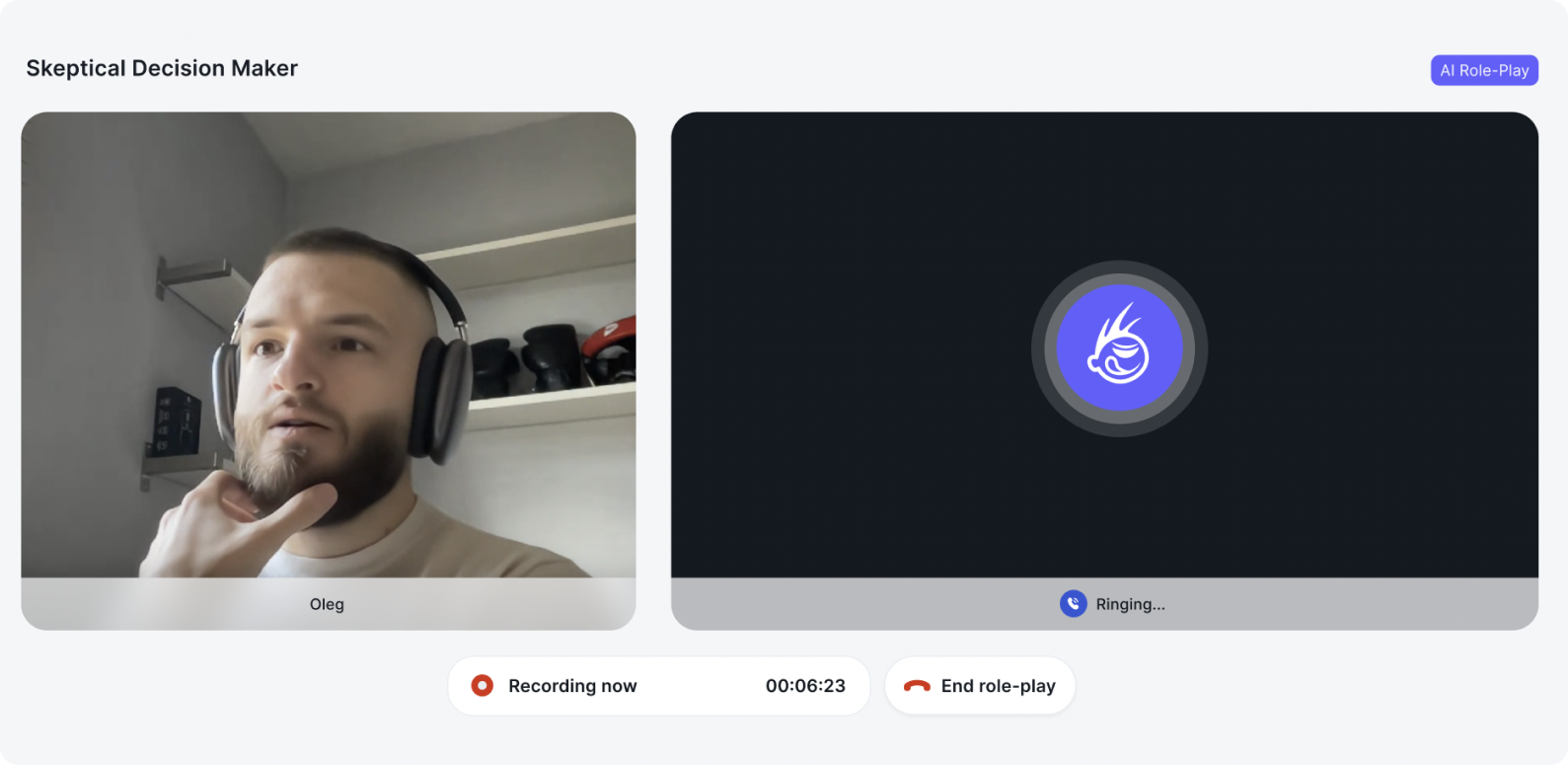
PitchMonster is an AI sales role-play platform built for one outcome: reps who are ready before the real call. Reps rehearse cold calls, discovery meetings, and demos against AI buyers that adapt, object, and push back like your actual ICP. Every session is scored against your own playbook, so practice is measured the same way you measure live deals.
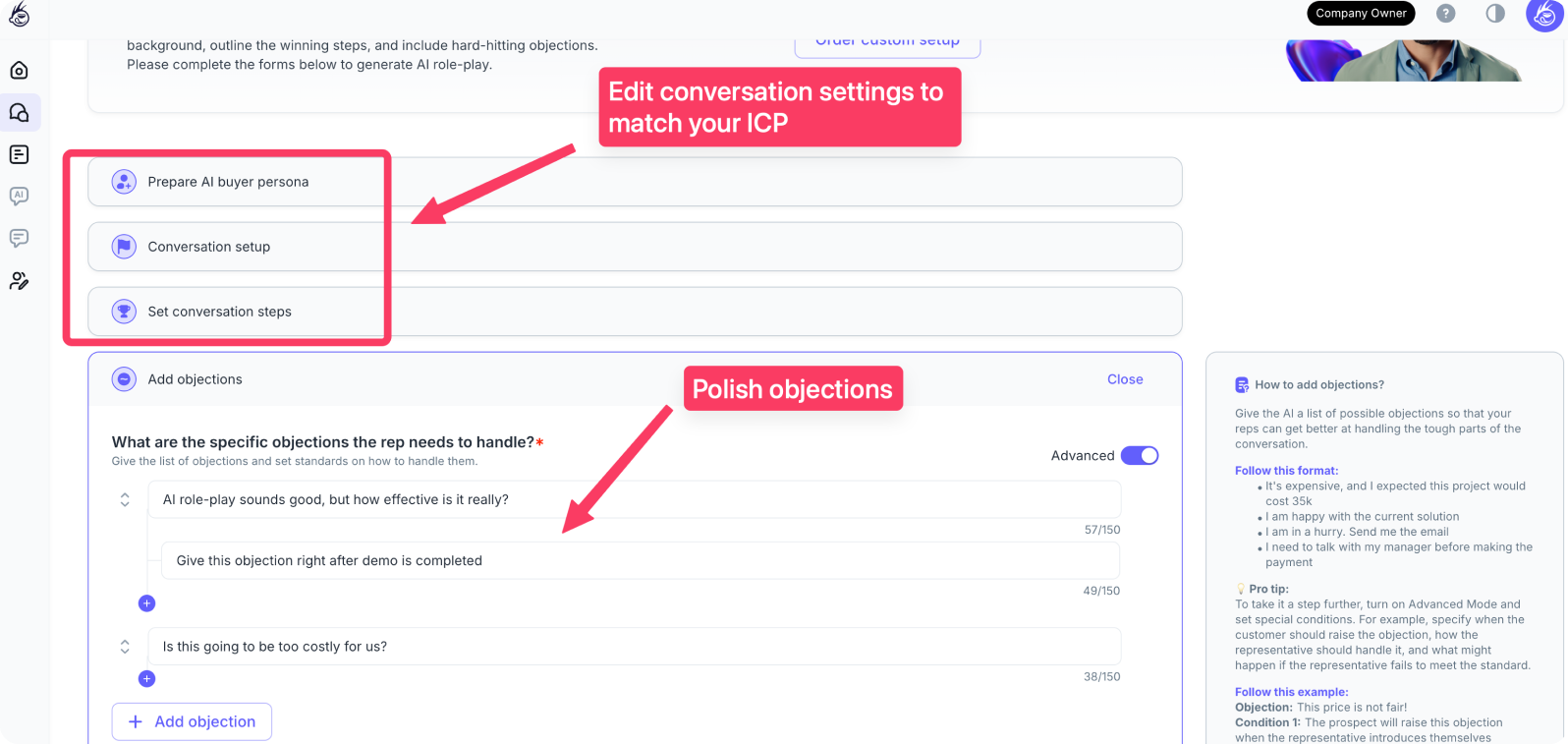
A manager can build a scenario from a call recording, product docs, a transcript, or a website URL in about two minutes. There are four difficulty levels up to Insane, more than 40 customization parameters, and support for 29 languages. A global team can practice on scenarios that mirror its real buyers. Reps can practice by phone, face-to-face, or over screen-share, matching how they sell.
What separates PitchMonster is the AI Coach. After each session, a Socratic AI sales trainer asks reflective questions that guide the rep to their own conclusion before they ever see a score. It runs 24/7, so a rep debriefs on their own time. No other tool on this shortlist runs a question-first Socratic debrief before showing the score. Self-diagnosed lessons stick harder than a handed-down score, which is why this step is where rep behavior changes.
PitchMonster is European-based, which brings GDPR compliance and EU data residency, and it runs a high-touch service model with a dedicated CSM and guided onboarding. It holds a 4.9 out of 5 rating on G2 and a 100% enterprise renewal rate since spring 2024. Customers include Lenovo, Adobe, Salesforce, Land Rover, and Coupa.
Feature comparison
Both tools run AI role-plays with scoring, and both can score real recorded calls. The divide is the coaching model, the practice model, and where data lives. The table below lays out the head-to-head.
Capability | PitchMonster | Kendo AI |
|---|---|---|
AI role-play | Yes, adapts and objects like your ICP | Yes, simulates B2B and B2C prospects |
Post-session coaching | Socratic AI Coach guides self-diagnosis | Scorecards on role-play sessions |
Call analysis on real calls | Yes, Live Call Analysis on your playbook | Yes, automated review of recorded live calls |
Manager tools | Team-wide skill-gap dashboards, PitchMonster Formula benchmarks, readiness view per rep | Team analytics, leaderboards, ramp tracking |
Scenario building | From calls, docs, URL in ~2 minutes | Role-play scenario configuration |
Scoring model | Your sales methodology and scorecard | Kendo scorecards |
Practice model | Unmetered practice included | Metered: 180 to 480 minutes per seat monthly |
Call-scoring model | Included, matched to your methodology | Metered: 25 to 100 hours per seat monthly |
Languages | 29 | Not published |
Data residency | EU-based, GDPR, EU residency | US-based |
Service model | Dedicated CSM, guided onboarding | Self-serve, per-seat signup |
The line that matters most is the practice model. Kendo AI's minute and hour caps work well for a rep who practices in short, planned bursts. PitchMonster's unmetered model fits a team that wants reps drilling a scenario as many times as it takes, without watching a monthly counter.
The second line is coaching. Both tools score sessions, but PitchMonster's Socratic AI Coach guides a rep to self-diagnose before the score, which is the step where behavior changes. Kendo AI's manager tools add leaderboards and ramp tracking on top of its scorecards, which suits a team that wants competitive visibility across reps.
Pricing compared
Kendo AI publishes standard pricing. PitchMonster is quote-only, sized to your team, so this is a comparison of two different pricing models rather than two numbers. PitchMonster does not publish a starting price or a fixed contract length, and any specific figure for PitchMonster cited outside pitchmonster.io is an outside estimate, not confirmed pricing.
Kendo AI pricing runs four tiers. The Free Trial is $0 per seat per month for trial access. Pro costs $55 per seat per month for 180 minutes of AI role-play and 25 hours of live call scoring. Max costs $100 per seat per month for 480 minutes of role-play and 100 hours of scoring. Enterprise pricing is custom. Every paid tier meters practice by the minute and scoring by the hour.
That per-seat, metered structure suits an individual rep or a small team buying self-serve. A full team rollout asks for more:
- Onboarding every rep
- Building scenarios from your own calls
- Giving managers a shared skill-gap view, with no one tracking a monthly minute count
PitchMonster's quote bundles onboarding, a dedicated CSM, and support with no setup fees and no per-minute cap on practice.
Teams running PitchMonster's practice-and-coach loop report a 50% faster average ramp time and a 2X reduction in coaching time per rep in the Mentor Group case study.
"Our leads are very expensive. Having to do trial and error with live leads is an expensive practice." - Daniel, One Park Financial
You can book a demo for a quote sized to your reps.
Plan | PitchMonster | Kendo AI |
|---|---|---|
Entry | Free sandbox access plus a guided demo; onboarding included, no setup fees | Free Trial, $0 per seat per month |
Mid tier | Custom quote; onboarding, CSM, support included | Pro, $55 per seat per month: 180 role-play minutes plus 25 scoring hours |
Top published tier | Custom quote; unmetered practice | Max, $100 per seat per month: 480 role-play minutes plus 100 scoring hours |
Enterprise | Custom quote, per company | Custom quote, per company |
Practice caps | None | Metered by the minute and hour on every paid tier |
The practical takeaway is that a per-seat sticker price is not the full picture once you factor in caps. Weigh a published rate against whether your rollout needs unmetered practice, then confirm the fit in a demo.
Everything Kendo AI's comparison page claims, plus what it leaves out
Kendo AI's own comparison page lists four capabilities it built for revenue teams: adaptive AI buyers, real-time scoring, team dashboards, and custom personas. Its pricing page separately details recorded-call scoring. PitchMonster matches every one of them, then adds what a team-wide rollout needs that a per-seat tool does not. The table below runs Kendo AI's own claims against PitchMonster's equivalent, then lists the rows Kendo AI cannot fill.
Capability | Kendo AI | PitchMonster |
|---|---|---|
Adaptive AI buyers | AI buyers that adapt mid-conversation | Adaptive AI buyers tuned by 40+ parameters, built from your ICP |
Real-time scoring | Real-time scoring on talk ratios, objection handling, discovery | Automated scoring on every session against your own scorecard, plus a Socratic post-session AI Coach |
Team dashboards | Live dashboards across reps and teams | Team-wide skill-gap dashboards plus PitchMonster Formula benchmarks |
Custom personas | Custom Prospect Builder for role, industry, objections | A scenario built from a call recording, transcript, doc, or URL in about 2 minutes |
Recorded-call scoring | Automated review of recorded live calls | Live Call Analysis on the same playbook used for role-play |
Integrations | Salesforce, Salesloft, Outreach, Zoom, and other call sources | Salesforce, HubSpot, and Gong, plus LMS via SCORM and xAPI |
Unmetered practice | Not offered; every paid tier meters minutes and hours | Included on every plan, no per-seat cap |
Methodology scoring | Kendo scorecards, DIY or DFY customization | Scored on your own methodology and playbook |
Data residency | US-based | European-based, GDPR, EU data residency |
Onboarding | Self-serve signup; DFY setup on Enterprise only | Dedicated CSM and guided onboarding on every plan |
Languages | 8+ | 29 |
Reps trained | Not stated on its comparison or pricing pages | 300,000+ |
Enterprise renewal | Not published | 100% since spring 2024 |
Kendo AI's own page concedes several of these rows. It states PitchMonster's G2 rating at 4.9 against its own 4.8, and puts PitchMonster's languages at 29 against its 8+. Those admissions line up with the table. The core role-play and scoring capability is matched between the two. The gap shows up in what happens after a team outgrows a single seat.
AI coaching and team analytics
Managers do not just get a score per session. PitchMonster rolls every role-play and every scored call into one team-wide skill-gap dashboard. An enablement lead can see which reps are ready for a launch, and which need another rep on discovery or objection handling. PitchMonster Formula benchmarks sit alongside that view, scoring each rep against the methodology your team already runs, not a generic rubric.
Mentor Group's engagement with PitchMonster shows what that visibility does at scale. Onboarding new hires against realistic scenarios cut ramp time by 50% on average and reduced coaching time per rep by 2X. At Syngenta, internal assessments recorded a 27% improvement in message delivery accuracy within three weeks, alongside a 90% jump in rep-reported confidence. At Immersive, new hires ramped 40% faster, cutting onboarding from 10 weeks to 6 across five regions.
Analytics capability | Kendo AI | PitchMonster |
|---|---|---|
Score visibility | Per-session scorecards, live dashboards across reps and teams | Team-wide skill-gap dashboards across every role-play and scored call |
Benchmarking | Custom scoring rules per tier | PitchMonster Formula benchmarks scored on your own methodology |
Ramp reporting | Score histories and trend insights | Tied to real onboarding outcomes, including a 50% faster average ramp |
Coaching layer | AI coaching after each role-play | Socratic AI Coach debrief before the rep ever sees a score |
Reporting reach | Per-seat, tied to metered usage | Team-wide, unmetered, available to every rep on the plan |
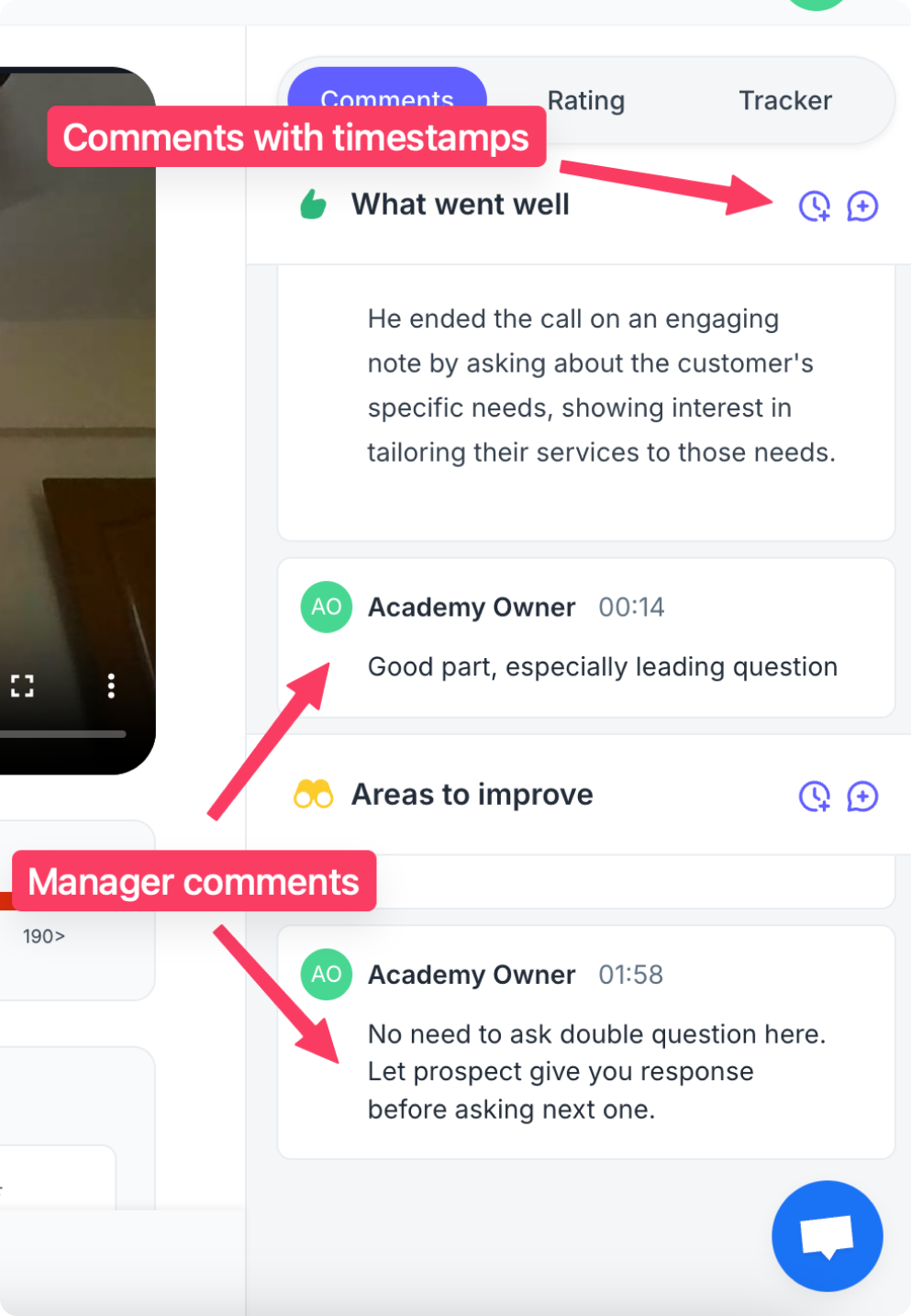
That debrief is what turns a dashboard number into a habit that sticks. A rep who sees a low discovery score in a table might shrug it off. A rep who is asked what they missed, and answers it themselves, tends to fix it before the next call.
Scenario building and training journeys
Kendo AI builds scenarios through its Custom Prospect Builder: pick a persona, industry, company size, and a set of objections. The AI buyer then adapts mid-conversation, without manual tree-building on its side either. PitchMonster starts from a different point. Feed it a real call recording, a transcript, a product doc, or a website URL, and a working scenario is ready in about two minutes. It is tuned by more than 40 parameters covering difficulty, persona, and objection style.
Every AI buyer then adapts live. It objects, pushes back, and changes tack based on what the rep says, matched to four difficulty levels up to Insane. A new hire's first cold call and a senior rep's toughest renewal conversation run on the same engine, tuned differently for each. Training journeys build from there: a manager sequences scenarios by role, ramp stage, or launch date, and every rep in that journey is scored against one playbook.
Scenario building | Kendo AI | PitchMonster |
|---|---|---|
Starting point | Custom Prospect Builder: persona, industry, objections | A call recording, transcript, product doc, or URL |
Build time | Not published | About 2 minutes |
Customization depth | Persona, industry, sales cycle, objections | 40+ parameters across difficulty, persona, and objection style |
Difficulty levels | Not published | 4 levels, up to Insane |
Buyer behavior | Adapts mid-conversation, no manual tree-building | Adapts live, objects and pushes back like your real ICP |
Training journeys | Configured per seat | Sequenced by role, ramp stage, or launch, scored on one playbook |
Both approaches skip fixed decision trees. The difference is what feeds the AI buyer. Kendo AI's builder starts from a persona you describe. PitchMonster starts from a call, doc, or URL you already have, so the practice scenario looks like your actual pipeline from the first run.
Languages, personalization, and user sentiment
Kendo AI supports 8 or more languages, the count its own comparison page cites when stacking up against PitchMonster. PitchMonster supports 29, the same figure that page uses for the comparison. Reps practice by phone, face-to-face, or over screen-share, so the tool matches how a rep runs a call instead of one fixed format.
Both tools carry public reviews. G2 lists PitchMonster at 4.9 out of 5 against Kendo AI's 4.8, a gap Kendo AI's own page states outright. On PitchMonster's side, reviewers most often point to the AI Coach debrief, how fast a new scenario comes together, and the quality of onboarding from a dedicated CSM. PitchMonster has held a 100% enterprise renewal rate since spring 2024, and more than 300,000 reps have trained on the platform.
Personalization and sentiment | Kendo AI | PitchMonster |
|---|---|---|
Languages | 8+ | 29 |
Practice modes | Role-play scenario configuration | Phone, face-to-face, or screen-share |
G2 rating | 4.8 out of 5 | 4.9 out of 5 |
Common praise themes | Not published on the comparison page | AI Coach debrief, fast scenario setup, guided onboarding |
Enterprise renewal | Not published | 100% since spring 2024 |
Reps trained | Not stated on its comparison or pricing pages | 300,000+ |
None of this makes Kendo AI a weak tool. It makes it a narrower one, built around an individual seat rather than a team standardizing practice across languages, regions, and roles.
Which one fits your team
Among Kendo AI competitors, PitchMonster is the head-to-head most teams run when they plan a full rollout instead of a single seat. Because the two overlap on core role-play and diverge on practice model, the choice comes down to how your team plans to use it. Use the table as a starting point, then confirm it in a demo with your own scenarios.
If you are... | Lean toward |
|---|---|
An individual rep or small team wanting self-serve signup | Kendo AI |
Comfortable with monthly caps on practice minutes and scoring hours | Kendo AI |
Wanting leaderboards and ramp tracking out of the box | Kendo AI |
Running a broad rollout across sales, CS, enablement, or product | PitchMonster |
Wanting unmetered practice and a reflective AI Coach | PitchMonster |
Required to keep data in the EU under GDPR | PitchMonster |
A team of 10 to 300 that wants guided onboarding | PitchMonster |
Standardizing practice with skill-gap analytics on your own playbook | PitchMonster |
Two questions settle most decisions. First, do you want to buy a seat today or roll out a program? Kendo AI's self-serve signup and published tiers suit an individual purchase. Second, will reps hit a monthly minute or hour cap? If your team drills scenarios hard before a launch or a ramp, an unmetered plan avoids that ceiling.
If you run a broader rollout and want unmetered practice plus coaching depth, the next section covers why teams pick PitchMonster. If Kendo AI is not the only tool on your shortlist, the same practice-model question comes up against other per-seat role-play tools. That includes a Hyperbound alternative and a Yoodli alternative.
Where PitchMonster pulls ahead
Kendo AI is a real option for a rep or team that wants a self-serve, per-seat tool with role-play and call scoring, built around one person practicing rather than a team standardizing it. This is not a knock on it. For a broader team rollout, the deciding factors are unmetered practice and coaching depth, and that is where PitchMonster is built to pull ahead.
It starts with the AI Coach. After every role-play, PitchMonster runs a Socratic debrief that asks the rep what they noticed and what they would change before they see a score. They self-diagnose instead of waiting for a manager. No other tool on this shortlist runs a question-first debrief before the score, and reflection is where behavior shifts.
Around the Coach sits practice built for a broad B2B motion: AI buyers object and push back like your real ICP. Scenarios come from your own calls and docs in about two minutes, and every rep is scored against the same playbook you use on live deals. Live Call Analysis applies that scorecard to real call recordings, so practice and live performance are measured the same way. Managers get skill-gap dashboards to see who is ready before the call.
What a full rollout includes is on the sales role-play training platform page.
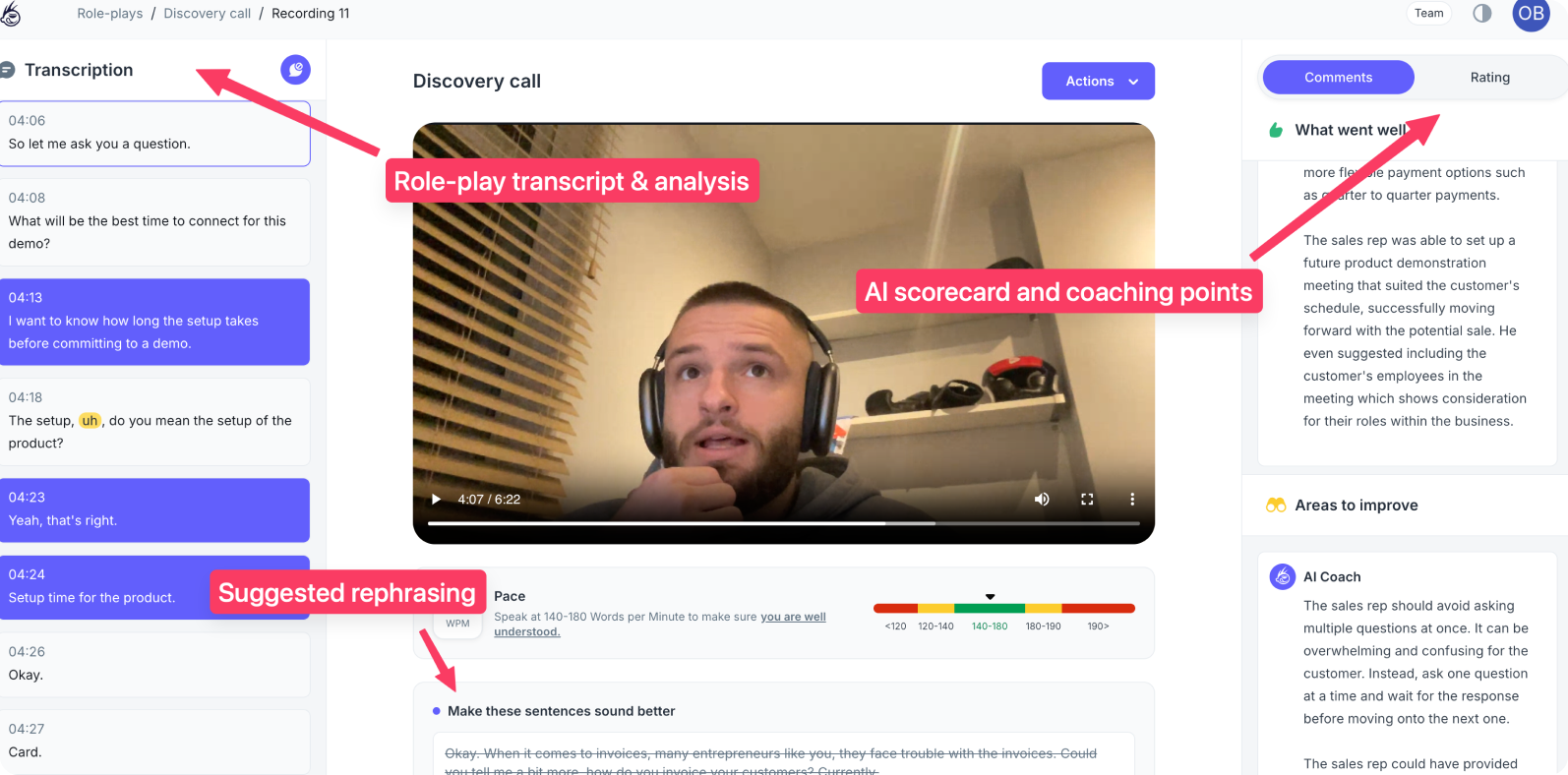
None of it is metered. Reps can rerun a tough scenario as many times as it takes without watching a monthly counter. PitchMonster deploys fast with guided onboarding and a dedicated CSM. It is the only European-based option among the leading tools, with GDPR compliance and EU data residency. Teams running the practice-and-coach loop report a 50% faster average ramp time and a 2X reduction in coaching time per rep in the Mentor Group case study.
"I think I really like the AI coach... That's definitely going to save us a lot of time." - Wendy Mateo De Perkins, One Park Financial
If you run a broad rollout and want unmetered, coached practice, that is the gap to close. Book a demo and we will build your first sales role-play with you, or see pricing sized to your team. You can also browse 12 sales role-play scenarios to see the kind of practice reps run.
FAQ
What is Kendo AI?
Kendo AI is an AI sales management and training suite built by salespeople. It combines three parts. AI role-play simulates B2B and B2C prospects for pitch and objection-handling practice. Call scoring reviews recorded live calls against a scorecard, and manager tools cover team analytics, leaderboards, and ramp tracking. It is US-based and sells through per-seat pricing tiers.
How much does Kendo AI cost?
Kendo AI publishes per-seat pricing. The Free Trial is $0 per seat per month for trial access. Pro costs $55 per seat per month for 180 minutes of AI role-play plus 25 hours of live call scoring. Max costs $100 per seat per month for 480 minutes of role-play plus 100 hours of scoring. Enterprise pricing is custom. Practice and scoring are metered, not unlimited.
Is Kendo AI the same as Kendo UI?
No. Kendo UI is a JavaScript component library made by Progress Telerik, used by software developers to build web interface elements. Kendo AI is a separate company and product: an AI sales role-play and call-scoring platform for revenue teams. The names overlap, but the two tools serve completely different audiences and have no connection to each other.
What is the difference between Kendo AI and PitchMonster?
Both run AI sales role-plays with scoring. Kendo AI sells individual, metered per-seat plans that cap practice minutes and scoring hours each month. PitchMonster serves sales, CS, enablement, and product teams with unmetered, adaptive practice, a Socratic AI Coach that debriefs every session, and a European base with GDPR compliance. Kendo AI suits self-serve individual practice; PitchMonster suits a team-wide rollout with guided onboarding.
Is Kendo AI good for sales teams?
Yes, for a team that wants a self-serve, per-seat tool with AI role-play, call scoring, and leaderboards. Its Pro and Max tiers meter practice by the minute and scoring by the hour, which fits individual reps more than an unlimited team rollout. A team that wants unmetered practice across sales, CS, enablement, and product should compare it against a platform like PitchMonster before committing to a seat count.
What is the best Kendo AI alternative?
PitchMonster is the closest Kendo AI alternative for a team that wants unmetered practice instead of per-minute and per-hour caps. Reps rehearse cold calls, discovery, and demos against AI buyers built from your ICP, debrief with a Socratic AI Coach, and get scored on your own playbook. PitchMonster is European-based with GDPR compliance and holds a 4.9 out of 5 rating on G2.
Does Kendo AI train enterprise sales teams on objection handling and closing technique?
Yes. Kendo AI's role-play simulates B2B and B2C prospects so reps can drill pitches and objection handling, metered by the minute on its Pro and Max tiers. PitchMonster covers the same ground without a cap. Reps rehearse objection handling and closing technique against adaptive AI buyers built from your ICP, then debrief with a Socratic AI Coach that guides self-diagnosis before any score. Practice is unmetered, included in every plan.
Is Kendo AI comparable to Gong for call analysis and coaching?
Not directly. Kendo AI's call scoring reviews recorded live calls against a scorecard, metered by the hour. That sits closer to a role-play and coaching tool than a full revenue-intelligence platform like Gong. PitchMonster runs Live Call Analysis on the same playbook used for role-play, backed by team-wide skill-gap dashboards. Its scores are exportable to Gong and your CRM rather than competing with either.
Can Kendo AI integrate with a CRM or build scenarios from real customer data?
Yes. Kendo AI publishes integrations with Salesforce, Salesloft, Outreach, Zoom, and other call sources for importing recordings to score. PitchMonster covers the practice side deeper. It builds a role-play scenario from a call recording, transcript, doc, or URL in about two minutes, and scores are exportable to Salesforce, HubSpot, and Gong.
Can Kendo AI analyze recorded calls for coaching feedback?
Yes. Kendo AI's call scoring automatically reviews recorded live calls against a scorecard, included at 25 hours a month on Pro and 100 hours on Max. PitchMonster's Live Call Analysis scores real recordings on the identical playbook used for role-play, with no hourly cap. It feeds the same team-wide skill-gap dashboards managers use to see who is ready before the next call.