
- TeamInsurance broker sales team
- Account executivesAbout 500
- MarketUK
- SegmentsCorporate, commercial, small business
- Trains withLocal playbook role play
The team today
The broker has about 500 account executives in the UK, serving corporate, commercial and small business clients. They look after existing clients well.
- Local teams run role play on the sales playbook when they find the time.
- New joiners and existing account executives get no set sales training.
- With a new client, account executives often re-quote the current cover a little cheaper instead of offering what the client lacks.
- Nobody tracks individual scores, so leaders can't see who is improving.
The call reps find hardest
A client says their cover works fine. The account executive has to find a gap, such as cyber, employee benefits or trade credit, and can't win on price alone.
How a rep practices it
The buyer
A buyer with no reason to change
The broker builds its buyers from its own playbook: the persona, the context and the objections its clients raise. A buyer can be tight on budget, and the rep still has to find a gap and ask for more. Megan is an example buyer from the PitchMonster library who answers a cold call and says her current setup works fine.
From the PitchMonster library
 MeganProspect on a cold call, AI buyerPhone call
- Call type
- Cold call by phone
- Says
- Her current setup works fine
- Rep has to
- Find a weak spot she hasn't mentioned
The call
The rep tests a weak spot
Megan pushes back from the first question. The rep asks about a weakness other clients have raised, and Megan admits it could be better. An account executive needs the same move when a client's cover has a gap.
Megan, AI buyer
It's working fine for us. Not really looking to switch or anything. Why should I even consider changing?
Your rep
What we hear from a lot of ex-customers, they were not really keen on the analytics and reporting. Is that something that bothers you today?
The feedback
Each playbook stage gets a check
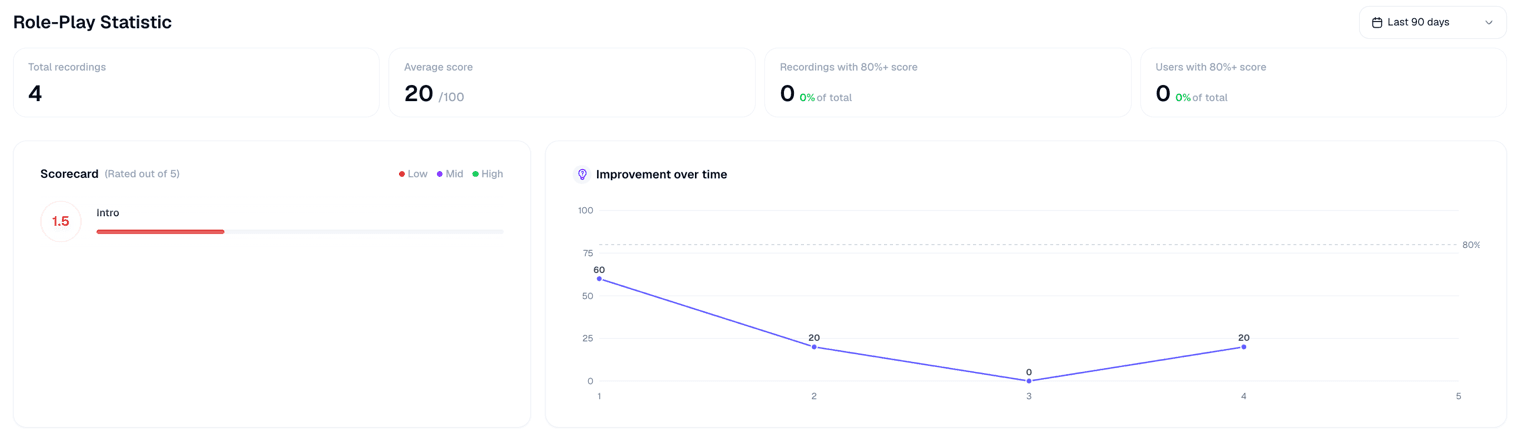
After each run the account executive gets the playback, the transcript and a summary. The scorecard splits the call into the playbook's stages, marks what they did and missed, and adds a coaching comment with the phrase or question to use next time. The upsell or referral ask can be a check of its own.
What the scorecard checks
- Discovery
- Presentation
- Closing
- Asked for an upsell or referral
Each missed step gets a coaching comment with an example sentence.
What managers see
Leaders see each account executive's score on every roleplay over time. New joiners can get a set list of roleplays, and a team can certify once a quarter with a pass mark such as 80%. At kickoff, PitchMonster's customer success team agrees before-and-after measures with the broker, such as playbook use on a sample of real calls.
- Run history for each account executive
- Upload a recording of a real call to rehearse the next meeting with that client
- Phone, or face to face with a video avatar and screen share
Lessons for your team
- Start with new joiners, who need training anyway.
- Put the cross-sell on the scorecard and give the AI buyer a reason to resist.
- Agree at kickoff how you will measure results, such as playbook use on real calls.
