Sales negotiation training is the structured practice of the single conversation where a deal's terms get decided: price, scope, contract length, and what each side gives up to close. It covers preparation before the call, concession discipline during it, and a scored debrief after it. Some teams call the same practice sales negotiation skills training; both terms point at the same gap in most sales training programs.
What sales negotiation training covers
Sales negotiation training focuses on the part of the deal cycle where terms get actively contested, not just discussed. A discovery call surfaces a problem. A demo shows a fit. A negotiation is where both sides argue over price, scope, contract length, or a specific clause, and someone decides what to give up to get the deal signed.
Done well, it turns three separate skills into one rehearsed habit. A rep needs strategic preparation: knowing the floor, the ceiling, and the walk-away point before the call starts. Value preservation matters just as much, trading a concession for something back instead of giving it away for free. And the rep needs composure under a buyer who deliberately stays vague, just to see how hard the rep will push.
Objection handling belongs here too, but it plays differently than it does earlier in the cycle. A price objection raised during discovery needs context; the same objection raised mid-negotiation needs a held number and a response ready before the call starts. Most sales training programs give reps plenty of practice pitching and qualifying. Negotiation gets far less practice, even though it decides whether a deal closes at the number the business needs.
Why peer-led and one-off negotiation practice plateaus
Most sales teams already run some version of negotiation practice. A manager plays the skeptical buyer before a big renewal, or two reps trade roles ahead of a close. It helps, for a while, and then it stops helping.
The ceiling is structural. A colleague playing the buyer still wants the practice deal to close. The moment a rep's number sounds shaky, the colleague softens instead of holding firm. PitchMonster's guide to sales role-play exercises covers the concession-trading and anchoring drill this produces in real detail. That single technique is worth the read on its own. It stays the right starting point before a rep runs a full negotiation drill.
What that guide does not cover is the harder problem: a dozen reps who all need negotiation practice on a schedule, scored the same way. Account types vary too, and a single give-get drill does not touch most of them. That gap, a real scenario library and a rubric built for negotiation, is where this guide picks up.
Building a negotiation scenario library
A negotiation scenario library is a small set of named buyer situations, each one built from a real account shape a team meets often. It gets reused across the whole roster instead of invented fresh for every rep. PitchMonster's roundup of 12 sales role-play scenarios already covers three solid negotiation scripts: a straight discount ask, a competitor squeeze late in the deal, and a deadline-driven timeline negotiation. Start there for those three. This section covers four scenario types most sales negotiation training skips, starting with the one nobody covers at all. Some of this demand shows up in search as sales negotiation role play exercises or negotiation role play scenarios. Most of it lands on a page that treats negotiation as one stop in a longer tour, not the whole subject.
Escalation-clause and contingency-triggered negotiation is the clearest gap. An escalation clause changes a contract term automatically once a defined condition is met: a renewal date, a usage threshold, an inflation index, or an SLA breach. Almost no sales negotiation training covers it directly. A rep who has never explained one out loud will fumble the first time a real contract triggers one.
Build two scenarios here. In "The Renewal Step," a happy champion pushes back on a contractual 8% price increase at renewal and asks for a freeze. The rep has to explain why the clause exists, then negotiate a partial freeze or a longer term in exchange for holding most of the step. In "The Usage Trigger," a customer crossed a seat or usage cap mid-term. The buyer's procurement lead disputes the trigger definition itself, not just the resulting price. The rep has to walk through the contract language calmly, without sounding like they are hiding behind fine print.
Multi-stakeholder procurement-committee negotiation adds a wrinkle a one-on-one drill never teaches: reading who holds the decision. In "The Committee Split," a champion favors the higher tier, and a procurement lead on the same call pushes for the lower one. A third stakeholder from finance says almost nothing, but holds the real veto. The rep has to notice who is quiet, not just who is loud, and address the finance stakeholder directly before the call ends.
Renewal and expansion negotiation looks easier than it is, because the buyer assumes the relationship carries the negotiation for them. In "The Quiet Renewal," a satisfied champion expects the contract to roll over at the same price. The champion gets defensive the moment the rep raises a modest increase tied to added seats. The drill here rewards naming the value delivered since the last renewal, not trading concessions like a fresh negotiation.
Competitive discount-matching is a cousin of the discount ask already covered elsewhere, with one added wrinkle: the buyer claims a competitor's quote without showing it. In "The Matched Quote," the buyer states a specific discount from an unnamed competitor and asks the rep to match it on the spot. The rep has to ask a specific, verifiable question about that quote before conceding anything. A vague claim earns a probing question, not an instant match.
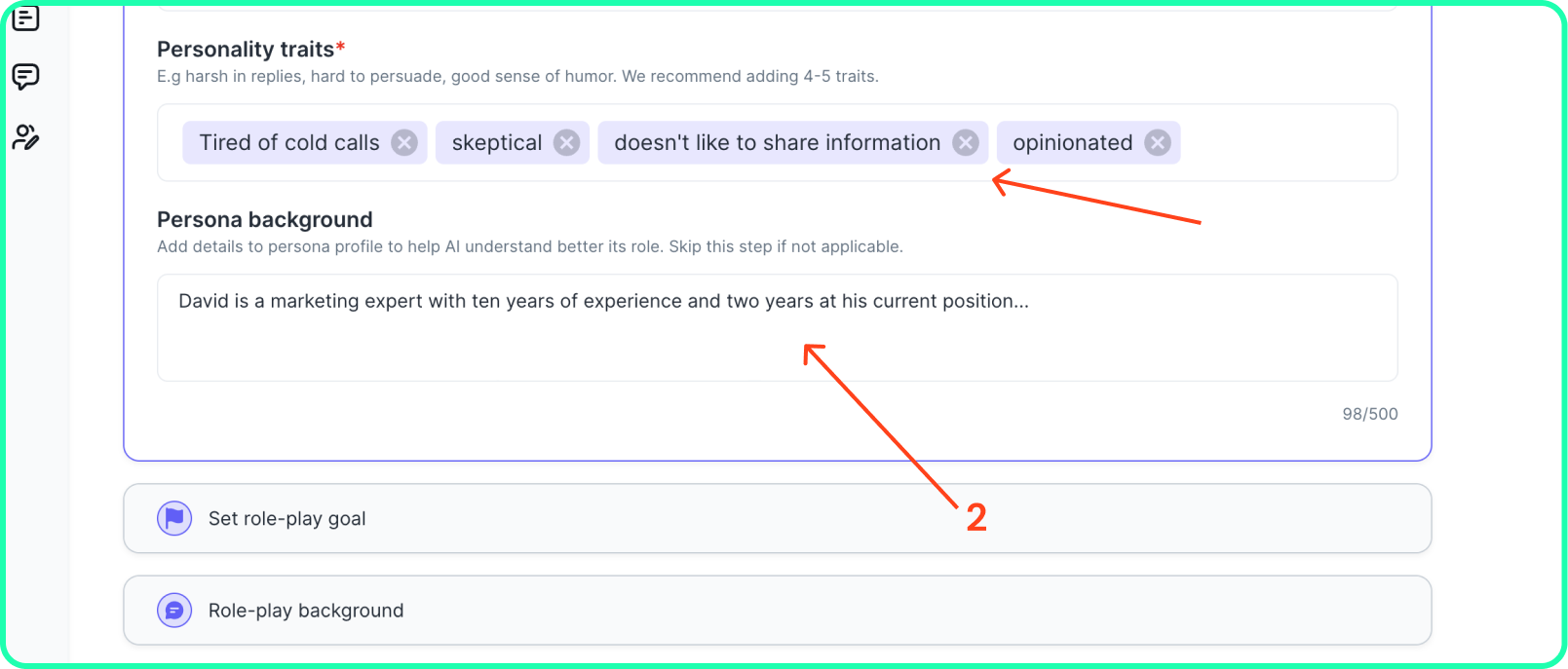
Building each of these from scratch is the slow part, and it's usually where a scenario library stalls before it starts. PitchMonster builds a scenario from a real call recording, a transcript, a contract, or a written prompt in about 2 minutes. A manager can turn last quarter's toughest renewal into next week's practice scenario instead of writing a persona from memory. Set the persona's traits specifically. "Holds firm on price" is not a trait a rep can rehearse against. "Will not move off the first number for at least two exchanges, then concedes only against a longer term" is.
Sample negotiation role-play scripts
A negotiation role-play script gives a rep exact language to react against, not just a scenario description. Some teams search for these as negotiation role play scripts, since a script gives a rep something to act on immediately, not just a situation to imagine. These two are built to run inside two of the scenario types above: escalation-clause and multi-stakeholder committee negotiation.
Escalation clause, "The Renewal Step"
Buyer: "I get that it's in the contract, but an 8% jump feels steep. Can we just freeze it this year?"
Rep: "I hear you. That clause exists so pricing keeps pace with the platform, not so it surprises you at renewal. Here's what I can do: hold the increase to 3% this year if we move to a 2-year term."
Buyer: "What happens next year, then?"
Rep: "Same clause applies, but you'll have seen exactly how it works by then, and we can revisit the term length again."
Multi-stakeholder committee, "The Committee Split"
Champion: "We'd love the higher tier, honestly. It covers everything we've talked about."
Procurement lead: "We were planning to come in at the base tier. That's what's budgeted."
Rep: "Let's separate those two questions. [Turning to the quiet stakeholder] From a finance standpoint, what would make the difference between those two tiers worth it this year?"
A script like this earns its place in a scenario library only if a rep runs it against real pushback, not just reads it once. That is what a scored drill is for, covered next.
Scoring negotiation practice: a rubric built for negotiation
PitchMonster's guide to building a sales role-play program already covers how to build a general role-play rubric: four to six criteria, scored on observable behavior instead of a gut feeling. That mechanic does not need repeating here. What negotiation needs is different criteria, because a strong discovery call and a strong negotiation call reward different things.
Four criteria cover most of what separates a controlled negotiation from one that drifts. Copy this table into a scorecard and start using it on the next drill.
Criterion | What "pass" looks like |
|---|---|
Concession ratio | Every concession trades for something back: a shorter cycle, a case study, a referral, not a concession given for nothing |
Anchor discipline | The rep holds the number stated at open and does not move off it in the first counter |
Walk-away follow-through | A stated walk-away line is followed by silence, not by the rep filling the pause with a new offer |
Value-trade completion | Final terms trade value for value (scope, term length, payment timing), not a straight price cut |
Score each criterion pass or fail, the same way a discovery call rubric does. A rep who fails walk-away follow-through for 3 straight sessions and then passes it on the fourth has learned something a single score would hide. Track the sheet across attempts, not just the latest one, since the trend is the part worth reporting to a manager.
Running negotiation drills on a cadence tied to the deal cycle
A weekly practice slot works well for general role-play. Negotiation drills earn more by tying to a moment in the deal cycle instead of a fixed day on the calendar. Three moments matter most.
Deal-cycle moment | What to drill |
|---|---|
Before the first pricing conversation | Anchor discipline and value-trade completion, since this is the first time a number gets said out loud |
When a deal stalls on a specific objection | The exact scenario that matches the stall, run twice with the difficulty raised the second time |
Ahead of a renewal or expansion conversation | Escalation-clause and quiet-renewal scenarios, since these carry the highest risk of the rep improvising |
A rep who only negotiates during real deals gets a handful of live attempts a year, and real revenue rides on every one of them. Tying practice to the cycle adds several more low-stakes attempts without waiting for a real account to force the lesson. New reps benefit from running the full scenario library once during ramp, then returning to specific scenarios as their pipeline reaches each moment.
Managers should report what changed, not just what ran. Report 3 numbers every month, not just a completion count:
- The pass rate on walk-away follow-through, the criterion most reps fail first.
- Scenarios completed against the assigned library.
- Time from first negotiation drill to the first real negotiation call that clears the same rubric.
Those numbers connect practice to a result leadership already tracks, instead of stopping at "reps did the exercise." For the mechanics of running any role-play program end to end, see PitchMonster's guide to sales role-play.
Where AI-buyer practice changes negotiation drilling, and where it does not
An AI buyer changes one thing above all else: it can hold a number under pressure for as long as the drill requires, without breaking character to be nice. It does not get tired of a rep who keeps re-asking the same question, and it does not run out of time before the next meeting. That single trait is what makes the cadence in the last section possible to run at scale, across every rep and every deal-cycle moment, without burning a manager's calendar.
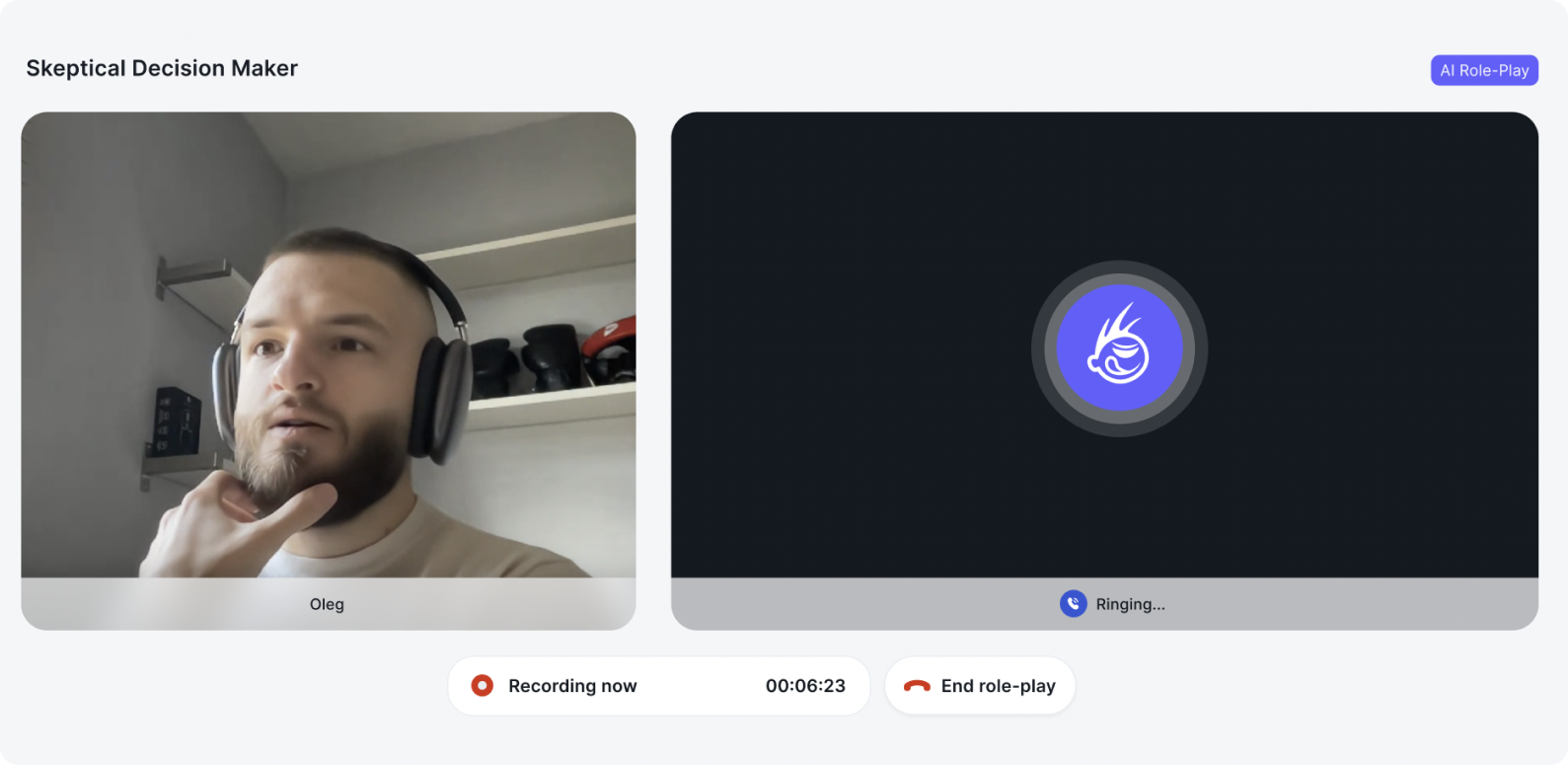
It does not change what "good" looks like on a real negotiation call. The rubric still has to come from a manager who has sat through real negotiations and knows which behaviors correlate with a deal closing at the number the business needs. An AI buyer scored against the wrong criteria produces reps who win every practice round and still give away margin on the first real call.
It also does not replace what a manager wants to see in person. That includes how a rep handles a buying committee member who interrupts mid-sentence, or reads the room when a champion goes quiet on video. AI role-play and screen-share practice cover different mechanics for a reason. A program that only ever runs one of them is missing half the format most B2B negotiations happen in.
This is a capacity gain, not a quality upgrade. A manager can run 2 or 3 live negotiation drills a week before running out of hours. Escalation clauses, committee splits, and quiet renewals all need more repetition than that to stick. An AI buyer removes that ceiling, which is the only reason a weekly or per-deal-cycle cadence across a full team is realistic at all.
What PitchMonster does differently
A scenario library and a rubric get a team most of the way there, and any AI-buyer tool can run both. What sets a negotiation program apart happens right after the call ends, in the few minutes most teams skip completely.
The AI Coach debriefs every negotiation drill by asking the rep what happened before it shows a score. A rep who is told "you moved off your anchor at minute 3" tends to forget it by the next deal. A rep who is asked what happened right after the buyer pushed back, and has to find the gap alone, tends to keep it. The correction comes from the rep's own answer, not a grade screen. It also runs 24/7, so a rep drilling an escalation-clause scenario at 9pm the night before a renewal call gets the debrief immediately, not at the manager's next 1:1.
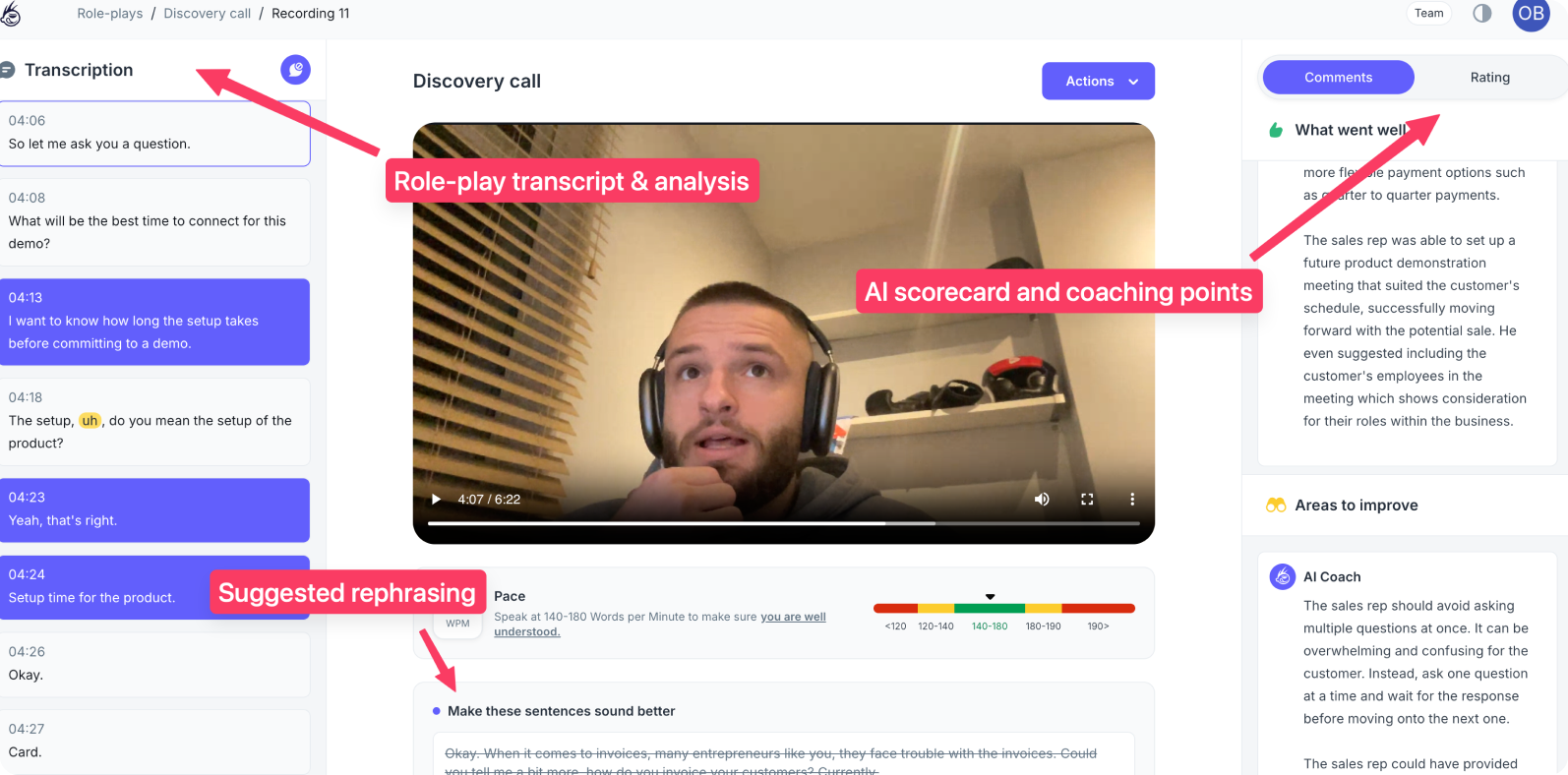
Live Call Analysis runs the same rubric against a rep's real recorded negotiation calls, not just the drills. A manager can see whether a behavior a rep finally nailed in practice, holding an anchor, showed up on Wednesday's real renewal call. That check matters more than assuming the practice improvement transferred on its own. PRN reps improved 22.37% on real calls running that same practice-to-real loop.
"I think I really like the AI coach... That's definitely going to save us a lot of time." - Wendy Mateo De Perkins, One Park Financial
Negotiation practice also protects something budget-limited: real leads.
"Our leads are very expensive. Having to do trial and error with live leads is an expensive practice." - Daniel, One Park Financial
That is exactly the risk a negotiation scenario library exists to absorb, before a live deal ever pays for the lesson.
PitchMonster is EU-based with EU data residency under GDPR, the only European platform among the top 5 in this category. That matters for a sales enablement program built on recorded negotiation calls, which often carry pricing and contract terms a legal team already cares about. PitchMonster holds a 4.9 rating on G2, has kept a 100% enterprise renewal rate since spring 2024, and has trained more than 300,000 reps. Mentor Group cut ramp time by 50% on average while running this kind of structured negotiation practice, halving coaching time per rep and lifting message-delivery accuracy by 27%.
If a rep's negotiation practice today is a manager reading pushback from a script, book a demo. We will build the first scenario from one of your own recent negotiations.
Frequently asked questions about sales negotiation training
What is sales negotiation training?
Sales negotiation training is structured practice of the conversation where deal terms get finalized: price, scope, contract length, and what each side gives up to close. It differs from general role-play by focusing only on the moments where those terms are actively contested. A rep drills a specific negotiation scenario, gets scored against a rubric, and repeats it until the behavior holds under real pressure.
What is the difference between negotiation role play exercises and negotiation role play scenarios?
A negotiation role-play scenario is the setup: a named buyer situation, such as a procurement committee holding firm on price. What people search for as "negotiation role play exercises" usually means the specific drill run inside that scenario, such as practicing one concession trade or one walk-away line. A library needs both: enough scenarios to cover the deal types a team meets, and enough exercises inside each one to build a real behavior.
How often should sales teams run negotiation drills?
Tie the cadence to the deal cycle instead of a fixed weekly slot. Run a drill before a deal enters its final pricing conversation, again if the deal stalls on a specific objection, and once more ahead of a renewal or expansion call. A rep who only negotiates during real deals gets a handful of live attempts a year. Tying practice to the cycle adds several more without waiting for a real account to force it.
What should a negotiation training rubric measure?
Score concession ratio: what the rep gets back for every concession given. Score anchor discipline: whether the rep holds a number under pressure. Score walk-away follow-through: whether a stated walk-away gets enforced. Score value-trade completion: whether the final terms trade value for value rather than a straight discount. Score each one pass or fail, so a manager can name exactly what needs to change.
Can AI buyers replace live negotiation practice with a manager or peer?
No. An AI buyer removes the capacity limit on repetition, since a manager cannot run more than 2 or 3 live negotiation drills a week. It cannot replace a manager's judgment about which concessions matter on a specific account, and it cannot fully recreate reading a buying committee's body language over a live screen-share. Teams that get the most from AI-buyer practice run it alongside manager-led sessions, not instead of them.
How long should a negotiation role-play session run?
Budget 15 to 20 minutes per attempt rather than a full negotiation from open to close. A focused session only needs to cover the specific moment being drilled, such as one price anchor and one counter. Running the same scenario twice in that window, with a short debrief between attempts, builds the behavior faster than one long, unfocused rehearsal of an entire negotiation.
What is escalation-clause negotiation, and why does it need its own practice?
Escalation-clause negotiation is the conversation over a contract term that changes automatically once a defined condition is met. A common trigger is a price increase tied to a renewal date or a usage threshold. It needs its own practice because the rep has to explain a future, conditional cost before it happens, not defend a price already on the table. Almost no sales negotiation training covers this scenario type directly.
The short version
Run sales negotiation training as its own discipline, not a subsection of general role-play. Build a scenario library that covers what your team negotiates: committee splits, escalation clauses, quiet renewals, and matched-quote claims, not just the discount ask everyone already drills. Score every attempt against a rubric built for negotiation: concession ratio, anchor discipline, walk-away follow-through, value-trade completion. Then tie the cadence to the deal cycle instead of a fixed day on the calendar. A scenario library and a rubric get most teams to competence. The cadence in this guide is what turns one good session into a program that holds under real pressure.