Search "recruiter training program" and you get a shopping mall. Certificates, bootcamps, academies, coaching packages, all stacked on the same page, all answering different questions. Four different questions, in fact, and almost no page tells you which one it is answering.
Here they are, separated:
What people mean by "recruiter training" | Who buys it | What it changes |
|---|---|---|
A certificate you buy for yourself | An individual recruiter | Your CV and your sourcing vocabulary |
A coach you hire personally | A solo biller or owner | Your own desk, one person deep |
An internal ramp program | An employer with new hires | Time to first placement |
A licensed academy for the whole team | An agency or in-house TA function | Baseline knowledge across the team |
If you are in the first 2 rows, the certification table below is the useful part of this page. Take it and go. The rest is written for the other 2 rows. You already employ recruiters, they are already on the phone, and you want them better on candidate and client calls by the end of the quarter.
The certification layer, priced from the vendor page
Certifications are worth buying. They give a shared vocabulary, they satisfy procurement, and they give a new recruiter something to point at in month 2. What they do not do is change what happens on a live call, because almost none of them score one.
Published prices for recruiting credentials are a mess in blog roundups. The same AIRS certification shows up at 3 different figures across the first page of Google, none of them linked to a vendor page. Below is what the vendors themselves published, checked on 2026-08-25.
Program | Vendor | Published price | Format |
|---|---|---|---|
AIRS | $895 | Self-guided or a 5-hour instructor-led session, 12 months of access | |
AIRS | $1,995 | 2-year access to 16 certifications and the full course library | |
HRCI | $395 exam fee plus $100 application fee | Proctored exam | |
AIHR | 975 EUR | 42.5 hours of self-paced learning, 12 months of access | |
SHRM | Published on request | Seminar plus e-learning and assessment | |
NAPS | Published on request | Certification exam for staffing and search professionals |
Two of the 6 do not publish a figure at all. If a roundup quotes you a price for those, ask where it came from.
Budget for 1 of these per recruiter in year 1 if you want the baseline. Do not expect it to move your submission-to-interview ratio. That is a different build.
The 3 calls that decide your quarter
A 360 recruiter loses money in 3 places, and they are all conversations:
- The intake call with the hiring manager. Weak intake means a vague brief, which means the wrong shortlist, which means 4 weeks burned before anyone notices.
- The candidate call at offer stage. Counter-offers and second processes kill placements that were already billed in your forecast.
- The commercial call with the client. Fee percentage, exclusivity, contract rate. One soft answer here costs more than a month of sourcing.
Every recruiter training program in the search results lists these as skills. Sourcing, screening, interviewing, negotiation, ATS literacy, communication. Fine. The gap is that 4 of the top pages tell you to run role-plays. Not 1 of them tells you what scenario to run, how to score it, or how often. Recruiterflow's own advice is a single sentence about designating monthly practice days. The longest article on the SERP, over 4,000 words, does not mention practice at all.
So here is the part nobody ships.
A scenario library you can run on Monday
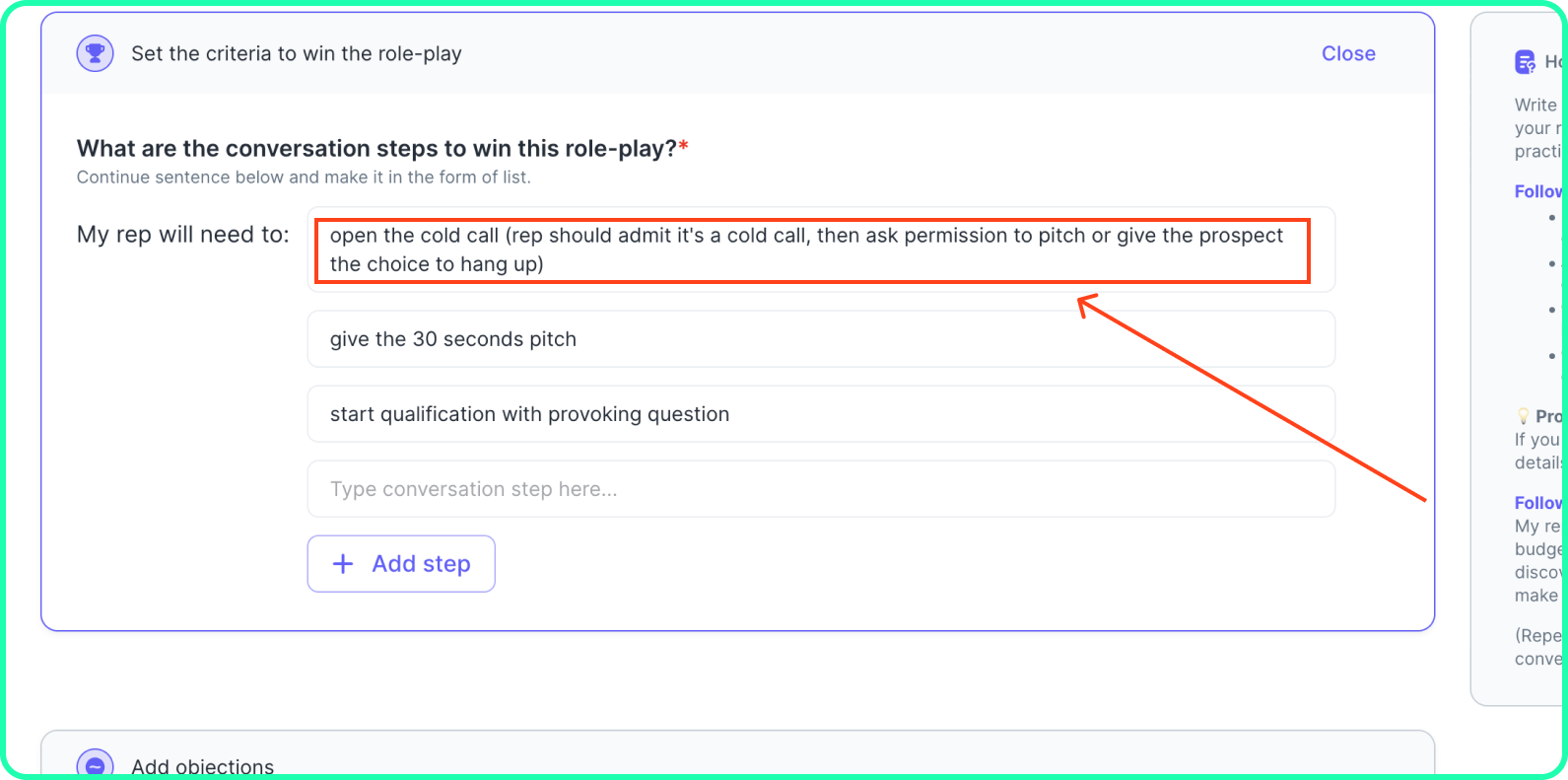
Nine scenarios, 3 tracks, 8 to 12 minutes each. Each one needs a defined counterpart behaviour and a pass condition, otherwise it is 2 colleagues being polite at each other.
# | Track | Scenario | What the counterpart does | Pass condition |
|---|---|---|---|---|
1 | Intake | Vague requirement | Hiring manager describes a "strong all-rounder" and resists specifics | Recruiter leaves with 3 must-haves, 2 deal-breakers and a named comparison hire |
2 | Intake | Salary band below market | Manager insists the band is fine and gets defensive on evidence | Recruiter presents market data without arguing and gets agreement to revisit the band or the spec |
3 | Intake | "Just send me CVs" | Manager tries to end the call in 4 minutes | Recruiter keeps the call and books a 20-minute scoping slot with a date |
4 | Candidate | Counter-offer from current employer | Candidate is flattered, mentions loyalty and a pay rise | Recruiter surfaces the original reason for leaving and books a call before the candidate answers |
5 | Candidate | Two live processes | Candidate is vague about the other timeline | Recruiter gets the competing stage, the date, and a commitment on decision criteria |
6 | Candidate | Cold approach to a passive engineer | Candidate is short and mildly annoyed for the first 30 seconds | Recruiter earns 5 more minutes and books a proper call |
7 | Client | Fee objection | Client says a competitor works at a lower percentage | Recruiter holds the fee or trades it for exclusivity or a retainer, never both away |
8 | Client | Exclusivity ask | Client refuses and cites a bad past experience | Recruiter offers a time-boxed exclusivity with a named exit condition |
9 | Client | Contract rate squeeze at renewal | Client asks for a margin cut across 12 live contractors | Recruiter protects margin on the majority of the book and quantifies the trade |
Track 1 and 3 are commercial conversations, which is why this sits closer to sales training than to HR training. If your team runs a full agency desk, the deeper build for those 2 tracks lives in our staffing agency sales training guide. The scenario mechanics generalise from our 12 sales role-play scenarios.
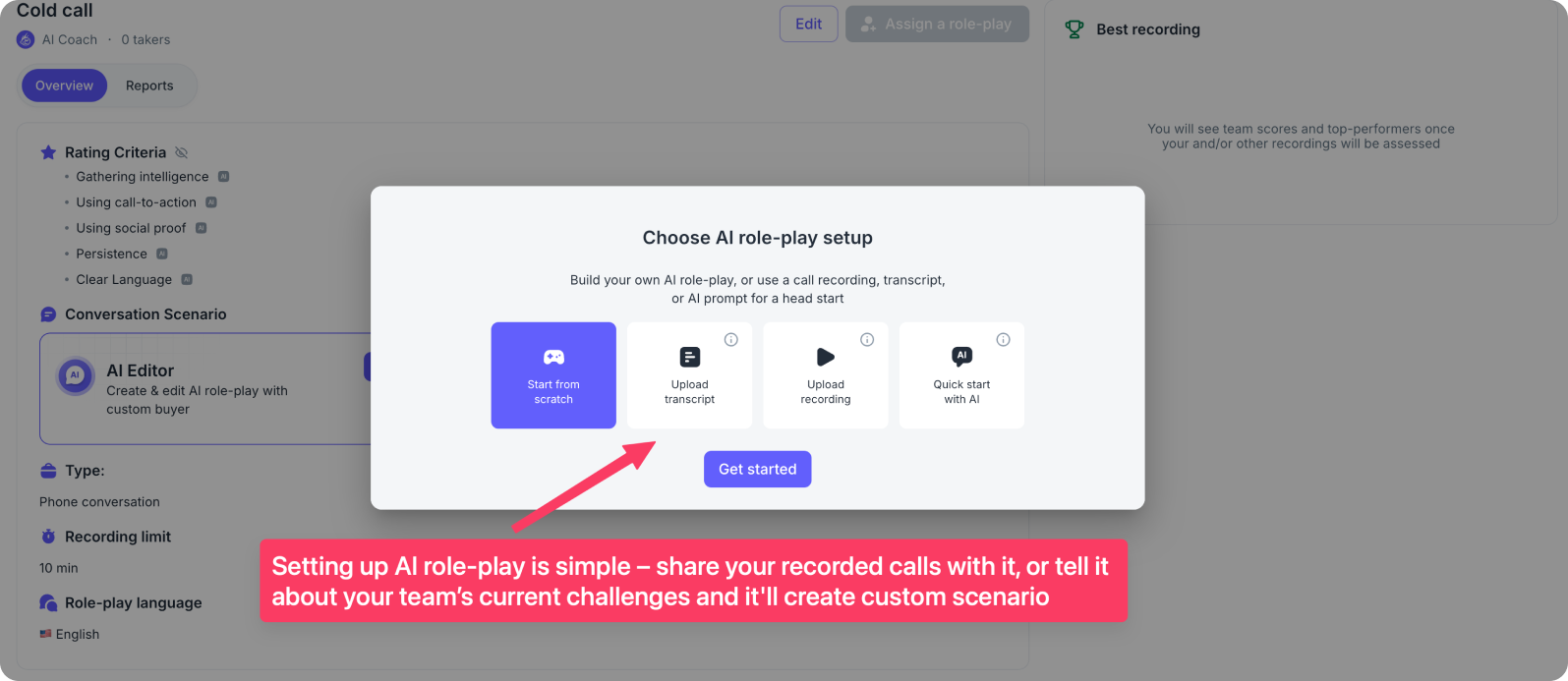
Practising these with a manager works until the manager runs out of Tuesdays. Practising them against an AI role-play platform removes the scheduling problem. The counterpart is available at 7pm, plays the same difficulty every time, and does not go soft on a recruiter it likes. PitchMonster runs these in 29 languages, which matters when your Warsaw desk and your Amsterdam desk are working the same client.
The rubric, so 2 managers give the same score
Scoring is where most programs quietly collapse. If 2 team leads score the same call 6 points apart, nobody trusts the number and the drill becomes theatre.
Use 5 dimensions, weighted, out of 100.
Dimension | Weight | 1 point, below bar | 2 points, at bar | 3 points, above bar |
|---|---|---|---|---|
Opening and reason for the call | 15 | No reason given, apologises for the interruption | States a clear reason and asks for the time | Reason is specific to that person or that role, earns attention in under 20 seconds |
Qualification depth | 30 | Accepts the first answer | Gets the required facts by asking directly | Gets the facts plus the motivation behind them, and plays them back |
Objection handling | 20 | Concedes or argues | Acknowledges, then answers once with evidence | Isolates the real objection first, then answers, then checks it landed |
Commercial control | 25 | Ends with "I'll send something over" | Books a next step | Books a dated next step with a named owner and a stated purpose |
Pace and talk ratio | 10 | Talks over 70% of the call | Roughly balanced | Under 50%, uses silence after the hard question |
Multiply each score by its weight, divide by 3, and you get a number out of 100. Set the certification bar at 80 or better on 2 different scenarios, scored by 2 different people. That is the same logic behind sales rep certification: a recruiter is signed off on a call type, not on a course completion.
Calibrate the rubric before you use it. Have 3 managers score the same recorded call cold and compare. If the spread is more than 10 points, your wording is too loose, not your managers.
Cadence and debrief
Volume beats intensity. A single offsite role-play day produces nothing 3 weeks later.
Run 2 scored role-plays per recruiter per week, 8 to 12 minutes each. That is roughly 8 per month, which is enough to move a habit and small enough that nobody cancels it. Rotate tracks so a recruiter is not drilling intake calls for a month while their offer stage leaks.
The debrief is 15 minutes and has 4 steps, in this order:
- The recruiter self-scores against the rubric before hearing anyone else. If their self-score is more than 15 points off the manager's, the gap in awareness is the coaching topic, not the call.
- The manager reads out 1 rubric line, not 5. Pick the lowest-weighted failure that is easiest to fix this week.
- Replay 1 clip of 60 seconds. The exact moment the call turned. Not a summary of it.
- The recruiter states 1 commitment for their next live call, in their own words, and the manager writes it down.
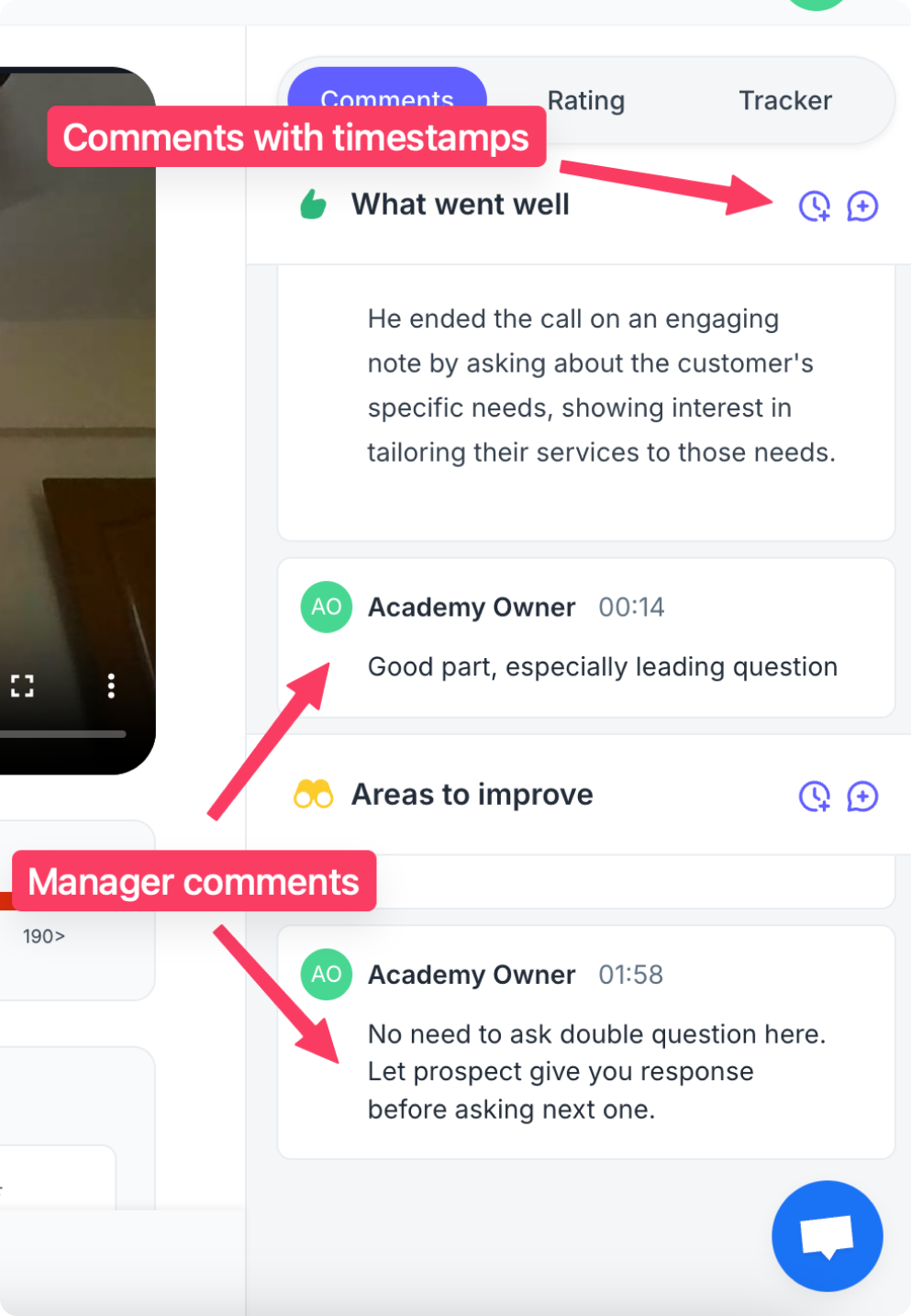
Between sessions, the AI Coach handles the part managers never get to: a Socratic post-session debrief that asks the recruiter why they conceded the fee instead of telling them. It is available 24/7 and personalised to that recruiter's own pattern across sessions.
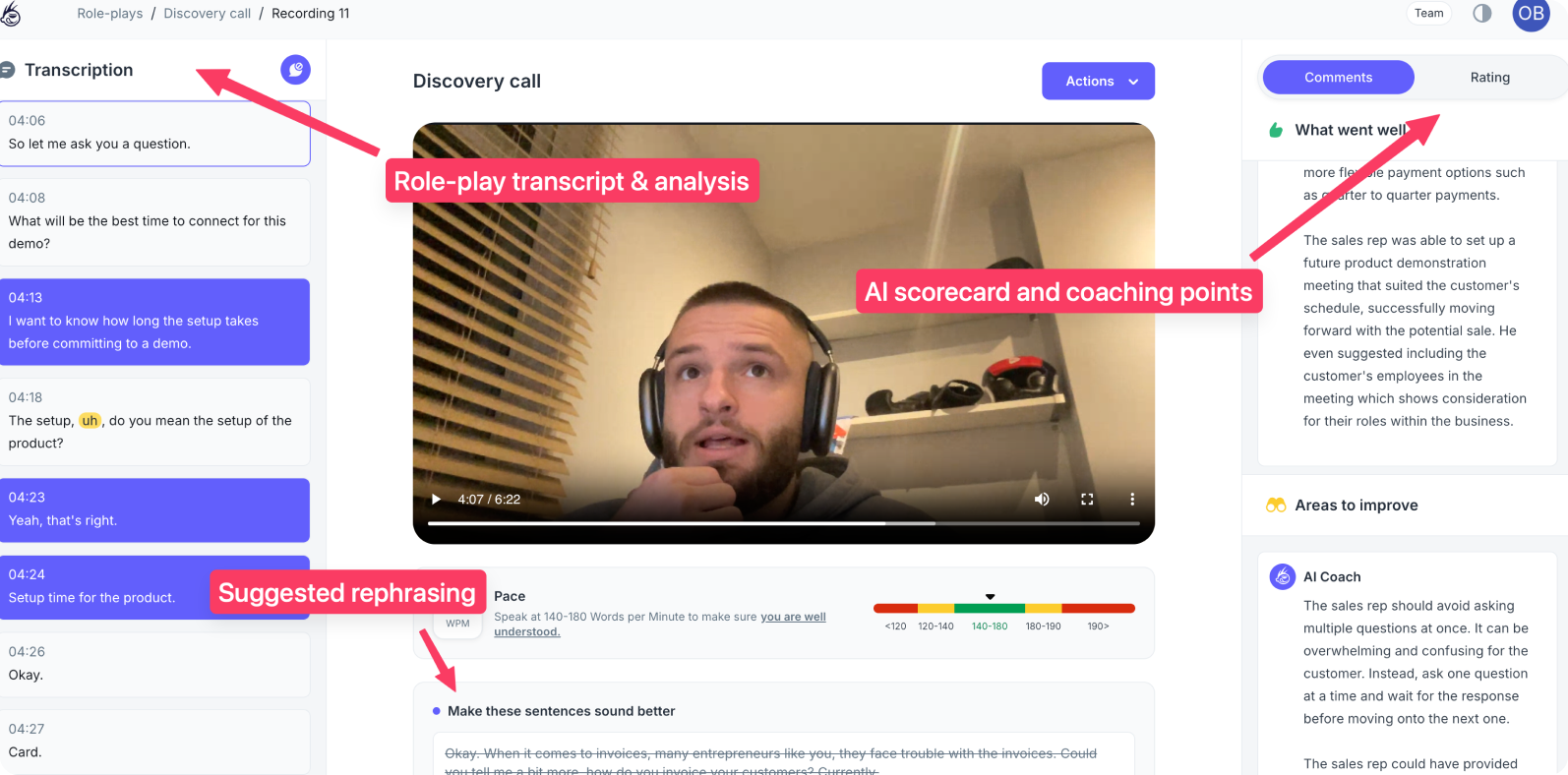
That is the difference between a library of recorded practice and coaching that compounds. More on how that works in AI sales coaching software.
For client pitch meetings and shortlist presentations, run the same drills in screen-share mode so the recruiter is talking over the actual deck rather than describing it.
Measure it on real calls, not on practice scores
Every employer-side article on this topic lists metrics: time-to-fill, placement rate, submission-to-interview ratio, billings. Almost none shows a before and after on a real recruiting team.
PRN Health Services, a US healthcare staffing firm, measured over a 60-day window. It reported 22.37% higher scores on actual calls, a 14% increase in interviews conducted, and a 9% increase in talk time. Their L&D director at the time, Mandy Nycz, ran it as a call-quality program rather than a course rollout.
Read the middle number again. Interviews conducted is an activity metric a recruiting manager already tracks weekly, so it does not need a new dashboard to prove the point. And the measurement is on live calls, not on practice scores, which is the only version worth reporting to a board.
Pick 3 numbers before you start: 1 quality number scored on real calls, 1 activity number from your ATS, and 1 outcome number like submission-to-interview ratio. Baseline them for 30 days first. A program that cannot show a delta gets cut in the next budget round, no matter how good the content was.
Running it at scale without an enablement hire
The honest constraint in most agencies is that there is no dedicated enablement person. Training is whatever a team lead squeezes between their own billings, which means it stops the moment the desk gets busy.
SThree, the FTSE-listed STEM staffing group behind Computer Futures, Progressive Recruitment and Real Staffing, runs roughly 2,700 people across 11 countries and reported 2x less coaching time per rep. Their senior curriculum lead, Stefano Bianchini, built the practice layer so the repetitive part happens without a manager in the room. Manager time now goes to the calls that need a human.
The same pattern shows in Mentor Group, which reported 50% faster average ramp-up and a 2x reduction in coaching time per rep. If you are ramping recruiters in cohorts, the mechanics carry over from sales onboarding.
The 30-day build
Week 1: baseline your 3 numbers and record 5 real calls per track. Week 2: write the rubric, calibrate it across 3 managers, and cut the scenario list to the 4 that match your current bleed. Week 3: run the first 2 sessions per recruiter and debrief them properly, even if it takes 25 minutes the first time. Week 4: certify nobody. Just get the cadence to hold when the desk is busy, because that is the only thing that predicts whether this exists in March.
Then add the certifications from the table above for whoever wants them. In that order, not the reverse.
If you run an agency desk and want the commercial half of this in more depth, start with staffing agency sales training. If you want to see the scenario library, the rubric and the AI Coach running against your own briefs, book a demo and bring 1 real intake call you lost.