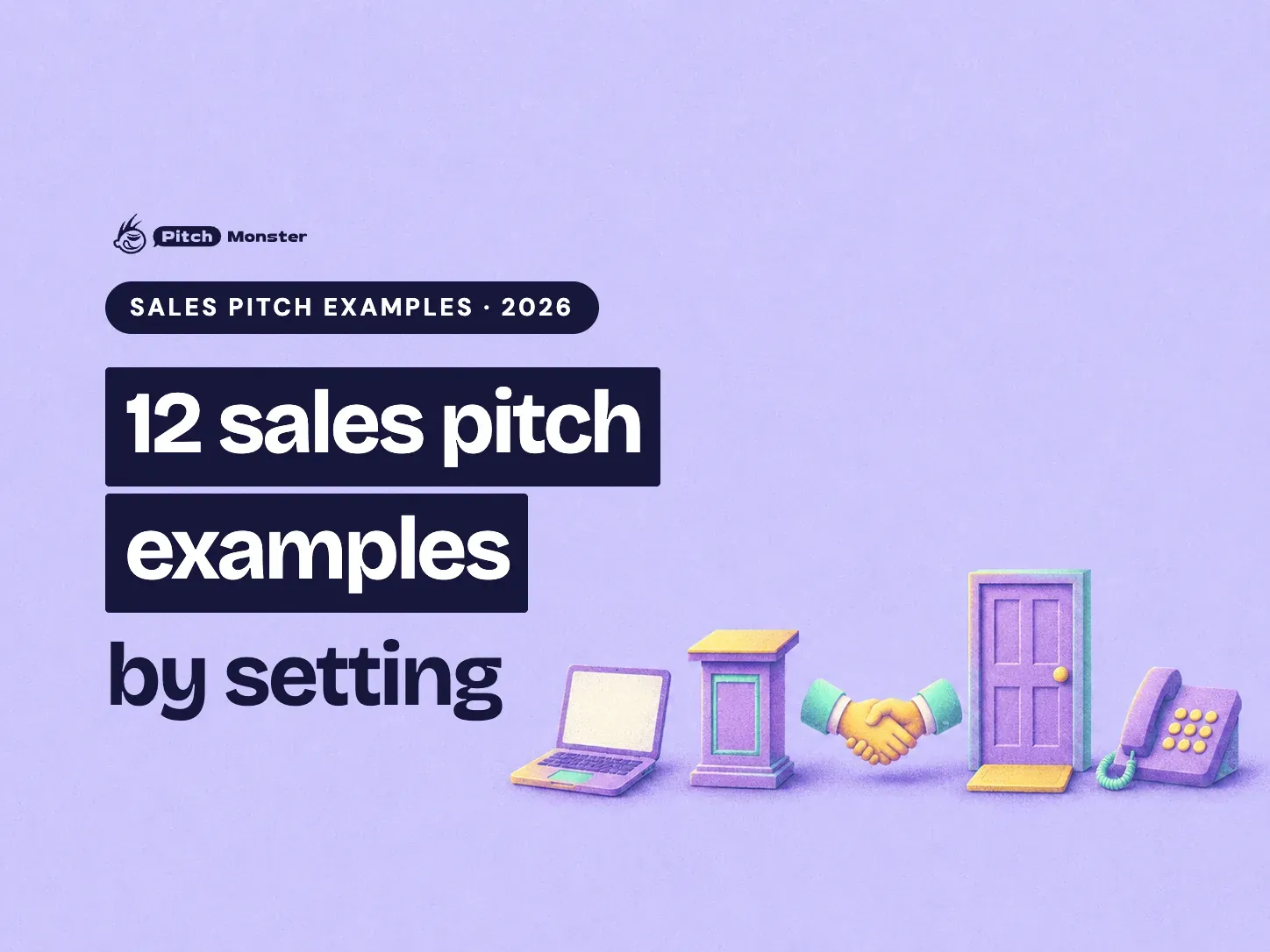
A sales pitch is a short, structured case for why a buyer should take a next step. Name a problem the buyer recognizes, show credible proof that it can be solved, and ask for one clear action. These 12 sales pitch examples are sorted by selling setting, from a Zoom demo to a doorstep conversation.
Last updated: November 17, 2026.
How to write a sales pitch
Problem: Name a problem the buyer already feels, using words they might use. A specific problem gives the conversation a reason to continue. Avoid opening with a product description before the buyer recognizes the issue.
Proof: Use evidence the rep is allowed to share. That might be a similar customer's situation, a demonstration of the exact step, or a number the rep can source. Never fill a gap with an invented figure or result.
Next step: Ask for one small, dated action. Make it clear what the buyer would do and when. A useful ask could be a short follow-up meeting to review a specific question. These 3 parts are the sales pitch ideas behind the examples below.
12 sales pitch examples by selling setting
Use these as sales pitch script examples, then rewrite them in your own words. The 12 pitches below cover 5 settings: a Zoom demo, a live presentation, a face-to-face meeting, the doorstep and the phone. Each example gives the words a rep says, a note on why it works and a practice prompt a manager can assign.
On a Zoom demo
Example 1: Open with the problem
You mentioned that new reps take a while before they can run a customer conversation on their own. Let me start with the part of the process where that time goes. Then we can decide whether the rest is worth looking at.
Why it works: It starts with the buyer's concern and gives the demo a clear focus.
Practice prompt: Ask the rep to open without naming the product, then invite the buyer to redirect the focus.
Example 2: Show the requested step
You asked how the review works when a request comes in. I’ll show that step first, so you can see what the handoff looks like. Afterward, we can decide whether to look at anything else.
Why it works: It answers the buyer's stated question before widening the conversation.
Practice prompt: Have the buyer ask for a different feature midway through, and practice returning to the agreed question.
Example 3: SaaS pitch to a team lead
You’re looking for a clearer way to see where work is waiting. I can show you how a team lead reviews an open item and decides what happens next. Would it help to walk through that view together now?
Why it works: It connects a software demonstration to a working decision the buyer cares about.
Practice prompt: Ask the rep to explain the screen without reading labels aloud.
In a live presentation
Example 4: Buying committee presentation
The current process asks people to repeat the same steps in different places. That makes it harder to see who owns the next move. I’ll show the proposed handoff, then we can discuss whether it fits your teams.
Why it works: It describes the cost of a process in plain language without inventing figures.
Practice prompt: Let different committee members raise concerns, then ask the rep to keep the opening grounded in the process.
Example 5: Close with a decision ask
We have covered the part you wanted to change and the steps needed to support it. The open question is whether this approach fits your review process. Can we set a date to decide after your team has considered that question?
Why it works: It asks for a decision step rather than ending with a vague invitation.
Practice prompt: Have the buyer say they need to discuss it internally, and ask the rep to agree on a follow-up date.
Face to face
Example 6: First meeting in the buyer's office
Before I explain what we do, what part of the current process is hardest to manage? I can focus our conversation on that and show a relevant example. If it seems useful, we can agree on what to review next.
Why it works: It earns permission to tailor the conversation instead of delivering a generic opener.
Practice prompt: Ask the buyer to give a broad answer, then coach the rep to ask one useful follow-up.
Example 7: Insurance coverage review
You may have arranged your coverage at a different stage of life. I can help review what you have now and explain the options in plain terms. Would you like to book a time to look at your current coverage together?
Why it works: It invites a review without promising what a policy pays or making assumptions about coverage.
Practice prompt: Have the buyer ask for a guarantee, and practice explaining that the review starts with their current documents.
Example 8: Follow up after “not now”
Last time, you said this was not a good moment to review the process. Has anything changed, or should we leave it for now? If it is worth revisiting, we can choose a time that suits you.
Why it works: It respects the buyer's earlier answer and lets them set the pace.
Practice prompt: Ask the buyer to repeat “not now” and practice responding without arguing.
At the door
Example 9: Home services after a storm
We’re speaking with homeowners in the area after the recent storm. I can take a look at the roof exterior and point out anything you may want to review. Would you be open to an inspection?
Why it works: It offers a relevant inspection without claiming the home has damage.
Practice prompt: Ask the rep to make the offer clearly without implying damage or discussing insurance payouts.
Example 10: Home service when the homeowner is busy
I can see you’re busy. We help homeowners review exterior maintenance. Would another time work better for a quick introduction?
Why it works: It keeps the opener brief and asks permission to return at a better time.
Practice prompt: Have the homeowner say they are heading out, then practice asking for a suitable time without pressing.
On the phone
Example 11: Cold phone pitch
Have I caught you at a bad time? I’m calling because managers who hire this quarter often want new reps running real customer conversations sooner. Is ramp time something you’re looking at right now?
Why it works: It asks permission, explains the reason for the conversation, and asks one question.
Practice prompt: Have the buyer say “What is this about?” and coach the rep to answer in one sentence.
Example 12: Warm phone pitch
You recently downloaded a guide about preparing for customer conversations. I wanted to hear which part was most useful and what questions it raised. Would you have a moment to talk through that?
Why it works: It refers to the buyer's earlier interest without assuming they are ready to buy.
Practice prompt: Have the buyer say they have not read the guide yet, then practice offering an easy next step.
Industry examples: home services, insurance and SaaS
The home services example starts with a relevant inspection offer; see roofing and home services sales training. The insurance example invites a review of existing coverage without promising an outcome; use these insurance sales role-play scripts to practice that conversation. The SaaS example ties a screen demonstration to a team lead's workflow and decision.
How to practice a pitch before you use it
For broader sales pitch and demo practice, start with one setting and rehearse the words. For closing lines, review how to end a sales pitch.
With PitchMonster, reps can rehearse each pitch with an AI buyer. They can practice the same pitch more than once, with a realistic buyer voice. Managers set up the persona's name, title, company, difficulty level, photo or 3D avatar, and voice, so the buyer matches the setting the rep sells in.

After a session, the AI Coach steps in before the score is revealed and asks the rep reflective questions, so the rep self-diagnoses first and then sees the score. The AI Coach is available 24/7. Reps can use sales call practice to rehearse a conversation before facing a buyer.

FAQ
What does "sales pitching" mean?
Sales pitching means making a short case for why a buyer should consider a next step. A rep names a problem the buyer recognizes, offers relevant proof, and makes one clear ask. The pitch should fit the buyer and the setting. It can start a larger discussion, support a demonstration, or ask for time to review an option.
How do you pitch on a sales call?
To pitch in a sales conversation, begin with a problem the buyer recognizes, then connect it to evidence you can share. Keep the explanation focused on the buyer's situation and ask one clear next step. If the buyer raises an objection, respond to that concern before returning to your requested action.
Can you give an example of a phone sales pitch?
A phone sales pitch can open by asking permission, giving a reason for the conversation, and asking one question. For example: “Have I caught you at a bad time? I’m reaching out because teams that add reps often want them ready for customer conversations sooner. Is that on your list this quarter?” The rep then follows the buyer's answer.
What makes a good sales pitch?
A good sales pitch connects a buyer's recognized problem to relevant proof and one clear next step. It sounds natural in the rep's voice and fits the setting. A manager can listen for those parts, then have the rep practice again with a buyer who asks questions or pushes back.
What is an elevator pitch example?
An elevator pitch is the short version of a sales pitch: who you help, the problem you remove and one question. For example: “We help sales managers get new reps ready for real customer conversations before their first one. How are your new hires practicing today?” It opens a conversation rather than closing a deal.