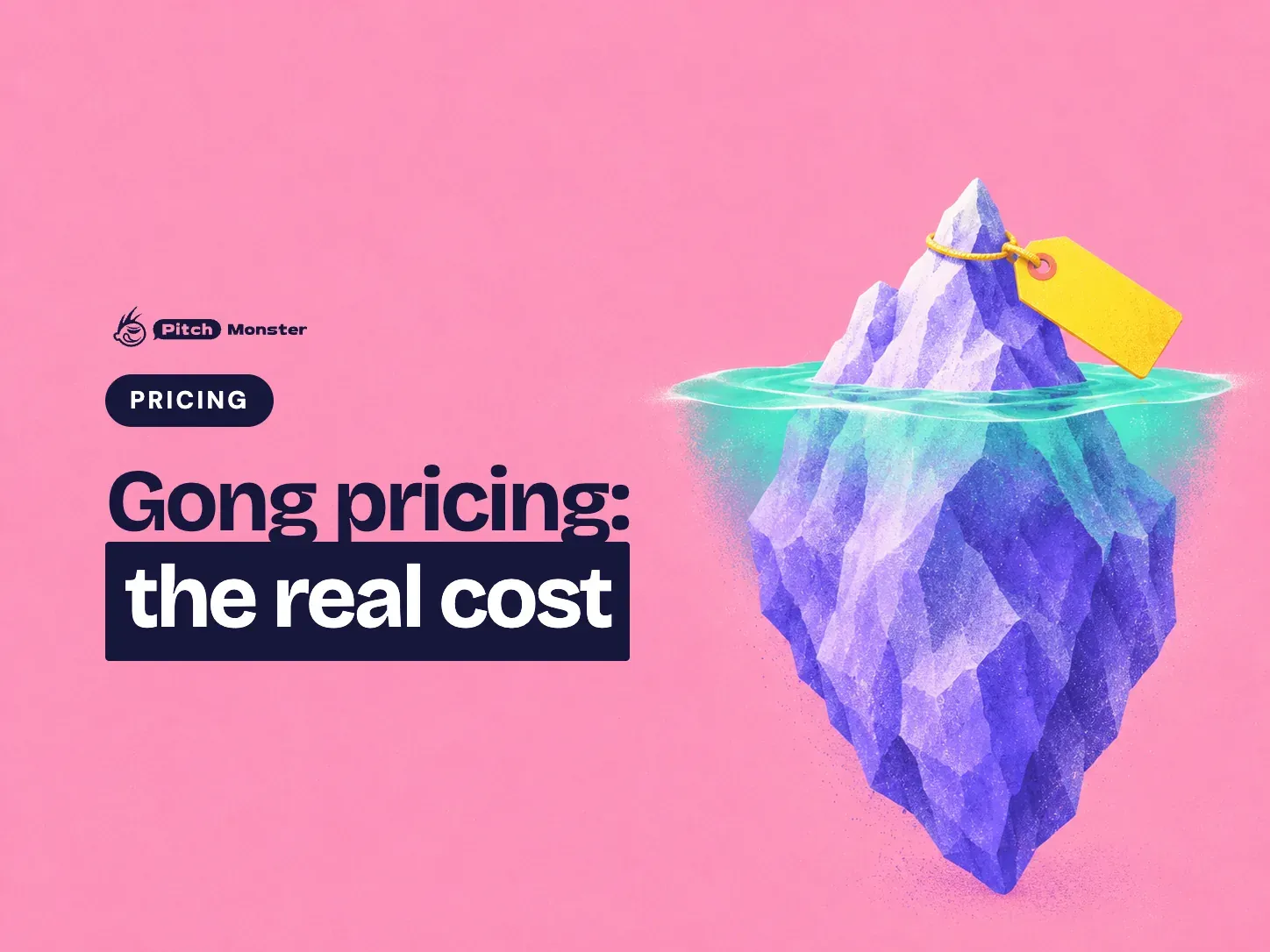
Gong pricing in 2026 is not published, but reported figures are consistent: expect roughly $1,300 to $1,600 per user per year for a Foundations license, plus a platform fee reported between $5,000 and $50,000 a year and onboarding around 7,500. For a small team, that puts a realistic first-year total near $28,000 to $29,000. This guide breaks down every line.
Gong does not list prices on its site, so every number here is a reported third-party range, consistent across pricing guides and buyer data, not an official quote. Treat it as a planning baseline, then negotiate your own. Below you will find the components, a first-year example, the 2026 AI credit change, and an honest read on whether Gong is worth it.
Gong pricing at a glance
Gong prices in layers rather than a single per-seat number. The table below shows the reported components you will see on a quote.
Cost component | Reported range (2026) | Notes |
|---|---|---|
Foundations license | ~$1,300 to $1,600 per user/year | Negotiated deals reported as low as $1,000 to $1,349 |
Platform fee | ~$5,000 to $50,000 per year | Mandatory; does not scale down with team size |
Onboarding | ~$7,500+ one-time | Required for most new customers |
Gong Forecast (add-on) | ~$700 per user/year | Was bundled before the 2025 restructure |
Gong Engage (add-on) | ~$800 per user/year | Sales engagement module |
Bundled all modules | ~$2,400 to $3,000 per user/year | Foundations plus common add-ons |
Renewal uplift | ~5 to 10% per year | Auto-renewal increases are common |
These ranges come from third-party pricing guides and buyer-data sources, since Gong publishes no official rate. The takeaway is that the per-user license is only part of the cost. The platform fee and onboarding are what make Gong expensive for smaller teams, because they do not shrink as your seat count drops.
How Gong pricing works
Gong's own pricing page says the model depends on factors specific to your team, that licenses are priced per user, and that there is a platform fee based on the number of users supported. It does not print a number. That structure is why two companies with the same seat count can see very different quotes.
There are three moving parts. The first is per-user licenses, reported around $1,300 to $1,600 a year for the Foundations plan, with negotiated deals landing lower for bigger commitments. The second is the platform fee, a flat annual charge reported anywhere from $5,000 to $50,000 depending on scale. The third is onboarding, a one-time fee reported near $7,500 that most new customers pay to get set up.
On top of the base, several capabilities are add-ons. Gong Forecast is reported around $700 per user per year, and Gong Engage, the sales-engagement module, around 800. Bundling Foundations with the common add-ons pushes the reported all-in figure to roughly $2,400 to $3,000 per user per year. Contracts are annual or multi-year, and reported renewal uplifts run 5 to 10 percent a year, so the price you sign is rarely the price you keep.
What you will pay in year one
The headline per-user number understates the real cost, because the platform fee and onboarding land on top. Here is a reported, illustrative first-year build for a 10-person team, shown so you can see what each layer adds.
Line item | Reported, illustrative (10 users) |
|---|---|
Foundations licenses (10 x ~$1,600) | ~$16,000 |
Platform fee | ~$5,000 |
Onboarding (one-time) | ~$7,500 |
First-year total | ~$28,500 |
That roughly $28,500 first-year figure lines up with multiple published breakdowns, which put a small team's first year near $28,000 to $29,000 before add-ons. Layer in Forecast or Engage and the per-user cost climbs toward the $2,400 to $3,000 bundled range, which for 10 users adds five figures more.
Two things move the number most. Seat count and contract length are the biggest levers, since Gong discounts for larger teams and multi-year commitments. Module selection is next, because the add-ons are priced separately after the 2025 restructure. Ask for a line-item quote, push on the platform fee and onboarding, and get renewal caps in writing, because the auto-renewal uplift compounds over a multi-year term.
The 2026 AI credit pricing change
Gong changed how it charges for AI in 2026, and it is the update most buyers are asking about. On June 2, 2026, Gong rolled out metered AI pricing. Each seat gets a yearly allowance of roughly 2,000 AI credits, and certain actions consume them, while most standard platform features are unaffected.
The credit-consuming areas are the newer generative features: smart trackers, web search in briefs, and the briefs API. For many teams the included allowance covers normal use, but heavy users of those specific features can exceed it and pay for more. The shift followed a broader 2025 restructure that unbundled modules once included in the base, which is the main reason reported effective per-user cost rose 25 to 56 percent between 2023 and 2026.
For budgeting, the practical move is to ask Gong how the credit model maps to your actual usage. If your team leans on smart trackers or the API, model the overage. If you mostly use call recording and standard analytics, the metered layer may not change your bill much. Either way, get the credit terms in the contract so a mid-year usage spike does not become a surprise.
Is Gong worth it?
For the job it is built for, Gong is a strong platform for revenue intelligence. It records and transcribes calls, analyzes what happened, ties conversations to pipeline, and gives revenue leaders forecasting and deal visibility in one system. Larger teams that need that depth are the core buyer, and it is widely used for that job.
The honest caveats are cost and scope. The platform fee and onboarding make it expensive for smaller teams, the 2026 credit model adds a variable to budget, and renewal uplifts compound. More importantly for a training budget, Gong is built to analyze calls that already happened, not to prepare reps for the next one. It shows you a rep fumbled the pricing objection last week. It does not put that rep through the objection 20 times until they handle it.
So the "worth it" answer depends on the problem you are solving. If you need revenue intelligence and forecasting at scale, that is what the price is built to cover. If the problem is that reps are not ready for live calls, a call-analytics platform is an expensive way to discover that, and a practice tool is the more direct fix. That distinction is where the next section comes in.
Where practice fits alongside Gong
Gong is not a practice tool, and it is not a competitor to one. It records what happened so managers can coach after the fact. The gap it leaves is the rehearsal before the call, and that is the job PitchMonster does. Many teams run both and connect them, so the same calls Gong captures become the raw material for practice.
For how Gong stacks up against the rest of that category, see our comparison of the best call coaching software for sales teams.
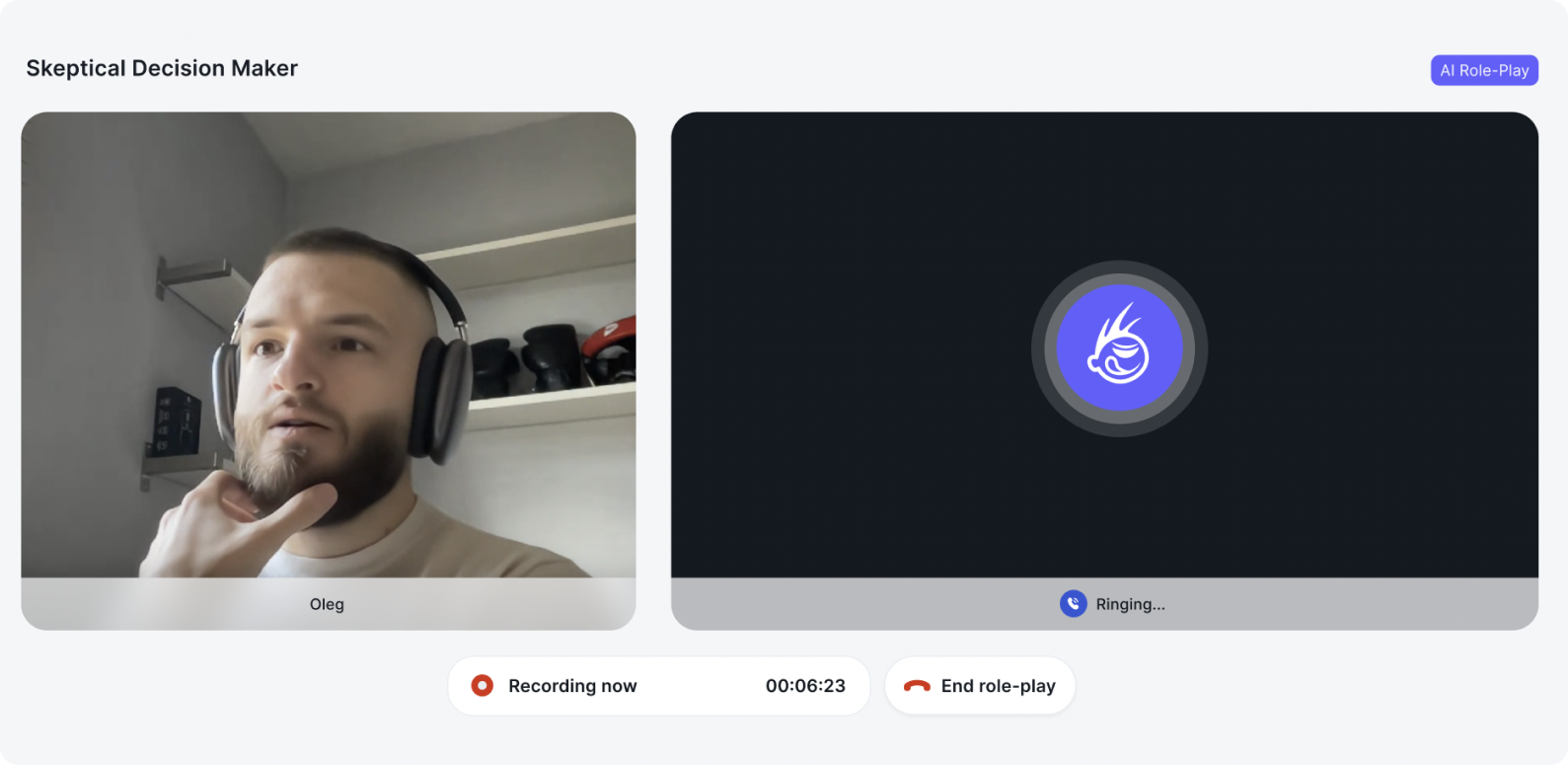
PitchMonster is an AI sales role-play platform. Reps rehearse cold calls, discovery, and demos against AI buyers that adapt and object like your real ICP, then get scored against your own playbook. A manager can build a scenario from a real call recording, product docs, or a website URL in about two minutes, so a deal Gong flagged last week becomes a practice rep runs this week. The same practice loop covers sales, customer-success, and enablement teams on any plan.
It reads real calls too: sales call analysis software scores recorded calls on the same scorecard reps practice against.
The part no call-analytics tool has is the AI Coach. After each session, a Socratic AI sales trainer asks reflective questions that guide the rep to their own conclusion before they see a score, so the lesson sticks. Teams running the practice-and-coach loop report a 28% win-rate improvement, 37% higher performance, and 30% faster ramp in the Mentor Group case study.
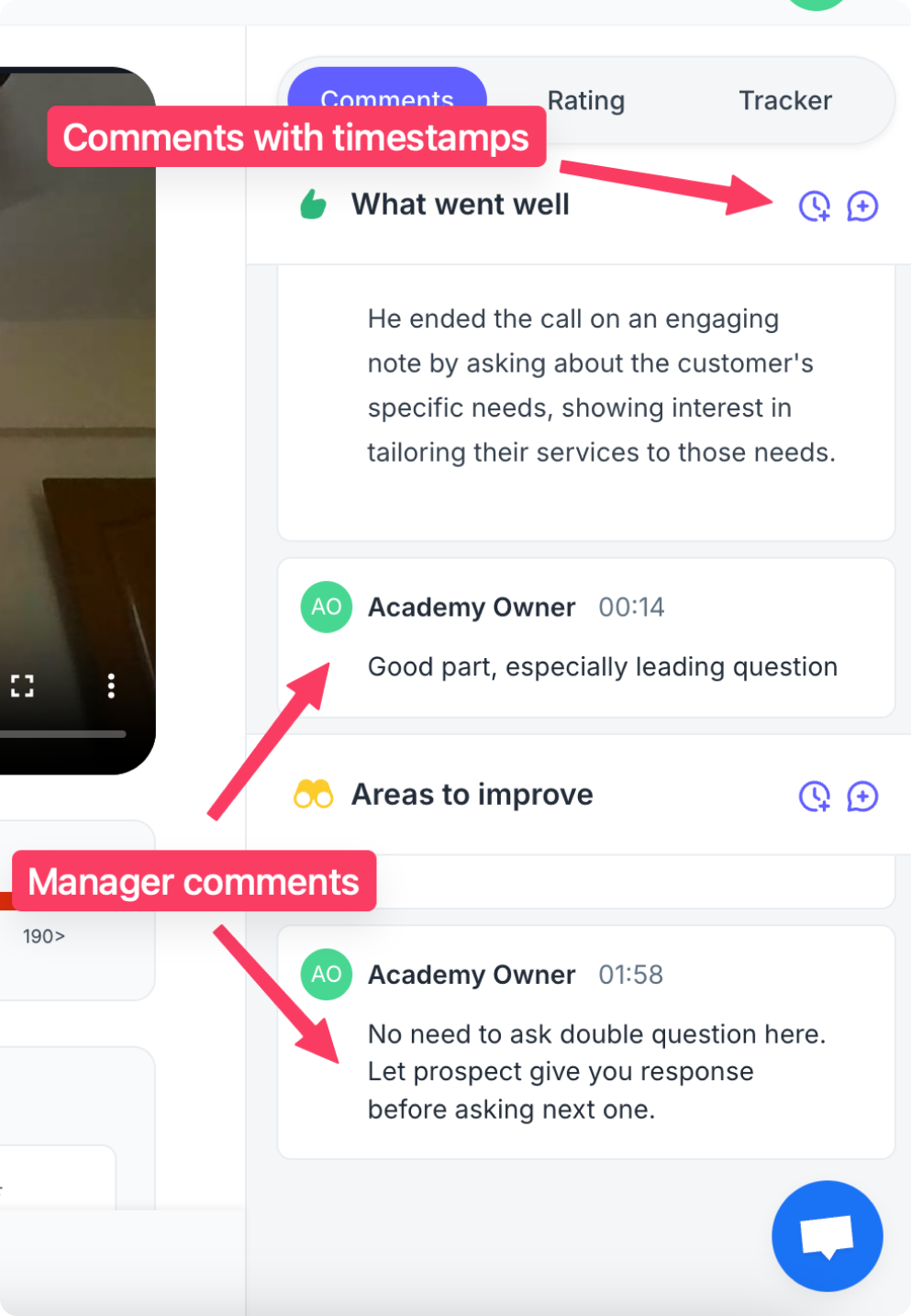
On cost, the two are not the same purchase. Gong is a per-user license plus a platform fee plus onboarding, built for revenue intelligence at scale. PitchMonster is quote-only and sized to your team, with onboarding and a dedicated CSM included, and it is built specifically for rep readiness. If your budget question is how to get reps ready rather than how to record them, that is the cheaper and more direct place to spend. See how the two fit together on the PitchMonster and Gong page, or book a demo to build your first role-play from a real call.
"Our leads are very expensive. Having to do trial and error with live leads is an expensive practice." - Daniel, One Park Financial
"I think I really like the AI coach. That's definitely going to save us a lot of time." - Wendy Mateo De Perkins, One Park Financial
FAQ
How much does Gong cost in 2026?
Gong does not publish official pricing, but reported figures put Foundations licenses around $1,300 to $1,600 per user per year, with negotiated deals landing near 1,000 to 1,349. On top of that sits a platform fee reported between $5,000 and $50,000 a year and onboarding near 7,500. A small team's first year is commonly reported around $28,000 to $29,000 total.
Does Gong charge a platform fee?
Yes. Reported pricing includes a mandatory platform fee, commonly cited between $5,000 and $50,000 per year, charged on top of per-user licenses. Because the fee does not scale down with team size, it hits small teams hardest as a share of total cost. The exact figure depends on your user count and modules, and Gong quotes it per company.
Is Gong worth it?
For larger revenue teams that need call recording, conversation analytics, and forecasting in one system, Gong is a strong platform. The cost is real, though, and it is built to analyze calls that already happened rather than prepare reps for the next one. If your goal is rep readiness, a practice tool is a cheaper, more direct fix.
Does Gong have a free trial or free plan?
No. Gong does not offer a free plan or a public self-serve trial. Evaluation happens through a guided demo and a custom quote based on your team size and modules. Because there is no free tier and no published price, buyer-review sites and reported ranges carry more weight than they would in a self-serve category.
Why did Gong pricing go up in 2026?
Two changes drove it. A 2025 restructure unbundled modules that used to be included, so features like Forecast and Engage became paid add-ons. Then in June 2026 Gong rolled out metered AI pricing, giving each seat a yearly credit allowance for certain AI actions. Reported effective per-user cost rose meaningfully between 2023 and 2026 as a result.
Is PitchMonster a cheaper alternative to Gong?
They do different jobs, so it is not a like-for-like swap. Gong records and analyzes calls that already happened. PitchMonster is an AI role-play platform where reps practice before the call and get coached. Many teams run both and integrate them. If your budget problem is rep readiness rather than call analytics, PitchMonster is the more direct and lower-cost place to start.