Seismic vs Highspot is the comparison most sales enablement buyers run first, because the two platforms solve the same problem from opposite starting points. Seismic began as enterprise content automation and wins on governance and compliance. Highspot began as content management and wins on ease of use and fast adoption. They are one company now: the merger closed on August 18, 2026, and both products run under the Seismic name.
That merger is the new context for any 2026 comparison, so this guide covers what changes, what does not, and how each platform stacks up on features, pricing, CRM integration, G2 scores, and total cost. It ends with a clear verdict, a decision table by team type, and where an AI role-play layer fits alongside either one.
If the merger has you rethinking the suite model entirely, our sales enablement solution covers the practice-first alternative.
Verdict at a glance
If you want the short answer before the detail:
The verdict. Pick Highspot if you are a mid-market team (roughly 50 to 500 reps) that needs fast rollout, high rep adoption, and native AI coaching without a dedicated admin team. Pick Seismic if you are a large or regulated enterprise (1,000+ reps in finance, healthcare, or pharma) that needs deep content governance, audit trails, and document automation, and you have the resources to run it. Both score 4.7 out of 5 on G2 and both are content-first platforms, so if your real gap is reps who are not ready for live calls, pair either one with an AI sales role-play tool like PitchMonster. Now that the merger has closed under the Seismic brand, get written commitments on roadmap, pricing, and support before you sign a multi-year deal.
Seismic vs Highspot at a glance
The table below summarizes how the two platforms compare on the factors buyers weigh most. Pricing and implementation figures are commonly reported third-party ranges, not official vendor rates, since neither company publishes pricing.
Factor |  Highspot Highspot |  Seismic Seismic |
|---|---|---|
Best for | Mid-market teams, fast adoption | Large and regulated enterprises |
Origin and core strength | Content management, intuitive search | Content automation, governance |
AI engine | Nexus AI: search, coaching, recommendations | Aura AI: generative search, content analytics |
Content governance | Role-based permissions, bulk actions | Audit trails, legal hold, LiveDocs guardrails |
Compliance fit | Moderate (mid-market to enterprise) | High (finance, healthcare, pharma) |
CRM integration | Native bi-directional sync (Salesforce, Dynamics) | Broad API flexibility, Microsoft 365 focus |
G2 rating | 4.7 / 5 (~1,197 reviews) | 4.7 / 5 (~1,680 reviews) |
Reported pricing per user/month | ~$50 to $100 | ~$60 to $120 |
Implementation time | 4 to 8 weeks | 8 to 16 weeks |
Admin burden | Low; manageable by lean teams | High; dedicated admin expected |
Status in 2026 | Merging into Seismic (deal pending) | Surviving brand of the merged company |
Read the table as a spectrum, not a scorecard. Highspot leans toward speed, adoption, and a single native platform; Seismic leans toward control, customization, and regulated-industry depth. The rest of this guide unpacks each row so you can match it to your team.
What the Seismic-Highspot merger means
On February 12, 2026, Seismic and Highspot announced a definitive agreement to merge, with the combined company operating under the Seismic name in a deal GeekWire reported at more than $6 billion. The merger closed on August 18, 2026. The combined company runs under the Seismic name with Rob Tarkoff as chief executive, and Seismic puts the merged base at 2,500 customers and 3.5 million users. Both product lines still sell and still carry their own contracts, so this comparison is now a choice inside one company rather than a choice between two vendors.
For buyers, the merger changes the risk calculus more than the day-to-day product. Two roadmaps are now one, and history says some overlapping features get consolidated or retired. Seismic says it will put more than $100 million a year into research and development, and it will show the combined roadmap at Seismic Shift in Carlsbad on October 12 to 15, 2026. If you are signing a multi-year contract before then, that roadmap gap is the thing to manage, not a reason to wait.
Teams hedging against that consolidation can compare the field in our Highspot alternatives guide.
A few practical moves protect you. Ask both vendors, in writing, what happens to your specific modules, your pricing, and your support tier now that the deal has closed. Favor shorter initial terms or renewal flexibility over a long lock-in. And keep your shortlist open: consolidation is exactly why teams are re-evaluating their stack this year, and looking at independent Seismic alternatives and Highspot alternatives before they renew.
A couple of things are worth watching as the deal moves toward close. The first is which overlapping modules survive once two roadmaps become one, since duplicated features tend to get retired. The second is whether renewal pricing holds for existing customers, and how support is staffed while the organizations combine. None of this is a reason to freeze a decision you need to make now, but each belongs in your list of contract questions.
Seismic overview
Seismic is an enterprise enablement platform built around content automation and governance. Its core job is making sure global sales teams use approved, on-brand, up-to-date content, and tying that content to revenue.
Its signature feature is LiveDocs, which pulls CRM data to assemble personalized sales assets automatically, with guardrails that let reps customize parts of a deck while locking down regulated or brand-critical content. Seismic Learning (formerly Lessonly) adds training and certification, and Aura AI handles generative search and content analytics. The platform integrates tightly with the Microsoft 365 stack, including SharePoint, Teams, and Outlook.
Where Seismic separates from most rivals is regulated-industry control. It supports role-based permissions, automated approvals, detailed audit trails, and legal hold, and it integrates with third-party archiving to meet WORM retention standards. It is certified under ISO/IEC 27001 and 27701 and offers data residency in the US, Canada, Europe, or Australia through Microsoft Azure. That depth is the reason finance, healthcare, and pharma teams pick it, and also the reason it needs dedicated admins to run well. Analysts back the pattern: in the Forrester Wave for sales content solutions (Q3 2024), Seismic earned the top score in 26 of 32 criteria.
The flip side of that depth is effort. Buyers most often flag Seismic's setup time and admin overhead, and its cost climbs with the breadth you turn on. Reviewers describe a steeper learning curve than Highspot and a heavier reliance on professional services to reach full value. If you do not have enablement-operations headcount, budget for it, or the capability you paid for goes unused.
"Selling as One Oracle means we must be unified in our messaging, and Seismic helps us do just that." - Kari Gallagher, SVP of Revenue Enablement Services, Oracle
Highspot overview
Highspot is a unified enablement platform built around content management, search, and adoption. It started as a content system and is known for an intuitive interface that gets reps using it quickly, which is why it shows up most often as the mid-market choice.
Nexus AI is the engine underneath. It powers semantic search, content recommendations, and a Deal Agent that suggests next-best actions and surfaces relevant case studies and talk tracks based on the deal a rep is working. Highspot folds coaching and training into the same platform, including AI-powered role-play tied to skill frameworks, Sales Plays that deliver just-in-time guidance inside the CRM, and adaptive learning paths that let reps skip what they already know.
Adoption is the recurring theme in how teams describe it. Highspot embeds content, coaching, and analytics directly into Salesforce and Dynamics, so reps work without leaving their CRM, and lean enablement teams can manage it without a dedicated admin headcount. It is recognized as a Gartner Magic Quadrant Leader in revenue enablement, positioned highest of every vendor for Ability to Execute in the 2025 report. The trade-off versus Seismic is governance depth: Highspot covers role-based permissions and bulk content actions well, but does not match Seismic's audit-and-compliance machinery for the most heavily regulated environments.
Highspot has its own limits. At enterprise scale its governance and permissioning are lighter than Seismic's, which matters when compliance or legal hold is a hard requirement. Some buyers report that cost rises quickly as seats and add-on modules grow, and that large content libraries need discipline to stay organized. For most mid-market teams these are manageable; for a 2,000-seat regulated organization they can be the reason Seismic wins.
"In this tool, you have that AI feedback, which will free up a lot of time for managers. That AI piece is really key to helping us long-term so we can do more and more coaching." - Stacy Ardoin, Manager of Sales Enablement, Elsevier
Feature comparison
Highspot and Seismic overlap on the big categories and diverge on emphasis. Highspot leans toward usability and a single native platform; Seismic leans toward enterprise customization and control. The table below lays out the head-to-head across the dimensions buyers ask about.
Capability | Highspot | Seismic |
|---|---|---|
Content search and discovery | Native semantic search, recommendations | Generative search via Aura AI |
Document automation | Templates and content management | LiveDocs dynamic assembly from CRM data |
Training and coaching | Built-in, native to the platform | Seismic Learning (acquired Lessonly) |
AI role-play | Included, tied to skill frameworks | Available through Seismic Learning |
Conversation intelligence | Native call capture and analysis | Available, integrates with partners |
Analytics and reporting | Content usage and action in one view | Deep content and revenue analytics |
Buyer engagement | Digital Sales Rooms | Digital Sales Rooms |
Content governance | Role-based permissions, bulk actions | Audit trails, legal hold, hierarchical tagging |
Compliance fit | Moderate to enterprise | High (regulated industries) |
CRM integration | Native bi-directional sync | Broad API flexibility, Microsoft 365 |
Mobile and field sales | Strong mobile app, offline access | Strong mobile app, offline access |
Admin burden | Low | High |
On training specifically, the two take different paths. Highspot built coaching natively into one platform, so practice, content, and analytics live in the same place. Seismic delivers training through Seismic Learning, which carries the deepest authoring capabilities in the category thanks to its Lessonly heritage, but sits alongside the content engine rather than fully inside it.
Analytics is the other line where the emphasis differs. Highspot markets that analytics and action live together, so a manager can spot a stalled play and reassign it without leaving the tool. Seismic goes deeper on content-to-revenue reporting for large libraries, which matters when you have thousands of assets to govern.
The AI engines are worth a closer look, because both companies now lead with them. Highspot's Nexus AI focuses on the selling moment: semantic search that reads intent, content recommendations tuned to the deal, and a Deal Agent that suggests next-best actions and surfaces the right case study or talk track inside the CRM. It also feeds the native coaching and role-play, so the same AI that finds content also scores practice. That tight loop is a big part of why reps adopt Highspot quickly.
Seismic's Aura AI leans toward content operations and insight at scale. It powers generative search across large libraries, drafts and assembles content, and drives analytics that tie assets to pipeline and revenue. For an enterprise with tens of thousands of pieces to manage, that content-intelligence angle is the draw; for a mid-market team that mainly wants reps to find and use the right asset fast, Nexus tends to feel more immediate. Both are moving quickly, and both will likely converge after the merger, so treat today's AI feature list as a snapshot rather than a long-term dividing line.
Implementation is where the two feel most different day to day. Highspot is built to go live fast, with reported rollouts of four to eight weeks that a lean team can run on its own. Seismic's governance and LiveDocs setup is more involved, commonly eight to sixteen weeks, and it expects a dedicated admin or a services engagement to configure permissions, templates, and integrations. Neither is plug-and-play, but Highspot asks less of you up front while Seismic asks more and hands back more control in return. Either way, both are enablement systems first and practice systems second, which is the point the conversion section below returns to.
G2 ratings and analyst recognition
Third-party scores put these two neck and neck, so ratings alone will not break the tie. Both platforms sit at 4.7 out of 5 on G2. Highspot carries roughly 1,197 reviews and Seismic roughly 1,680, and G2's own comparison gives Highspot a slight edge on ease of use and ease of setup while noting the two are close on overall satisfaction. On Gartner Peer Insights, both hold about 4.6 stars.
Analyst reports split the same way the products do. Gartner named both Leaders in its 2025 Magic Quadrant for revenue enablement platforms, with Highspot positioned highest of any vendor for Ability to Execute. Forrester, in its Q3 2024 Wave for sales content solutions, gave Seismic the top score in 26 of 32 criteria. The pattern is consistent: Highspot scores on execution and adoption, Seismic scores on depth and governance.
Source | Highspot | Seismic |
|---|---|---|
G2 rating | 4.7 / 5 (~1,197 reviews) | 4.7 / 5 (~1,680 reviews) |
Gartner Peer Insights | ~4.6 / 5 | ~4.6 / 5 |
Gartner Magic Quadrant 2025 | Leader, highest Ability to Execute | Leader |
Forrester Wave Q3 2024 | Strong performer | Top score in 26 of 32 criteria |
One caveat on the scores: review counts skew toward each vendor's core base, so Seismic's larger enterprise sample and Highspot's mid-market weighting shape the averages. Read the segment breakdowns on G2, not just the headline star rating, and weight reviews from companies close to your own size and industry. A 4.7 built from enterprises in a regulated field tells you something different from a 4.7 built from fast-scaling mid-market teams.
The takeaway is that both are proven, highly rated platforms, so the decision comes down to fit rather than reputation. Score them against your team size, industry, and admin resources, which is what the pricing and decision sections do next.
Pricing and total cost
Neither Seismic nor Highspot publishes pricing. Both quote per company after a demo, and the final number depends on team size, modules, and contract length. Commonly reported ranges put Highspot around $50 to $100 per user per month and Seismic around $60 to $120, though some buyer-data sources report both closer to $50 to $65 list before add-ons. Seismic tends to land higher because of its suite-like breadth.
The widely cited public anchor for Highspot is roughly $90K to $91K average annual contract value, with buyers reporting negotiated discounts off the first quote and mid-market deals in the $70K to $120K range. Seismic does not have a single public figure; buyer-data platform Vendr reports Seismic annual contracts anywhere from about $30K to more than $1M depending on scope, and large deployments commonly land in the $40K to $180K a year range. Implementation adds to both: Highspot rollouts are reported in the $15,000 to $45,000 range over 4 to 8 weeks, and Seismic's deeper governance setup runs longer at 8 to 16 weeks with reported fees from roughly $5,000 to $50,000.
Here is the math behind the often-quoted three-year comparison for a 50-person team, shown so you can see exactly what it assumes:
Line item | Highspot (reported, illustrative) | Seismic (reported, illustrative) |
|---|---|---|
Per-user/month (reported range, upper end) | ~$100 | ~$120 |
50 users for 12 months | ~$60,000 | ~$72,000 |
Implementation (reported) | ~$15,000 to $45,000 | ~$5,000 to $50,000 |
Reported average annual contract | ~$90,000 to $91,000 ACV | ~$40,000 to $180,000 |
Three-year total cost of ownership (commonly cited) | ~$227,000 | ~$322,000 |
The per-seat math is straightforward; the roughly $227K and $322K totals are analyst- and vendor-cited three-year figures that bundle licensing, implementation, and services, and Seismic's in particular rests on unpublished pricing. Treat both as directional. The reliable takeaways are that Highspot tends to run cheaper than Seismic at comparable scope, and that neither cost is final until you have a written quote. Since neither vendor confirms rates, every figure here is a reported third-party range, not an official price, so build your budget from the quote you negotiate rather than any single published number.
Knowing what moves the number helps before you negotiate. Seat count and contract length are the biggest levers, since both vendors discount for multi-year commitments and larger teams. Module selection comes next: training, conversation intelligence, and digital sales rooms are often priced as add-ons, so a headline per-seat figure rarely includes everything. Ask for a line-item quote, push back on implementation fees, and get renewal caps in writing, which matters more now that the merger has closed and pricing models are likely to change.
One thing neither offers is a free tier or self-serve trial. Both are enterprise, sales-led products, so evaluation happens through a guided demo and, if you push for it, a scoped pilot rather than a credit card and a sandbox. That raises the stakes on the demo, because you are committing to an annual contract off a walkthrough, not a month of hands-on use. Ask for a proof of concept with your own content and a defined success metric before you sign, and treat any vendor that will not scope one as a warning sign. The absence of a free path is also why buyer-review sites and analyst reports carry more weight here than they do in self-serve categories.
How to choose between Seismic and Highspot
Because the two score so closely on ratings and overlap on features, the decision comes down to who you are as a buyer. Use the table as a starting point, then pressure-test it against your own stack in the demos.
If you are... | Lean toward |
|---|---|
A mid-market team (50 to 500 reps) that needs fast rollout and high adoption | Highspot |
A large or regulated enterprise (1,000+ reps) in finance, healthcare, or pharma | Seismic |
Running mostly on Salesforce or Dynamics and want reps to stay in the CRM | Highspot |
Deep in the Microsoft 365 stack with heavy document-automation needs | Seismic |
Short on admin headcount to run the platform | Highspot |
Able to staff a dedicated enablement-operations team | Seismic |
Buying mainly for content governance, audit trails, and legal hold | Seismic |
Buying mainly for rep adoption, guided selling, and quick time-to-value | Highspot |
Worried the merger will disrupt your roadmap | Either, with short terms and written commitments |
Two questions settle most shortlists. First, how regulated is your industry: if audit trails and content lock-down are non-negotiable, Seismic is built for that and Highspot is not, to the same degree. Second, how much admin can you staff: Highspot is designed to run without a dedicated team, while Seismic rewards teams that can invest in configuration.
Switching costs deserve their own line. Moving a mature content library, permission structure, and analytics history between platforms is a real project, not a weekend migration, so the merger raises a fair question: now that Highspot sits inside Seismic, what does that path look like? Ask both vendors to describe migration support and data portability in writing. It is also why some teams pick the platform they can commit to for the long term and negotiate shorter initial terms as insurance.
When you run the bake-off, test both on your own content and a live deal, not the vendor's demo data. Load a real asset library, invite two or three reps to search and build a document, and watch time-to-first-value. Score onboarding effort and how fast a new rep finds what they need, and note how many admin clicks it takes to publish and govern a piece. The platform that wins on your data, rather than the sales deck, is the one to shortlist.
Whichever way you lean, remember that both are systems for managing and surfacing content. Neither is built to put a rep through repeated live practice before a real call, which is the gap the next section covers.
If neither suite fits, the best Seismic alternatives guide ranks eleven options by the job each one actually does.
Where a practice layer fits with both
The honest read on this matchup is that Seismic and Highspot are both content-first platforms, and content is not where most reps lose deals. The thing neither one is built to do is put a rep through repeated live-fire practice and coach them before the call. That is the gap PitchMonster fills, and it is why teams run it alongside either platform rather than instead of one.
The difference starts with the AI Coach. After every practice session, PitchMonster runs a Socratic debrief that asks the rep what they noticed and what they would change before they ever see a score, so they self-diagnose instead of waiting for a manager. Highspot and Seismic include coaching modules, but neither has a reflective post-session coach like this, and that reflection step is where rep behavior actually changes.
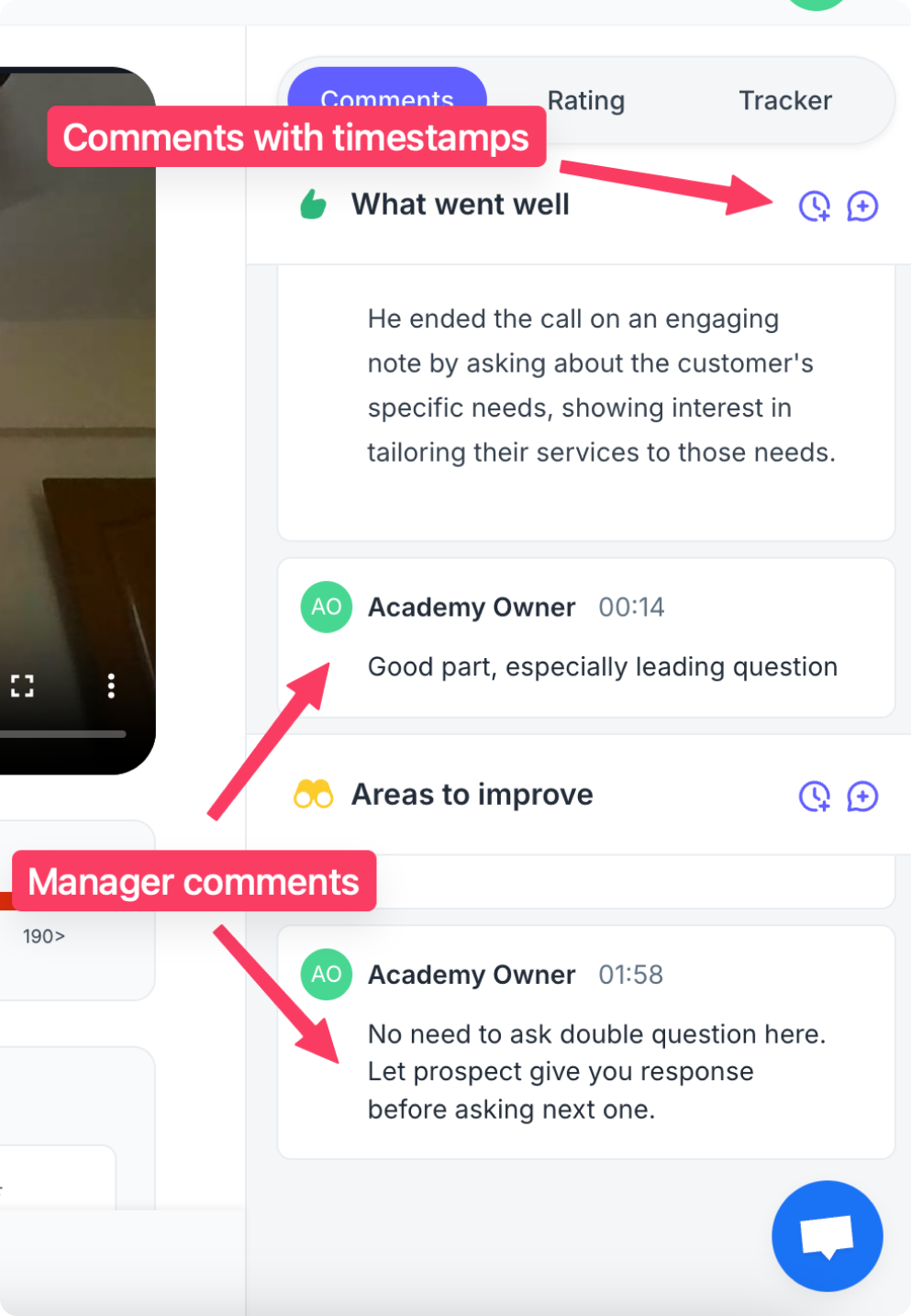
Around the Coach sits the practice itself. Reps rehearse realistic conversations with AI buyers that adapt, object, and push back like your real ICP, across screen-share, face-to-face, and phone modes, in 27-plus languages. A manager can build a scenario from a call recording, product docs, or a website URL in about two minutes, then score every rep against the same playbook. Live Call Analysis applies that same scorecard to real recordings, so practice and live performance are measured the same way.
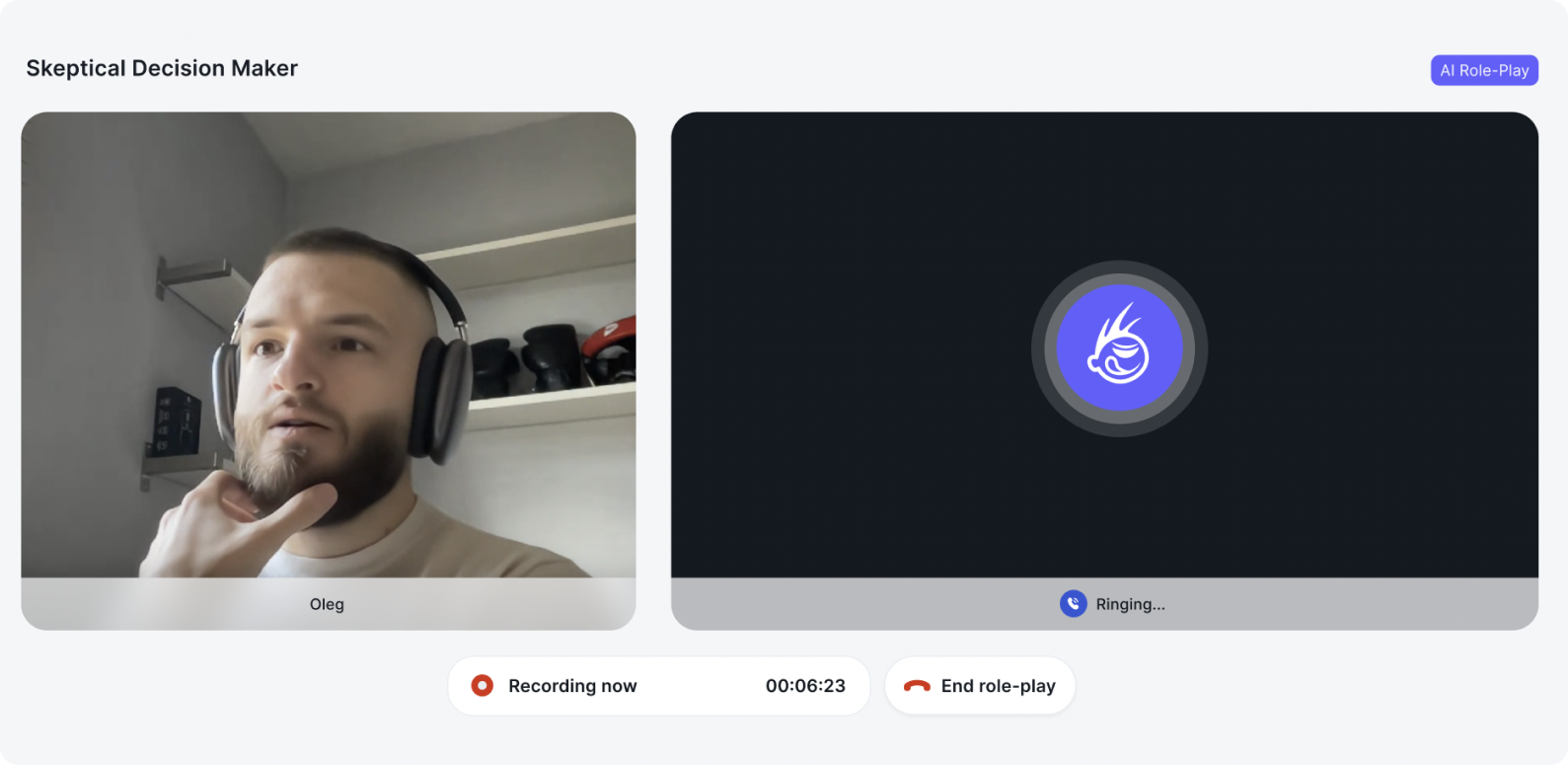
This complements rather than competes. Keep Highspot or Seismic as your system of record for content and governance, and let PitchMonster be the layer that gets reps ready to use that content well. It also fills two gaps in this matchup: it is the only European-based option with GDPR compliance and EU data residency, and it is built for teams of roughly 10 to 300 reps with guided onboarding of three to four hours and no setup fees. PitchMonster holds a 4.9 out of 5 rating on G2 and a 100% enterprise renewal rate since spring 2024, and teams running the practice-and-coach loop report a 28% win-rate improvement, 37% higher performance, and 30% faster ramp (Mentor Group case study). For the full head-to-head against each platform, see our PitchMonster vs Highspot and PitchMonster vs Seismic comparisons.
"I think I really like the AI coach. That's definitely going to save us a lot of time." - Wendy Mateo De Perkins, One Park Financial
If your reps have the content but still are not ready for live calls, that is the gap to close. Book a demo and we will build your first role-play library with you, or see pricing by team size.
FAQ
Is Seismic the same as Highspot?
They are one company now. Seismic and Highspot completed their merger on August 18, 2026, and the combined business runs under the Seismic name. They are still two product lines with their own contracts and support, so you can buy either today, but a single roadmap is coming and Seismic will show it at Seismic Shift in October 2026.
Did Highspot and Seismic merge, and did Seismic buy Highspot?
It is a merger, not a straight acquisition. On February 12, 2026 the two signed a definitive agreement to combine under the Seismic name, in a deal GeekWire reported at more than $6 billion. The merger closed on August 18, 2026. Rob Tarkoff leads the combined company, which Seismic says serves 2,500 customers and 3.5 million users, and the two product lines still carry their own contracts and support.
What is the difference between Seismic and Highspot?
Seismic started as an enterprise content-automation platform and is strongest on governance, compliance, and dynamic document assembly through LiveDocs. Highspot started as a content management system and is strongest on intuitive search, fast adoption, and native AI coaching. Seismic suits large regulated enterprises; Highspot suits mid-market teams that want quick rollout and high rep adoption.
How much do Seismic and Highspot cost?
Neither publishes official rates, and both quote per company after a demo. Commonly reported ranges put Highspot around $50 to $100 per user per month and Seismic around $60 to $120, with Highspot's average contract reported near $90K to $91K ACV. Implementation adds five figures on top. Treat any single annual figure as illustrative until you have a written quote.
Which integrates better with your CRM, Seismic or Highspot?
Both integrate deeply with CRMs; the difference is approach, not depth. Highspot embeds content, coaching, and analytics directly inside Salesforce and Dynamics with bi-directional engagement sync. Seismic offers broad API flexibility and tight ties to the Microsoft 365 stack, which suits custom enterprise workflows. Neither is categorically better; match the approach to your existing stack.
What does Highspot do?
Highspot is a sales enablement platform that organizes marketing and sales content, makes it searchable for reps, and ties usage to deal outcomes. On top of content management it adds Nexus AI search and recommendations, guided Sales Plays inside the CRM, training, and native AI role-play, so reps find the right asset and get coached in one place.
Who are the main Seismic and Highspot competitors?
The two compete most with each other, then with Showpad, Mindtickle, Allego, SalesHood, Bigtincan, and Paperflite in the enablement category. For the practice-and-coaching job specifically, teams also look at AI sales role-play tools like PitchMonster, which sit on top of an enablement platform rather than replacing it.
Do I still need a practice tool if I use Seismic or Highspot?
Often yes. Seismic and Highspot govern and surface content and include coaching modules, but their core job is enablement content, not repeated live-fire practice. If reps lose deals because they are underprepared, many teams add an AI sales role-play layer like PitchMonster on top, so sellers rehearse real conversations and get coached before the call rather than reading assets after it.