BANT is a 4-part sales qualification framework: Budget, Authority, Need, and Timeline. It originated at IBM and it exists to answer one question fast, which is whether a lead is worth a seller's time. It does that job well and it is regularly asked to do jobs it was never built for.
This guide covers the 4 criteria with questions that actually get answers, the budget question that quietly kills calls, an honest comparison against MEDDIC and MEDDPICC, and the specific situations where reaching for BANT will cost you a good deal.
What is BANT?
BANT is a triage tool. A rep runs 4 checks on a lead: is there money, is there someone who can decide, is there a real problem, and is there a reason to act on a defined timescale. If all 4 hold, the lead earns a full sales conversation.
Its strength is speed. Applied to inbound leads, BANT gives a team a defensible reason to route some to a seller and decline the rest, which is a real operational problem worth solving.
Its weakness is what it assumes. BANT was designed for a world with one buyer holding one budget, and it treats the absence of allocated budget as disqualifying. In a 200-person company buying software, budget is often created by the business case rather than waiting in an account, and the person who signs is not the person the rep is talking to. Applied to that deal, BANT gives a confident answer to the wrong question.
The 4 criteria, with questions
Each criterion has an obvious question that gets a useless answer, and a better question that gets a real one.
Criterion | What you need to know | Do not ask | Ask instead |
|---|---|---|---|
Budget | Whether money can be found, not whether it is already allocated | "What's your budget for this?" | "What do you spend on this today, and who would fund a change?" |
Authority | Who signs, and who can veto | "Are you the decision maker?" | "Who signs a contract like this, and has anyone else weighed in so far?" |
Need | Whether the problem is urgent enough to fund | "Do you have a need for this?" | "What happens if this stays as it is for another 12 months?" |
Timeline | Whether an event forces action | "When are you looking to buy?" | "Is there anything in your calendar that this has to be ready for?" |
The pattern in the right-hand column: ask about behaviour and events, not about intentions. What a buyer spends today is a fact. What they have budgeted is a guess they will revise. What is in their calendar is real. When they are "looking to buy" is a number they invented to answer your question politely.
The budget question problem
"What's your budget for this?" is the single most damaging question in the framework, and it is the one reps ask first because it is the B.
It fails in 3 ways. On a first call it reads as a rep sizing up a wallet before showing any interest in the problem, which changes the tone of everything after it. It invites an anchor the buyer picks defensively, usually low, and now you are negotiating against a number they made up. And in most mid-market deals the honest answer is that no budget exists yet, which a checklist scores as a disqualification when it is actually just an early-stage deal.
The better move is to establish current spend and who controls it. A buyer who tells you they spend 40 hours a month of manager time on call reviews has given you both a cost and a budget holder, without either of you naming a figure. That is more useful than a budget range, and it is a question people answer honestly.
BANT vs MEDDIC vs MEDDPICC
These are compared as competing options. They are different altitudes, and picking by preference rather than by deal shape is the actual mistake.
BANT | MEDDIC | MEDDPICC | |
|---|---|---|---|
Parts | 4 | 6 | 8 |
Question it answers | Is this lead worth a meeting? | Will this deal close? | Is this deal real, and where will it stall? |
Stakeholders it assumes | 1 to 2 | Several | Several, plus procurement and legal |
Cycle length it suits | Short, roughly under 60 days | 90 days and up | Long, with a security or legal review |
Who runs it | SDR, inbound triage | Rep | Rep and manager, in pipeline review |
Biggest blind spot | Political risk, competing options, no budget yet | Paper process | Nothing structural; the risk is admin overhead on small deals |
The practical read: BANT tells you whether to take the meeting. MEDDIC tells you whether to trust the forecast. MEDDPICC adds the 2 letters that account for procurement and competition, which is where enterprise deals actually die.
If you sell a product with a 3-week cycle and a single buyer, BANT alone is proportionate and MEDDPICC is bureaucracy. If you sell into an enterprise with a security review, BANT alone will produce a pipeline full of leads that qualify on paper and stall in legal.
When BANT is the wrong tool
Four situations where a BANT checklist will actively mislead you.
The need is strong and the budget does not exist yet. This is the most expensive false negative in B2B sales. A Head of Enablement who has just lost 2 reps to slow ramp has a real problem and no line item for it. BANT marks that unqualified. The correct move is to help build the business case, which is a deal, not a disqualification.
The person you are talking to is not the signer, and never was going to be. BANT asks whether your contact has authority and treats no as a stop. In committee purchases the answer is almost always no, and the useful question is who else needs to be in the room.
The timeline is real but external. A buyer with no purchase timeline may still have a compliance deadline, a product launch, or a new-hire cohort starting in January. Asking when they plan to buy misses all 3.
Competition is invisible to it. BANT has no letter for the alternative, including doing nothing, which in practice is the most common competitor in every category.
The handoff pattern that works
The teams that get value from BANT scope it deliberately and hand off early.
The SDR runs BANT on the inbound lead: current spend, who signs, what breaks if nothing changes, and any date in the calendar that forces action. That is enough to justify booking or declining a meeting, and it takes one call.
The seller then runs a proper discovery conversation and works the deal against MEDDIC or MEDDPICC. Nothing from the BANT pass is thrown away; it becomes the starting evidence, and the seller's job is to verify it rather than assume it. SDR-qualified budget and authority are frequently wrong in good faith, because the SDR asked the only person who would talk to them.
The failure mode is a team that runs BANT and stops, then wonders why a pipeline of qualified leads converts badly. The 4 boxes were never designed to carry a deal.
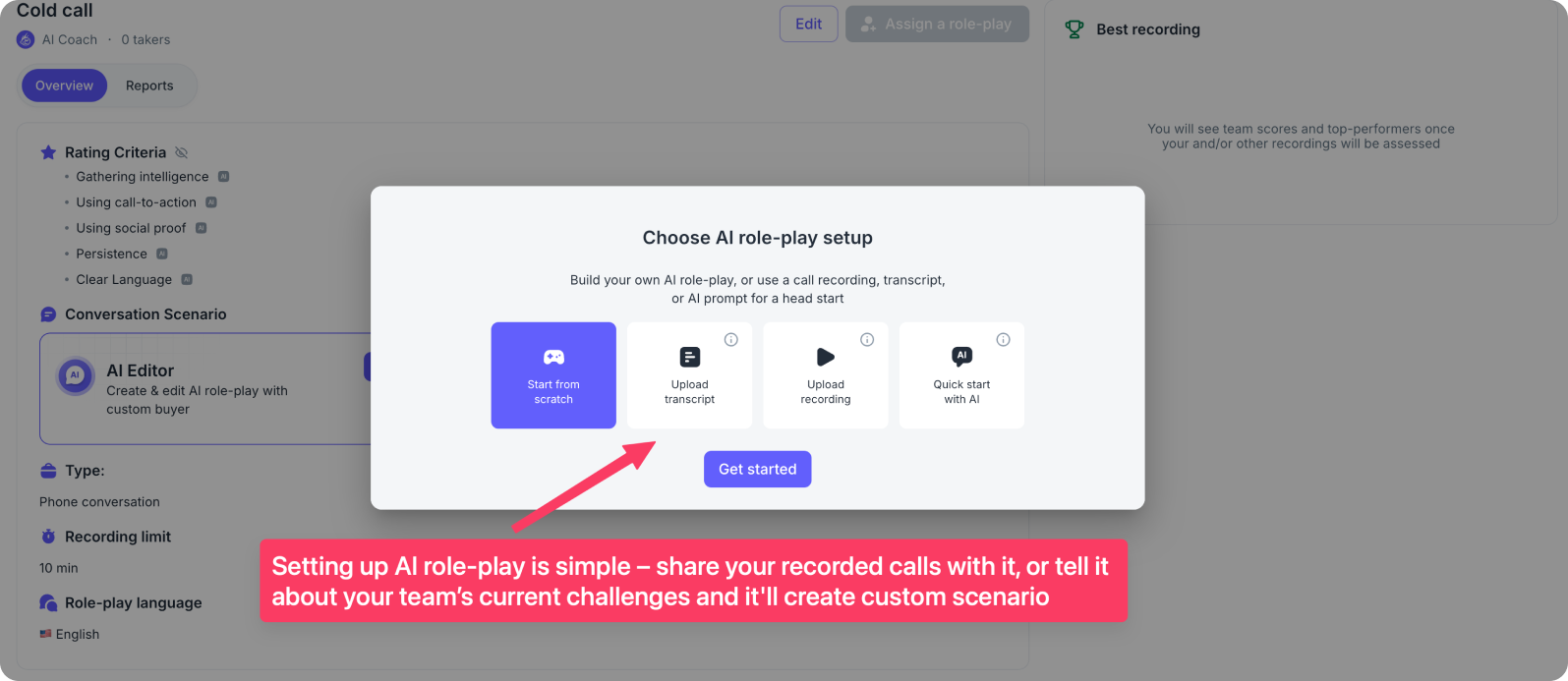
In practice the handoff has 2 halves worth getting right independently: the cold call that earns the meeting, and the discovery call where the seller replaces the SDR's assumptions with evidence.
How reps get good at it
BANT is 4 words, so it is tempting to treat training as a slide and a CRM field. The skill is entirely in the phrasing.
The specific things a rep has to be able to do: ask about spend without sounding like they are pricing the deal, ask who signs without implying their contact is unimportant, and press on need when the buyer gives a vague answer. Each of those is a sentence delivered under mild social pressure, which is a rehearsable skill and not a knowledge gap.
The way to build it is repetitions on the individual question, not whole mock calls. Take the budget question, give a rep a buyer who answers "we haven't set a budget yet", and have them keep the conversation moving rather than marking the lead dead. Then run it again with a buyer who names an implausibly low figure.
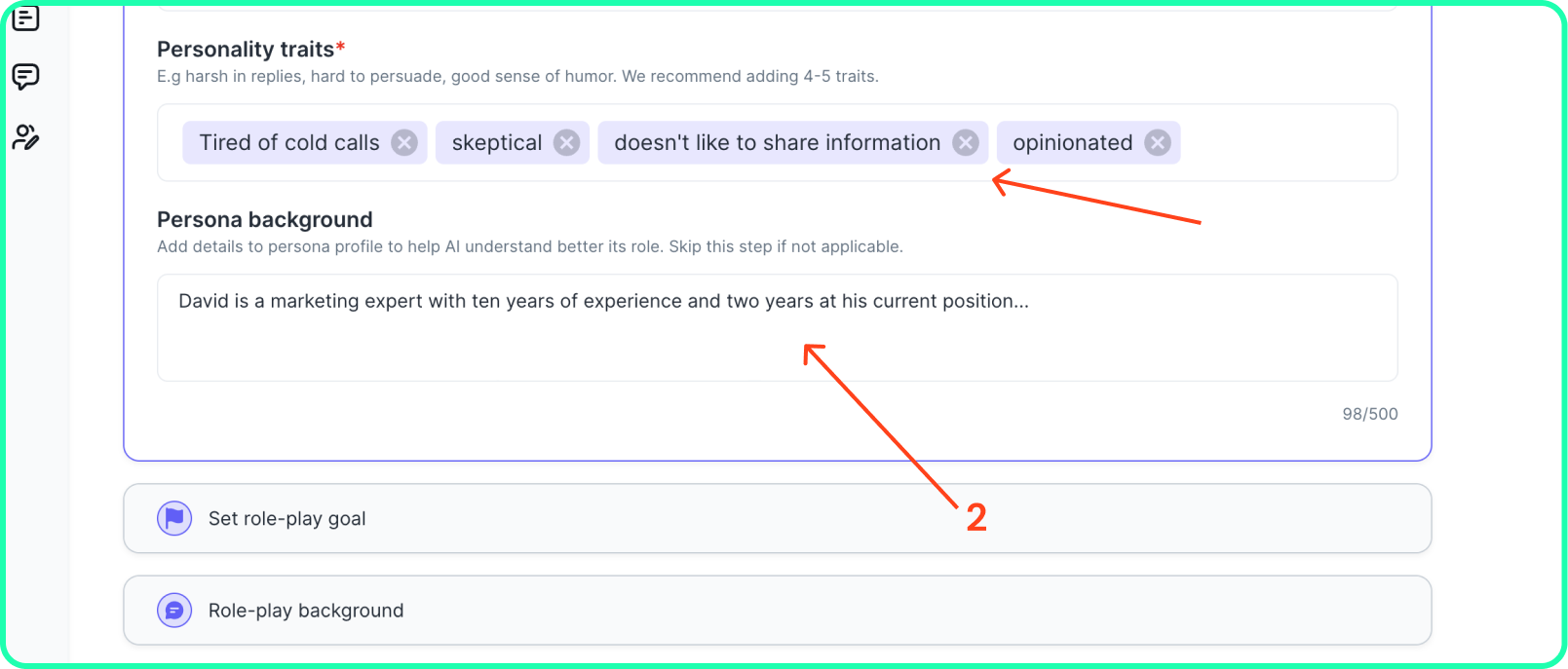
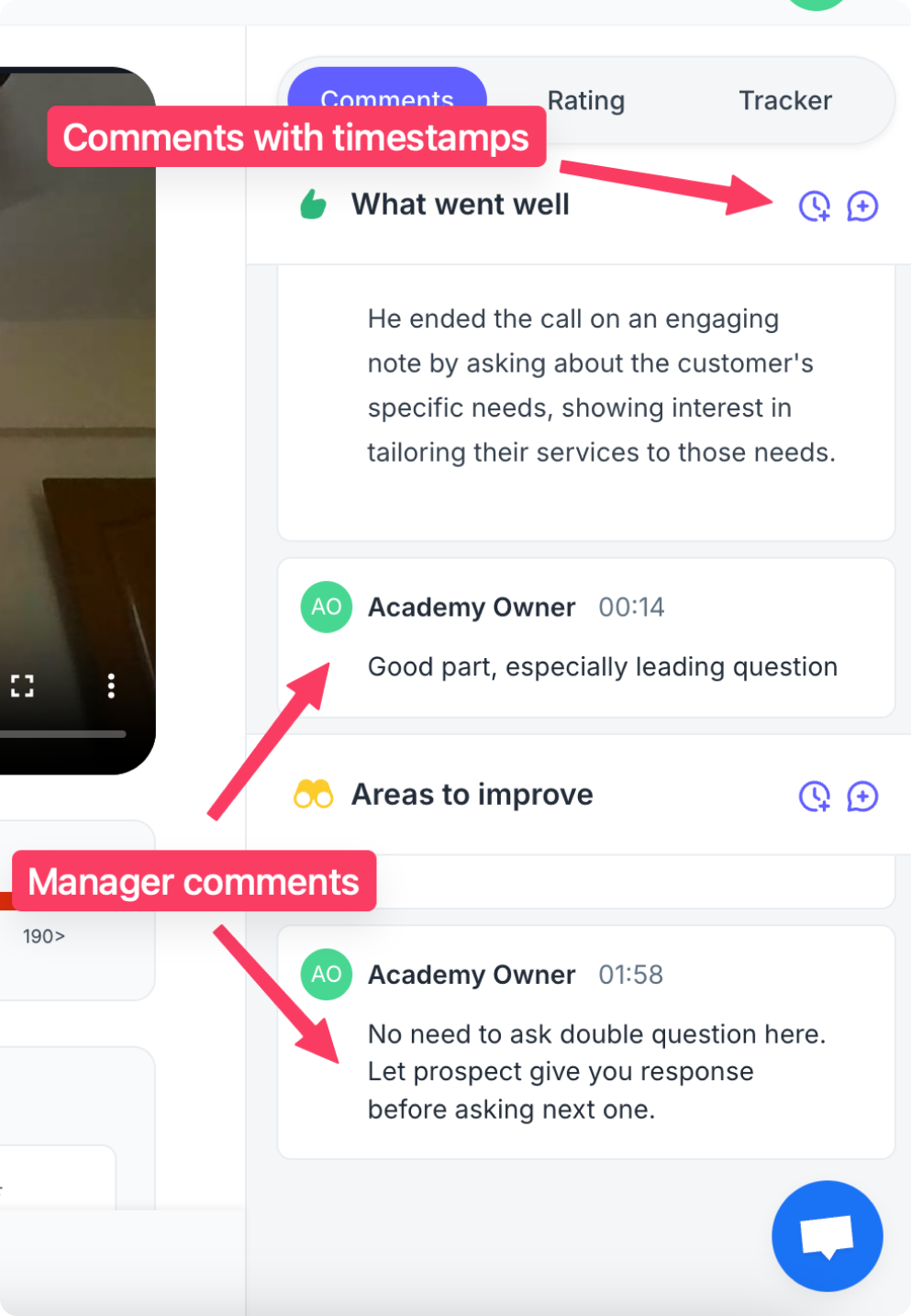
In PitchMonster you can build that buyer from a real recorded call, so the deflections sound like your market rather than a generic script, and score the rep against your own criteria. The AI Coach then debriefs by asking the rep what they noticed, which is what turns a repetition into a habit. For an SDR team this matters more than for AEs, because SDRs run the same 4 questions dozens of times a day and small phrasing differences compound fast.
PRN Health Services measured 22% higher call quality scores and 14% more interviews scheduled after their recruiters practised this way, which is the same skill applied to a screening call rather than a sales one.
If you are standing up a qualification standard this quarter, book a demo and we will build the budget-deflection scenario from one of your own calls.
FAQ
What does BANT stand for?
BANT stands for Budget, Authority, Need, and Timeline. It is a 4-part sales qualification framework that originated at IBM and is used to decide quickly whether a lead is worth a seller's time: can they pay, can they decide, do they have a real problem, and are they trying to solve it on a defined timescale.
What is BANT in sales?
BANT is a fast qualification checklist for deciding whether an opportunity deserves a full sales cycle. A rep checks 4 things: budget, decision authority, a genuine need, and a timeline for acting. It is designed for speed rather than depth, which makes it well suited to inbound triage and poorly suited to complex enterprise deals with several stakeholders.
Is BANT still relevant in 2026?
BANT is still useful as a triage tool and still misleading as a deal framework. It assumes one decision maker with clear budget authority, which is rare above about 50 employees. Use it to decide whether an inbound lead earns a discovery call, then switch to a deeper framework once a real opportunity exists.
What is the difference between BANT and MEDDIC?
BANT has 4 criteria and asks whether a lead can buy. MEDDIC has 6 and asks whether a specific deal will close. BANT suits short cycles with 1 or 2 decision makers; MEDDIC suits deals with multiple stakeholders and a procurement step. BANT also misses political risk, competing alternatives, and the paper process, which is where enterprise deals usually stall.
What are good BANT qualification questions?
Ask about spend rather than budget: "What do you spend on this today?" Ask about signing rather than deciding: "Who signs a contract like this?" Ask what happens if nothing changes, which tests need better than asking whether they have a need. And anchor timeline to an event in their calendar, not to your quarter end.
Why does BANT get criticised?
Two reasons. It is seller-centric, so it measures whether a buyer is convenient to sell to rather than whether you can help them. And it disqualifies too early: a strong need with no allocated budget is often a good deal that needs a business case, but a rep working a BANT checklist marks it as unqualified and moves on.
Should SDRs use BANT?
Yes, and this is the role BANT is genuinely good at. An SDR has minutes, not a full discovery call, and needs a defensible reason to book or decline a meeting. BANT gives them that. The mistake is carrying the same 4 boxes into the deal itself, where they stop being enough.
Can you use BANT and MEDDIC together?
This is the most common working pattern in B2B teams. The SDR runs BANT to decide whether an opportunity is worth a seller's time, then the seller runs MEDDIC or MEDDPICC to work the deal. The 2 frameworks answer different questions, so they stack cleanly rather than conflicting.
The short version
BANT is a good triage tool wearing the costume of a deal framework. Use it to decide whether a lead earns a meeting, then drop it.
And stop asking about budget on the first call. Ask what they spend today and who would fund a change. Same information, and the buyer will actually answer.