MEDDPICC is a B2B sales qualification framework that tests whether a complex deal is real before you forecast it. The 8 letters stand for Metrics, Economic Buyer, Decision Criteria, Decision Process, Paper Process, Identify Pain, Champion, and Competition, and reps use them as a checklist to find the gap that will cost them the deal. It replaces optimism with evidence.
This guide covers what each part means, the exact question to ask for it, how MEDDPICC differs from MEDDIC, how to score a deal honestly, and the reason most rollouts fail: reps can recite all 8 letters and still not ask the uncomfortable question out loud.
A note on the name: MEDDPICC is a registered trademark of MEDDIC Academy. This guide explains the framework. It is not affiliated with, endorsed by, or a certification from the trademark holder, and if you want official training or certification you should go to them directly.
What is MEDDPICC?
MEDDPICC is an 8-part qualification checklist for enterprise B2B deals. A rep works through the 8 categories on a live opportunity and, for each one, either has evidence from the buyer or does not. The parts with no evidence are the deal risk.
The framework grew out of MEDDIC, built at PTC in the 1990s by Jack Napoli and Dick Dunkel during a period of fast enterprise growth. MEDDPICC adds 2 letters that modern selling made unavoidable, Paper Process and Competition, because a deal is now as likely to die in procurement or security review as it is to be lost to a rival.
What makes it different from a stage-based sales process is the direction of proof. A stage says where the deal is. MEDDPICC asks what you can show. A deal can be at "verbal commit" with no identified economic buyer, no known paper process, and a champion who has never advocated for you internally. The framework's whole job is to make that visible while there is still time.
The 8 parts, with the question to ask
Every guide on this topic explains the 8 letters. Fewer give you the sentence to say out loud, which is where the framework actually lives or dies. For each part below: what it means, the question that gets you real evidence, and the answer that should worry you.
Part | What it means | Ask this | This answer is a problem |
|---|---|---|---|
Metrics | The measurable business result the buyer expects, in their numbers | "If this works, what number changes, and by how much?" | "It will make us more efficient." No figure means no business case. |
Economic Buyer | The person who can release budget, not the person who likes you | "Who signs the contract, and have they signed one like this before?" | "My contact will take it to them." You have not met the buyer. |
Decision Criteria | The stated rules the buyer will judge vendors against | "What has to be true for you to pick a vendor, and who wrote that list?" | A criteria list that matches a competitor's feature page. |
Decision Process | The actual sequence of approvals from evaluation to signature | "Walk me through every step and person between today and a signature." | A 2-step answer on a 6-figure deal. They have not done this before. |
Paper Process | Legal, security, procurement, and vendor onboarding | "What does security review look like, and how long did the last one take?" | "That should be quick." Nobody has asked procurement yet. |
Identify Pain | The problem urgent enough to fund this year | "What happens if you do nothing for another 12 months?" | "We would carry on as we are." That is a deal with no deadline. |
Champion | Someone with influence who sells for you when you are not there | "Who has argued for this internally, and what did they say?" | An enthusiastic contact who has never mentioned you to their boss. |
Competition | Every alternative, including a rival, an internal build, and doing nothing | "What else are you considering, including building it yourselves?" | "You are the only ones we are talking to." Rarely true. |
The pattern across all 8: the useful question is the one that feels slightly rude. Reps who avoid asking who signs the contract are not short on knowledge. They are short on reps at saying it.
MEDDIC vs MEDDPICC vs MEDDICC
Three spellings circulate and they are not interchangeable.
Framework | Letters | What it adds | Best fit |
|---|---|---|---|
MEDDIC | 6: Metrics, Economic Buyer, Decision Criteria, Decision Process, Identify Pain, Champion | The original, built at PTC in the 1990s | Mid-market deals with a short approval chain |
MEDDICC | 7: MEDDIC plus Competition | Forces reps to name the alternative, including doing nothing | Competitive markets with clear rival vendors |
MEDDPICC | 8: MEDDICC plus Paper Process | Adds legal, security, and procurement as a tracked risk | Enterprise deals, regulated buyers, security review |
If you sell to enterprises with a procurement function, use the 8-part version. The Paper Process letter exists because a signed verbal commit that sits in legal for a quarter is indistinguishable, on your forecast, from a deal you lost.
Two adjacent frameworks are worth knowing where they fit. BANT is the lighter 4-part check an SDR runs to decide whether a lead earns a meeting at all, and it is the wrong tool once a real opportunity exists. SPIN is not a qualification framework at all but a questioning method, and it is what produces the evidence you record here: if your scorecard is full of blanks, the cause is usually a discovery conversation where nobody asked what the problem costs.
Why teams adopt it
Three reasons come up repeatedly, and they are about management as much as selling.
It replaces optimism with evidence. A rep who says a deal is "looking good" and a rep who says "strong on pain and champion, no economic buyer, paper process unknown" are describing the same deal. Only one of them is coachable.
It surfaces gaps early enough to fix. The value is not in scoring a deal at the end of a quarter, it is in finding a missing economic buyer in week 2 rather than week 10.
It makes forecasting arguable. Pipeline reviews stop being a round of confidence estimates and become a review of what each rep can actually show.
Scoring a deal
A MEDDPICC scorecard rates each of the 8 parts, usually 0 to 3, and totals them into a deal-health figure out of 24.
Most teams over-engineer this. The score itself matters far less than the conversation it forces. When a rep claims a 3 on Champion, the follow-up is always the same: who is it, and what have they done for you? Scored honestly, most early-stage deals come out far lower than the rep expected, and that gap is the point of the exercise.
Two rules keep a scorecard useful. Score on evidence, not impression, so a part scores 0 until the buyer has told you something. And let the score go down. A scorecard that only ever rises is a morale tool, not a qualification tool.
Why rollouts fail
The common failure is not that reps dislike MEDDPICC. It is that the rollout teaches recall and expects behavior.
A typical rollout runs a workshop, adds 8 fields to the CRM opportunity, and reviews them at the weekly pipeline meeting. Within a month reps have learned to complete the fields after the call, from memory and inference, so the record looks complete while the questions were never asked. The framework becomes reporting rather than qualification, and the deals still slip in legal.
This is a practice gap, not a knowledge gap. Asking a VP of Finance who signs the contract is a skill with a physical component: tone, timing, and not filling the silence afterwards. Reading about it does not build that. Neither does a certificate.
How reps actually learn it
The teams that make MEDDPICC stick treat it as 8 conversations to rehearse rather than 8 fields to complete.
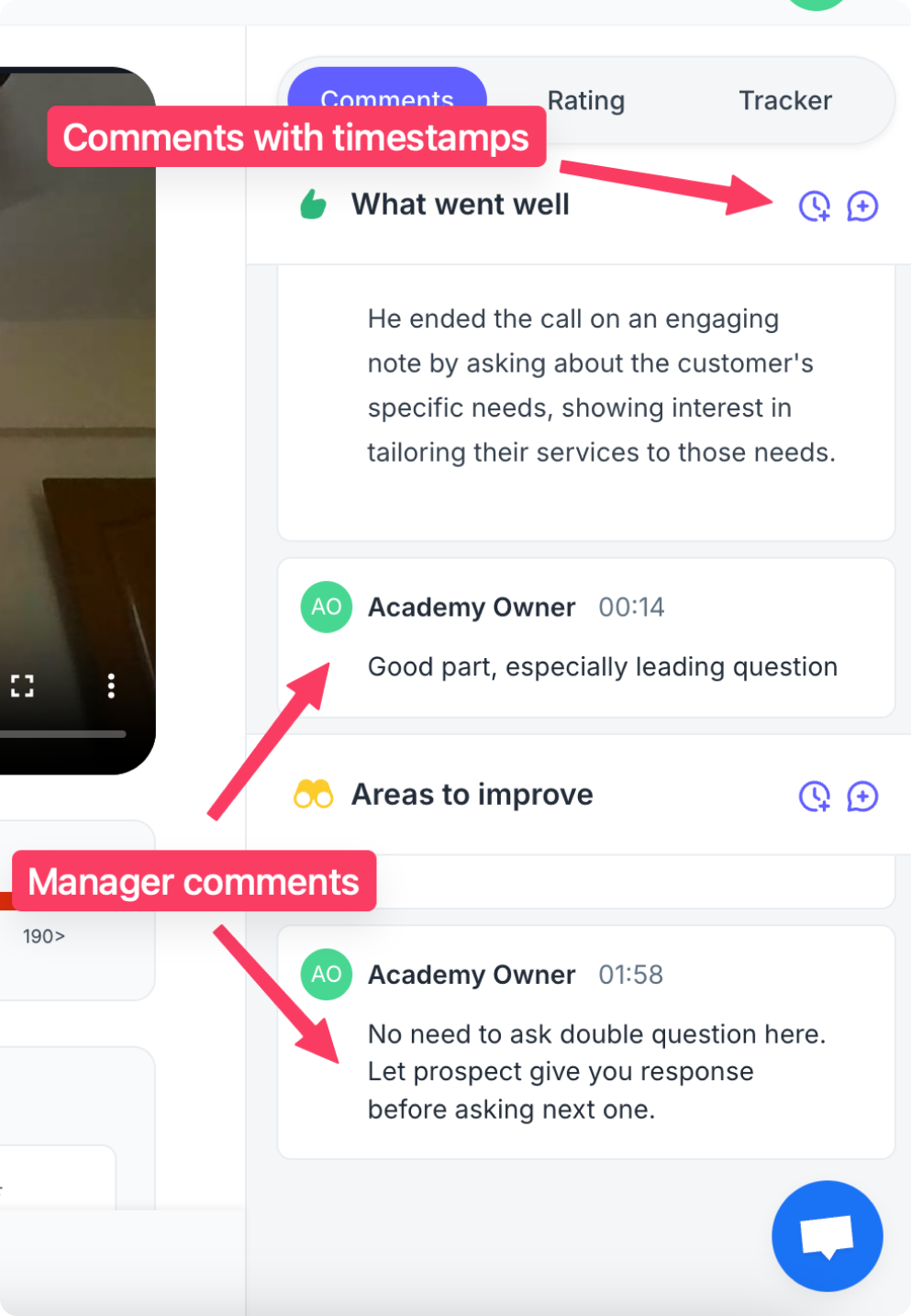
Practically, that means picking one letter at a time and drilling the question until it sounds like a normal thing to say. Economic Buyer is usually the right place to start, because it is the letter reps skip most and the one that costs the most when it is missing. Then Paper Process, which reps rarely ask about because it feels administrative rather than commercial.
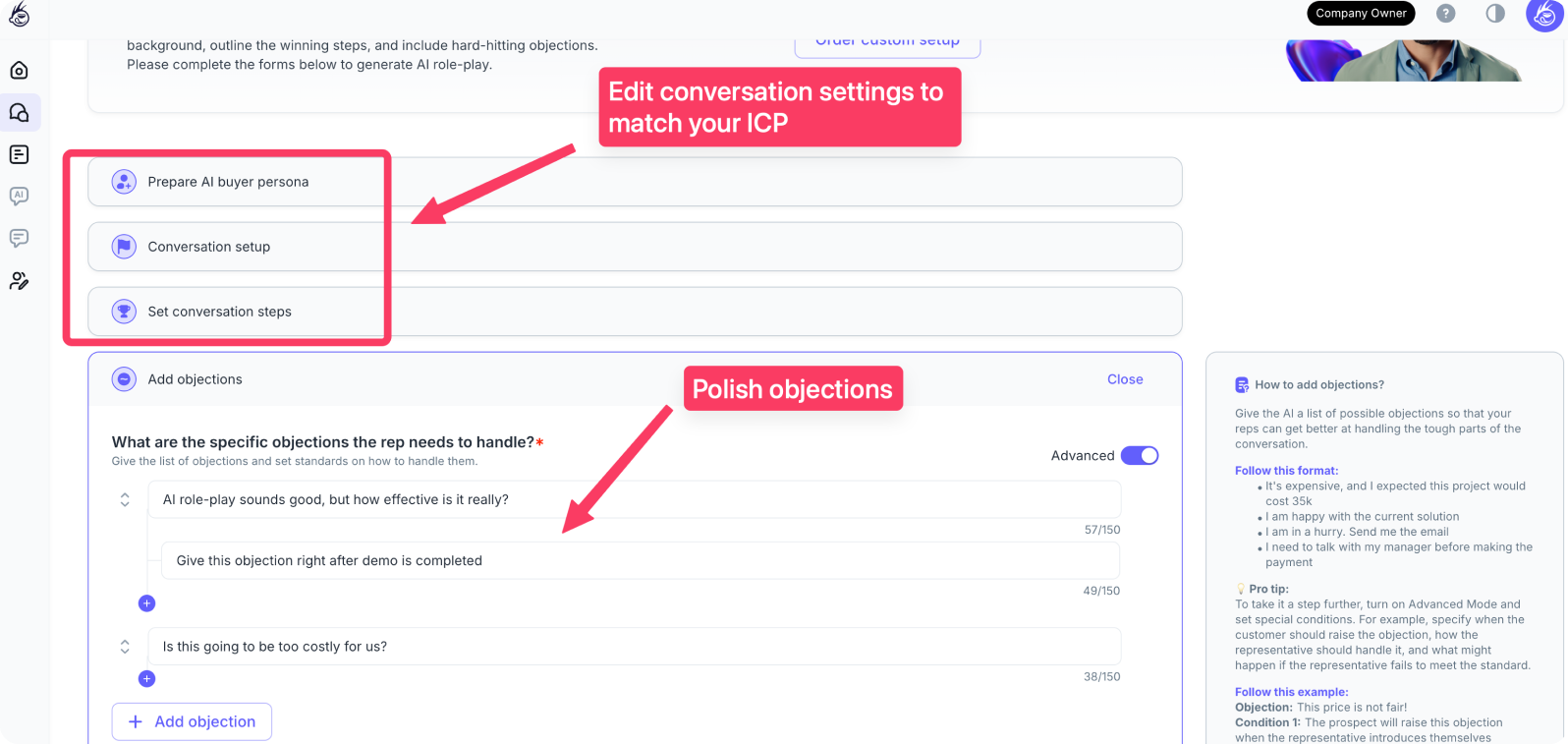
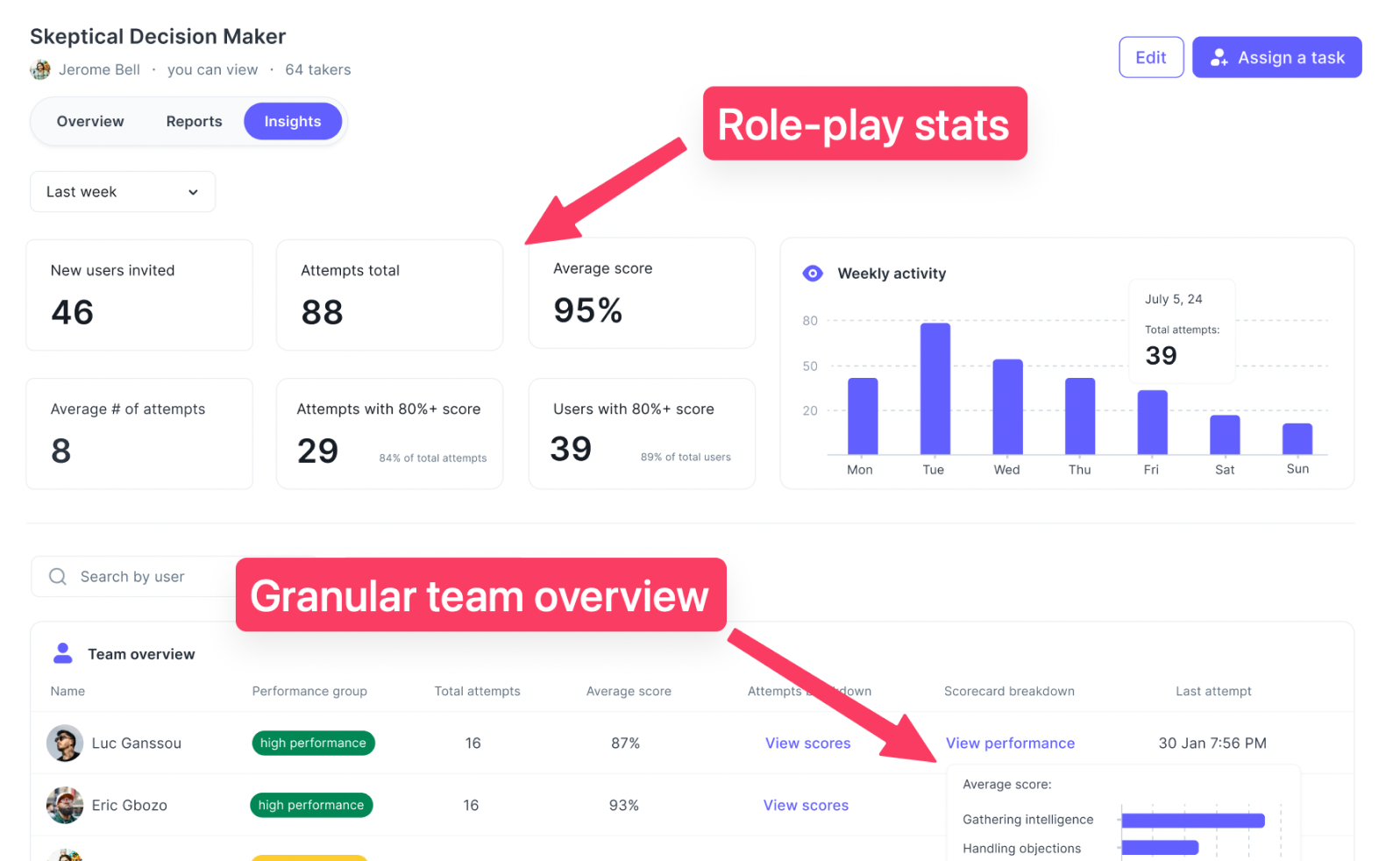
This is where AI role-play fits. In PitchMonster, an enablement lead can build an AI buyer from a real recorded call, then have every rep practice the economic-buyer question against a stakeholder who deflects it the way a real CFO does. The session is scored against your own MEDDPICC criteria, and the AI Coach debriefs the rep afterwards by asking what they noticed rather than handing them a grade. Reps get the repetitions without spending live pipeline learning to ask an awkward question.
The proof point that matters here is ramp. Mentor Group cut ramp time by 50% on average and halved coaching time per rep by moving practice off their managers' calendars, and SThree onboarded 53% faster the same way. A methodology rollout is an onboarding problem wearing a different hat.
If you are rolling MEDDPICC out this quarter, the sequence that works is: teach the 8 parts once, then spend the rest of the time on repetitions of the 3 questions your reps avoid. Book a demo and we will build the economic-buyer scenario from one of your own calls.
FAQ
What does MEDDPICC mean?
MEDDPICC is an 8-part B2B sales qualification framework for complex enterprise deals. The letters stand for Metrics, Economic Buyer, Decision Criteria, Decision Process, Paper Process, Identify Pain, Champion, and Competition. Reps use the 8 categories as a checklist to test whether a deal is real, winnable, and worth forecasting, and to find the gaps before a close date slips.
Is MEDDPICC the same as MEDDIC?
No. MEDDIC is the original 6-part framework: Metrics, Economic Buyer, Decision Criteria, Decision Process, Identify Pain, Champion. MEDDPICC adds 2 letters that modern enterprise selling made unavoidable, Paper Process and Competition, because procurement, legal, and security review now kill more deals than a weak pitch does. Same qualification logic, 2 more places a deal can die.
Who created MEDDPICC?
MEDDIC came out of PTC in the 1990s, where Jack Napoli and Dick Dunkel built it while the company grew rapidly through enterprise sales. MEDDPICC is the later extension that adds Paper Process and Competition. MEDDPICC is a registered trademark of MEDDIC Academy, so treat the mark as theirs rather than as a generic term you can attach to a product.
Is MEDDPICC certification worth it?
Certification is worth it if your team needs shared vocabulary fast and a manager to point at a standard. It is not worth it if you expect certification alone to change behavior on calls. A certificate proves a rep can recall the 8 parts; it does not prove they can ask an economic buyer about budget authority without flinching. Budget for practice after the course, not instead of it.
Does Salesforce use MEDDPICC?
Teams commonly run MEDDPICC inside Salesforce in 2 ways: custom fields on the opportunity for each of the 8 parts, or a scoring app that rolls the 8 into one deal-health number. Both work. The failure mode is identical either way: reps fill the fields in after the call to satisfy the pipeline review, so the CRM looks complete while the questions were never asked.
Is MEDDPICC worth it?
MEDDPICC earns its keep on deals with multiple stakeholders, a procurement step, and a cycle longer than about 60 days. On short transactional sales it adds admin without adding insight. The honest test: if your forecast regularly slips because a deal stalled in legal or an economic buyer appeared late, the framework addresses your actual failure mode.
What are the best MEDDPICC questions to ask?
The strongest MEDDPICC questions are the ones reps avoid because they feel rude. Ask who signs the contract rather than who makes the decision. Ask what happens if the project is not funded this year. Ask what the security review timeline looks like before you set a close date. The table earlier in this guide gives you the specific question for each of the 8 parts, plus the answer that should worry you.
What is a MEDDPICC scorecard?
A MEDDPICC scorecard rates each of the 8 parts on a simple scale, usually 0 to 3, and turns the total into a deal-health number. Its value is not the score but the argument it forces during pipeline review: a rep claiming a strong Champion has to say who that person is and what they have done. Scored honestly, most early-stage deals land far lower than reps expect.
The short version
MEDDPICC is 8 questions that tell you whether a deal is real. The letters are easy. Asking a finance director who signs the contract, and staying quiet while they answer, is the hard part, and it is the part a workshop cannot install.
Teach the framework once. Then spend the budget on repetitions of the 2 or 3 questions your reps currently skip.