Online sales training software is a browser-based platform where reps practice real sales conversations against AI buyers, get scored against your playbook, and fix gaps before they reach a live prospect. The best tools pair active role-play with instant coaching, so training builds a skill rather than only delivering content.
This guide compares the 9 best online sales training software tools for 2026, each delivered in the browser and built around active practice instead of passive video. Below you get a side-by-side comparison table with real G2 ratings and pricing fit, an honest read on what each tool does best, and a short method for matching a platform to the skill your team loses deals on. Most of these run on AI now, so the real question is which kind of practice moves your numbers.
Comparison table
Use this table to scan the field, then read the full write-up on any tool that fits. Pricing and ratings move often, so treat them as a starting point and confirm with each vendor before you buy. Where a vendor does not publish a price, the entry says so and points to the segment it fits rather than guessing a figure.
Tool | Best for | Pricing | G2 rating | Our take |
|---|---|---|---|---|
PitchMonster | AI role-play practice with a Socratic AI Coach | Custom (by quote) | 4.9/5 | The only tool pairing realistic AI buyers with post-session Socratic coaching, plus an EU base. |
Second Nature | Voice role-play for large, compliance-led teams | Custom (by quote) | 4.6/5 | Strong voice simulation and certification; no post-session Socratic coaching layer. |
Yoodli | Delivery coaching on pace, fillers, and clarity | Free; paid from $8/user/mo | 4.7/5 | Great for communication delivery; lighter on selling against your own playbook. |
Hyperbound | Cold-call and objection drills for SDR and BDR teams | By quote | 4.9/5 | Built for the top of the funnel; not for full-cycle demos or negotiation. |
Kendo AI | Quick AI role-play for smaller, growing teams | Custom (by quote) | Limited reviews | A newer AI role-play entrant with a small public footprint so far. |
Mindtickle | All-in-one readiness and enablement at scale | Custom (enterprise) | 4.7/5 | Broad suite for large teams; most add a practice layer on top of it. |
Quantified | Regulated industries like pharma and medtech | Custom (by quote) | Limited reviews | Specialized regulated-selling personas; a small G2 sample so far. |
FullyRamped | Turning your own docs and calls into practice fast | Custom (by quote) | 4.9/5 | Quick to stand up from your material; quote-only and enterprise-leaning. |
Outdoo AI | Practice built from your own recorded calls | Custom (by quote) | 4.6/5 | Useful when you have call data to mine; best for mid-market and up. |
What is online sales training software?
Online sales training software is a browser-based platform that helps a team practice and coach selling without waiting on a manager's calendar or booking an in-person workshop. It usually blends simulated conversations where reps rehearse before a real buyer, scoring that grades each session against a playbook, and analytics that show who is ready for live calls.
The modern version of the category runs on AI. The software acts as the buyer, asks questions, raises objections, and reacts to what the rep says. Reps drill discovery calls, cold outreach, demos, and objection handling on demand. Repetition is the point. A rep can repeat the same hard moment ten times in an afternoon instead of waiting for the next team session.
It matters because the old way leaks deals. Reps absorb messaging and product knowledge in onboarding, then freeze on the live call when a buyer questions price or names a competitor. There is no time to think through a slide. Practicing the moment first is what makes the right response automatic when it counts.
That shift is why the category now leads with active practice rather than a video library. An online sales training platform that only serves lessons teaches reps what to say. A practice tool checks whether they can say it under pressure. The tools below are built for the second job.
Why online sales training software delivers faster results
Reps forget most of what they hear in a classroom within days. They remember what they practice. That gap is the reason the category moved from video libraries to active role-play, and it is why online sales training software now leads with simulation instead of slides.
The mechanism is simple. When a rep rehearses a discovery call or a pricing objection out loud, against a buyer that pushes back, the response becomes automatic. On the live call there is no time to think through a script, so muscle memory carries it. A video course cannot do that on its own.
Speed comes from a few shifts happening at once. Practice runs on demand, so a new hire is never blocked on a trainer's calendar. Scoring stays consistent, because every rep is measured against the same playbook rather than a manager's mood that day. Readiness becomes visible, so a leader certifies a rep on evidence instead of time served. Reps in another timezone rehearse without waiting for anyone, because the software runs around the clock.
The numbers move when practice replaces passive content. Mentor Group recorded 30% faster ramp, 37% higher performance, a 28% win-rate improvement, and 2x more opportunities booked after rolling out PitchMonster. That is the fast result in practice. Reps reach quota sooner, and the pipeline shows it inside a quarter.
There is a management payoff too. When readiness is scored the same way for every rep, a sales leader stops guessing who needs another week and who is ready for real accounts. Coaching time then goes to the reps who need it, not the whole cohort at once.
Picture a new SDR in week two. Rather than waiting to shadow a call, she runs the cold open and her three hardest objections twenty times against an AI buyer, watches her score climb, and books her first live call already sharp. Her manager reviews the transcript and the score, not a raw first attempt. That is where the weeks come off a ramp, and why teams that practice out-ramp teams that only watch.
Online tools vs full enablement platforms
The category splits into two shapes, and knowing which you need is the fastest way to a shortlist.
Focused online tools solve one training problem well, usually AI role-play or delivery coaching, and a small team can stand one up in days. Full enablement platforms run the whole stack, from learning content and certification to conversation intelligence and reporting, which suits large organizations that want everything under one roof.
Your choice depends on team size, budget, and how complex your program is. Smaller teams that just need reps practicing before live calls are better served by a focused tool. Larger teams standardizing readiness across hundreds of reps tend to want the broader suite, usually with a dedicated practice layer added on top.
Plenty of enterprises run both. They keep the enablement suite as the system of record and treat the practice tool as the part reps touch every week. If you are weighing a full suite against a focused platform, the best sales training software overall breakdown maps the wider field, and the Seismic alternatives guide covers the heavier enablement end.
One rule holds across both shapes. The tool reps open every day is the one that changes behavior. A suite nobody logs into is a line item, not a training program.
How we evaluated these tools
We work in this market every day, so this list reflects how online training tools are bought and used by sales teams, not a scrape of vendor feature pages. We weighed each tool on five things that decide whether practice changes behavior.
Practice realism came first: how close the simulated conversations get to a real buyer, including objections and pushback. Coaching depth came next, meaning whether the tool only reports a score or helps a rep improve. Analytics an enablement lead can take to leadership carried the third weight. Setup and adoption came fourth, since the best platform is the one reps keep using after week one. Fit by team size and region rounded it out, including data residency for teams that need it.
Pricing and ratings change often, and many vendors quote per seat on request. Where a number is not published openly, we say so and describe the segment a tool fits rather than guess. G2 ratings are current as of July 2026, and figures attributed to PitchMonster customers come from named case studies, linked inline.
We also cut a few tools that other lists carry. If we could not confirm a product as a real, standalone platform with a live site and actual users, it did not make the list. A shortlist padded with tools that barely exist wastes a buyer's time, and it is a big reason generic roundups send teams down dead ends. Every entry below is one you can buy and pilot this quarter.
The 9 best online sales training software
1. PitchMonster
Best for: teams that want reps to practice realistic conversations online and get coached, not just complete courses.
PitchMonster is the only platform that pairs adaptive AI-buyer role-play with a Socratic AI Coach that debriefs every rep after the session, 24/7, so reps self-diagnose before a manager ever reviews the call. That coaching layer is where confidence builds. Other tools on this list surface a score or a feedback panel after a session; PitchMonster's AI Coach asks the rep reflective questions instead, so the rep works out the fix before a manager ever weighs in. Around it sits realistic practice, scoring on your own playbook, and readiness analytics a leader can act on. Teams like Lenovo, Xfinity, Syngenta, and Coupa use it to ramp reps across more than 40 countries.
The Socratic AI Coach that debriefs every rep
After each practice session, a Socratic AI sales trainer asks reflective questions that guide the rep to their own insight before they see a score. It is available around the clock, so a rep in any timezone gets coached without waiting for a manager to free up. Reps fix their own gaps first, which means the manager review starts from a higher floor.
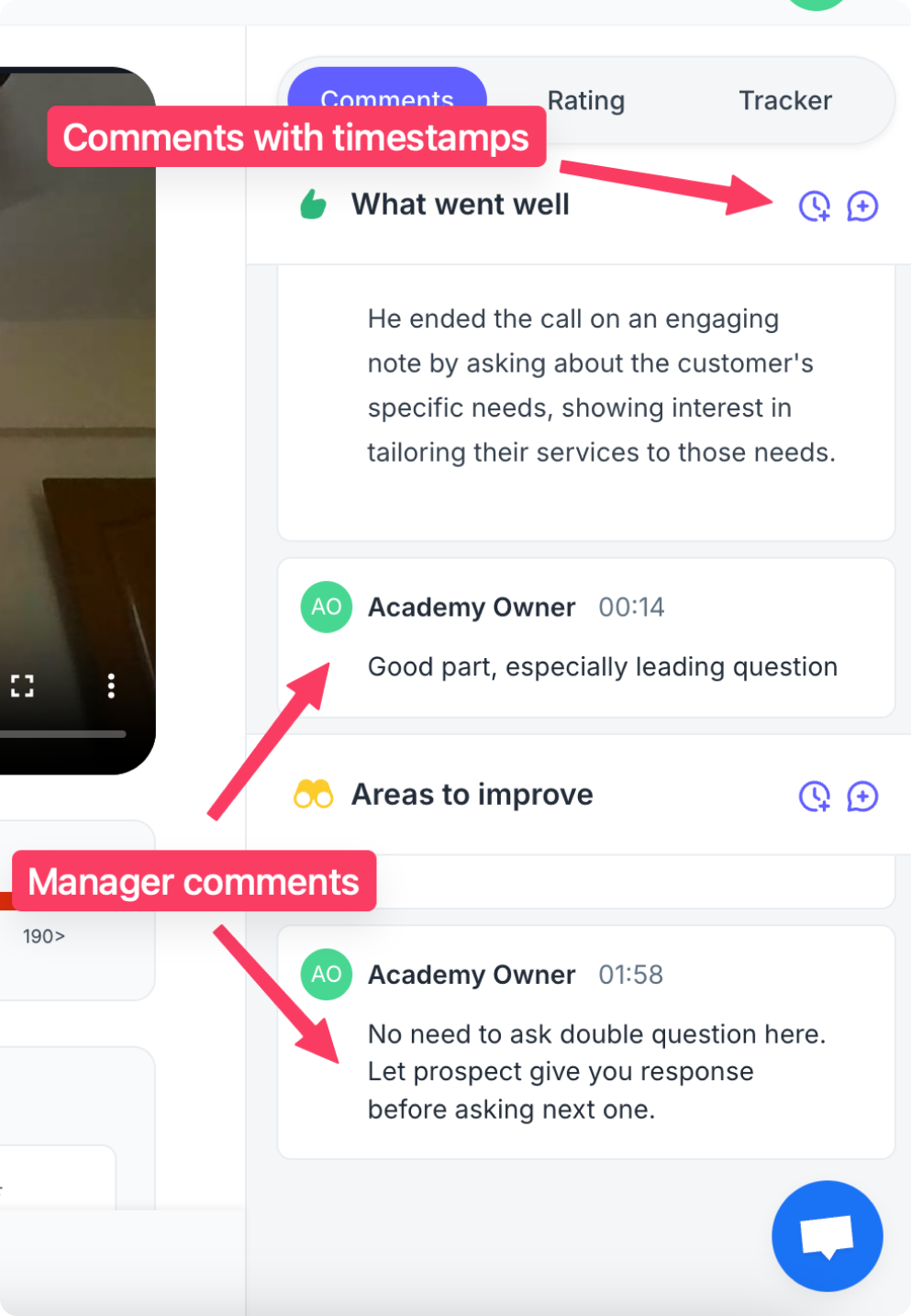
This is the part buyers react to most in a demo. One customer at One Park Financial put it plainly: "I think I really like the AI coach. That's definitely going to save us a lot of time."
Adaptive AI buyers scored on your playbook
Reps rehearse cold calls, discovery, and demos against AI buyers that adapt and object like your real ICP, then get scored against your own methodology. A manager builds a scenario from a call recording, a product doc, or a website URL in about two minutes, with four difficulty levels and support for 27 languages.
The AI sales role-play training page shows that practice loop step by step, voice buyer included.
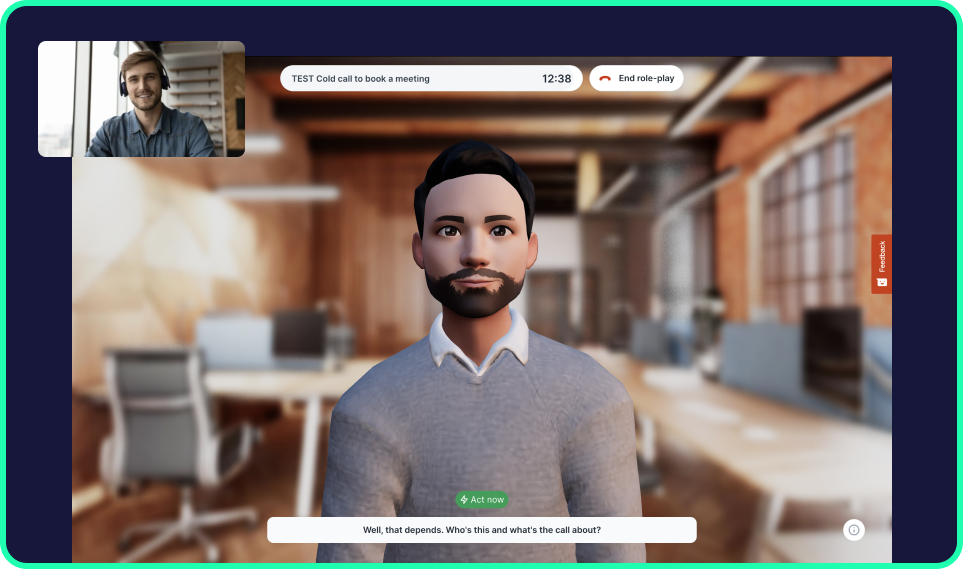
The voice realism is what makes the practice hold up. The AI paces its speech, uses filler words, and shifts its stance based on what the rep says, so the session feels like a real buyer rather than a script reader.
Readiness analytics, integrations, and scalability
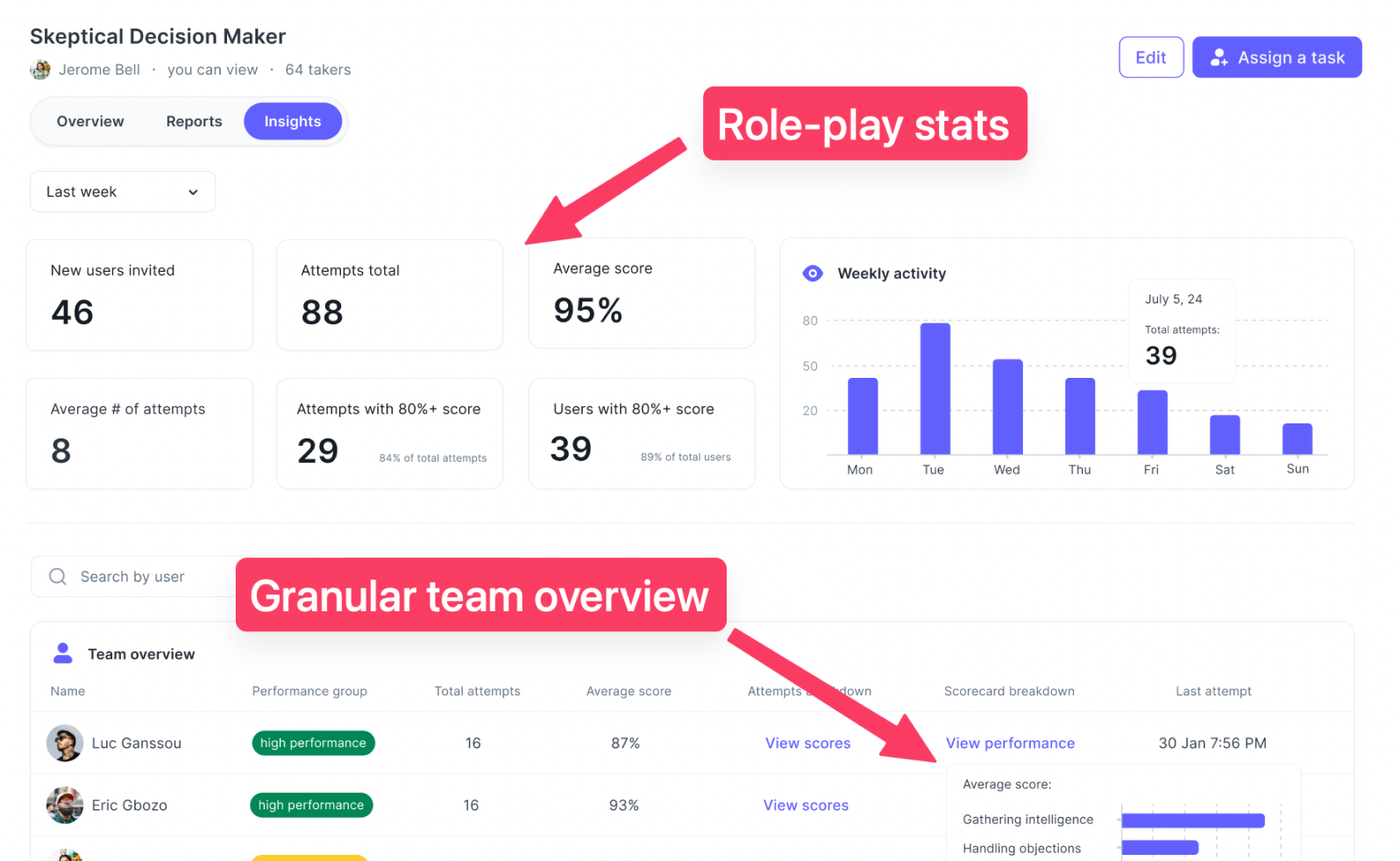
Every session feeds a scorecard, so managers see who is ready for live accounts and where a rep still loses the conversation. Scores export to HubSpot, Salesforce, Power BI, and your LMS through the API, which ties practice to pipeline instead of leaving it in a silo.
There is a second scoring surface as well. PitchMonster grades real call recordings on the same scorecard as the role-plays through Live Call Analysis, so a manager sees practice and live performance side by side. That closes the loop between how a rep rehearses and how they sell, and it flags the exact moment a deal slipped.
PitchMonster is also the only European-based platform among the leaders, which matters for teams that need GDPR compliance and EU data residency. It is not a full LMS or course library. It is the active-practice and coaching layer that pairs with your content.
PitchMonster fits sales teams of roughly 10 to 300 reps running consultative, B2B motions with someone who owns training. It holds a 4.9/5 on G2, and Mentor Group recorded 30% faster ramp, 37% higher performance, and a 28% win-rate improvement after rollout, with a 100% enterprise renewal rate since spring 2024 and more than 300,000 reps trained. Pricing is quote-only, with onboarding, a dedicated CSM, and support included and no setup fees. See pricing for your team size, or how it maps to your sales enablement program.
2. Second Nature

Best for: voice-based role-play for large teams that need structured, compliance-ready training.
Second Nature uses conversational AI to run voice-based simulations where virtual avatars play a range of buyer personas, from skeptical gatekeepers to time-crunched executives. Sessions adjust to the rep's skill level and get scored automatically, with feedback on pitch delivery, talk tracks, and sentiment. It ships with a large library of pre-built scenarios and syncs readiness data to Salesforce.
The focus here is voice realism, formal certification, and a setup geared to enterprise compliance. It holds a 4.6/5 on G2. Pricing is quote-only and leans toward larger teams on annual contracts, so it is less suited to a small team testing the water.
Second Nature is a solid fit when voice simulation and certification at scale are the reason you are buying. For a side-by-side on the practice-and-coaching angle, see PitchMonster vs Second Nature.
3. Yoodli

Best for: coaching how reps come across, not just what they sell.
Yoodli is an AI speech-coaching tool that evaluates communication during practice. It tracks filler words, speaking pace, tone, and clarity, then returns coaching tips after each session so reps can self-correct without waiting for a manager. It runs in the browser and connects to Zoom, Google Meet, and Microsoft Teams, so practice mirrors a real call setup.
The strength is detailed delivery feedback and an easy on-ramp for reps nervous about how they sound. A free Starter plan lets one rep try it, with paid plans from $8 per user per month billed annually, and it carries a 4.7/5 on G2. It coaches communication more than selling, so it does less to score a rep against your ICP, objections, and methodology than a role-play platform built for that.
Yoodli earns its place for reps who need to sound clearer and calmer on a call. If you need practice scored on your methodology rather than delivery alone, weigh a Yoodli alternative built for selling.
4. Hyperbound

Best for: cold-call and objection drills for SDR and BDR teams.
Hyperbound is an AI role-play platform aimed at the top of the funnel, where reps have two or three seconds to handle an objection. Its AI buyers play tough gatekeepers, busy executives, and enthusiastic champions, and a custom builder lets teams script the objections they hear. Reps repeat a scenario 10 to 20 times to build quick reflexes, and the platform scores practice against your methodology.
The focus is cold-call training, fast deployment inside one to two days, and integrations with Gong, Chorus, and Salesloft to compare practice with live calls. It holds a 4.9/5 on G2. Pricing is quote-only through a demo, and commonly runs into five figures a year for the larger outbound teams it targets.
Hyperbound is a strong pick when prospecting is the skill you are trying to fix. For full-cycle practice beyond cold calls, compare a Hyperbound alternative.
5. Kendo AI

Best for: quick AI role-play practice for smaller, growing teams.
Kendo AI is a newer AI sales role-play tool that lets reps rehearse conversations against an AI buyer in the browser. Sessions cover discovery and objection handling, and reps get feedback after each run, so a small team can put reps through repeated reps without booking a manager. The setup is light, which suits a team that wants practice live quickly rather than a long configuration project.
As a newer entrant, Kendo AI has a smaller public footprint than the established tools here, so its G2 presence is limited and there is less independent review data to weigh. Pricing is quote-based, so budgeting takes a short conversation with the vendor.
Kendo AI is worth a look when you want basic AI practice running fast and do not need a deep enablement layer yet. Trial it against your own scenarios before you commit, since the public track record is still thin. See our PitchMonster vs Kendo AI comparison for the detailed head-to-head.
6. Mindtickle

Best for: all-in-one sales readiness and enablement at scale.
Mindtickle is a broad enablement suite that combines learning modules, onboarding automation, readiness assessments, and analytics in one place. It includes AI-driven role-play so reps rehearse pitching and objection handling, and its readiness scoring gives managers a view of where a rep still needs coaching. It connects to Salesforce, Gong, Outreach, and Slack so training data ties back to pipeline.
The strength is breadth and reporting for sizeable teams, and it holds a 4.7/5 on G2. The trade-off is that the suite can be complex to set up, and rolling out playbooks and methodologies takes months for larger organizations. That is why many teams add a focused role-play layer on top for the daily practice.
Mindtickle fits large teams that want one system of record for readiness. If practice and coaching depth is the real goal, compare a Mindtickle alternative built for it.
7. Quantified

Best for: regulated industries like pharmaceuticals and medtech.
Quantified specializes in fields where reps navigate strict messaging and compliance, such as healthcare. Its AI personas act as virtual practice partners, run realistic discussions, and evaluate performance automatically, so a pharma rep rehearses off-label questions or product-specific objections without pulling a manager in. It supports roles from Medical Science Liaisons to frontline managers and automates certification across regions.
The strength is a standardized QC Score for communication skills, customizable rubrics, and certification workflows built for regulated selling. Pricing is quote-only and demo-gated, so budgeting takes a conversation. Its G2 profile carries a limited number of reviews, so there is a smaller public sample to weigh than for the larger tools here.
Quantified fits best when compliance and regulated messaging are the reason you are buying, rather than general B2B practice. For consultative selling outside regulated fields, a general-purpose role-play tool tends to be a closer match.
8. FullyRamped

Best for: turning the sales material you already have into practice quickly.
FullyRamped skips the work of building training content from scratch. Reps upload existing playbooks, battle cards, and product decks to a Knowledge Hub, and the AI turns them into practice sessions with dynamic responses and objections. It focuses on active drilling of discovery questions, objection handling, and value articulation, and managers customize scorecards to a methodology like MEDDPICC. Its "AI twins" replicate your hardest real calls to rehearse against.
The strength is fast setup from your own documents, integrations with Gong and Salesforce, and dashboards that flag who needs support. It holds a 4.9/5 on G2. Pricing is custom and demo-gated with a five-seat minimum, and there is no mobile app, so practice and analytics live on the desktop.
FullyRamped is a good fit when you already have strong sales material and want it turned into practice fast. For a side-by-side read, compare a FullyRamped alternative.
9. Outdoo AI

Best for: building practice scenarios from your own recorded calls.
Outdoo AI, formerly MeetRecord, turns historical call data into practice, so reps rehearse the real situations your team has already faced. The buyer simulations respond dynamically and cover discovery, objection handling, and negotiation, and each session is scored on areas like discovery, qualification, and negotiation. It integrates with Salesforce, HubSpot, Gong, Chorus, Slack, and Zoom to tie coaching to revenue.
The strength is practice grounded in your actual conversations and dashboards that standardize coaching across larger teams. It holds a 4.6/5 on G2, and pricing is custom by quote. It suits mid-market and enterprise teams with call data to mine and a coaching framework already in place, so smaller teams get less from it out of the gate.
Outdoo AI is a fit when you have a library of recorded calls and want practice drawn from them. For a side-by-side, see this Outdoo alternative.
Common mistakes when choosing online sales training software
Buying online sales training software goes wrong in a few predictable ways, and each one is avoidable once you know to watch for it.
The first is skipping the trial. Committing on the strength of a demo leaves you blind to how the tool behaves once real reps use it every day. Run a 30-day pilot with a small group of 5 to 10 reps, and judge engagement and skill gains rather than the sales pitch. A tool that reps quietly stop opening after week one is the most expensive mistake of all.
The second is buying on price alone. Cost matters, but the cheapest tool that reps ignore returns nothing, while a well-adopted platform pays back in faster ramp and higher win rates. Weigh the value the tool delivers against the seat cost, not the seat cost by itself.
The third is skipping a proper needs assessment. Without a clear read on your must-have features and the specific skill gaps you are fixing, you end up with a flashy tool that misses the point. Software that cannot load your own scripts and buyer personas will not help reps close the deals you run.
Scalability gets overlooked too. A tool that cannot grow with your headcount or flex with seasonal hiring turns into overage fees and workarounds later. And a clean interface counts for nothing if the tool lacks the practice depth and analytics your team needs.
A quieter mistake is treating practice as a one-time onboarding event. Reps who drill hard for their first two weeks and never open the tool again slide back to old habits by the next quarter. The teams that see lasting gains build a weekly practice rhythm, tie it to live deals, and give managers a reason to check the scores. Buy for the ongoing habit, not just the ramp.
The last mistake is treating software as a cure on its own. Practice works when it sits on good content and clear coaching, so audit your sales material against the buyer journey before you roll a platform out. Get the mix of practice, content, and coaching right, and the tool does its job.
How to choose online sales training software that speeds ramp time in 2026
Start with the bottleneck, not the feature list. If reps need more repetitions before live calls, you want a practice and role-play tool. If they freeze on how they come across, you want delivery coaching. If new hires lack foundational knowledge, you want a learning platform or LMS. Most teams have one real constraint, and buying for the others wastes the budget.
Set your top training goals first, then let team size and structure shape the shortlist. A smaller team often does best with a focused simulator that needs little setup. A growing team may want practice paired with call analysis. A large enterprise usually needs a full enablement suite with compliance controls, global scale, and dedicated support. Sizing the tool to the team keeps you from paying for scale you will not use.
Then pressure-test the shortlist on what decides adoption. Does it connect to your CRM, Salesforce or HubSpot, so practice lives where reps work? Can you load your own scripts and buyer personas, so sessions match your market rather than a generic template? Is the feedback specific enough to act on, covering tone, pacing, and tactics rather than a single number? And is it simple enough that reps keep using it after week one?
Feedback quality is where tools separate. Some report a basic score, while others surface exactly what a rep should change next time. That difference is what turns a practice session into a skill, because a rep who knows the specific fix improves faster than one who only sees a grade.
Region matters more than most buyers expect. If your team sits in the EU or handles EU customer data, check where the vendor stores recordings and whether it meets GDPR and data-residency rules before legal does it for you. Timezone coverage counts too, since a support desk asleep when your reps practice slows every rollout. A European base is one reason teams shortlist PitchMonster over US-only tools.
Run a real trial before you commit. Build a scenario on your own use case, put a few reps through it for 30 days, and judge the output, not the demo. Set a baseline for ramp time and win rate first so you can prove the return after a quarter. To see what reps should rehearse first, browse sales role-play scenarios, and if you lead a team, map the rollout to your sales leaders plan. When you want the practice-and-coaching angle on your own material, book a demo and run your first role-play.
FAQ
What is online sales training software?
Online sales training software is a web-based platform that lets reps practice real sales conversations against AI buyers before they speak with a live prospect. Instead of watching videos, reps rehearse discovery, objections, and demos, get scored against a playbook, and fix gaps on demand from any browser.
What is the best online sales training software?
It depends on your bottleneck. For AI role-play practice with post-session coaching, PitchMonster is the strongest pick. For speech and delivery feedback, Yoodli fits. For cold-call drills, Hyperbound is built for it. For regulated industries, Quantified specializes there. Match the tool to the skill your reps lose deals on.
How much does online sales training software cost?
Most online sales training tools price per seat and quote on request. PitchMonster is quote-only, with onboarding, a dedicated CSM, and support included and no setup fees. Yoodli has a free plan with paid plans from $8 per user per month billed annually. Hyperbound is quote-only, sold through a demo. Enterprise suites run into five or six figures a year. Confirm current pricing with each vendor.
Is there free online sales training software?
A few tools offer a free tier for individuals. Yoodli includes a free Starter plan with a handful of practice sessions, and some vendors run limited free trials. Free plans suit one rep testing delivery feedback. For a full team practicing against your own playbook with manager visibility, you will need a paid plan, which most vendors quote per seat.
What is the best AI sales role-play software?
For AI sales role-play, judge how realistic the AI buyer is and whether a rep gets coached afterward. PitchMonster pairs adaptive AI buyers with a Socratic AI Coach and scores each rep on your methodology. Hyperbound suits cold-call reps, and Second Nature handles voice practice at scale. Match the tool to the conversation your reps rehearse most.
Does online sales training software integrate with your CRM?
Most online sales training software connects to Salesforce and HubSpot, and many link to Gong or Chorus so practice sits next to real calls. PitchMonster exports scores to HubSpot, Salesforce, Power BI, and your LMS through its API. Check that a tool writes readiness and scorecard data back to your CRM before you buy, so training ties to pipeline.
How do you measure whether online sales training software works?
Set a baseline before rollout, then track it. Watch ramp time to first closed deal, win rate, and scorecard progress across repeated role-plays. Manager-facing analytics should show who is ready and where a rep still loses the conversation. Mentor Group, a PitchMonster customer, measured a 28% win-rate improvement and 2x more opportunities after rollout.
Does online sales training software speed up ramp?
It can, when it replaces passive content with active practice. Reps rehearse the hard moments against AI buyers, get scored, and repeat until the response holds up, so managers certify readiness on evidence rather than time served. One PitchMonster customer, Mentor Group, recorded 30% faster ramp after rollout.
What is the difference between an online sales tool and a sales LMS?
A sales LMS stores and delivers courses, quizzes, and certifications, so reps learn by reading and watching. An online practice tool puts reps into simulated conversations and scores how they perform under pressure. Many teams run both: an LMS for foundational knowledge and a practice tool to turn that knowledge into a skill.
Conclusion
The right online sales training software cuts ramp time and helps a team close more deals, which is why AI role-play has moved from a nice-to-have to the core of modern training. The best tool for your team still depends on your own picture: the skill gaps you are fixing, your team size, and the way your reps sell. A cold-calling team needs different features than one running detailed product demos.
Address the skill gap your reps have. Test two or three platforms with a small group for 30 days, use your own scripts and buyer personas, and measure the change in call performance and quota attainment. Look for the ability to load your battle cards, feedback specific enough to act on, and analytics that show who is ready for live calls.
Then pick the platform your reps will open every day. The tools that speed up ramp are the ones that build muscle memory through repeated practice, not the ones that only serve information. When you want to see practice and post-session coaching on your own scenarios, book a demo and run your first role-play.