Effective sales coaching techniques turn a rep's last conversation into one change they can practice. Ask before telling, focus on one skill and review a call replay. Rehearse with role-play, set a goal and name the gap, give feedback with a next attempt, and use peer coaching. Each method below includes words to use and a practice prompt.
Last updated: November 18, 2026.
A focused conversation gives the rep a clear next move to test in their next buyer interaction.
Why technique matters more than time
Coaching for sales performance depends on what happens inside the conversation. These effective sales coaching techniques focus on what you say and ask. A session can happen every week and change nothing if you do most of the talking, cover several skills at once or finish without a next step. The rep needs room to notice what happened, name one change and try it out loud.
That is why the techniques below focus on words and actions inside a coaching session. You can use them in a one-to-one, after reviewing a real conversation or during a team practice. Start with one moment the rep can describe clearly, then stay with it long enough to rehearse a different response.
Use the sales coaching guide when you need broader guidance for coaching conversations. Sales coaching vs sales training explains the distinction: training teaches a skill, and coaching helps that skill stick for each rep.
The 7 techniques
Choose a real selling moment and apply one technique at a time. The goal is a rep who can describe the change and practice it before the next conversation.
Technique 1: Ask before telling
Ask the rep to assess their conversation before you offer your view. The rep names what they wanted, where the exchange shifted and what they might try next. You can add your perspective after they have had a chance to think it through.
What the manager says:
- “What did you want to happen in that conversation?”
- “Where did it change from what you expected?”
- “What would you try next time?”
The mistake to avoid: Asking a question, then answering it yourself before the rep can respond. Leave a pause and let the rep finish their thought, even if the first answer is brief.
Practice prompt for the rep: Rehearse the opening of a discovery conversation with a buyer who gives short answers. After each answer, pause and ask yourself what you learned before choosing the next question.
Technique 2: Coach one skill at a time
Choose the single skill that would make the clearest difference in the rep's next conversation. That could be asking a second follow-up question or responding to a price objection. Keep the coaching and practice focused on that skill until the rep can use it naturally.
What the manager says:
- “Let’s stay with the price objection. What did the buyer need to understand?”
- “Which follow-up question would help you learn more before you respond?”
- “Try that part again, and we’ll leave the rest of the conversation alone.”
The mistake to avoid: Do not give the rep a list of 6 fixes after one conversation. A long list makes it hard to tell which behavior to practice first.
Practice prompt for the rep: Rehearse one response to a buyer who says the price is too high. Ask a question that explores the concern, then respond to the answer without changing the subject.
Technique 3: Review a call replay together
Listen to or watch a short section of a real recorded conversation with the rep. Ask the rep to pause where they would change something, then review that moment together. Keep the discussion to 1 or 2 moments.
What the manager says:
- “Pause where you think the conversation changed.”
- “What did you hear the buyer say just before that?”
- “What could you ask here before moving forward?”
The mistake to avoid: Do not replay the whole conversation and score every line. Too many observations can bury the moment you chose to coach.
Some teams use AI-powered sales coaching to surface moments worth reviewing. Keep the replay focused on the section where the rep can identify a specific choice and test a different response.
Practice prompt for the rep: Replay the selected moment, then pause before the original response. Say a different question or reply out loud and explain what you hoped to learn from it.
Technique 4: Rehearse with role-play
Play the buyer while the rep practices the difficult moment out loud. Keep the role-play short and specific, such as one objection or one opening. Then rerun the exchange or swap roles so the rep can repeat the new line until it sounds natural.
What the manager says:
- “I’ll be the buyer. Tell me why I should stay with the current approach.”
- “I’m not convinced. What would you ask me next?”
- “Let’s run that again, starting with your new opening.”
The mistake to avoid: Do not make the buyer polite and easy to persuade. If the buyer gives in as soon as the rep responds, the practice will not prepare them for resistance.
For more ideas, see the sales role-play guide. Keep the buyer's pushback tied to the situation you are coaching, so the rep knows which skill the exercise is for.
Practice prompt for the rep: Rehearse the first 2 minutes of a discovery conversation with a buyer who answers in one word. Ask 3 follow-up questions before you mention the product.
Technique 5: Set the goal and name the gap
Agree on what good looks like for the one skill, then compare that behavior with what the rep did. Describe the goal in observable terms, such as “the buyer states the cost of the problem in their own words.” Write the goal in the rep's words. That helps them own it.
What the manager says:
- “What would I hear you do if this skill were working?”
- “What did you do in the conversation, and what was missing?”
- “How would you write the goal in your own words?”
The mistake to avoid: Do not set an outcome the rep cannot control, such as a quota number. Pick a behavior the rep can practice in a conversation.
Practice prompt for the rep: In a mock discovery exchange, ask questions that help the buyer describe the cost of the problem. The goal is for the buyer to explain that cost in their own words.
Technique 6: Give feedback with a next attempt
Keep feedback short: name what worked, identify one change and offer an example of a stronger line. Then ask the rep to try again immediately in a quick rehearsal. The next attempt turns feedback into an action the rep can hear and adjust.
What the manager says:
- “You gave the buyer room to explain the concern. Keep that pause.”
- “Ask what makes the current price feel high before you defend it.”
- “Try: ‘What were you hoping this would cost?’ Now say it in your own words.”
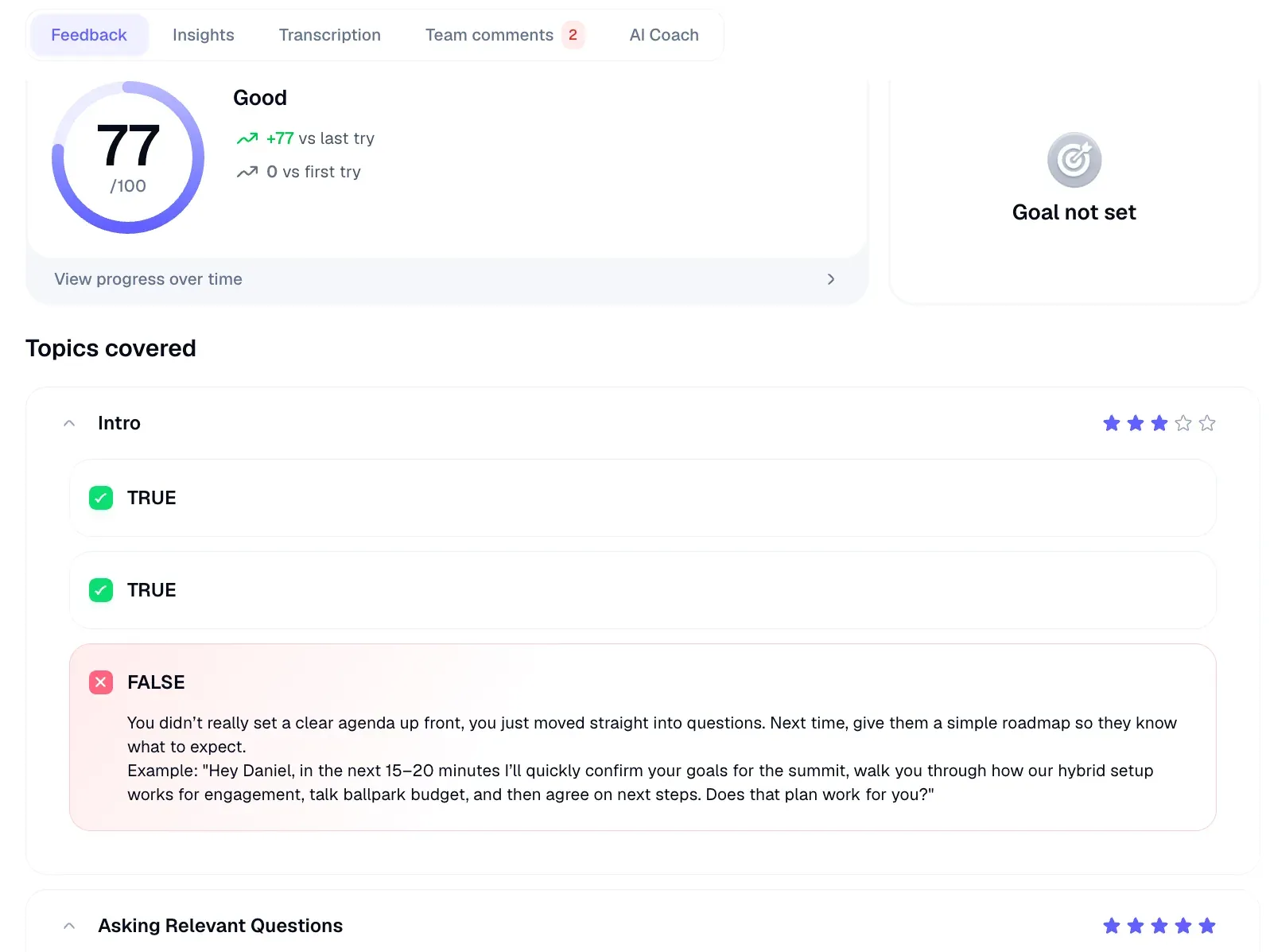
A failed criterion with written coaching and an example line to try next. The score is from a demo workspace.
The mistake to avoid: Do not end with “keep it in mind.” Without a new attempt, the rep leaves with an idea but no practice using it.
Practice prompt for the rep: Take one piece of feedback from the conversation and try it in a short buyer exchange. Repeat the exchange once, changing only the coached line.
Technique 7: Use peer coaching
Pair 2 reps to review each other's conversation or rehearse a difficult buyer moment. Give them one question each to keep the exchange focused: what worked, and what could the rep try? You choose the skill and check in after they practice.
What the manager says:
- “Listen for the follow-up question we discussed. Where did you hear it?”
- “What is one line your partner could try next time?”
- “Run that moment again, then tell me what changed.”
The mistake to avoid: Do not leave the pair without a focus. An open-ended session can drift into a conversation about frustrations, with no practice in it.
Practice prompt for the rep: With a partner, rehearse a buyer who says they already have a solution. One rep practices asking about the current approach; the other shares one observation and one possible next line. Swap roles and repeat.
A simple coaching cadence
Use a light cadence to connect conversation review, focused coaching and practice. Adjust the sessions to the skill and the moment the rep needs to prepare for.
Session | Who | Length | Techniques used | Output |
|---|---|---|---|---|
1:1 coaching session | Manager and rep | 30 minutes | Ask before telling, call replay, goal and gap, feedback with a next attempt | One skill and one agreed next attempt |
Team session | Manager and team | 30 minutes | Role-play rehearsal and peer coaching on one shared skill | Every rep has rehearsed the line once |
Rep practice between sessions | Rep alone | 10 to 15 minutes | Role-play rehearsal | Practice prompt completed before the next real conversation |
These lengths are a starting point to adjust. Pick a rhythm you will keep. See a full 1:1 framework for managers for session structure and templates.
Common coaching mistakes
- Talking more than the rep leaves the rep listening to your diagnosis while their own choices go unexamined.
- Fixing everything at once gives the rep several new behaviors to remember after one conversation.
- Coaching only after a lost deal misses chances to practice before a difficult buyer conversation.
- Feedback with no next attempt lets the rep leave with advice they have not tried out loud.
- Skipping rehearsal asks the rep to use a new line with a buyer before they have practiced it.
One change at a time makes the next practice attempt easier to identify. Choose the mistake that appeared in the conversation, then use the matching technique above to work on it.
Practice the techniques with AI role-play and the AI Coach
Rehearsal is often the step that gets skipped when a manager cannot play the buyer every time. PitchMonster AI role-play gives reps a realistic buyer voice to rehearse the practice prompts above before a real prospect hears them. Reps can repeat a scenario. The manager builds each scenario around the skill being coached.
The Persona tab sets the buyer's role and difficulty: Easy, Medium, Hard or Insane. The Scenario tab holds the context and specific objections. The Scorecard tab sets the goal and criteria used to judge the session. Together, these choices keep practice on the one skill the manager is coaching.
See AI sales coaching software for more about the product. If you are also comparing outside programs, see these sales coaching programs.
After a session, the AI Coach steps in before the score is revealed and asks the rep reflective questions. The rep can think through the conversation and self-diagnose before seeing the score. The AI Coach is available 24/7.
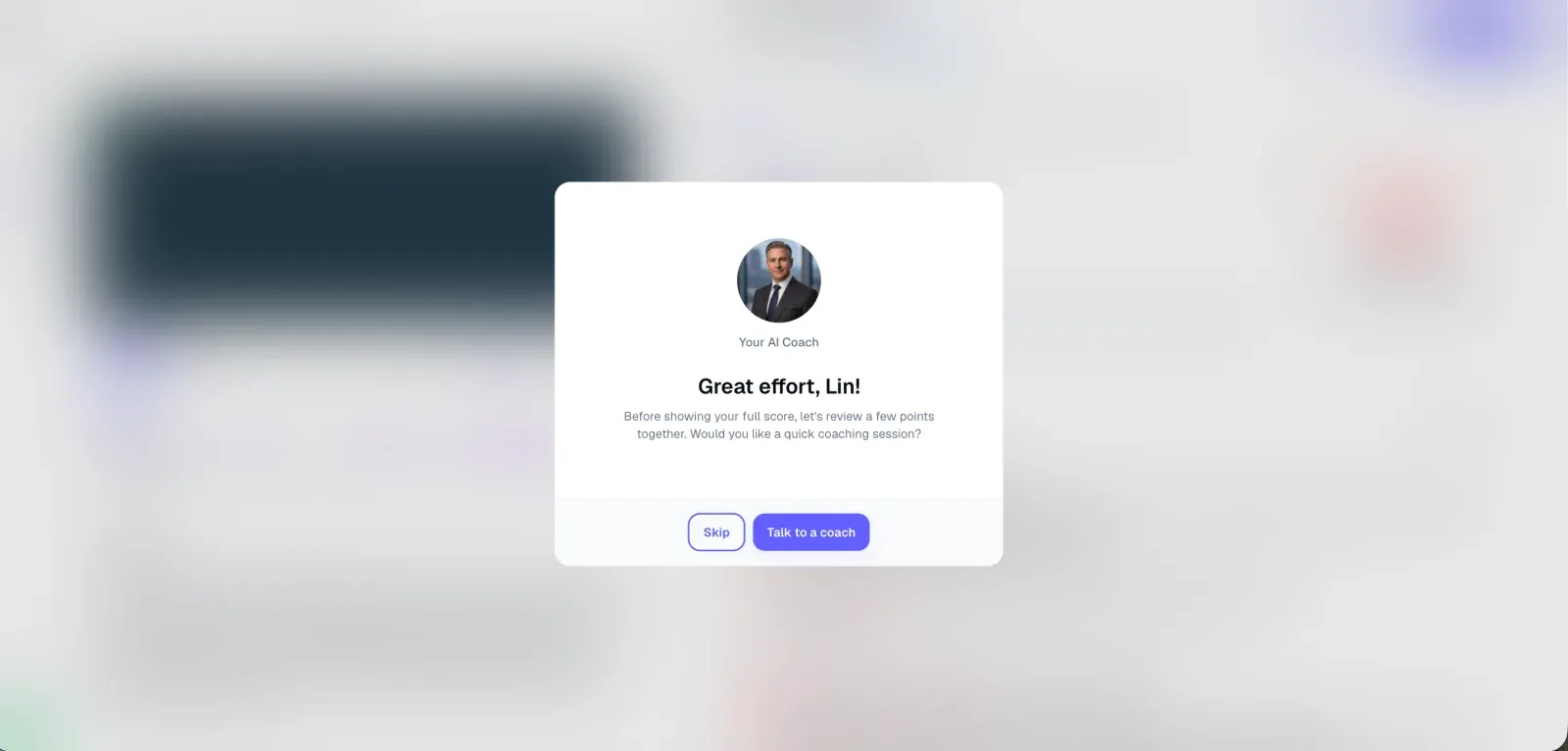
Mentor Group, a UK sales training consultancy, added AI role-play practice to its client onboarding programs. It reports that new hires ramp 50% faster on average, with a 2X reduction in coaching time per rep.
FAQ
What are the most effective sales coaching techniques?
The best sales coaching techniques are asking before telling, coaching one skill at a time and reviewing a call replay. They also include rehearsing with role-play, setting a goal and naming the gap, giving feedback with a next attempt, and using peer coaching. Each one gives the rep a clear behavior to try with a buyer.
How often should a sales manager coach each rep?
A sales manager should hold a regular, short 1:1 that they can keep, with rep practice between sessions. Consistency matters more than the length of a single meeting. Adjust the rhythm to the rep's experience and the skill they are working on, then use the next conversation to see whether the practice helped.
What is the difference between coaching and giving feedback?
Feedback says what happened in a conversation. Coaching helps the rep find the change and rehearse it before the next buyer interaction. Useful coaching includes feedback and then adds a next attempt, so both of you can hear how the behavior changes.
How do you coach a rep who keeps making the same mistake?
Choose one skill and describe the goal and gap in observable terms. Then rehearse the difficult moment with role-play until the new line feels natural. Check for that behavior in the next real conversation and discuss what happened. Keeping the focus narrow helps the rep work on the repeated mistake without juggling unrelated fixes.
Can sales reps coach each other?
Yes, sales reps can coach each other when you set a skill and give each person one question to use. Ask the pair to name what worked and what the rep could try next. Check in after the practice. Peer coaching gives reps another chance to rehearse, while the manager still sets the focus and guides their development.