The difference in outbound sales vs inbound sales is who starts the conversation. In outbound sales, a rep reaches out first to a buyer who did not ask. In inbound sales, the buyer reaches out after finding the company, and the rep responds. Most teams run both, and each motion asks reps to practice different conversations; this guide covers the differences, an example of each and what to train.
Last updated: November 18, 2026.
Use the distinction to shape ownership, handoffs and practice for your team.
Outbound vs inbound sales: side by side
In inbound vs outbound sales, the first difference is who begins the conversation, but that changes the buyer's context and the rep's first task.
Outbound sales | Inbound sales | |
|---|---|---|
Who starts the conversation | The rep | The buyer |
Where leads come from | A target account list, events, referrals the rep asks for | Website, content, search, social, referrals, demo or contact form |
What the buyer knows at first contact | Often not your company, and maybe not the problem | Usually the problem and something about you |
The first conversation | A cold open the buyer did not plan for | A response to a request the buyer made |
The skills it tests | Opening, earning attention, first objection, persistence | Response speed, discovery, qualification, next step |
Typical roles | SDRs or BDRs and account executives who prospect | Inbound SDRs, account executives and sometimes customer-facing teams |
Neither motion is better on its own. The right mix depends on your market, your buyers and your team.
What is outbound sales?
Outbound sales is a sales motion where a rep starts a conversation with a buyer who has not asked to speak with the company. Reps may use cold calls, cold emails, social messages, an approach at an event or a door knock. The rep chooses whom to contact and makes the first move.
That opening has to earn attention before the buyer has a reason to stay. The buyer may be busy, may not have planned the conversation and owes the rep nothing. The first lines need to establish relevance before asking for more time.
Here is one of the simplest outbound sales examples:
Example: an outbound cold-call opener
"I'm Sam, and I work with sales teams that want reps ready for more buyer conversations. I'm reaching out because you lead a sales team, and I thought this might be relevant to your work. Would you be open to a short question?"
The opener names the rep and gives a reason tied to the buyer's role. It is short on purpose: the buyer decides in the first lines whether to keep listening, so every extra sentence is a chance to lose them. It ends by asking permission for one question. For more opening ideas, see our cold call scripts. Reps can rehearse the opener aloud with cold call practice.
What is inbound sales?
Inbound sales is a sales motion where a buyer starts the conversation by contacting a company. The buyer may request a demo, submit a form, start a chat, reply to content or arrive through a referral. The rep responds to the request and learns what prompted it.
An inbound request gives the rep a starting point, but the buyer still has questions and expectations. Buyers may speak with more than one supplier. A slow or generic response can lose their attention, so the rep needs to learn quickly whether the request is a fit. The rep also has to resist the urge to pitch straight away, because the buyer usually wants to explain their situation first.
Example: an inbound lead-response opener
"Thanks for reaching out about our sales training. What prompted you to look into this now?"
The rep acknowledges the request, refers to its subject and opens the conversation with a question. The buyer did the reaching out, so the rep's job is to listen first and let the buyer explain. From there, the rep can learn what the buyer wants to change before recommending a next step. See our guide to discovery call questions for questions that can follow.
Which motion fits your team?
Outbound sales fits when buyers do not search for a solution yet or when you know which accounts you want to reach. It also fits when your team needs to enter a new market.
Inbound sales fits when buyers already search for the problem and your team can respond promptly. Many teams combine both motions and give each a clear owner.
The mix depends on how buyers find you and how your team works. Some teams route inbound requests to one group while another group prospects named accounts. Other teams have reps who handle both. Set ownership and handoffs before adding more activity. A team that adds outbound volume while inbound requests sit unanswered is working against itself.
Review these checks together with the people who own each motion. A clear handoff helps each buyer reach the right person. The conversation list then gives managers a practical starting point for coaching and practice.
What reps must practice for each motion
Outbound reps need to rehearse the cold open and the first objection. A buyer may say "not interested," ask for an email or say they already have someone. Reps should practice acknowledging the response, staying relevant and earning permission to continue.
After the first objection, the goal is simply a second minute of conversation. A rep who argues, rushes into a pitch or hangs up at the first "no" loses a conversation that a calm question could have kept open. Our objection handling guide covers ways to prepare for pushback.
Inbound reps need to practice a fast, useful response. They should learn what prompted the request, qualify the buyer's needs and agree on a clear next step. The aim is to understand the request before turning the conversation into a product demo.
Useful questions cover what prompted the request, who else is involved, what they have tried and what a good outcome looks like. The conversation should end with a next step both sides agree on and a date.
Managers comparing options can review cold call practice tools and discovery call practice tools. Whatever the tool, the test is the same: can the rep rehearse the exact conversation they will have next week, out loud, until it sounds natural?
PitchMonster AI role-play gives reps a realistic buyer voice to rehearse both kinds of conversation before a real prospect hears it. Reps can repeat a scenario. A manager builds each scenario to match the conversation the team wants to prepare for.
In the Persona tab, the manager sets the buyer's role and difficulty: Easy, Medium, Hard or Insane. The Scenario tab holds context and specific objections. One scenario can represent a busy buyer who did not expect a cold call; another can represent an inbound buyer who requested a demo. Neither comes ready-made: the manager writes both for the team.
Before each session, the rep sees a short rules screen with a microphone check. The session runs against a countdown.
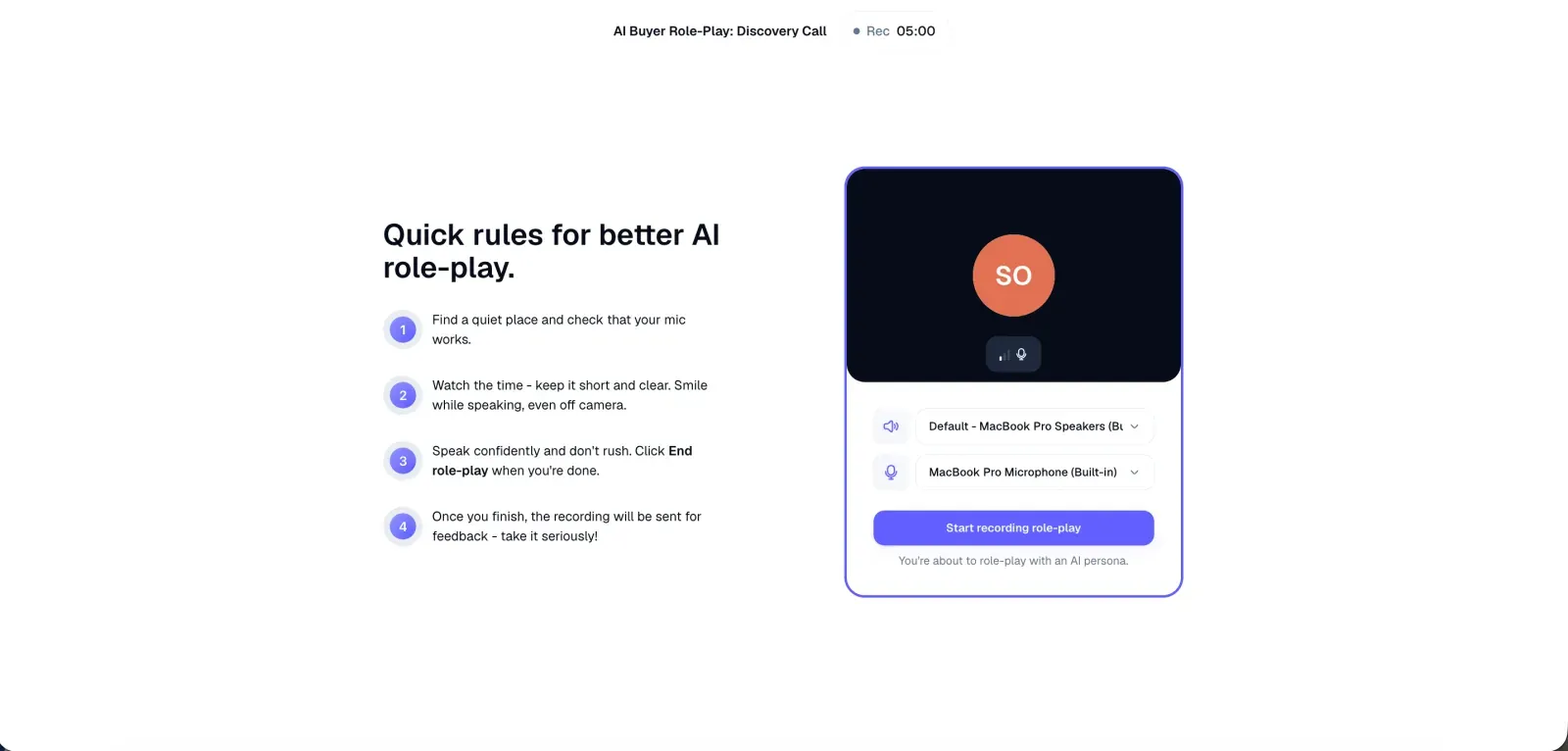
Afterward, the AI Coach steps in before revealing the score and asks reflective questions. Reps self-diagnose first, then see the score. The AI Coach is available 24/7.

For SDR and BDR teams, SDR sales training shows how this practice fits the prospecting role. Read the sales role-play guide for more on using role-play in training.
Mentor Group, a UK sales training consultancy, reports that new hires in its client onboarding programs ramp 50% faster on average after adding AI role-play practice.
FAQ
What is the difference between inbound and outbound sales?
The difference between inbound and outbound sales is who starts the conversation and what the buyer knows at first contact. In outbound sales, the rep reaches out to a buyer who did not request contact. In inbound sales, the buyer contacts the company after finding it, so the rep responds to an expressed interest or request.
Is inbound or outbound sales better?
Neither inbound nor outbound sales is better on its own; it depends on your buyers and your team. Inbound fits when buyers search for the problem and your team can respond. Outbound fits when you know which buyers to reach or they may not be looking yet. Most teams blend both motions and assign clear ownership.
What is an example of outbound sales?
An example of outbound sales is an SDR cold-calling a target account with a short opener and a permission question. The buyer did not ask for the conversation, so the rep gives a relevant reason for reaching out before asking to continue. A cold email or an approach at an event can also start an outbound conversation.
Can one sales team do both inbound and outbound?
One sales team can handle both inbound and outbound sales when each motion has a clear owner and handoff. That keeps an inbound request from waiting without a response. Managers should also train reps on the conversations they will meet in both motions, including unsolicited openings and discovery after a buyer reaches out.