A sales kickoff, or SKO, is the annual meeting where a revenue team settles on the year's number and priorities. It is also the largest single enablement spend most B2B companies make, and the one with the weakest measurement attached.
This guide covers the planning timeline, a 2-day agenda that is not wall-to-wall keynotes, and the part that decides whether any of it survives: what happens in the 90 days after everyone flies home.
If you are reading this in August, you are on time. January SKO planning starts now.
What a sales kickoff is for
An SKO does 3 things well and one thing badly.
It gets everyone onto the same number and strategy, which genuinely needs a room. It transfers context that does not survive a deck, such as why a segment shifted or what a competitor is now doing. And it does recognition, which matters more than cynics allow, because sales is a job with a lot of rejection in it.
What it does badly is change behaviour. Two days of sessions cannot rewire how a team sells, and this is where most SKO budgets quietly leak. The event is treated as the intervention, when it can only ever be the announcement.
That distinction should shape the whole plan. Ask what the SKO can announce and start, then ask what mechanism carries it through February and March.
The planning timeline
Start 16 to 20 weeks out. For a January event that means August or September.
Weeks out | What happens |
|---|---|
16-20 | Form the planning group: sales leadership, enablement, marketing, product, ops. Set the single behaviour goal |
12-16 | Lock venue and dates. Draft the agenda around the behaviour goal, not around who wants stage time |
8-12 | Build content. Decide what is a keynote and what is a breakout with practice attached |
4-8 | Managers briefed and rehearsed. They run the breakouts, so they cannot see the material for the first time on the day |
1-4 | Pre-work sent to reps. Baseline the metric you intend to move |
Event | Run it |
+1 to +12 | The reinforcement plan, scheduled before anyone travels home |
The row people skip is 4-8 weeks out. Managers are usually handed a facilitation guide days before and asked to lead a session they have never run. Then the breakout, which was the part with actual practice in it, becomes a discussion that drifts.
The other row people skip is the last one. If the reinforcement schedule is not in calendars before the event, it will not happen, because February arrives with its own problems.
Pick one behaviour to change
The single most consequential decision in SKO planning is narrowing to one behaviour.
Not one theme. One observable thing you want a rep to do differently on a call in March. "Qualify opportunities against a shared standard" is a behaviour. "Be more consultative" is a mood. "Ask about cost before timeline" is a behaviour. "Own your number" is a poster.
The reason to pick one is arithmetic. If an SKO announces 5 initiatives, each gets a fifth of the attention, a fifth of the practice time, and none of them get a reinforcement plan. Teams that pick one thing and drill it get one thing. Teams that pick five get zero.
Good candidates, if you need a shortlist: adopt a qualification standard such as MEDDPICC, change how discovery calls are structured, or fix the opening 15 seconds of cold calls. Each is narrow, observable, and coachable.
A 2-day agenda
A shape that works, with the practice time protected rather than assumed.
Day 1, morning. Executive keynote setting the year's context, market position, and the number. Keep it to 45 minutes and take questions. Then a customer session: an actual customer on stage or on video talking about why they bought and what nearly stopped them. This outperforms any internally produced content and costs almost nothing.
Day 1, afternoon. Name the one behaviour. Teach it once, properly, in a 60-minute session. Then split into manager-led breakouts where reps actually practise it, not discuss it. This block is the reason the event exists, so give it 2 hours and defend that.
Day 2, morning. Product and competitive updates, which is genuinely new information reps need. Then territory or account planning, which is real work that benefits from having the whole team and their managers in a room together.
Day 2, afternoon. More practice on the same behaviour, with managers observing and coaching. Then recognition and close. Send them home having done the thing twice rather than having heard about it four times.
Notice what is absent: a partner showcase, 6 department updates, and an afternoon of slides about internal reorganisations. Those go in a document.
The keynote-to-practice ratio
Most SKO agendas are 80% presentation and 20% doing. Invert it as far as your organisation will tolerate.
The reason is not that keynotes are worthless. It is that presentation is the format with the worst retention and practice is the format with the best, so spending the majority of your most expensive enablement day on the weaker format is a poor trade.
A practical target: no more than 3 hours of keynote across 2 days, and at least 4 hours where reps are speaking rather than listening. If you cannot get there because of internal politics, protect the practice block and cut something else, because the practice block is the only part with a chance of showing up in March.
Why nothing sticks after
The pattern is consistent enough to predict.
The SKO happens and the energy is real. Reps leave motivated and with a new framework. Within 2 weeks they are back in pipeline pressure, and under pressure people revert to whatever they can already do without thinking. The new qualification standard requires effort the old habit does not, so the old habit wins.
Then the CRM gets involved. Someone adds fields for the new framework, managers review them in pipeline meetings, and reps learn to complete the fields after the call. Now the record looks compliant and the behaviour never changed. That is the outcome that costs the most, because it produces reporting that says the rollout worked.
The mechanism failure underneath: the SKO taught recall and expected capability. A rep who can name the 8 parts of a qualification framework has not therefore acquired the ability to ask a finance director who signs the contract. That is a physical skill with tone and timing in it, and it takes repetitions under mild pressure.
The 90-day reinforcement plan
Build this before the event and put it in calendars.
Weeks 1-2. Managers run one short practice session per rep on the named behaviour. Short means 15 minutes on one moment, not an hour on a whole call.
Weeks 3-6. Reps practise independently on a schedule, and managers review a sample. This is where a practice platform does something a calendar cannot, because 15 minutes per rep per week does not fit into a manager's week once you have more than about 8 reps.
Weeks 7-12. Certify against the behaviour, not against a quiz. A rep passes when they can run the conversation, scored on the same criteria everyone else was scored on.
Then measure the metric you baselined. If the goal was better qualification, look at the share of opportunities with a complete, evidenced qualification record at 30 and 90 days, not at how many people liked the event.
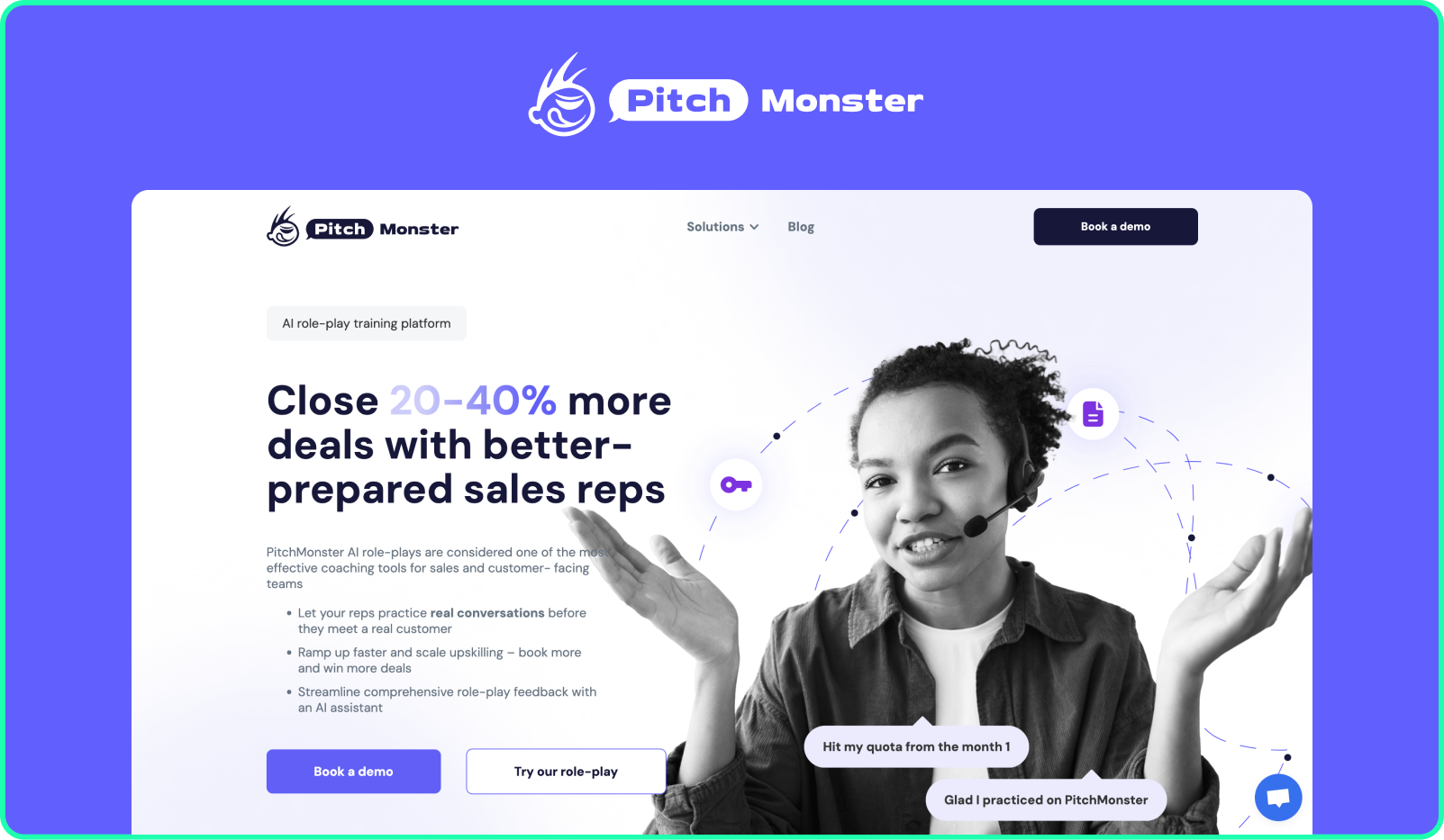
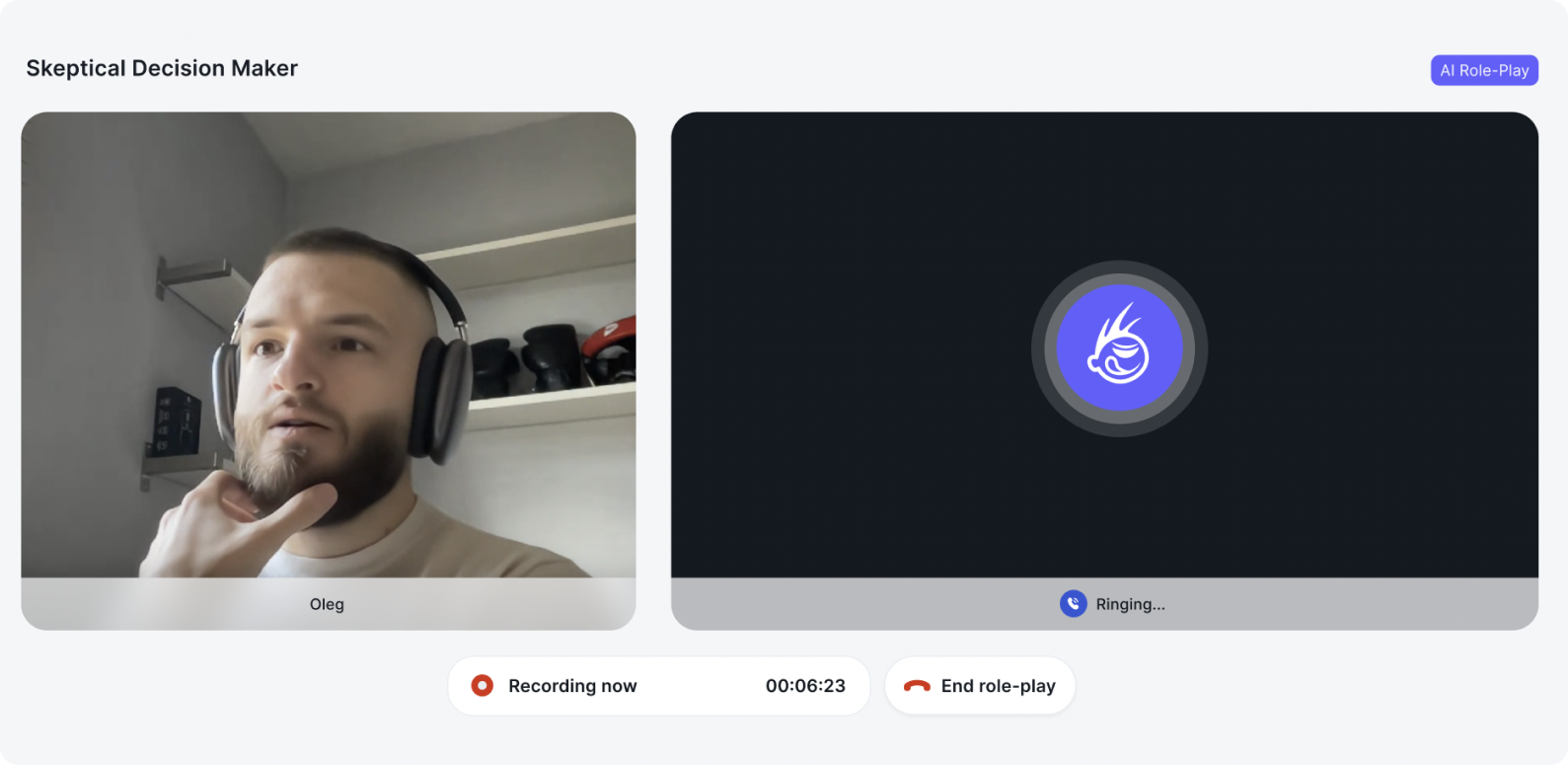
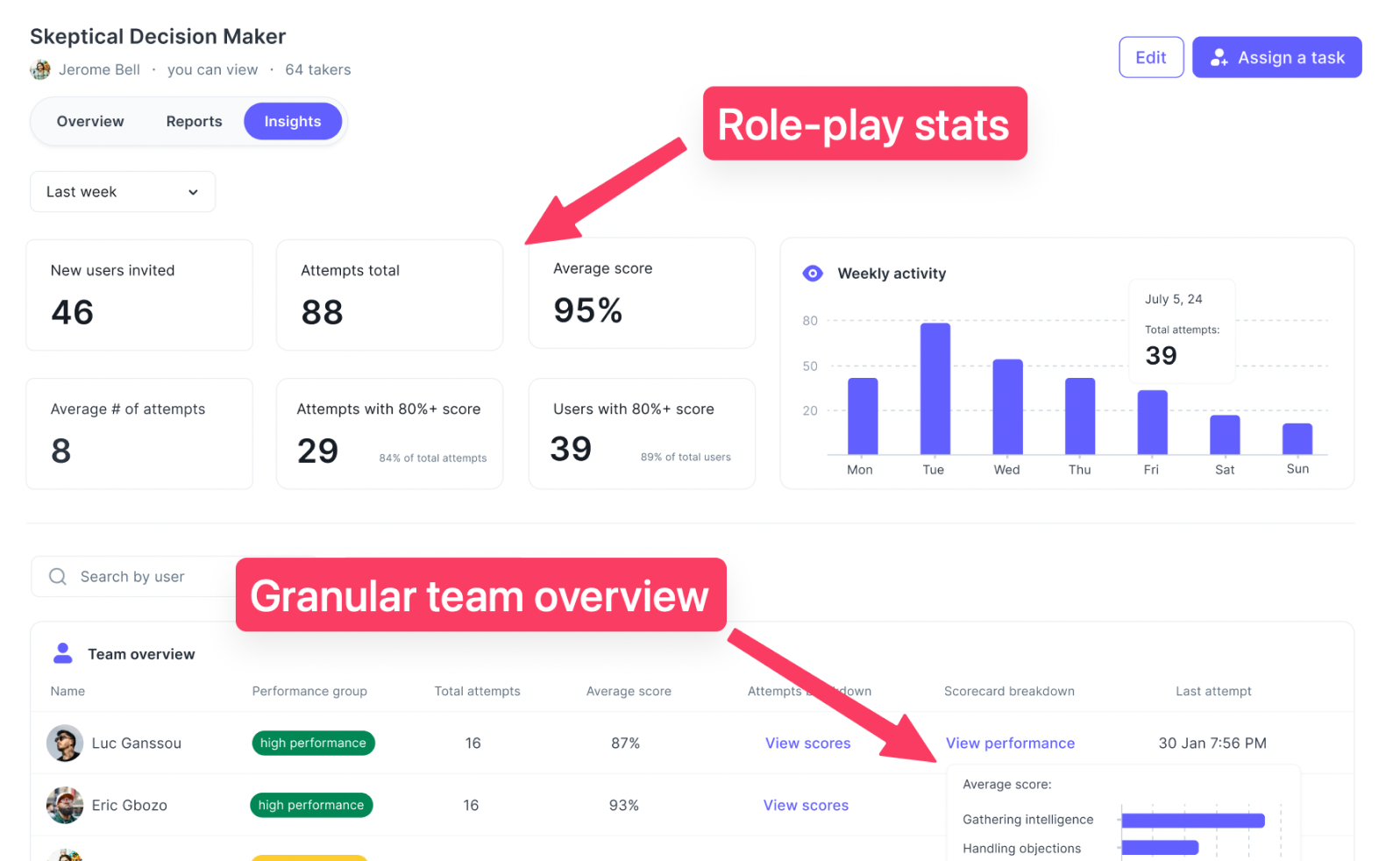
This is the specific gap AI role-play fills, and it is worth being plain about why. The reinforcement plan above is sound and it fails on manager capacity, every time. In PitchMonster an enablement lead can build an AI buyer from a real recorded call, assign the same scenario to every rep, and have the sessions scored against the criteria you set at the SKO. The AI Coach debriefs each rep afterwards by asking what they noticed rather than handing over a score, so the reflection happens without a manager in the room.
The measured version: Mentor Group cut ramp time by 50% on average while halving coaching time per rep, and SThree onboarded 53% faster. Both moved practice off manager calendars, which is the constraint every reinforcement plan actually dies on.
If you are planning a January SKO now, the useful sequence is: pick the one behaviour this month, design the practice block around it, and schedule the 90 days before you book the venue. Book a demo and we will build the scenario for whichever behaviour you pick.
FAQ
What is a sales kickoff?
A sales kickoff, usually shortened to SKO, is an annual meeting where a revenue organisation gets everyone onto the same page about the year's number, strategy, and priorities. Most run 1 to 3 days in January, combine executive keynotes with training and recognition, and are the single largest enablement spend of the year for most B2B companies.
When should you start planning an SKO?
Start 16 to 20 weeks out, which for a January event means beginning in August or September. That timeline is not padding. Venue, travel, and executive calendars need the lead time, and the content decisions need to happen before the agenda hardens, not after.
What should a sales kickoff agenda include?
A workable 2-day shape: an executive keynote to set context, a customer or market session, one clearly named behaviour change with real practice time attached, manager-led breakouts, territory or account planning, and recognition. If your agenda is mostly presentations, you have built a conference rather than a kickoff.
How long should a sales kickoff be?
Two days is the common sweet spot. One day forces everything into presentation mode with no practice time. Three or more days is hard to justify against the cost of pulling an entire sales team out of pipeline, unless you are combining it with something like a product launch or a post-merger integration.
What makes a sales kickoff fail?
Trying to change a mindset in 2 days. You cannot rewire how a team thinks about selling at an event, but you can change one process, such as how opportunities get qualified. SKOs that fail usually announced 4 or 5 initiatives with no reinforcement plan, so by February reps have reverted to what they did before.
How do you measure SKO ROI?
Pick the metric attached to the one behaviour you set out to change, and baseline it before the event. If the goal was better qualification, measure the share of opportunities with a complete qualification record 30 and 90 days after. Attendance, satisfaction scores, and energy in the room measure the event, not the outcome.
What are good sales kickoff themes?
Themes work when they name the behaviour you want, not the ambition you have. "Earn the second meeting" tells a rep what to do differently; "Unleash 2027" does not. A useful test is whether a manager could use the theme in a coaching conversation in March without it sounding like a slogan.
How do you make SKO training stick?
Attach practice and a 90-day reinforcement plan to the one behaviour you named. Reps forget most of what they hear in a keynote within weeks, and a certificate proves recall rather than capability. Sustained change needs repetitions after the event, run by managers or through a practice platform, on a schedule set before anyone flies home.
The short version
Start in August for January. Pick one behaviour, not five. Give it 4 hours of practice across the 2 days and cut a department update to pay for it.
Then schedule the 90 days of reinforcement before you book the venue, because that is the part that decides whether the SKO was an event or a change.