The SPICED sales methodology is Winning by Design's diagnostic framework for recurring-revenue and SaaS sales. It runs as a live conversation built on 5 elements: Situation, Pain, Impact, Critical Event, Decision. It shows up far more in RevOps and SaaS go-to-market teams than in general sales training. Almost every explanation of it skips the same thing: which 2 of the 5 elements reps struggle to ask.
This guide covers the 5 elements with the question to ask for each one, and why Critical Event and Decision are where reps go quiet. It walks through a worked discovery call with real pushback at both stages, and how SPICED compares with MEDDPICC and BANT. Then it covers how to drill the 2 hardest stages instead of the whole call.
What is SPICED?
SPICED is Winning by Design's sales framework, built to diagnose whether a deal is real. It walks a live conversation through 5 elements in this order: Situation, Pain, Impact, Critical Event, Decision.
Winning by Design built it for recurring-revenue and subscription go-to-market motions. That is why it circulates inside the RevOps and SaaS community rather than showing up as a general sales-training term. The framework does not treat all 5 elements as equal weight. Impact and Critical Event carry most of the diagnostic power. They are the 2 stages where a rep either presses for a hard number and a hard date, or accepts a vague answer and keeps moving.
What SPICED is not matters as much as what it is. It is not a qualification checklist scored after the call. That is what MEDDPICC does. It is not a first-touch filter for whether a lead earns a meeting. That is what BANT does.
SPICED is the conversation itself, closer to a doctor's exam than an audit. You diagnose before you prescribe, one question building on the last answer rather than a form to fill in. That posture has its own name and its own guide, consultative selling. SPICED is one of the more prescriptive ways to run it.
The 5 elements and the job each one does
Each element does a different job, and each has a distinct failure mode.
Element | What it does | Ask this | What reps get wrong |
|---|---|---|---|
Situation | Establishes the buyer's current setup and process | "How are you handling this today?" | Turning it into a warm-up that never ends |
Pain | Surfaces the specific problem the current setup causes | "Where does that break down for you?" | Accepting a mild complaint as if it were a real problem |
Impact | Quantifies what the pain costs in money, time, or risk | "What does that cost you when it happens?" | Letting the buyer stay vague instead of pressing for a number |
Critical Event | Names the deadline forcing a decision now rather than later | "What happens if this isn't solved by a specific date?" | Accepting "sometime this year" as if it were a real date |
Decision | Maps who is involved in saying yes | "Besides you, who else weighs in on a call like this?" | Taking "it's my call" at face value without asking who else signs off |
Read that last column downward and the pattern is obvious. The first 2 elements cost a buyer nothing to answer, so reps ask them fluently. The last 3 ask a buyer to put a number on something, commit to a date, or name a colleague, and each of those is a small imposition. A pipeline full of deals with a rich Situation, a clear Pain and nothing underneath is not a coverage problem. It is 3 questions nobody asked.
Where reps get stuck
Every published breakdown of SPICED lists the 5 elements as if they carry equal weight. In a live call, they do not.
Situation and Pain are comfortable to ask. A buyer will describe their current setup without much resistance, and naming a problem costs them nothing. Critical Event and Decision are where a rep is least likely to have rehearsed anything, because both require pressing a second time on an answer the buyer already gave.
Critical Event fails a specific way. A buyer says something is a priority "sometime this year," and the rep, glad to have momentum, writes down a soft date and moves on. Nobody named an actual event: a contract renewal, a budget cycle, a compliance deadline, a board meeting. Without one, there is no reason the deal closes this quarter instead of next.
Pressing on it feels uncomfortable, because it means telling a buyer their soft answer is not good enough. The rep who asks what specifically happens if the problem stays unsolved is doing the hard part of the job. Most reps skip it and mark the deal qualified anyway.
Decision fails for a different reason. A buyer who says "it's my call" is often telling the truth about their own authority and leaving out who else weighs in before they sign. Asking who else needs to be comfortable with the decision can sound like the rep doubts the buyer's word. So reps avoid it, and meet the second stakeholder during procurement, weeks later.
Neither failure is a knowledge gap. A rep who can recite all 5 letters of SPICED can still accept a soft date and a single-name decision. The acronym does not teach a rep how to press without sounding like they doubt the person in front of them. That is the skill, and it is the one worth drilling.
A worked discovery call
One thread, run properly, against a buyer who does not simply agree at every stage. The buyer is a Head of Sales Enablement at a mid-market SaaS company.
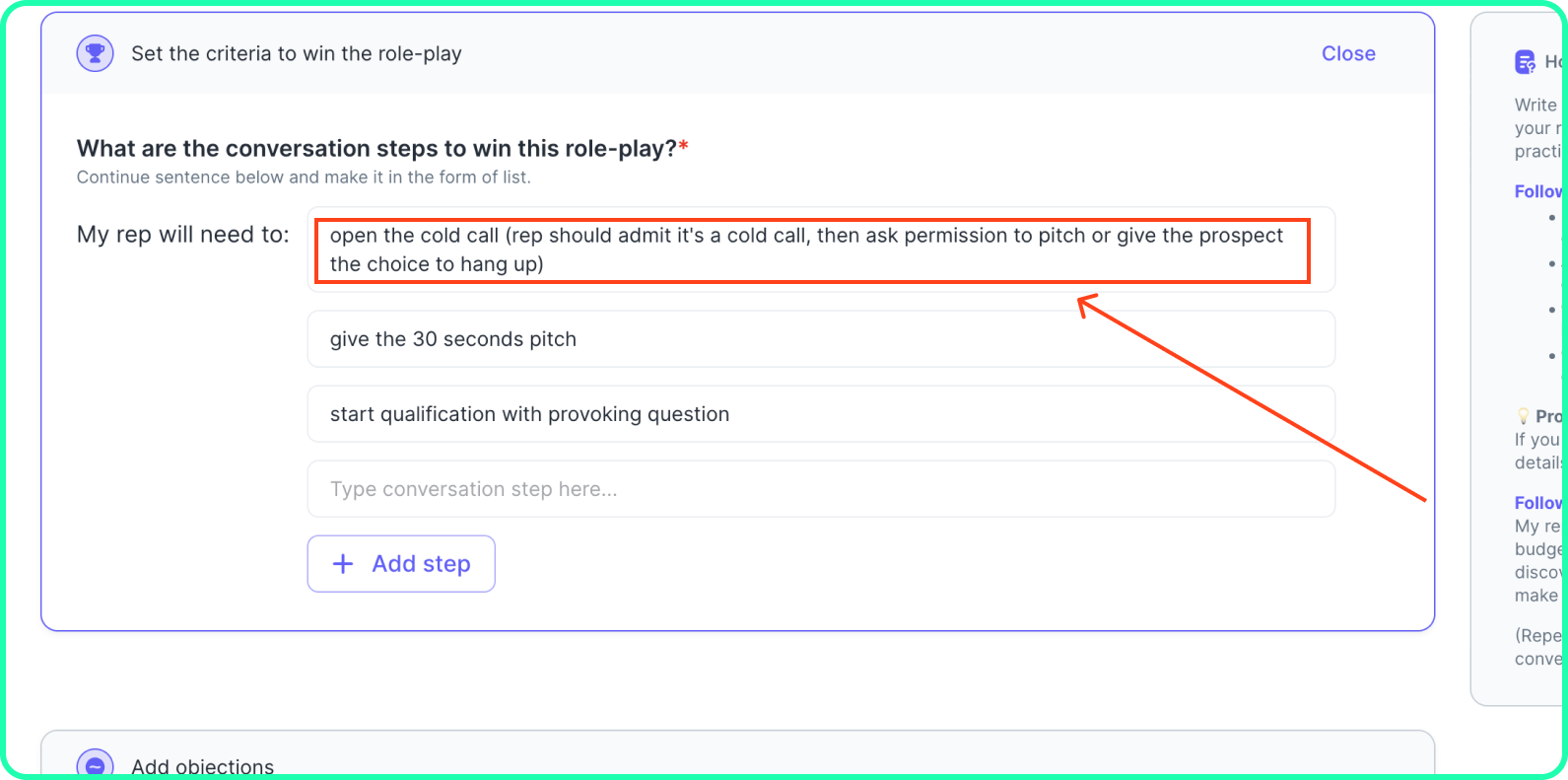
Situation: "How is your team running practice sessions today, before a rep takes a live call?"
Buyer: "Mostly role-play with a manager, when a manager has time. It's inconsistent."
Pain: "Where does that inconsistency actually show up?"
Buyer: "New reps on some pods get a lot of reps in before they go live. Others get almost none."
Impact: "What does that gap cost you when a rep goes live under-practiced?"
Buyer: "Probably a slower ramp for that pod. I haven't put a number on it."
Critical Event: "Is anything forcing a fix on a specific timeline, or is this a background priority?"
Buyer: "Nothing urgent, honestly. We'd like to improve it sometime this year."
Critical Event, pressed: "If nothing changes, what happens at your next planning cycle when someone asks why ramp time didn't move?"
Buyer: "That's fair. We do have a board review in Q1, and ramp is one of the numbers on it."
Decision: "Besides you, who else would need to be comfortable with a change like this?"
Buyer: "Honestly, it's really just my call."
Decision, pressed: "If you brought this forward, would anyone on finance or ops want to see it before it's final?"
Buyer: "Finance would want the cost against the ramp-time number, yes. I hadn't thought about looping them in this early."
Note what happened at the 2 hard stages. The buyer's first answer at Critical Event was a soft date. The second answer was a real one: a Q1 board review with ramp time on it. The buyer's first answer at Decision left out finance, a stakeholder who was always going to surface eventually. Pressing once, respectfully, at both stages turned a vague priority into a dated, multi-stakeholder deal before the call ended.
SPICED vs MEDDPICC vs BANT
These get compared as if a team picks one. They sit at different points in the deal.
Framework | What it governs | Core move | Best for |
|---|---|---|---|
SPICED | The live discovery conversation | Diagnose situation, pain, impact, event, and decision in sequence | Recurring-revenue and SaaS discovery calls |
MEDDPICC | The whole deal, audited | Score 8 categories against evidence already gathered | Pipeline review and forecasting |
BANT | The first-touch filter | Check budget, authority, need, and timeline before investing time | SDR qualification, early-stage triage |
SPICED and MEDDPICC cover some of the same ground. SPICED's Impact is close to MEDDPICC's Metrics, and SPICED's Decision overlaps with MEDDPICC's Decision Criteria and Decision Process. The difference is sequencing, not substance. SPICED runs live, on the call, one question feeding the next. MEDDPICC scores what the call already produced, usually in a pipeline review days or weeks later.
In a real cycle the 3 sit end to end rather than side by side. BANT decides whether the meeting is worth booking. SPICED is what the rep does once they are in it, and MEDDPICC is what the manager reads afterwards to decide whether to put the deal in the forecast. Each one consumes what the previous one produced, which is why a team running all 3 is not running 3 methodologies.
That dependency has a diagnostic use. A MEDDPICC scorecard with blanks under Decision Criteria and Decision Process is rarely a scoring problem, and telling the rep to fill it in does nothing. The blank is a record of a question that was never asked on the call 3 weeks earlier, at the Decision stage. And the only place to fix it is there.
Why SPICED is hard to run live
SPICED takes a few minutes to memorize and a long time to run without flinching.
The framework asks a rep to do an uncomfortable thing twice in one call. Press a second time after a buyer has already answered: once on the cost, once on the date or the stakeholder list. A rep who can recite all 5 letters can still take the first, easier answer at both stages. Pressing again on a call that is going well feels like it risks the relationship.
Real calls are not linear either. A Decision answer often surfaces a new Pain, the way finance entering the picture above meant a new stakeholder with a new set of concerns. Reps trained on SPICED as 5 sequential boxes to check miss that a later answer can reopen an earlier stage, and they move on instead of looping back.
That is why SPICED training so often shows up as improved recall and unchanged calls. Reading the framework does not install the reflex to press twice. A workshop does not either, when the practice partner is a colleague who wants the role-play to go well. The gap is repetitions, under mild pressure, with a buyer who does not simply concede.
How to drill it
Teams that get SPICED to stick isolate Critical Event and Decision specifically, rather than practicing full calls end to end.
Start with Critical Event. Give a rep a buyer who offers a soft date, and have the rep press once for a named event without sounding like they doubt the buyer's priorities. 10 reps of that single exchange beats an hour of running the whole call from Situation to Decision.
Then drill Decision the same way. A buyer says "it's my call," and the rep has to ask who else weighs in, once, without it landing as an accusation. The skill is the same in both drills: press once, respectfully, and do not soften the question into something that produces no new information.
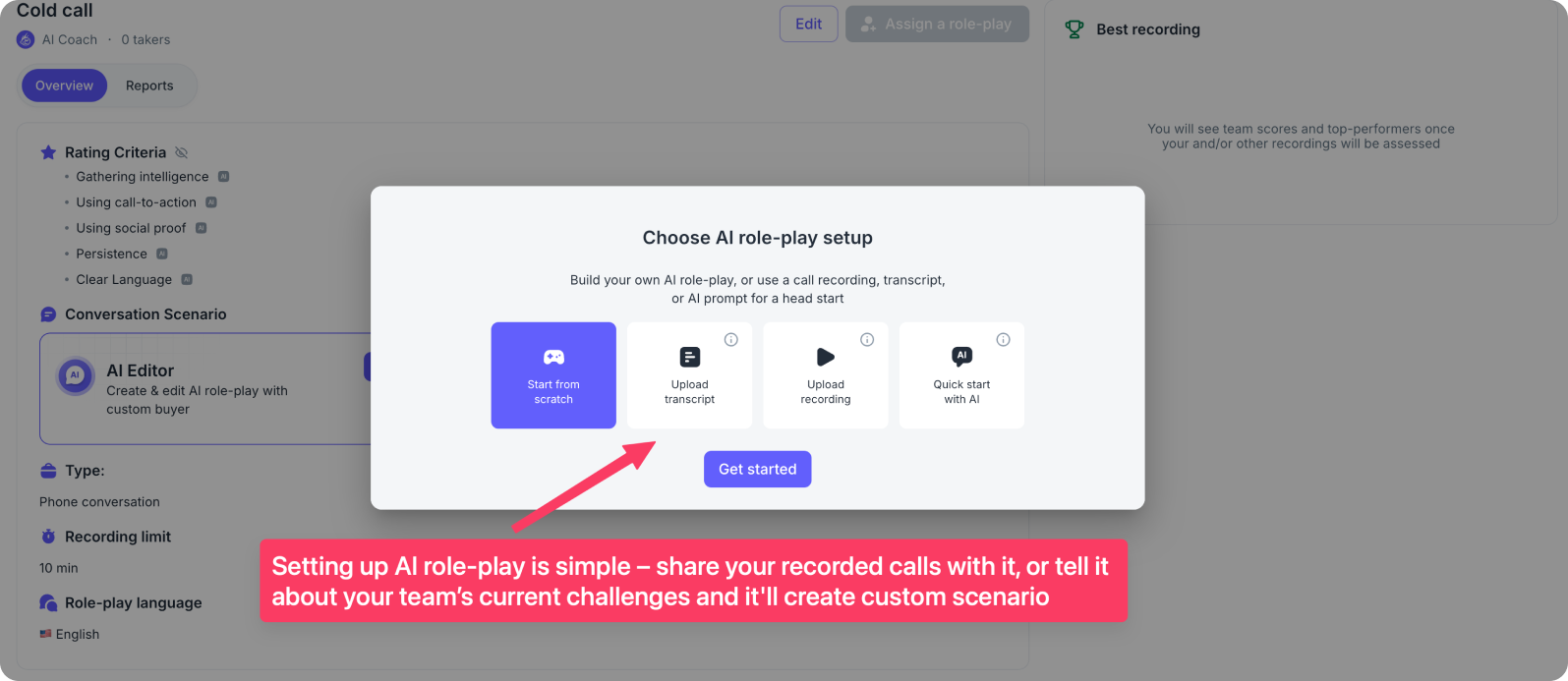
This is where AI role-play does something a colleague cannot. A peer playing the buyer in a practice call will usually concede on the second ask, because they want their teammate to succeed. In PitchMonster, a manager builds an AI buyer from a real call. The AI buyer holds the soft date or the single-name decision the way a real prospect does.
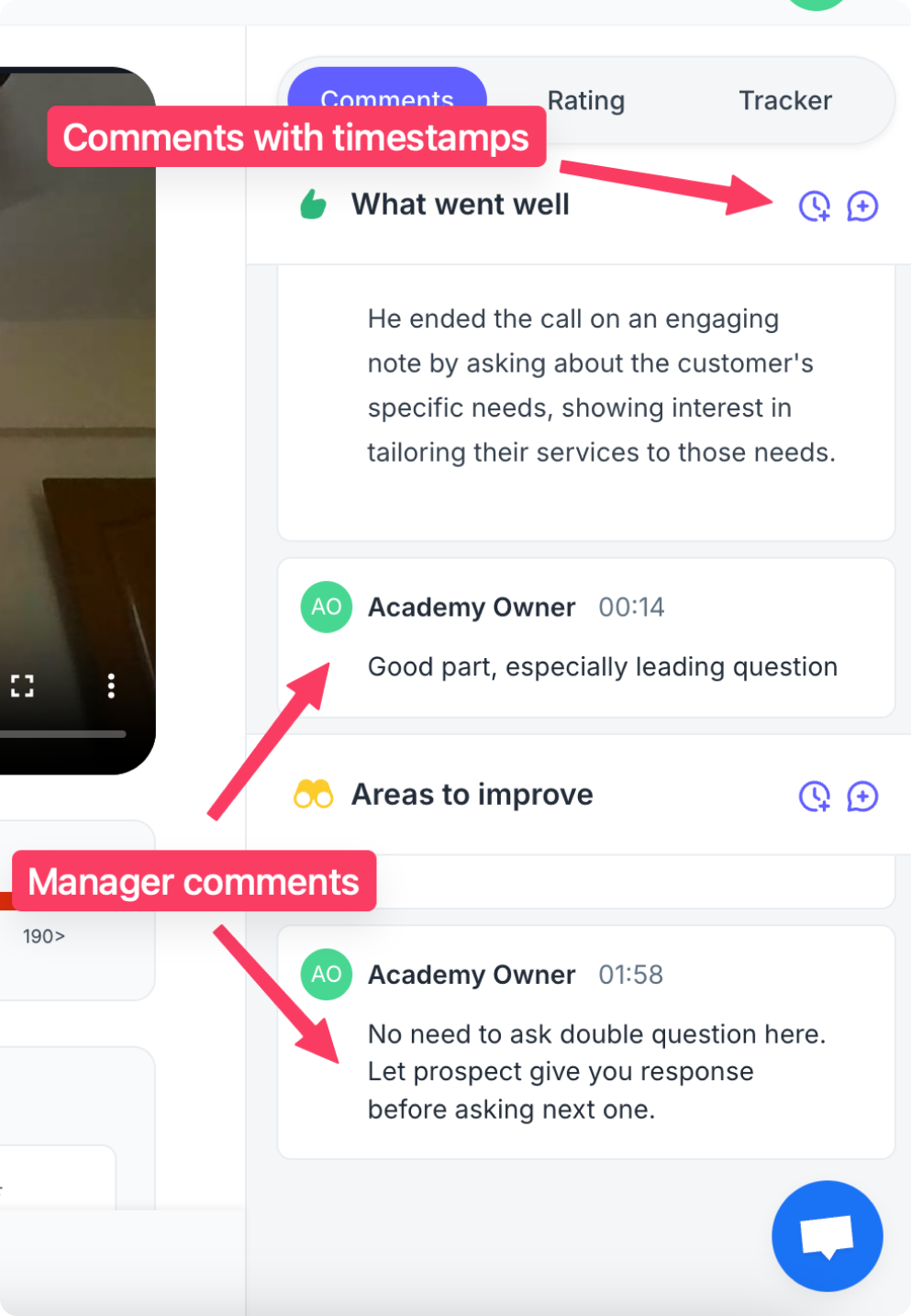
Every rep then runs the same exchange until pressing stops feeling rude. The AI Coach reviews the session afterward and asks the rep what they noticed, instead of just handing over a score. That is the part that makes the repetition stick.
The measurable version of this is ramp. Mentor Group cut ramp time by 50% on average and halved coaching time per rep by moving practice off managers' calendars. Pressing twice is a habit, and habits come from repetitions rather than from a slide that says to press twice.
If you are rolling SPICED out, teach the 5 elements once, then spend the remaining practice budget on Critical Event and Decision repetitions. Book a demo and we will build the scenario from one of your own discovery calls, using a role-play scenario built for your playbook.
FAQ
What is the SPICED sales methodology?
SPICED is Winning by Design's diagnostic sales framework for recurring-revenue and SaaS deals, built on 5 elements asked in sequence: Situation, Pain, Impact, Critical Event, Decision. It runs as a live conversation rather than a checklist scored afterward. RevOps and SaaS go-to-market teams use it most, rather than teaching it as general sales training.
What does SPICED stand for?
SPICED stands for Situation, Pain, Impact, Critical Event, Decision. Situation questions establish how the buyer operates today. Pain surfaces a specific problem. Impact quantifies what that problem costs. Critical Event names the deadline forcing action, and Decision maps who else is involved in saying yes.
Who created the SPICED framework?
Winning by Design created SPICED as a framework for recurring-revenue and subscription sales teams. This guide explains how the 5 elements work and where reps get stuck running them. It is not an official Winning by Design resource, so go directly to Winning by Design for their own training and certification.
What is the difference between SPICED and MEDDPICC?
SPICED is a live diagnostic conversation; MEDDPICC is a qualification checklist scored after the fact. SPICED tells a rep what to ask next while they are on the call. MEDDPICC tells a manager whether the deal is real, using the evidence that call produced. They stack rather than compete.
What is the difference between SPICED and BANT?
BANT is an early-stage filter for whether a lead is worth a meeting: budget, authority, need, timeline. SPICED runs later, during the discovery conversation itself, and goes far deeper on the buyer's situation, the cost of their problem, and who is involved in deciding. A team can run both, at different stages.
What are the top 5 sales methodologies?
There is no single ranked list, but the 5 most-referenced B2B frameworks are SPICED, MEDDPICC, SPIN selling, the Challenger Sale, and BANT. Each governs a different moment: a live discovery conversation, a deal audit, a questioning method, a teaching approach, or an early filter. Most teams end up running more than one.
What is a Critical Event in SPICED?
A Critical Event is the specific deadline or trigger forcing a decision now rather than later, such as a contract renewal, a budget cycle, or a board review. A soft "sometime this year" is not a Critical Event. Reps have to press once, respectfully, to find the actual date driving urgency.
Is SPICED still relevant outside SaaS?
The 5 elements hold up in any complex, multi-stakeholder sale, because they are about diagnosing a real problem rather than a specific industry. What is SaaS-specific is the emphasis on recurring revenue and renewal risk. Outside subscription businesses, Critical Event and Decision still do the same diagnostic work.
The short version
SPICED is 5 elements, and 2 of them decide whether the deal closes this quarter. Situation and Pain are the easy half. Impact, Critical Event, and Decision are where a rep either presses or lets a vague answer stand.
Teach the 5 elements once. Then spend the practice budget on Critical Event and Decision. A soft date and a single-name decision are the 2 things every published breakdown lists as equal weight, and no rep treats that way.