What is sales enablement? It is the function that makes sellers ready for the conversations the business is betting on. It owns onboarding, training, coaching, practice and the content reps carry into calls, and it answers for quota attainment, ramp time and win rate. Most published definitions stop one step earlier, at "give reps what they need."
Ebsta and Pavilion's 2025 GTM Benchmarks found 78% of sellers missed quota in 2025, up from 69% in 2024, across $48 billion of analysed pipeline. Enablement headcount spread across the market over those same years. A near-universal function whose headline number moves backwards is working from a loose definition.
What is sales enablement?
Sales enablement is a business function that makes customer-facing teams capable of running the company's revenue conversations to a defined standard. It combines onboarding, skills training, coaching, deliberate practice, messaging and sales content under one owner, and it reports on seller outcomes rather than on programme activity.
The scope is wider than a content library and narrower than "everything that helps sales." An enablement team decides what a rep must be able to do at day 30, 60 and 90, builds the path there, and produces evidence the rep arrived. Battlecards, the LMS and the certification path serve that. The load-bearing word in any credible sales enablement definition is behaviour: work that cannot name the behaviour it changes belongs to another department.
What does sales enablement mean in practice?
In practice, sales enablement means owning the distance between what a rep has been told and what a rep can do under pressure. It owns what gets taught, when it gets practised, how it gets scored, and which revenue metric proves it worked.
The test for what sales enablement means at your company is what happens the week after training. "We send the recording and the deck" is a content operation. "Reps run the conversation again, get scored against our framework, and repeat until the score holds" is enablement. Only one of those changes a call.
Why do the definitions disagree?
The definitions disagree because the field grew out of two departments at once. Marketing built the content half, sales training built the skills half, and every published definition leans toward whichever half wrote it.
One top-ranking page frames enablement as giving the sales team the resources it needs to close more deals: no training, no coaching, no behaviour change anywhere in the sentence. Another frames it as behaviour change tied to a revenue goal, working an example from "raise average deal size" down to "fewer calls that mention discounting." Those two definitions staff different teams, buy different software and report on different numbers. The table below resolves that instead of printing a fifth definition.
How is sales enablement different from sales training?
Sales training is an event that teaches a skill. Sales enablement is the standing function that decides which skills matter, schedules the training, verifies the skill transferred, and answers for the revenue number afterwards. Training is one input that enablement owns, alongside onboarding, coaching, practice, content and measurement. A company can run sales enablement training all year and still have no enablement function.
Four terms get used interchangeably:
Sales training | Sales readiness | Sales enablement | Revenue enablement | |
|---|---|---|---|---|
Scope | One skill, taught | Proof a seller can perform before facing a buyer | Seller capability end to end: onboard, train, coach, practise, measure | All customer-facing roles, CS and partners included |
Owner | Trainer or L&D | Enablement plus frontline managers | Head of Enablement, under sales | VP Revenue Enablement |
Output | A session and a certificate | A scored pass on a real scenario | A repeatable path from hire to quota-carrying | One standard across the lifecycle |
Primary metric | Completion, satisfaction | Pass rate, score on live calls | Ramp time, quota attainment, win rate | Net revenue retention, expansion, win rate |
Time horizon | Days | Weeks | Quarters, continuous | Annual, cross-functional |
Only 2 of the 8 pages ranking for this term separate enablement from training at all. That is how teams end up with a training budget, a revenue target and nothing in between.
What is sales readiness, and how is it different?
Sales readiness is the evidence layer of enablement. It is the step where a seller demonstrates, before a live buyer conversation, that they can run the call to standard, and where that demonstration is scored and stored. Training delivers the knowledge. Readiness proves the knowledge survived contact.
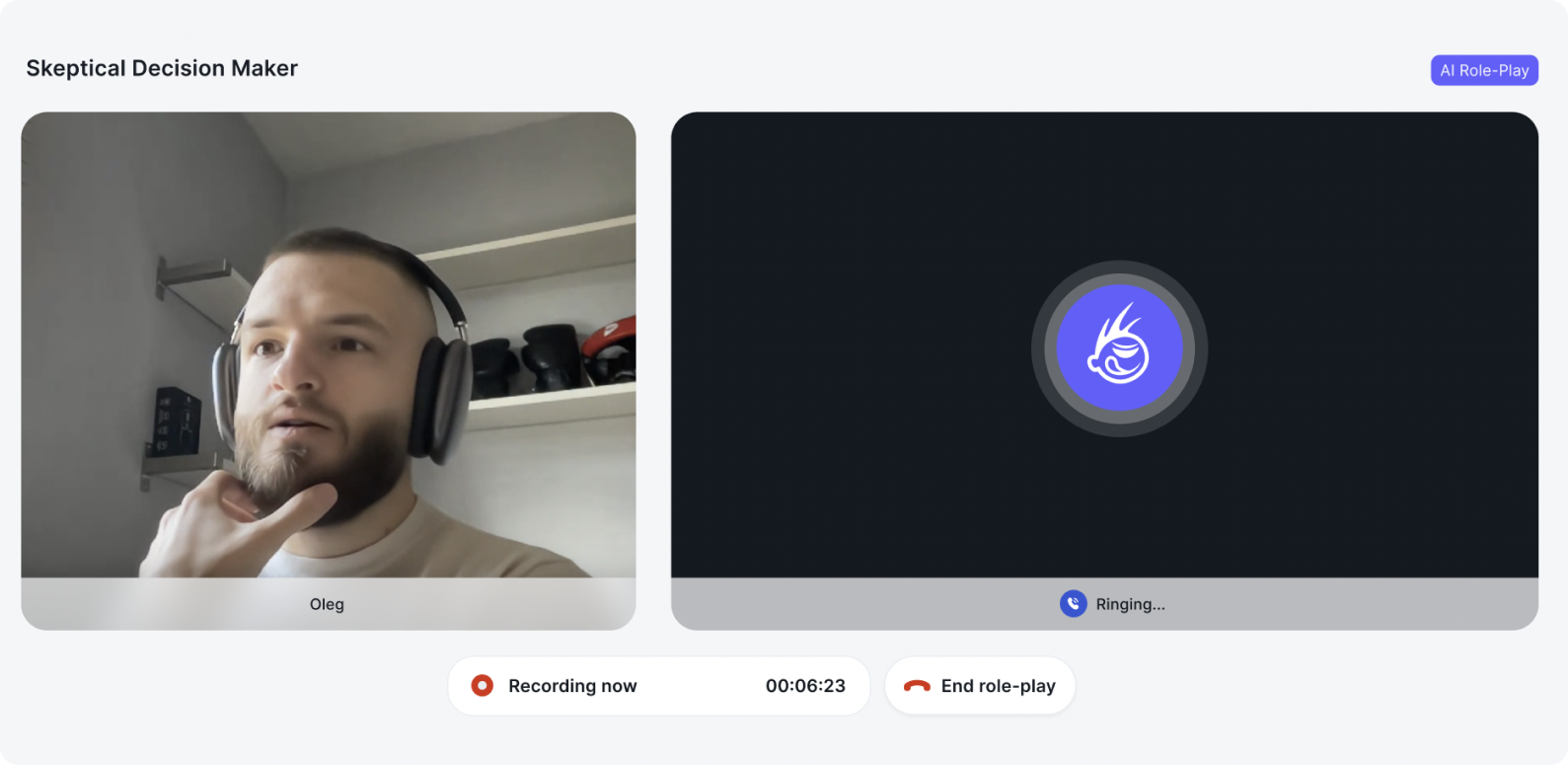
Most enablement functions have no readiness layer. They have a completion report, which records that a rep opened a module, and a manager's opinion. Readiness answers one question: can this rep handle the pricing objection, right now, without a script? A structured role-play programme answers it. A content library does not.
What is revenue enablement?
Revenue enablement is sales enablement widened to every customer-facing role. Instead of preparing account executives only, it prepares SDRs, customer success, partners and support on the same message, the same qualification standard and the same objection handling. It reports on retention and expansion alongside new business.
In most B2B companies the majority of new revenue comes from existing customers, so a function that prepares only the new-business team covers a minority of the number. GTM enablement means the same scope with marketing formally inside it. Buyer enablement points outward, at what the buying committee needs when no seller is in the room. Read all three as scope statements, not maturity badges.
What does a sales enablement function actually own?
A sales enablement function owns 6 things. They are new-hire onboarding, ongoing skills development, sales content and messaging, the practice and certification layer, the tooling behind it, and the reporting that ties it to revenue. It does not own quota, territory design, compensation or CRM administration. Those belong to sales operations.
Where the two meet, ops supplies the data and enablement supplies the intervention. Enablement sits under sales when the priority is quota attainment this year, under marketing when it is message consistency. The first structure produces better ramp numbers, the second better decks.
"Sales leaders finally get a window into how their teams are selling. That's incredibly valuable."
Martin Sharpe, Solutions Director at Mentor Group
Sizing is rarely published. The Sales Enablement Collective's 2025 Sales Enablement Landscape Report found 35% of enablement teams are a single person, and 97.3% of enablers are at least partly responsible for onboarding.
What are the stages of sales enablement maturity?
Sales enablement maturity runs through 4 stages: ad hoc, programmatic, measured and predictive. Each stage is defined by what evidence exists, not by headcount or budget. Most teams sit at stage 2 and describe themselves as stage 4, because stage 2 produces impressive-looking activity reports.
Stage | What exists | The metric it can honestly report | What breaks next |
|---|---|---|---|
1. Ad hoc | A shared drive, a kickoff deck, whoever hired the rep trains them | None, anecdote only | The second office. Nothing transfers, so each site invents a pitch |
2. Programmatic | Onboarding path, course catalogue, content library | Completion rate, content usage | Completion hits 90% and win rate does not move |
3. Measured | Scored practice before live calls, a certification gate, scorecards on your own methodology | Pass rate, ramp time in weeks, win rate by cohort | Volume. Manager capacity caps reps scored per week |
4. Predictive | Practice scores linked to call recordings and deal outcomes | Quota attainment by skill cohort, forecast risk by capability | Nothing structural. The work becomes holding the standard |
The jump from stage 2 to stage 3 is where a sales enablement strategy earns its budget or gets cut. It is also the only jump that needs a change in method rather than tooling.
How do you build a sales enablement strategy?
You build a sales enablement strategy by starting at the revenue number and working backwards to a seller behaviour, not by starting at a content audit. Pick the number, name the behaviour that moves it, design the practice that installs the behaviour, then measure the behaviour and the number separately.
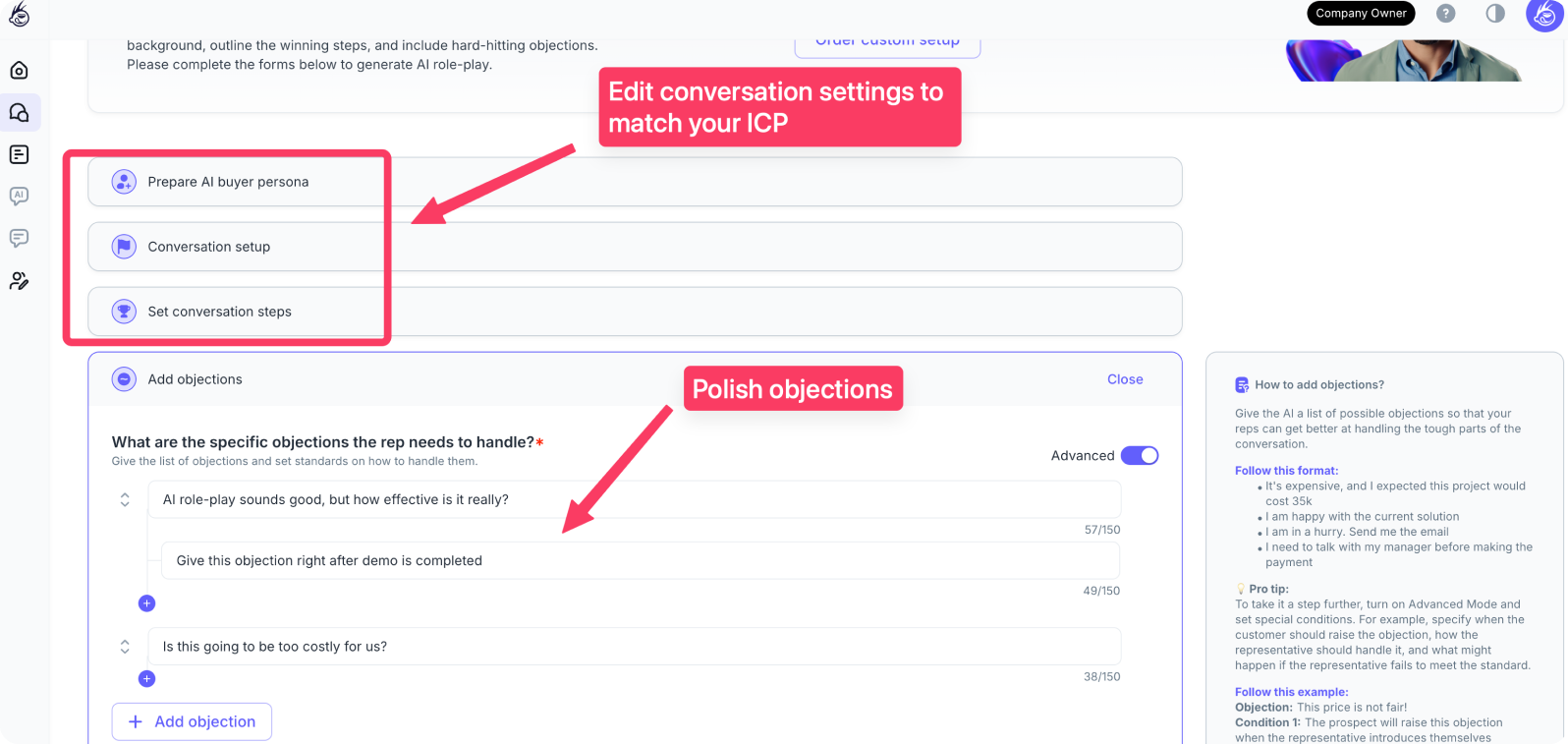
Run it in 5 steps:
- Pick one revenue number for the next 2 quarters.
- Name the behaviour that moves it, in terms a manager can observe on a call.
- Pull the baseline before you change anything.
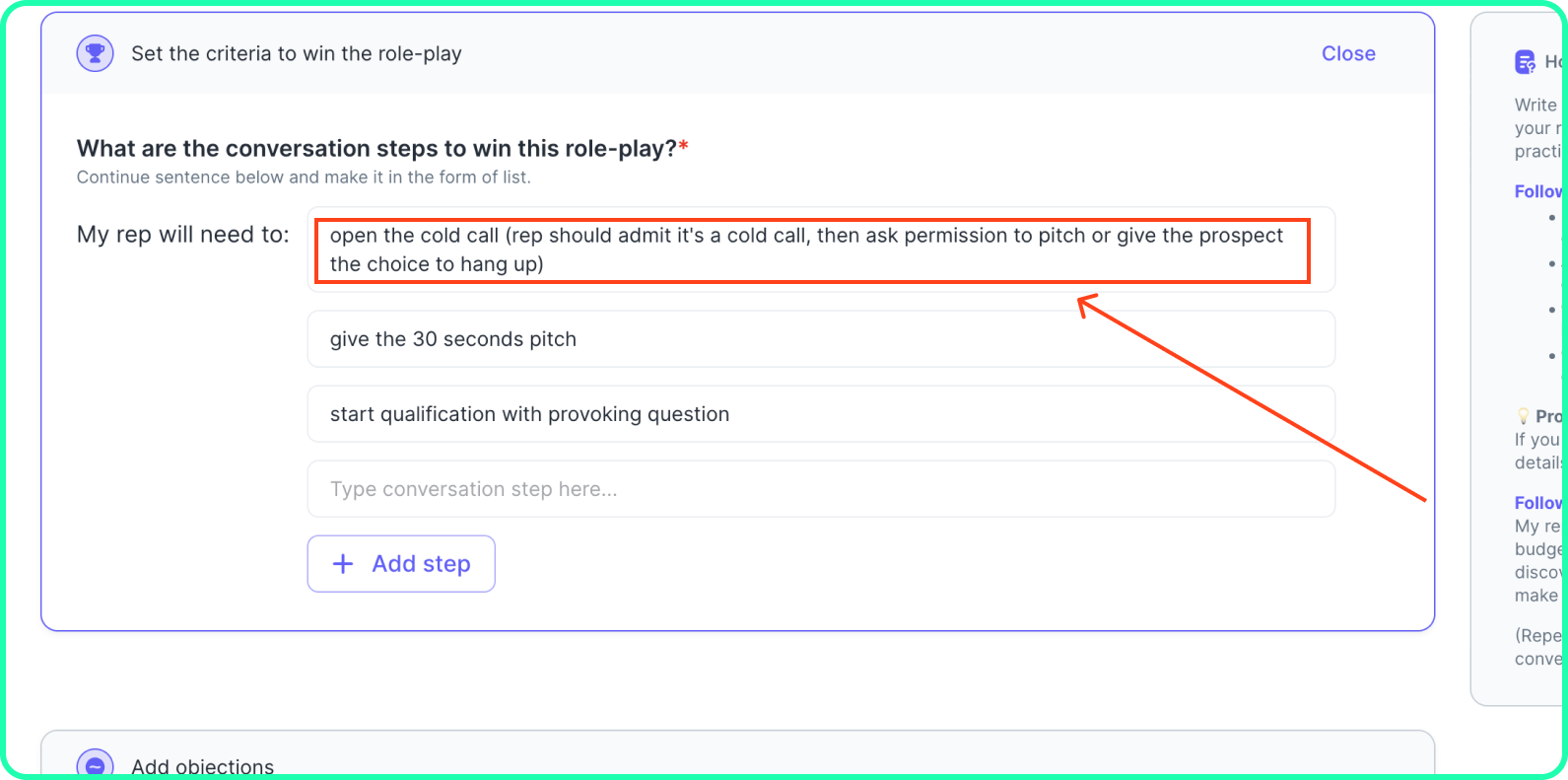
- Build the practice, not the course: rehearse against a realistic buyer until the score holds, then certify.
- Track the behaviour weekly, the number monthly, and cut work that moves neither.
Six worked chains cover most of what enablement gets asked for:
Revenue goal | Target behaviour | How it gets practised | How you measure it |
|---|---|---|---|
Cut ramp time | Full discovery call unaided by week 4 | Scored discovery role-plays from day 2, gate before live leads | Weeks to first month at 70% of quota |
Raise competitive win rate | Answers the head-to-head question without discounting | Role-plays against the 3 competitors most common in lost-deal notes | Win rate on deals tagged competitive |
Raise average deal size | Runs a multi-stakeholder value conversation, not a demo | Practice with a CFO persona who asks for the business case | Deal size where 3+ contacts are involved |
Shorten the sales cycle | Confirms the buying process on call 1, not call 3 | 10-minute drills scored on whether the question was asked | Days from first meeting to close |
Land a new product | Delivers the new positioning accurately, live | Message-delivery role-plays in launch week, scored on the approved narrative | Message accuracy, then new-SKU pipeline |
Reduce early-tenure churn | Survives the first 20 rejections | Objection-handling practice before the first live dial | 90-day retention, first-quarter attainment |
Sales enablement best practices collapse into one habit: refuse work that cannot fill all 4 columns.
Which sales enablement metrics actually matter?
The metrics that matter are the ones that move only when seller behaviour changes: ramp time, quota attainment, win rate by cohort and certification pass rate against live-call performance. The vanity metrics are the ones that move when someone opens a file: content usage, course completion, login counts and training satisfaction scores.
The field knows this and reports the opposite. The Sales Enablement Collective's 2025 Sales Enablement Landscape Report found the most common success metric enablement teams report on is content adoption at 50%. That is ahead of quota attainment at 43.1%, win rates at 42.2% and sales cycle length at 33.6%. The most-used measure of enablement success is an input, defended mainly because it is easy to measure, and it rises fastest when rep behaviour has not changed at all.
Metric | Formula | What to hold it to | Verdict |
|---|---|---|---|
Ramp time | Days from start to first month at target attainment (state the target) | Your own baseline cohort, then take weeks off it. Immersive Labs went from 10 weeks to 6 | Matters |
Quota attainment | Reps at or above quota / quota-carrying reps | Your own prior-year figure | Matters |
Win rate by cohort | Won / (won + lost), split by tenure | Certified vs not-yet-certified reps, one segment | Matters |
Certification pass rate | First-attempt passes / attempts | A 100% pass rate means the bar is too low | Matters, with the score |
Scored practice per rep | Scored sessions / rep / month | A floor per rep, reporting who is below it | Matters |
Content adoption | Reps who opened an asset / reps with access | Retiring dead assets | Vanity |
Course completion | Modules completed / assigned | Compliance with a deadline | Vanity |
Training satisfaction | Average post-session rating | How the session felt, an hour later | Vanity |
Platform logins | Active users / licensed users | Procurement, not capability | Vanity |
Copy the top 5 rows into your next enablement review as the scorecard. Keep the vanity metrics out of the board deck.
What does ramp time actually look like as a number?
Ramp time is the number of weeks from a seller's start date to the first month in which they hit an agreed share of full quota. Publish the share alongside the weeks or the figure means nothing. Every guide names ramp time as enablement's headline benefit, and almost none prints a before and after in weeks. Our own guide to sales onboarding and ramp time goes deeper on the compression levers.
Four real before-and-afters, from live customer records:
- Immersive Labs, onboarding across 5 regions with Mentor Group, cut onboarding from 10 weeks to 6, ramping new hires 40% faster.
- Mentor Group reports 50% faster ramp-up on average across its client base, and a 2X reduction in coaching time per rep.
- SThree, the FTSE-listed STEM staffing group with around 2,700 people in 11 countries, reports 2x less coaching time per rep after moving peer role-plays into scored practice.
- JustSchool lifted new-hire conversion from lead to payment by 8.3% and freed 5+ hours per week per sales leader.
"We realized it wasn't just time saved, it was time created. That's a huge shift."
Ben Barton, Assistant Marketing Manager at Mentor Group
Manager coaching hours are the hard constraint on ramp speed, so a method that returns hours to managers raises the ceiling on everything else.
How do you know a rep can actually do the job?
You know a rep can do the job when they have run the conversation against a realistic buyer and been scored against your own framework. They know it once they have repeated it until the score held. That is different from completion data, which only tells you a deck was opened. A scored practice conversation tells you whether the rep can take the objection, hold the price and get to a next step. Only the second one predicts a call.
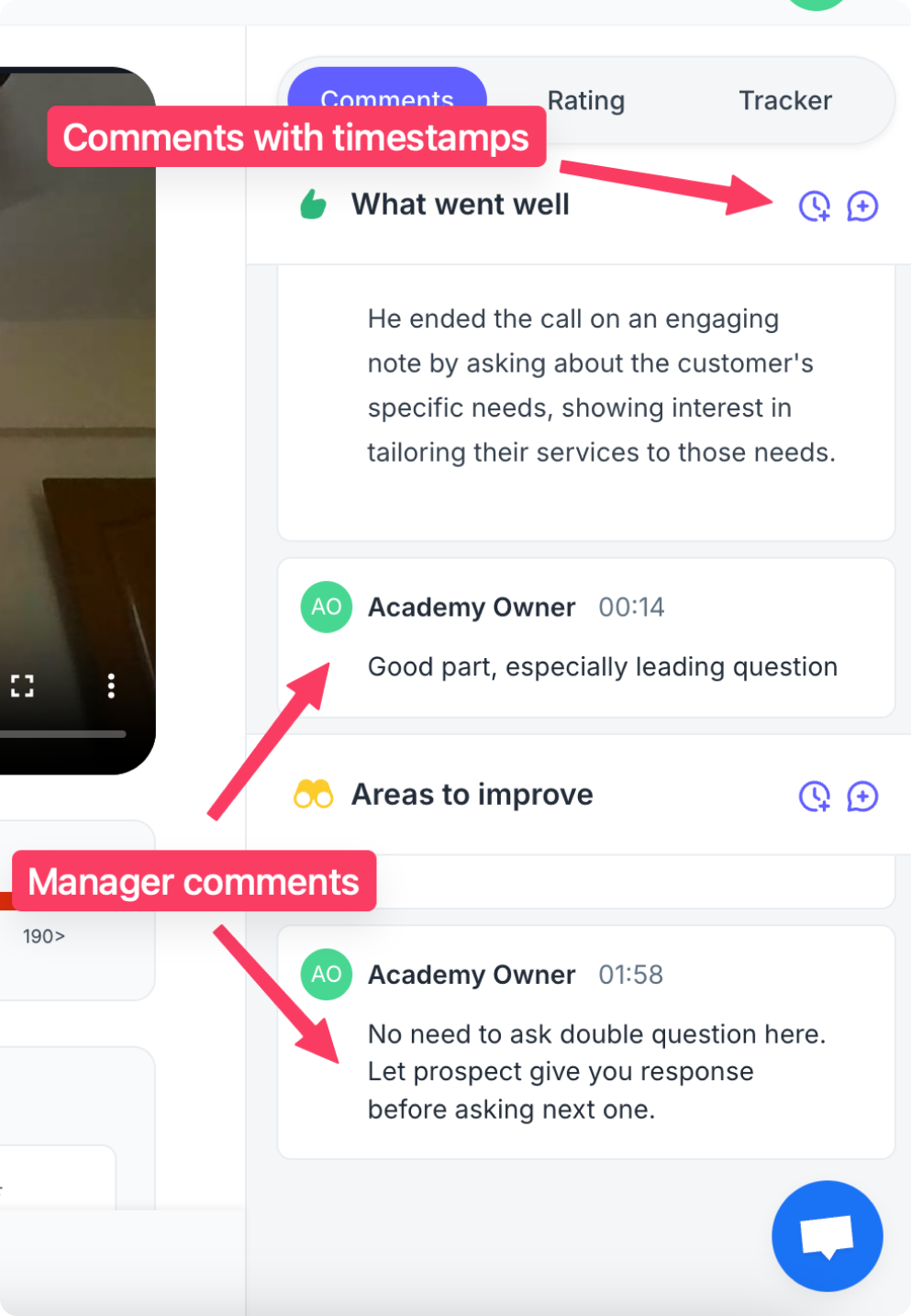
Every major guide raises the question of how skills get verified after training, then moves on. Our guide to sales role-play training sets out the practice loop in full. Two customer records answer the verification question here.
PRN Health Services, a US healthcare staffing firm, ran scored AI role-plays with its recruiters and measured real calls. The result: 22.37% higher call quality scores over a 60-day window, a 14% increase in clinician interviews and a 9% increase in talk time across a 6-month before-and-after.
"One of our reps thought he had great skills until getting his first PitchMonster feedback. It was transformative."
Mandy Nycz, then Director of Learning & Development at PRN Health Services
Syngenta, working with Mentor Group, needed its team fluent in the messaging for a new product. Within 3 weeks of practising value-based conversations, internal assessments showed 27% better message delivery accuracy and 90% of participants reporting higher confidence.
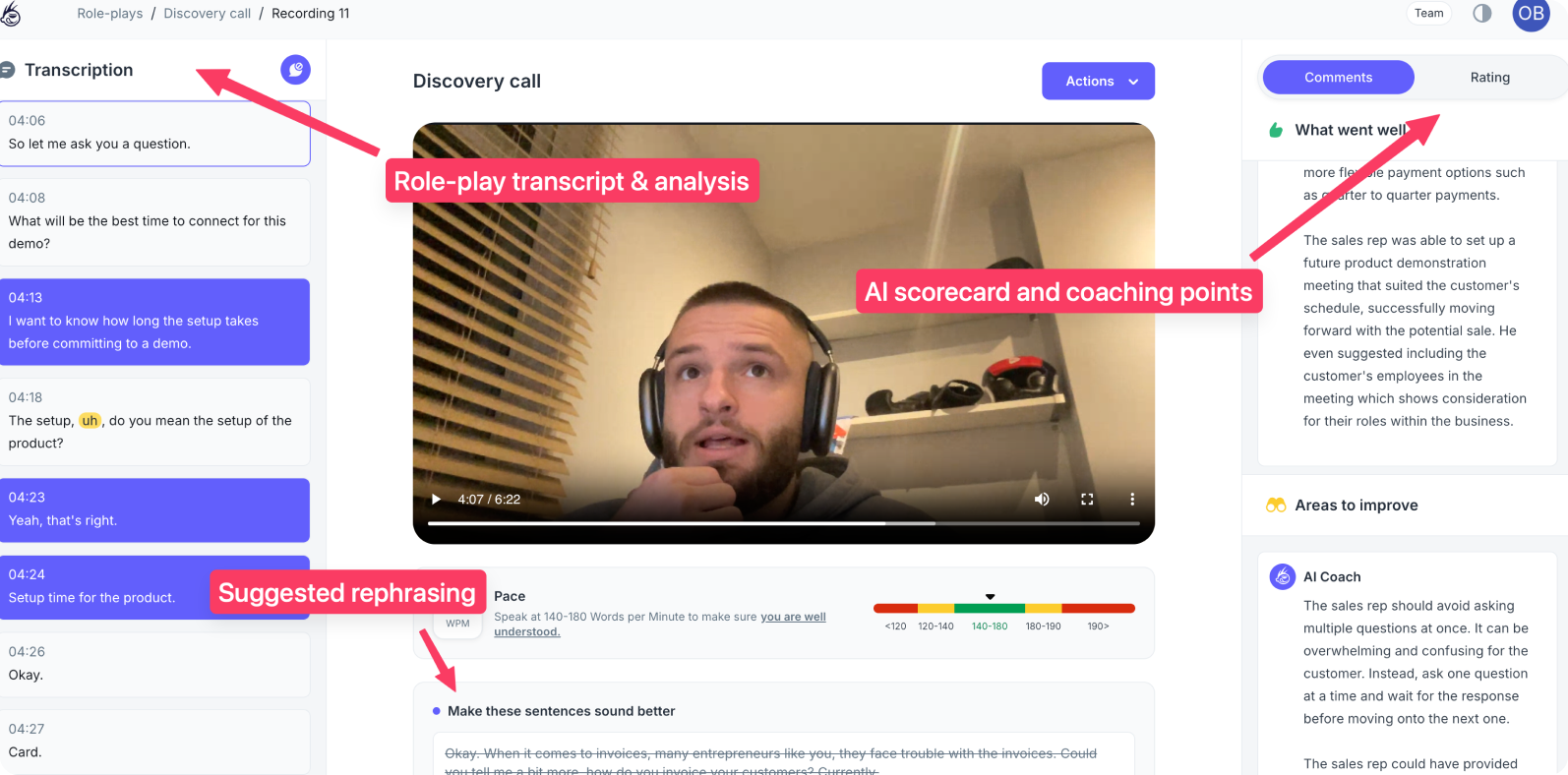
The mechanism is unglamorous:
"If a learner skips a step, we spot it straight away and send them back in until every box is green."
Stefano Bianchini, Senior Curriculum Lead at SThree
Practice, score, repeat. PitchMonster's AI Coach runs the debrief the way a good manager would, asking the rep what they would change rather than reading out the answer. It runs after every session rather than on the calendar, and our guide to sales coaching covers the cadence a manager should run alongside it.
Why doesn't content management change rep behaviour?
Content management does not change rep behaviour because reading a document and performing under pressure are different skills, and only one of them is being trained. A battlecard tells a rep what the answer is. It does not build the ability to deliver that answer in 6 seconds, to a sceptical CFO, while the deal is slipping.
Good content management still matters. It cuts the time reps waste hunting for assets and retires material that misrepresents the product. That solves supply. Capability is a rehearsal problem, and it stays unsolved until someone rehearses.
What tools do you need for sales enablement?
You need 4 categories of tool, and most teams over-buy in the first and under-buy in the third: content management, learning delivery, practice and certification, and conversation intelligence. A CRM and a calendar cover the rest. If a category cannot be tied to a row in your scorecard, it is not a requirement.
Judge any purchase on 5 questions:
- Does it produce a score on a person, or only a report on a programme?
- Can you map your own methodology and scorecard into it?
- Does it cover the languages and channels your team sells in, screen-share included?
- Does the manager's weekly workload go down once it is adopted?
- Where does the data live, and does that satisfy your legal team on day 1?
That last question does more work than it used to for European buyers. PitchMonster is the only European-based platform in the category's top 5, which settles GDPR, timezone coverage and cultural fit before procurement starts. It supports 29 languages, 3 practice modes including screen-share and presentation mode, custom scorecards, and call analysis on real recordings. A wider comparison of role-play and practice tools covers how the category splits.
When do you need a sales enablement function?
You need a dedicated sales enablement function when the sales organisation crosses roughly 10 quota-carrying reps, or when managers stop having time to coach. The same is true when a second office or language starts inventing its own pitch. Before that, a sales leader can carry it. After that, the cost of inconsistency compounds faster than the cost of a hire.
Four signals it is overdue:
- New hires learn the pitch by shadowing whoever is free, so every cohort sells a different product.
- Managers run the same corrective conversation with 4 different reps in one week.
- A launch lands and new-SKU pipeline does not move, because nobody rehearsed the story.
- Top-rep and bottom-rep win rates have separated and nobody can name the behavioural difference.
Measure the first hire on ramp time and attainment from month 1, not on programme launches. The sales enablement solution overview sets out what the practice layer replaces, and you can book a demo to see it scored against your own scenarios.
FAQ
What is sales enablement in business?
Sales enablement in business is the function responsible for making customer-facing teams capable of running revenue conversations to a defined standard. It covers onboarding, training, coaching, practice, messaging and content under one owner, measured on ramp time, quota attainment and win rate. The definition that survives a board meeting names a seller behaviour and the number it moves.
What is another name for sales enablement?
Revenue enablement is the most common alternative name, and it signals wider scope: sales, customer success, partners and support rather than account executives alone. GTM enablement means the same thing with marketing included. Sales readiness is not a synonym. It is the verification layer inside enablement, where a seller proves they can perform before facing a buyer.
What are the three pillars of sales enablement?
The 3 pillars of sales enablement are content, training and technology: the material reps use, the skills they are taught, and the systems that deliver both. That framing is incomplete, because none of the 3 verifies capability. A working version reads content, capability development and measurement, with scored practice before live calls.
What are the five pillars of sales enablement?
The 5 pillars most commonly listed are onboarding, ongoing training, sales content, coaching and analytics. Practice belongs as a sixth, and it is the one most often missing: reps rehearsing the real conversation against a realistic buyer and being scored on it. Without it, the other 5 measure delivery, not execution.
How is sales enablement different from sales operations?
Sales operations owns the system and the mechanics: CRM administration, territory design, quota, compensation and forecast hygiene. Sales enablement owns the capability of the people inside that system: onboarding, coaching, practice, certification and messaging. Ops supplies the data showing where deals fail. Enablement changes how reps handle it.