To improve sales team performance, measure how well your reps sell, how long their deals take, and how much effort each outcome costs, then fix one dimension at a time. The levers that move those numbers are sales enablement, consistent role-play, a clear methodology, AI for busywork, trait-based hiring, and peer coaching backed by culture. This guide walks through each one with examples and copy-ready prompts.
Measurement needs a consistent lens, and sales QA and deal assessment is how managers score deals and calls against one rubric.
Sunday night. Picture yourself in front of a laptop, planning the week ahead, while your friends are somewhere fun that someone dropped in the group chat last Thursday. You flip between their Stories and your packed calendar, then over to Slack, because you cannot miss any asks from your reps. Another 60-plus hour week, done.
First thing Monday: a check-in with your CEO. And the phrase you least want to hear lands anyway: "We need strategies to improve sales team performance." "I'm on it," you say. Inside, you are already picturing next Sunday and another laptop session.
If you were nodding along, this guide is for you. Let's sort it out now, so your next Sunday is more about Sunday.

This guide breaks down how to improve sales team performance, from quick wins you can run tomorrow to deeper changes that pay off over a quarter. Here is the short version.
Here is the whole guide in order.
- What makes sales performance, and how to measure it
- Build sales enablement that works
- What AI tools should you use in your sales process
- Hire the right salespeople
- Peer-to-peer training and coaching
- Build a high-performing culture
What makes sales performance?
Before you can improve sales team performance, you need a shared definition of what good performance is and how to measure it.
Sales performance is how well your team sells (revenue, average deal size, number of customers), the time it takes (sales cycle), and the effort required (calls, demos, meetings) to reach a target action, like closing a deal or booking a meeting.
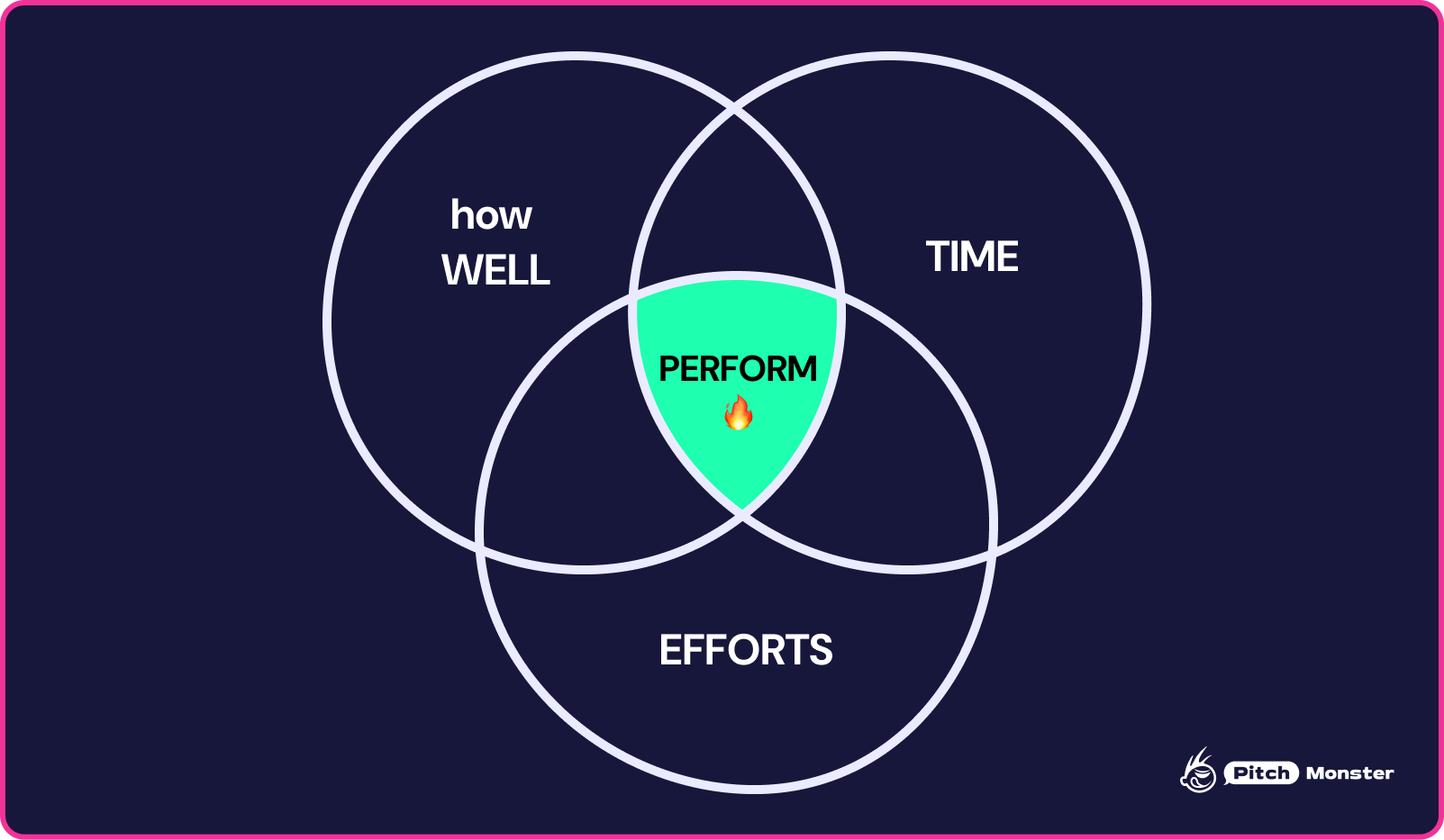
Why hold all three in mind at once? A rep closing a $100K deal looks like a star. But if it took two years and dozens of in-person meetings, that is not strong performance. Improve each dimension step by step, cutting time and effort while holding or growing deal size, and the numbers on your dashboard start to move.
That is the whole idea behind this guide. You do not fix performance with one heroic push. You pick the dimension that is dragging, find the factor behind it, and improve it deliberately.
How to measure sales performance?
"What gets measured gets done," as the McKinsey team puts it in their work on performance management. Hard to argue. To measure sales effort, first define your metrics across the same three dimensions.
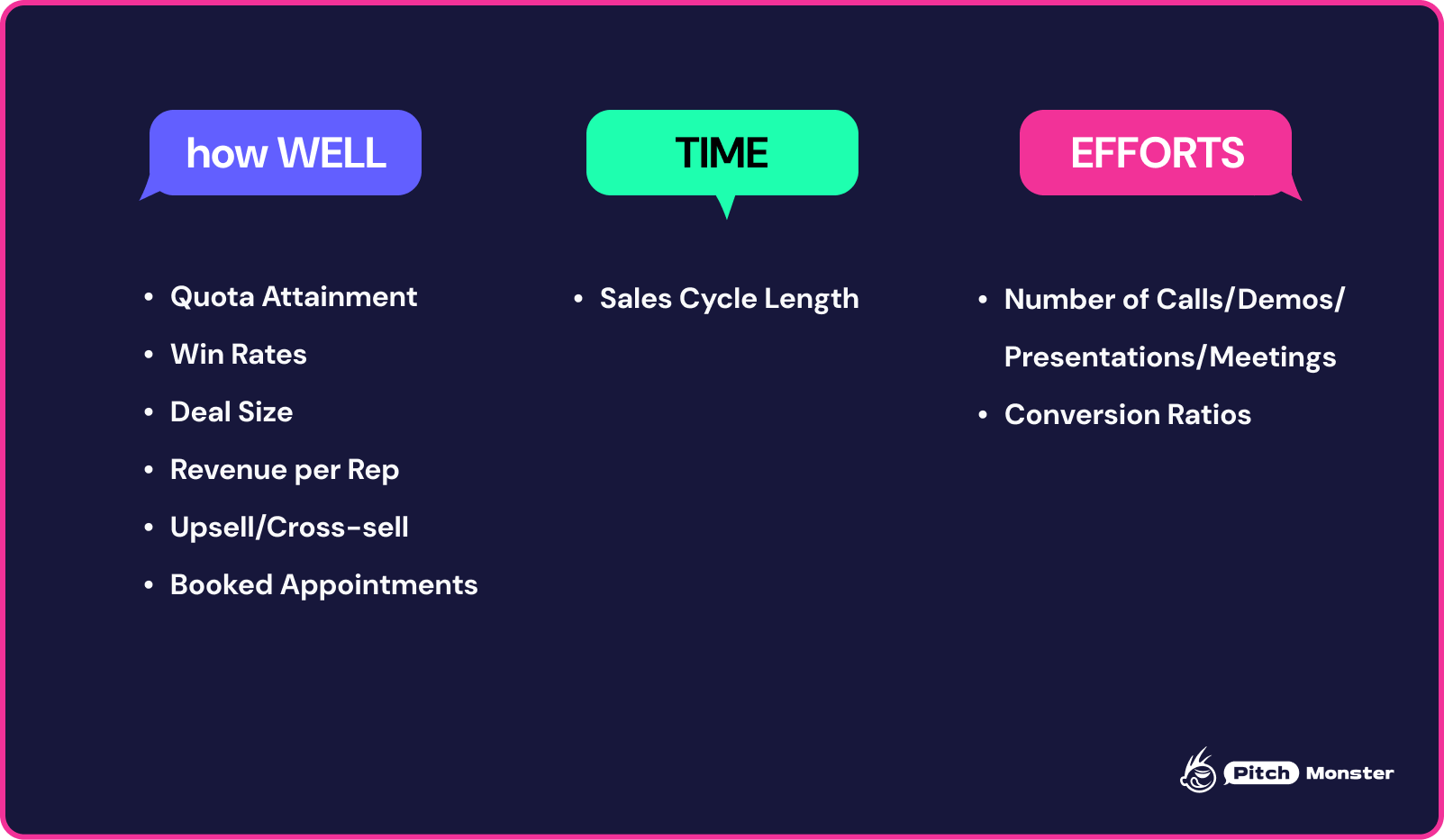
How well reps are performing:
- Quota attainment: the percentage of the sales target achieved
- Win rate: deals won divided by total deals
- Deal size: the average value of closed deals
- Revenue per rep: total revenue generated per rep
- Upsell and cross-sell: the share of revenue from expansion
- Booked appointments: the key metric if you run a lead-generation team
How much time it takes:
- Sales cycle length: the average time to close a deal or hit the target action
How much effort it takes:
- Number of calls, demos, presentations, or meetings per outcome
- Conversion ratios: the ratio between stages, like qualified opportunities to closed deals
No dashboard yet? Use the metrics above as your starting checklist, then build from there. The point is not to track everything. It is to track enough that you can see which single number is holding the team back this quarter.
What does good performance actually look like once you are tracking it? It is less about one hero number and more about balance. A healthy team hits quota without a single rep carrying the whole quarter, keeps win rate steady as deal volume grows, and does not let the sales cycle creep longer every quarter. Watch the trend, not just the snapshot. A win rate that is flat while activity climbs usually means effort is being wasted somewhere in the funnel, and that is a coaching problem, not a hiring one.
Review the dashboard on a regular cadence, not only at quarter close. Managers who look at rep-level numbers weekly catch a slipping conversion rate while there is still time to fix it, instead of explaining it after the fact.
What factors impact sales performance most?
Once your metrics are in place, you need to know which levers actually move them.
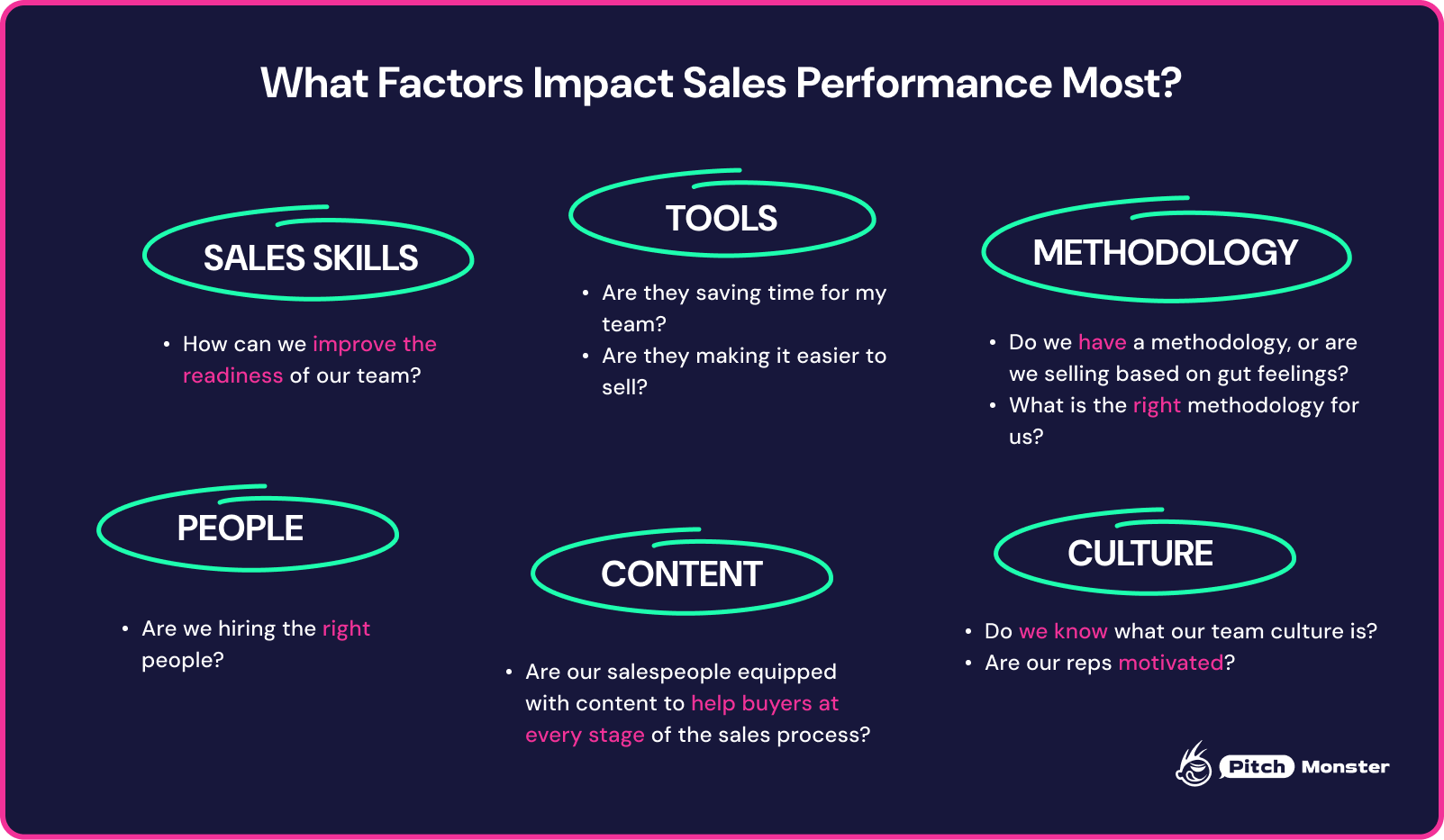
Six factors shape results more than any others: sales skills, tools, methodology, the people you hire, content, and culture. The rest of this guide maps directly to those factors, so you can pick the one where your team has the most room to grow and start there. Now let's discuss what it takes to make the most of each one.
Skills are the fastest of the six to move, and our guide to sales performance training programs ranks the options by how quickly each one shows results.
Build sales enablement that works
The first place most teams find easy performance gains is enablement, because everything else gets easier when reps can find the right content and know how to use it.
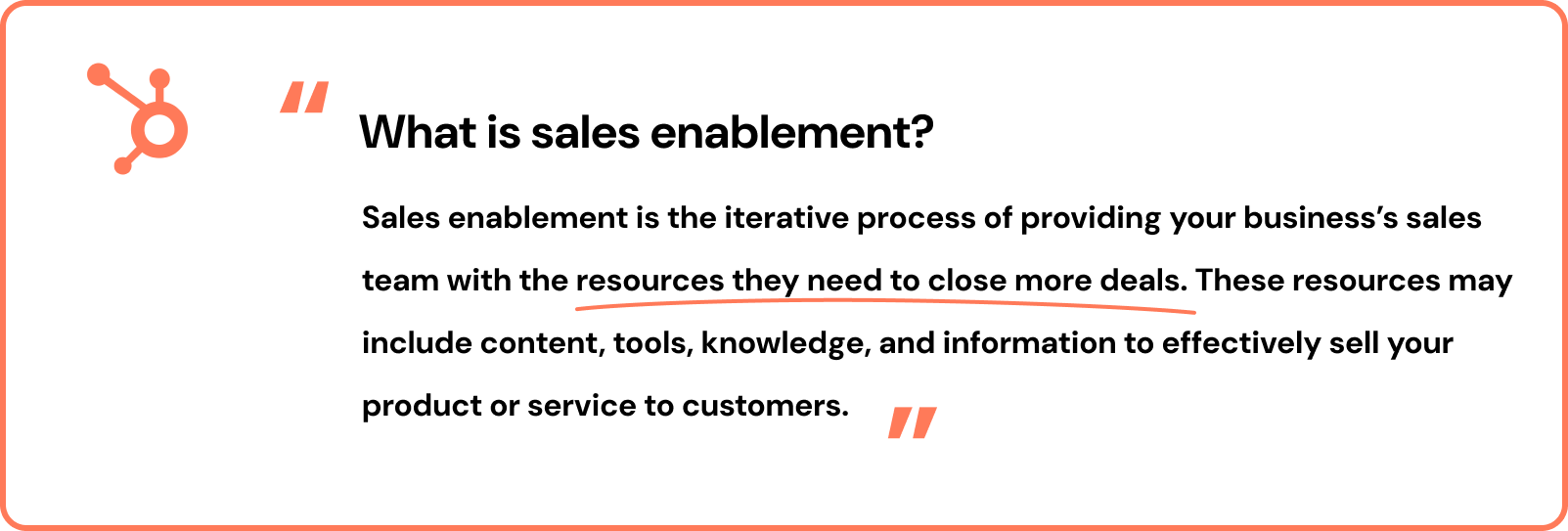
The goal of enablement is to make the sales process easier at every stage. Buyers across every industry are better informed than ever. They read blogs, watch videos, and ask AI before they ever speak to a rep. You cannot sell to customers who know more than your reps do, so you have to back your team with strong content.
According to Qwilr's research, interest in enablement keeps climbing, and teams that run enablement programs report meaningfully higher win rates on forecasted deals. Your competitors are likely already building theirs. The question is how to keep pace without hiring a whole enablement team.
How to create sales content reps need, faster?
Good content takes time, a lot of it. You are not alone there. Research from the Content Marketing Institute finds that 42% of marketers struggle to produce high-quality content and 20% cannot produce enough of it.
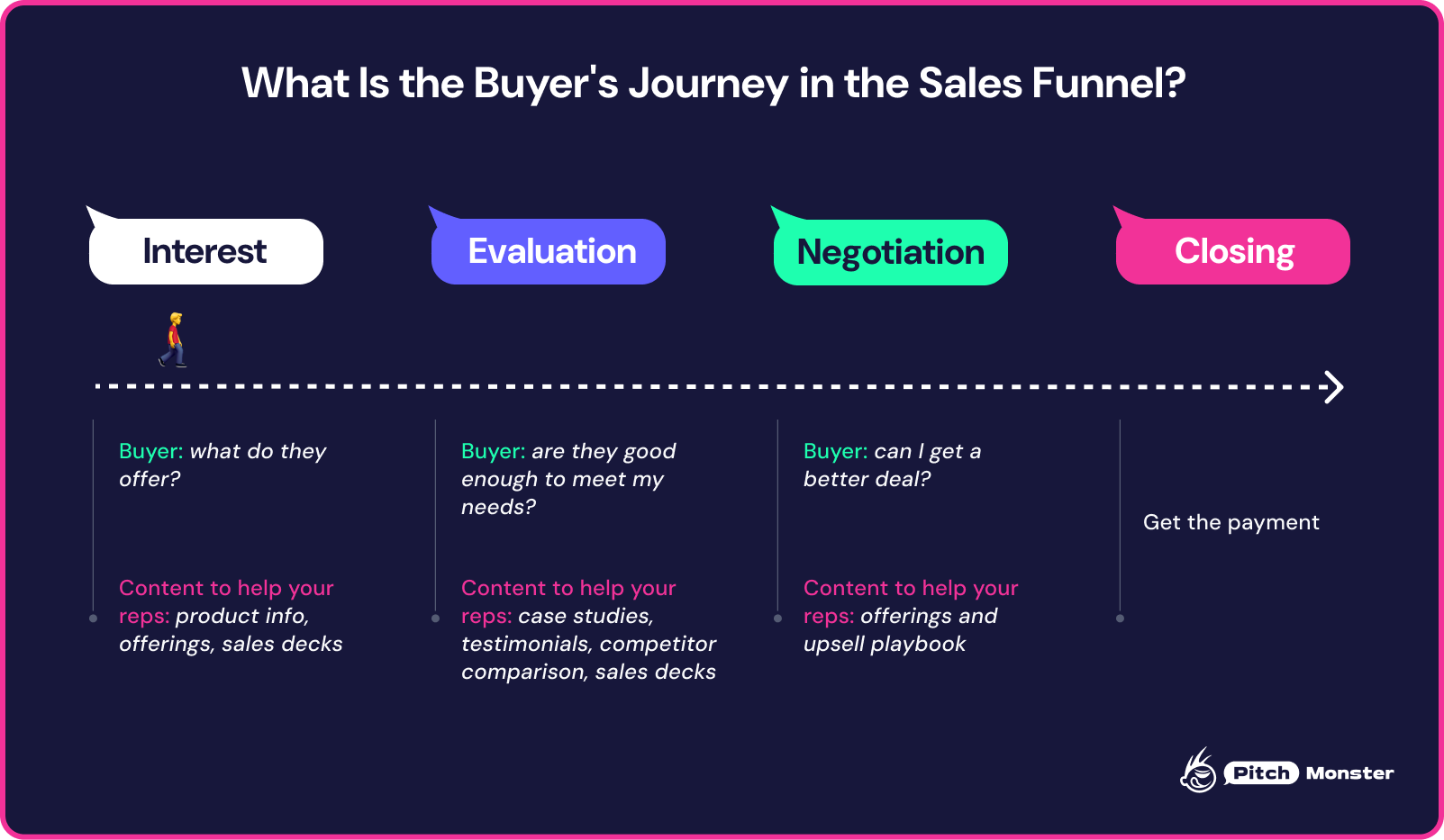
Here is how to move faster on the pieces a sales team actually uses at each stage of the buyer journey. Every one of these uses AI to cut the production time, not to replace your judgment.
The first job is to keep product information current. Build a knowledge hub with clear product descriptions and expert notes. To move quickly, record short video walkthroughs of features in Loom or Vidyard, pull the transcript, ask your AI assistant to structure it, add screenshots, and publish.
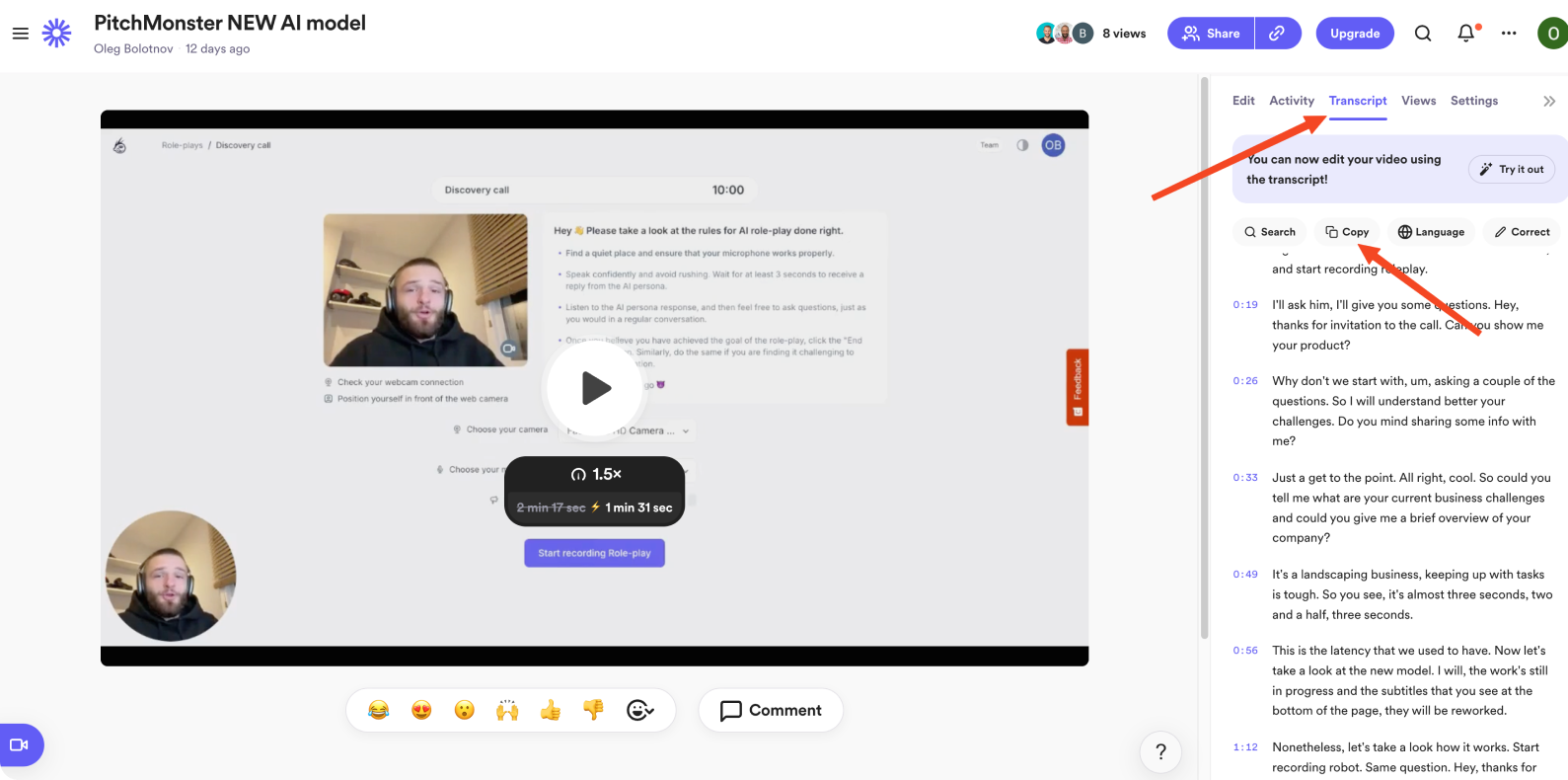
Copy this prompt to turn a raw transcript into a structured article:
I have a transcript from a product video overview about our [feature]. Turn this raw content into a well-structured article for our sales team's knowledge hub. Analyze the transcript and organize the key information into clear sections, format it for easy scanning, include relevant technical specifications and selling points, add headers and subheaders, and highlight any competitive advantages mentioned. Transcript: [insert transcript here]
Here is a sample of the structured output the prompt produces:
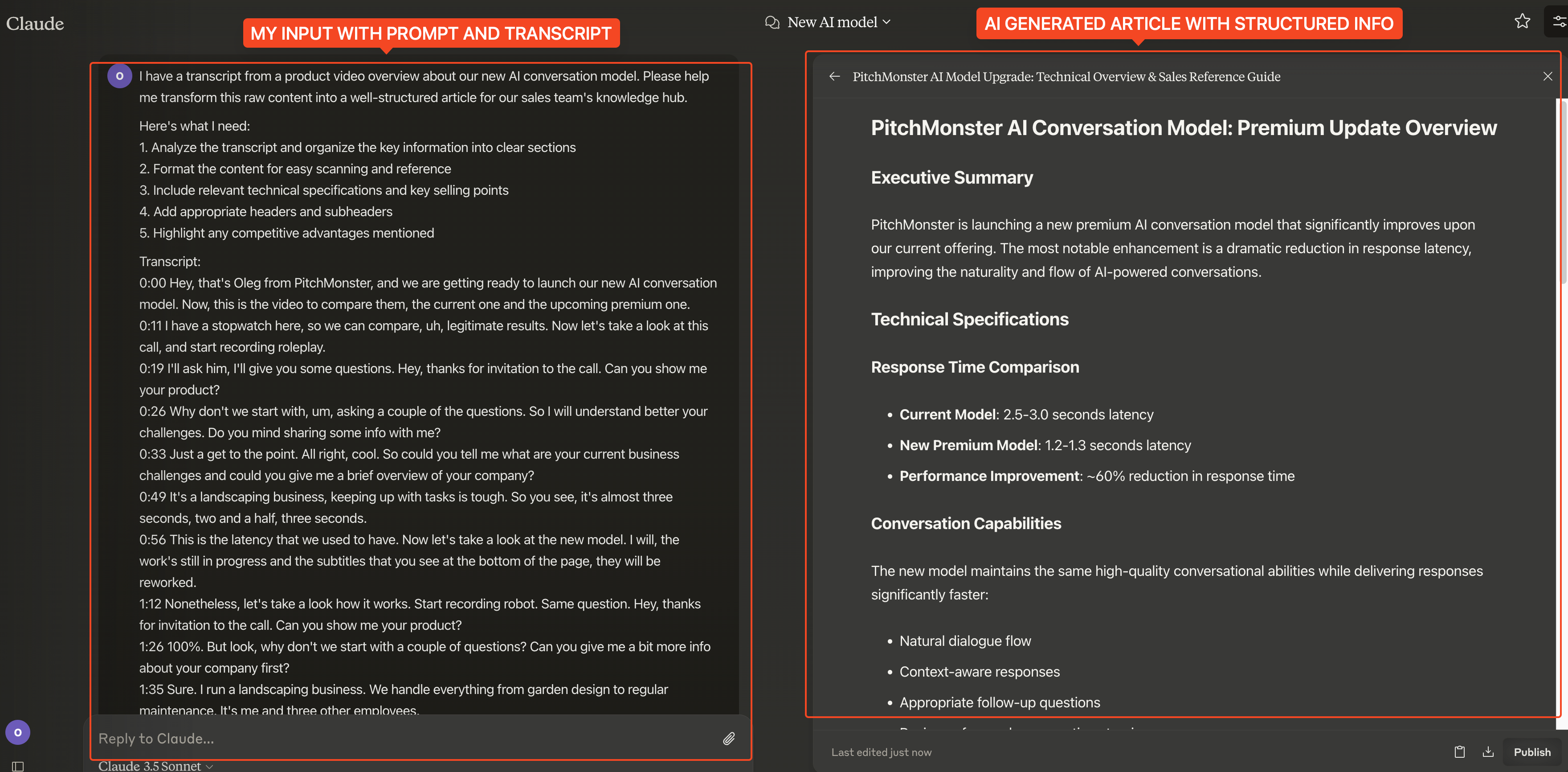
Adjust the prompt and the draft until it reads the way your team talks. Next, create case studies. Almost 80% of buyers review case studies before they purchase. Book calls with happy customers, ask targeted questions about their experience, record with a notetaker like Otter.ai, get the transcript, and have AI structure it into a case-study draft you then edit.
I have a transcript from a customer conversation about their experience with our product. Turn it into a case study for our sales team's knowledge hub. Structure it with: Customer Background (industry, size, challenges, goals), Solution Implementation (which features they used and how rollout went), Results and Impact (specific metrics, ROI, time to value, quotes), and Key Learnings (success factors and best practices). Transcript: [insert customer conversation here]
From those same transcripts you can pull testimonials. Selling is easier in the customer's own words. Ask AI to extract two-to-three-sentence testimonials that blend genuine emotion with a concrete result, pick the best, and use them in scripts and decks.
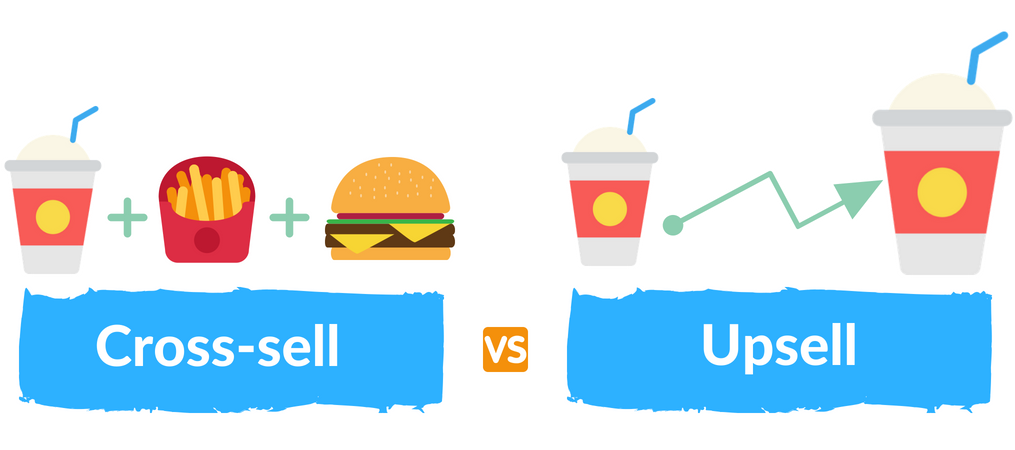
Then document your offers and an upsell playbook. Around 37% of salespeople miss upsell and cross-sell opportunities, often because they are not sure how to do it well. Add a page with every add-on, plus clear scripts for how and when to offer them. Then challenge your reps to offer an add-on to every customer for one month and watch what it does to average deal size.
If you are ever unsure which is which, here is the easiest way to remember the difference, credited to sales trainer Victor Antonio:
The last big piece is decks, usually the most time-consuming because design matters. If you do not have a designer, AI presentation tools like Canva or Pitch can get you a working draft. One master deck is a start, but stage-specific and product-specific decks serve buyers better, since people need different information at different moments.
Where should all this live? You have options: Google Docs, a wiki like Notion, or a dedicated enablement platform. More on platforms below. First, the strategy that decides whether any of this content sticks.
Sales role-plays: classic vs AI
Among all the ways to lift conversions at every stage, role-play sits at the top, because it is the only one that builds skill through repetition instead of just storing knowledge.
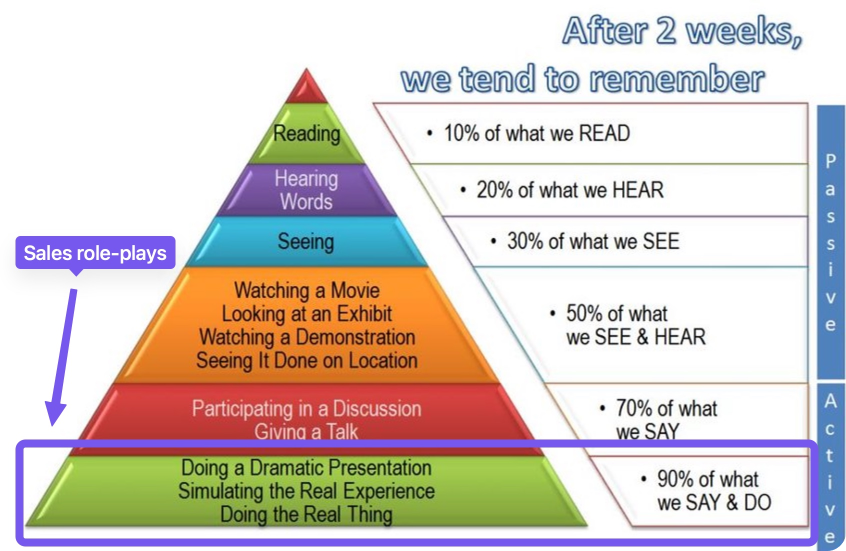
Do not get tricked by the age of that pyramid. It still holds: we forget 70 to 80% of new information within two weeks. So none of your work on enablement, training, or coaching will pay off without practice. And instead of letting reps practice on real calls, where mistakes cost pipeline, you bring more role-play into the routine.
At PitchMonster, our own data shows 20 to 40% better sales productivity among new reps in their first six months when role-play is consistent. Complete rookies can cut their ramp time in half with regular practice, without extra legwork in your onboarding program. Teams that pair AI role-play with coaching have reported 37% higher performance and 30% faster ramp in the Mentor Group case study.
There are four main ways to run role-play, and most teams use a mix:
- Sales leader and rep: the classic exercise every rep should do several times.
- Peer-to-peer: put two reps across from each other and let it run.
- Group role-plays: useful for larger training classes, with one rep practicing live while the rest observe.
- AI role-plays: the same benefits as traditional practice, with far more reach.
The four differ in who does the work and how consistent the feedback is. This table shows where classic role-play and AI role-play each win.
Factor | Classic role-play | AI role-play |
|---|---|---|
Availability | Only when a manager or peer is free | On demand, any time of day |
Reps per session | One at a time | Every rep in parallel |
Feedback consistency | Varies by coach and mood | Same scorecard every time |
Realism | Depends on the actor | Adaptive AI buyer that pushes back |
Manager hours | High | Low, freed up for real coaching |
Best for | High-stakes live practice and nuance | Volume reps, ramp, repeatable drills |
Neither replaces the other. Classic role-play is still the right call for high-stakes nuance and manager judgment. AI role-play is what gives every rep unlimited at-bats without booking your calendar.
To set up AI role-play, start with content prep whichever tool you choose:
- Write down your role-play cases. Begin with the conversation gaps you see most, like discovery, objection handling, and product-knowledge checks. Ten to twelve scenarios is a solid start.
- Set the scoring benchmark. Define what a rep has to do to succeed, tied to your methodology or your best calls.
Then it comes down to where you upload that content. Here is how short the flow is with PitchMonster. You can either upload real sales calls or start from scratch.
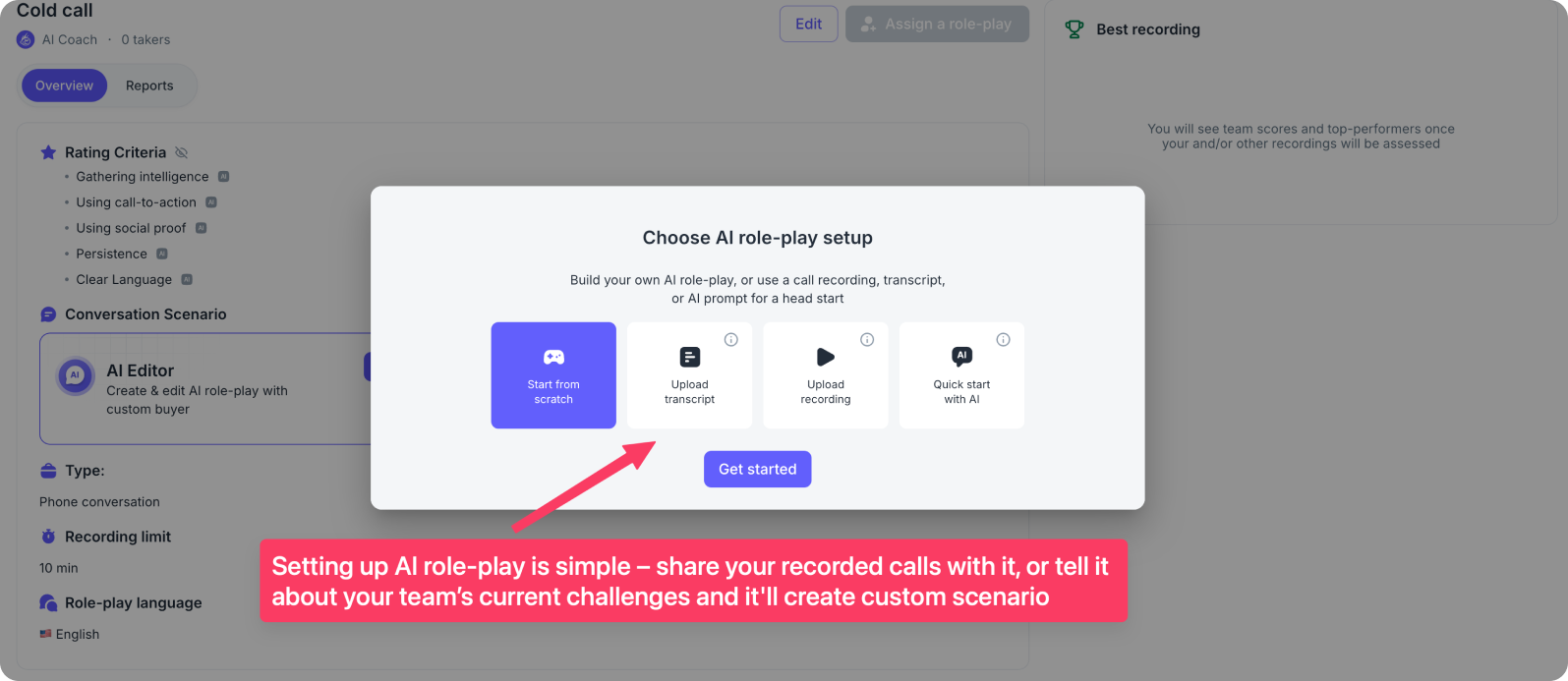
Then you customize the settings: who your typical buyer is, the situations you want to practice, and how your sales process works. That way the practice feels just like a real call.
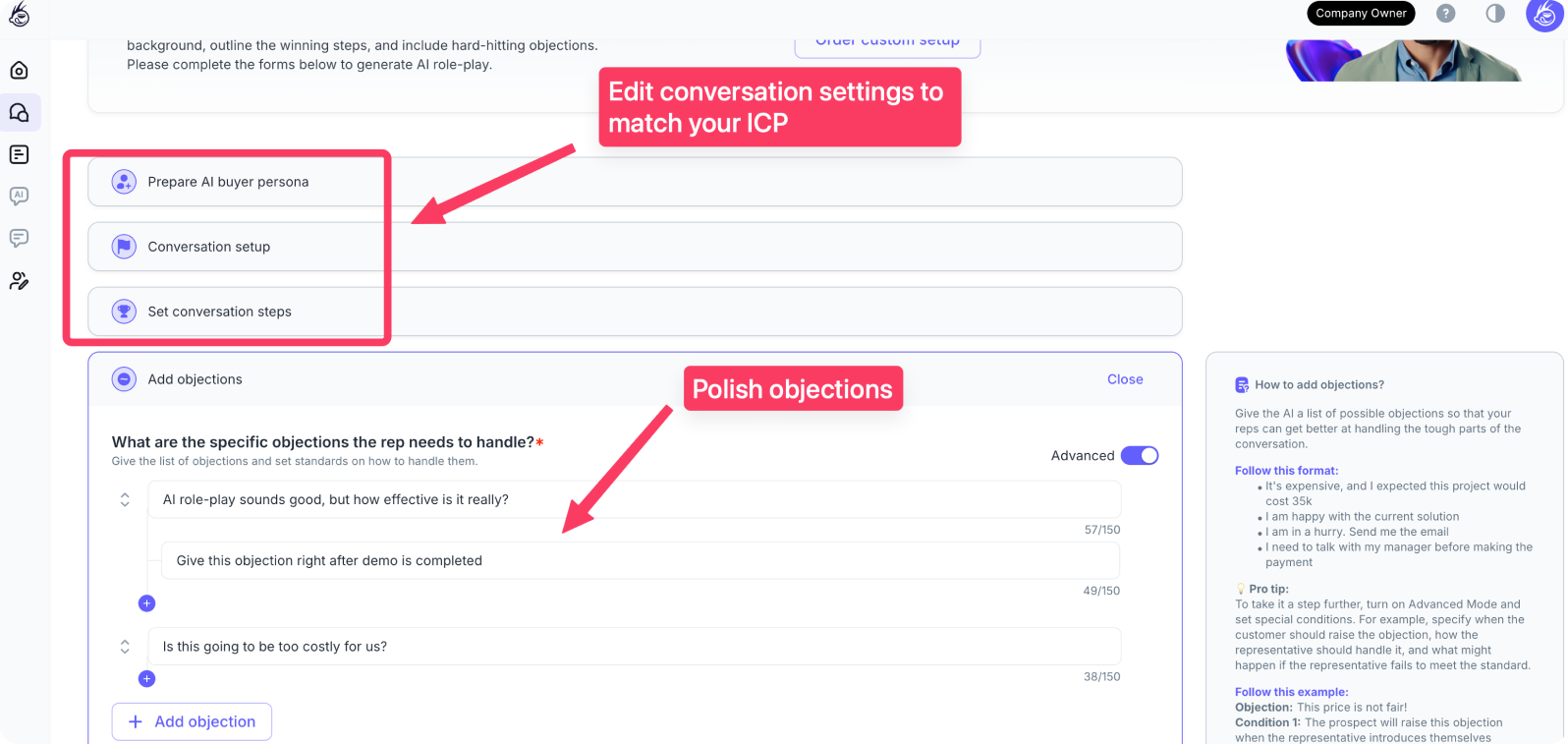
Reps then jump into these sessions any time and get AI feedback scored on your best sales practices.
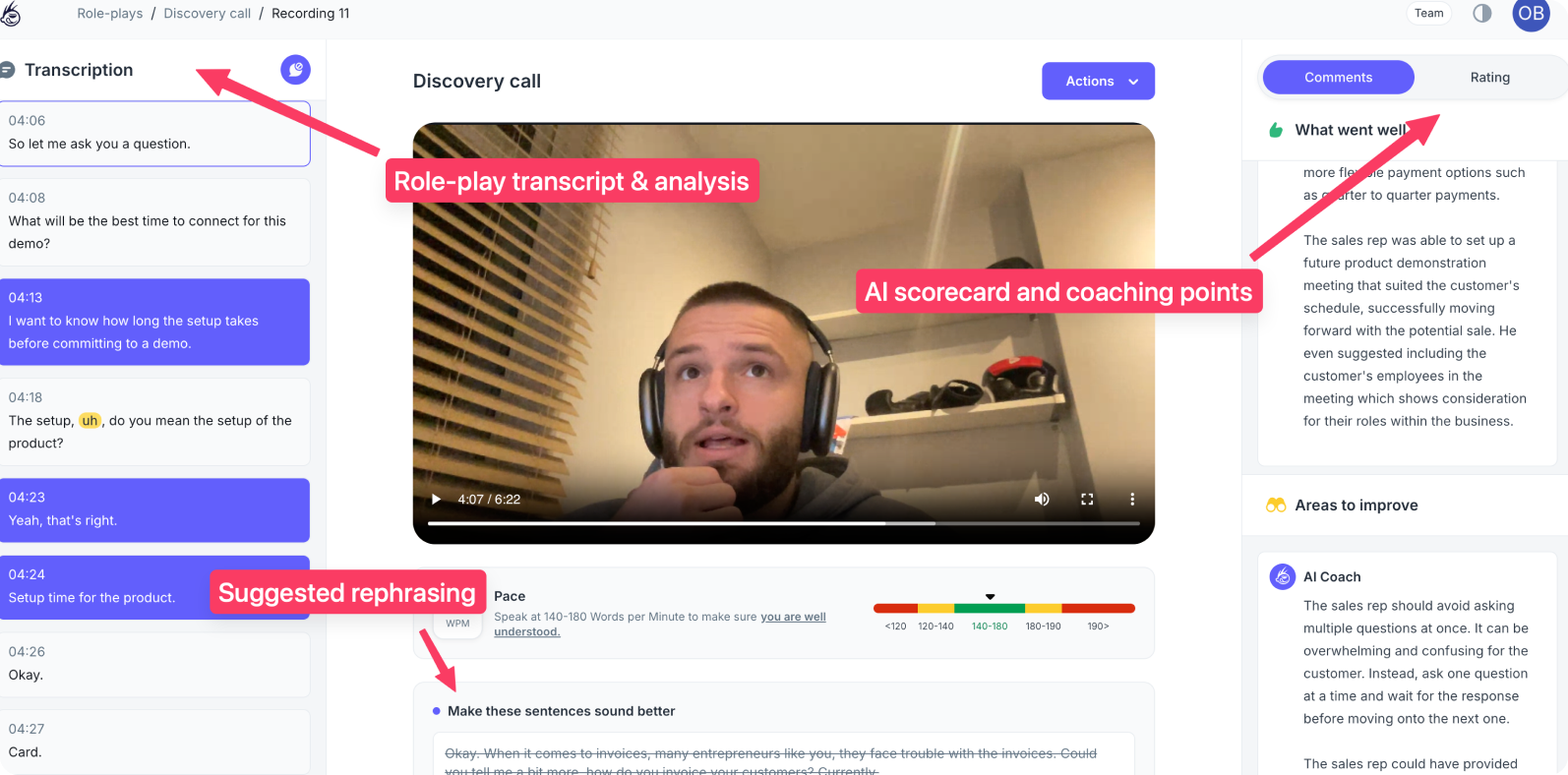
After each session, reps talk with the AI Coach, a Socratic trainer that asks what they noticed and what they would change before they ever see a score. That self-diagnosis is where the learning lands, and no other platform has it.
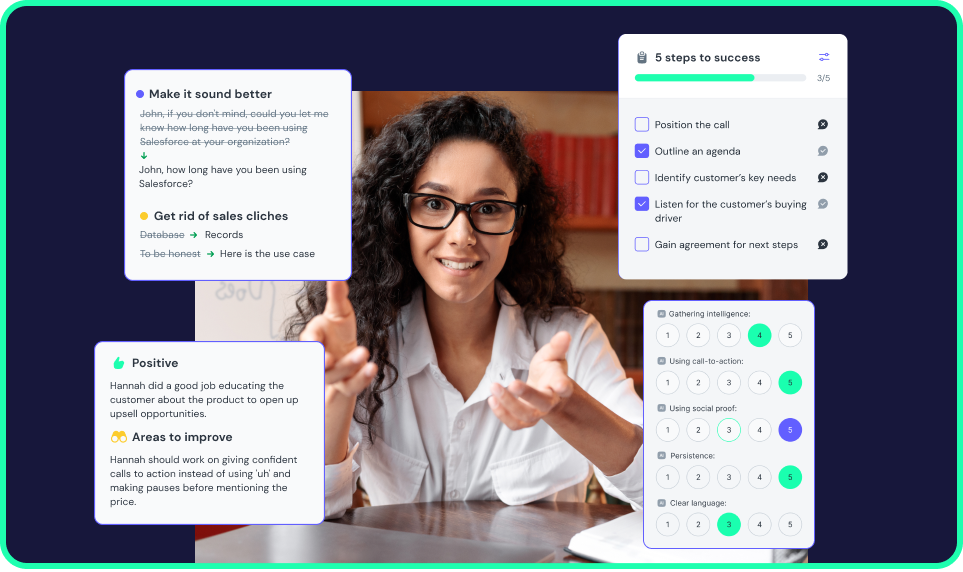
That is how it works with specialized software like PitchMonster. Want to see how it would work for your team? Book a demo and we will build your first role-play library with you. If you would rather try the DIY route first, our guide on how to create AI role-plays for sales training shows the custom-GPT approach step by step, and you can grab 12 ready-made role-play scenarios to run this week.
Sales enablement platforms: why to invest?
Why choose a platform over keeping content in Google Docs? Two reasons stand out. First, you get full visibility into how both reps and customers engage with content, down to which pieces influence revenue. Second, platforms go beyond storage: onboarding, upskilling, and with some vendors, conversation recording and analysis to support coaching.
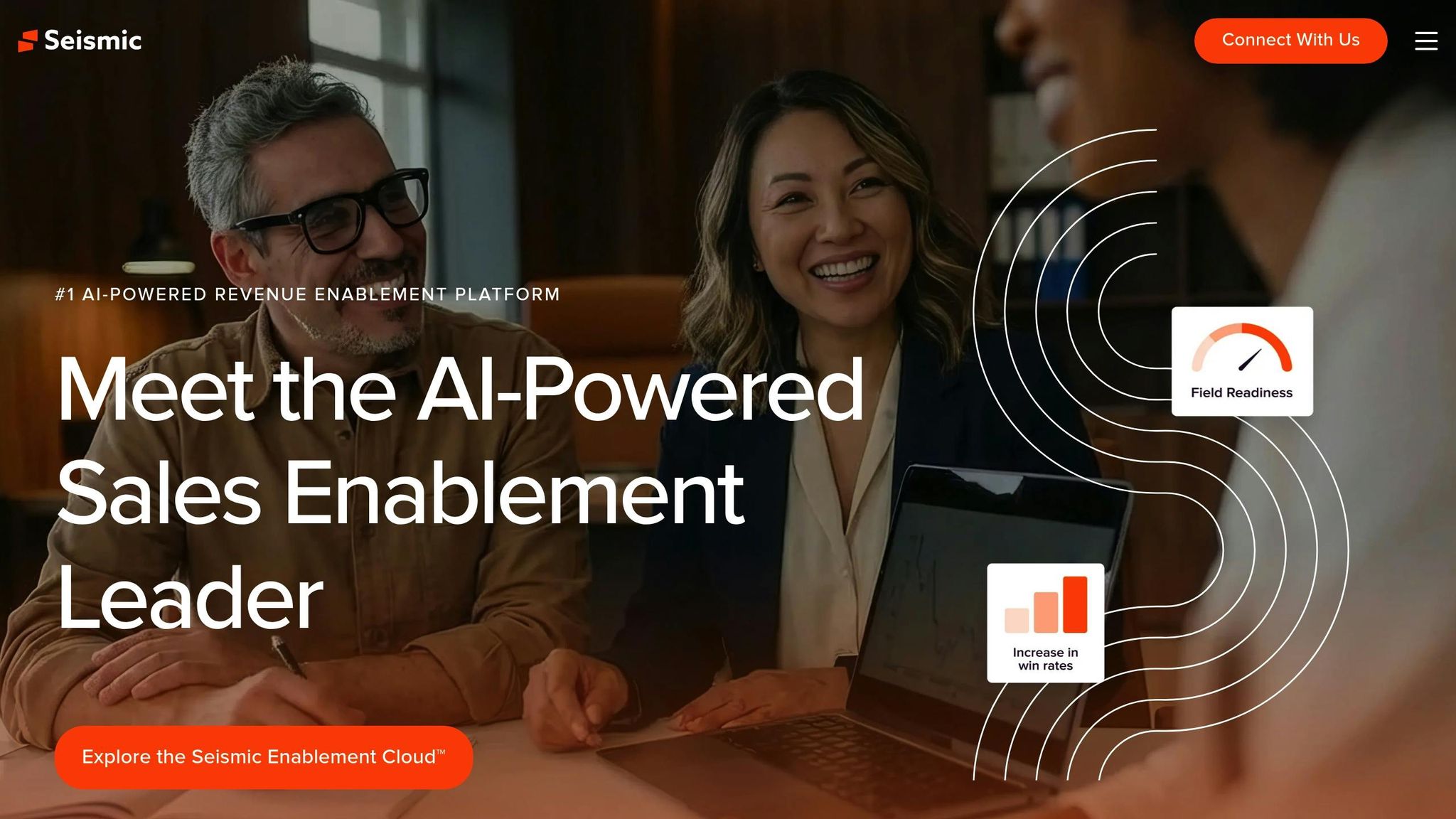
There are three ways teams get value from them. The first is content management. You know that feeling when a rep cannot find the perfect case study, or you wonder if anyone is even reading your decks? A platform solves exactly that, and it goes further by showing you which pieces of content actually influence revenue. Here is how Seismic surfaces that engagement data:
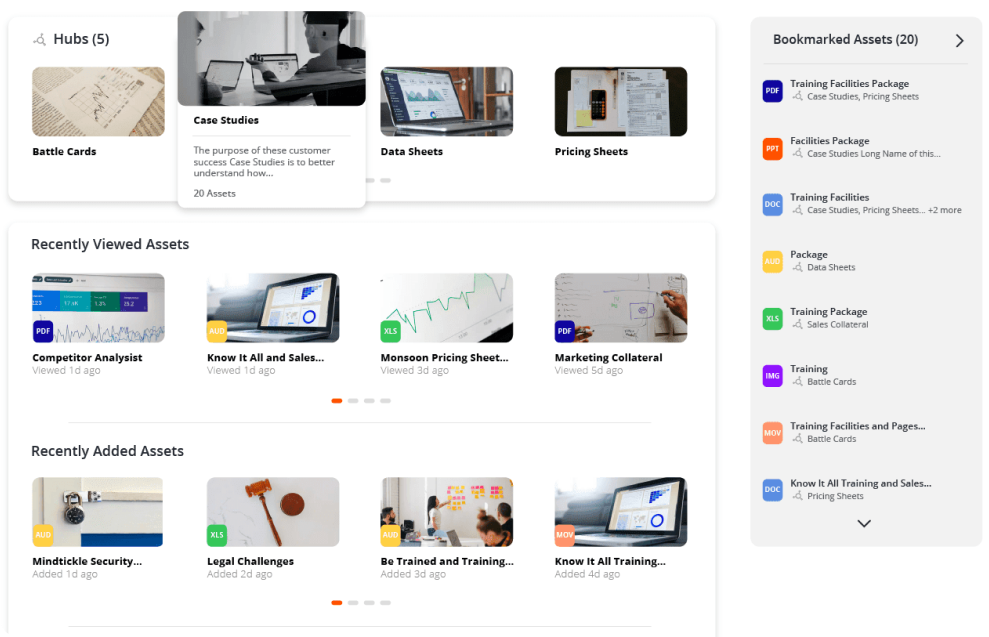
The second is built-in eLearning. Most platforms ship with course editors, quizzes, assessments, and progress tracking, so you can skip buying a separate LMS for the sales team. You can build complete onboarding programs or certification courses right inside the tool. Mindtickle's course library is a good example:
The third is an underused trick: recorded presentations. A champion may relay only 15 to 20% of your message to the rest of their buying group, so record a short version for each stakeholder type. One for the C-level decision-maker, one for finance, one for procurement, one for security, and one for your champion, each speaking that group's language. A platform lets you deliver those targeted messages and track how each group engages. Showpad handles this well:
Popular tools to evaluate include Seismic, Mindtickle, Showpad, and Allego. They are not cheap. Expect to invest roughly $400 to $800 per user per year, and note that some vendors add fees for setup, training, and support. Match the platform to the segment you sell into rather than the longest feature list. If you want a fuller side-by-side, our roundup of the best sales training software compares ten of them by what each is genuinely best for.
So you have content and a way to distribute it, and you have set up role-play for practice. But one day your metrics plateau anyway. That is usually your signal to look at methodology.
Choosing the right sales methodology
Who is going to tell you that sales tricks from the 1980s still work on buyers who research everything and resist obvious tactics?
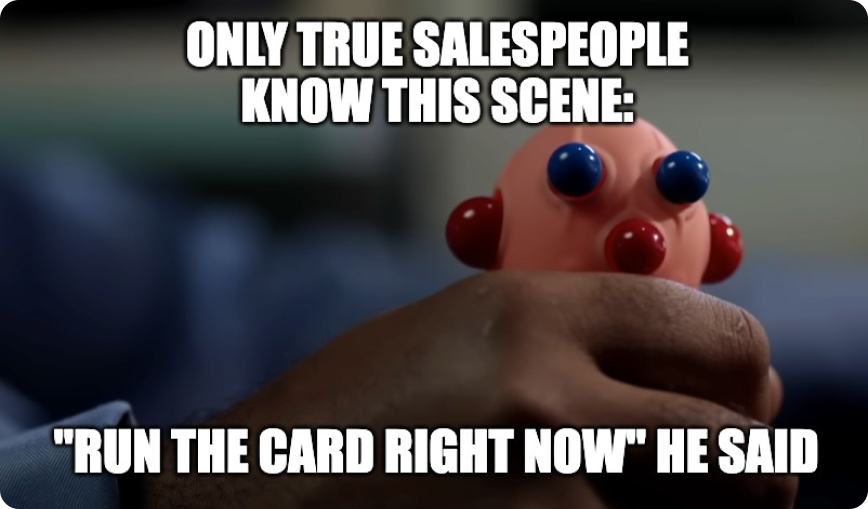
A good methodology can reshape your conversations, shorten the cycle, and give you a consistent way to manage the team. Its principles also guide everything downstream, from content to hiring to coaching.
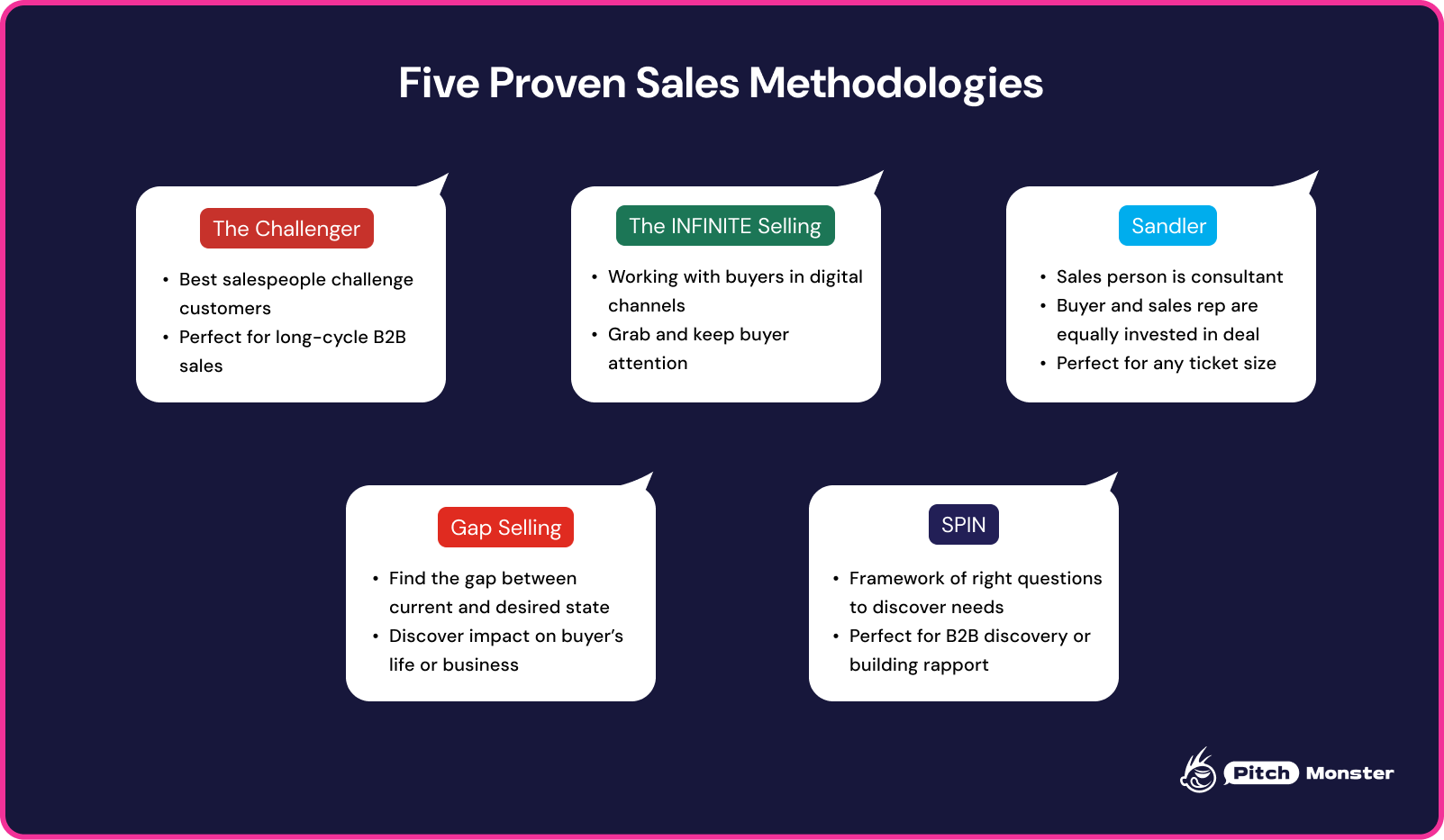
Here are five proven options and where each fits.
Methodology | Best for | Core idea |
|---|---|---|
The Challenger | Long-cycle B2B | Reps teach, tailor, and take control; from Dixon and Adamson's research |
INFINITE Selling | Digital-first buyers | Built by Mentor Group for sellers with less face time; used by Dell, Lenovo, and Infor |
Sandler | SMB to enterprise | A seven-step system where the rep stays in control and walks away early if the buyer is not invested |
Gap Selling | Problem-led discovery | Reps find the gap between the buyer's current and desired state, and dig into real impact |
SPIN | Early discovery | Situation, Problem, Implication, Need-Payoff: a framework for asking the questions that uncover need |
A note on Gap Selling: think of a good doctor who investigates the cause of your headache instead of handing you a pill. That book from sales coach Keenan reshaped how we think about selling, and it was part of why we built PitchMonster, to help reps sharpen those skills before customer conversations. Pick one methodology, train the whole team on it, and score your role-plays against it. Consistency beats collecting frameworks.
What AI tools should you use in your sales process?
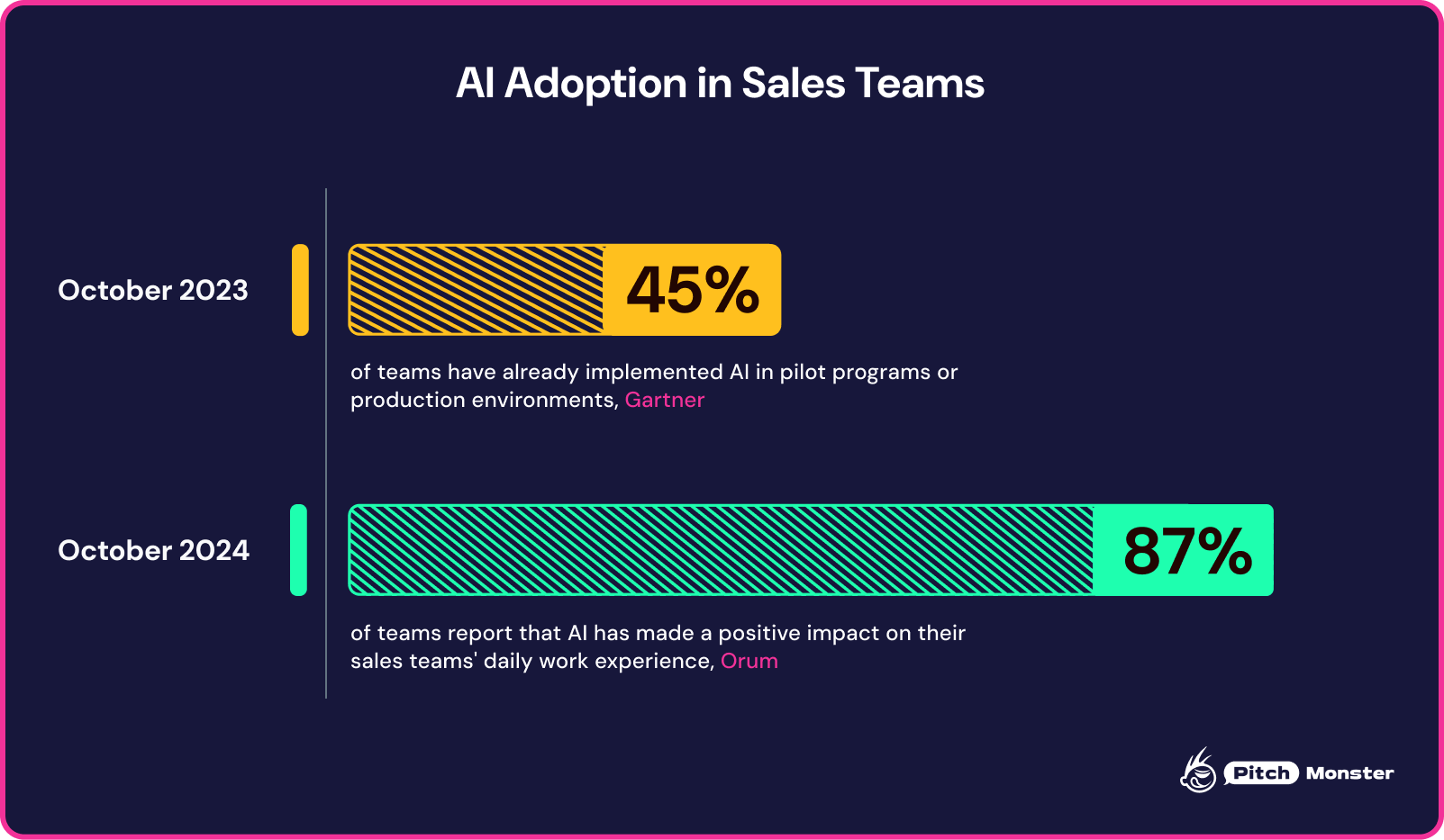
AI adoption across sales is no longer a pilot experiment. Gartner found that 55% of organizations were already piloting or running generative AI, and adoption has only grown since.
The point below is not to push specific tools. Treat each one as a use case, and explore several vendors to find your fit. This table maps the four categories where AI earns its keep in a sales process.
AI category | The job it does | Example tools | Best-fit stage |
|---|---|---|---|
AI in the CRM | Natural-language search, pattern spotting, plain-language reports | Salesforce Einstein, HubSpot AI | Daily pipeline work |
AI in prospecting | List building, outreach, and meeting booking at scale | Humantic AI, AI SDR tools | Top of funnel, smaller deals |
Conversation analysis | Recording, scoring, and trend insights across calls | Gong, Chorus, Clari | Coaching and forecasting |
Writing tools | Drafting and polishing emails and messages | Lavender, Grammarly | Outreach and follow-up |
The sections below show each category in action so you can see the use case before you shop.
AI + CRM = $?
The CRM is where reps spend most of the day, so it is the highest-value place to add AI. Three shifts stand out, starting with search.
Remember digging through your CRM just to find when you last talked to a champion? With AI you can search the way you actually think, asking "When did Jane from Acme last reply to our proposal?" or "What feedback did we get on pricing from Tech Corp?"
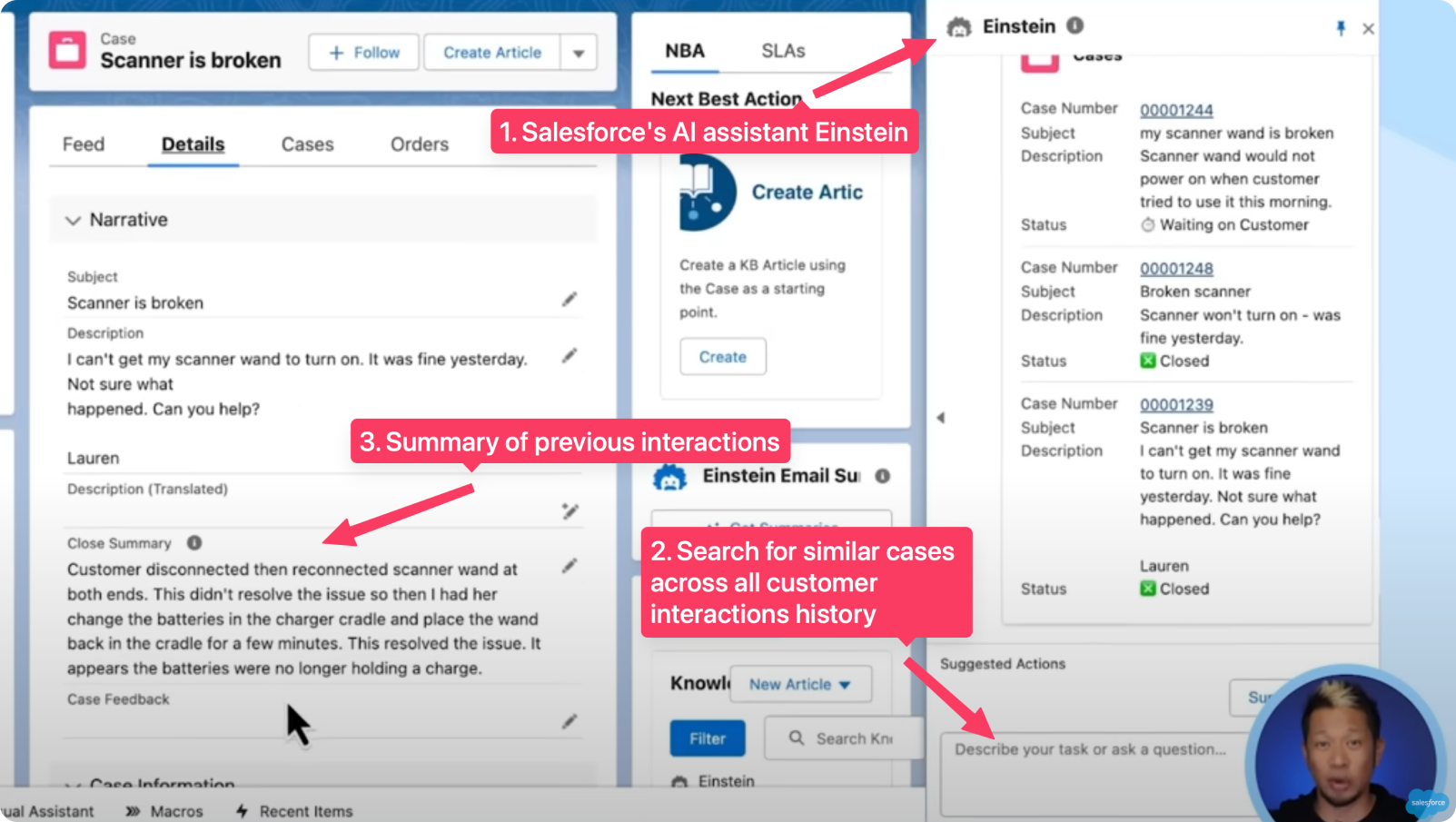
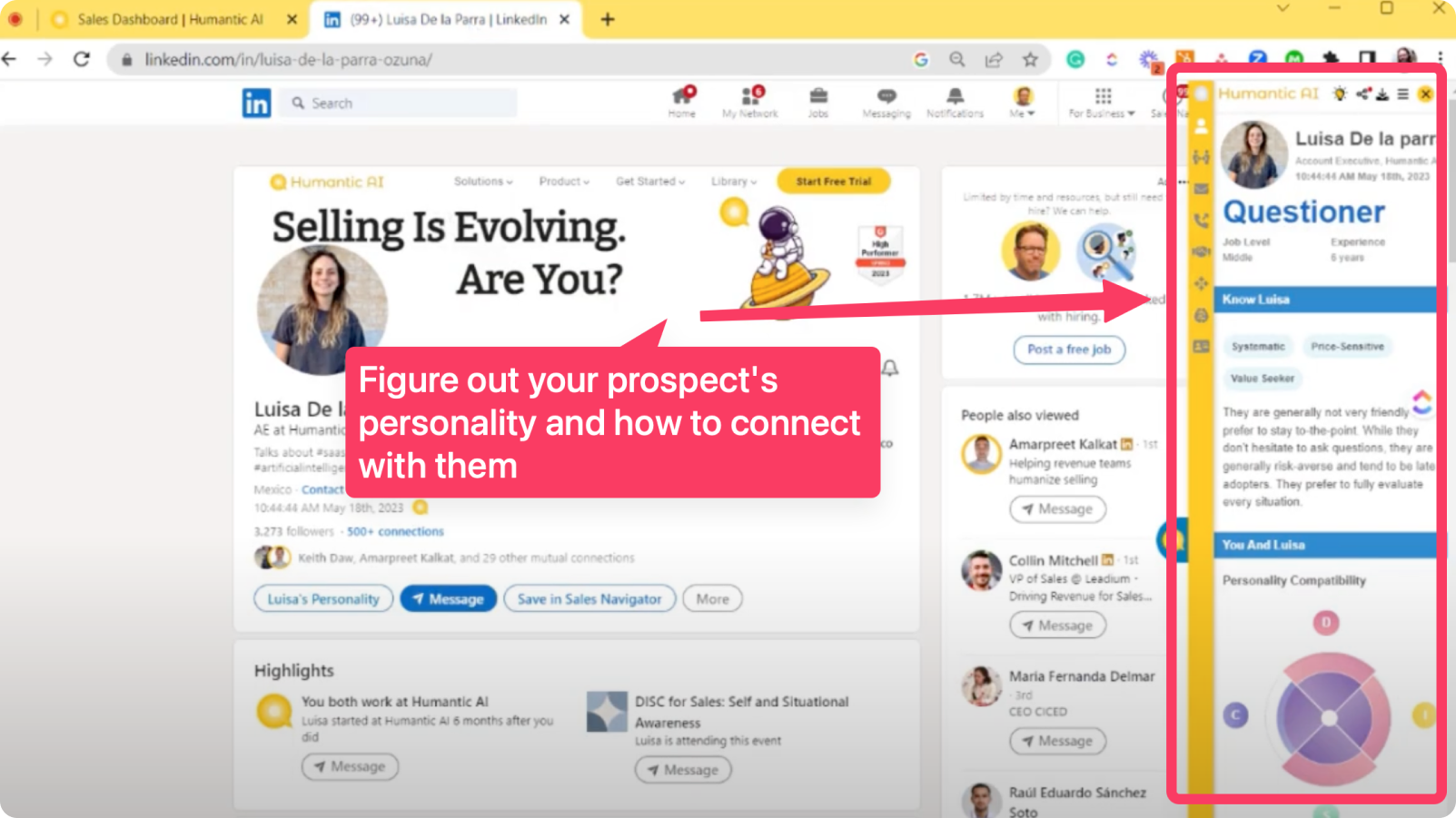
The second shift is pattern spotting. As you log more conversations and deals, the system starts surfacing when buyers tend to decide, which features they care about most, and how they feel about your product. Tools like Humantic AI go further and profile a prospect from their public footprint to predict how they will respond.
The third shift is reporting. Skip the hours of custom report building, and just ask "Show me all deals over $50K that went cold in Q4, grouped by rep" or "Give me a pipeline forecast for enterprise accounts, excluding renewals." Here is that kind of prompt in action inside HubSpot:
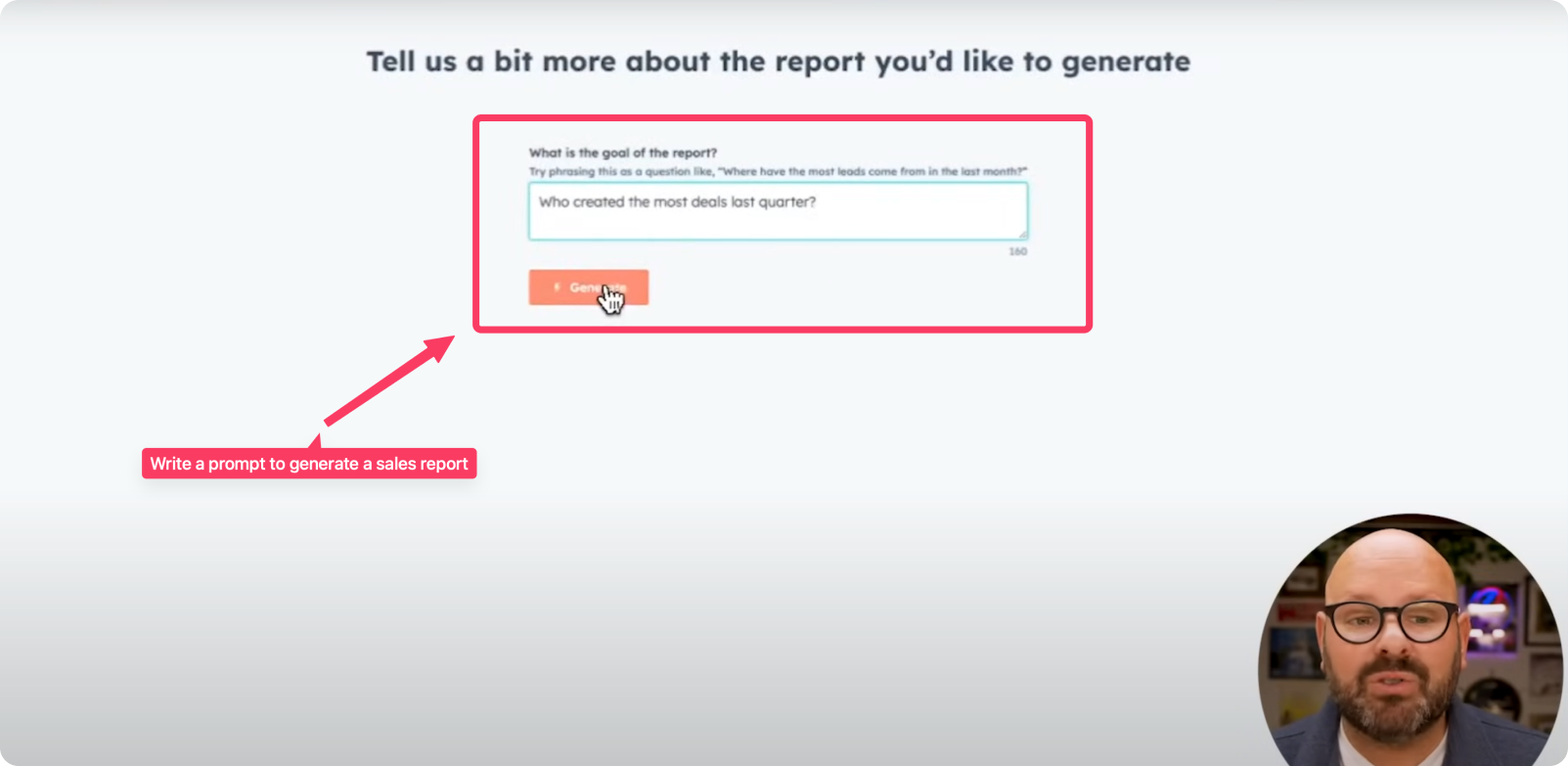
And the visual output it returns:
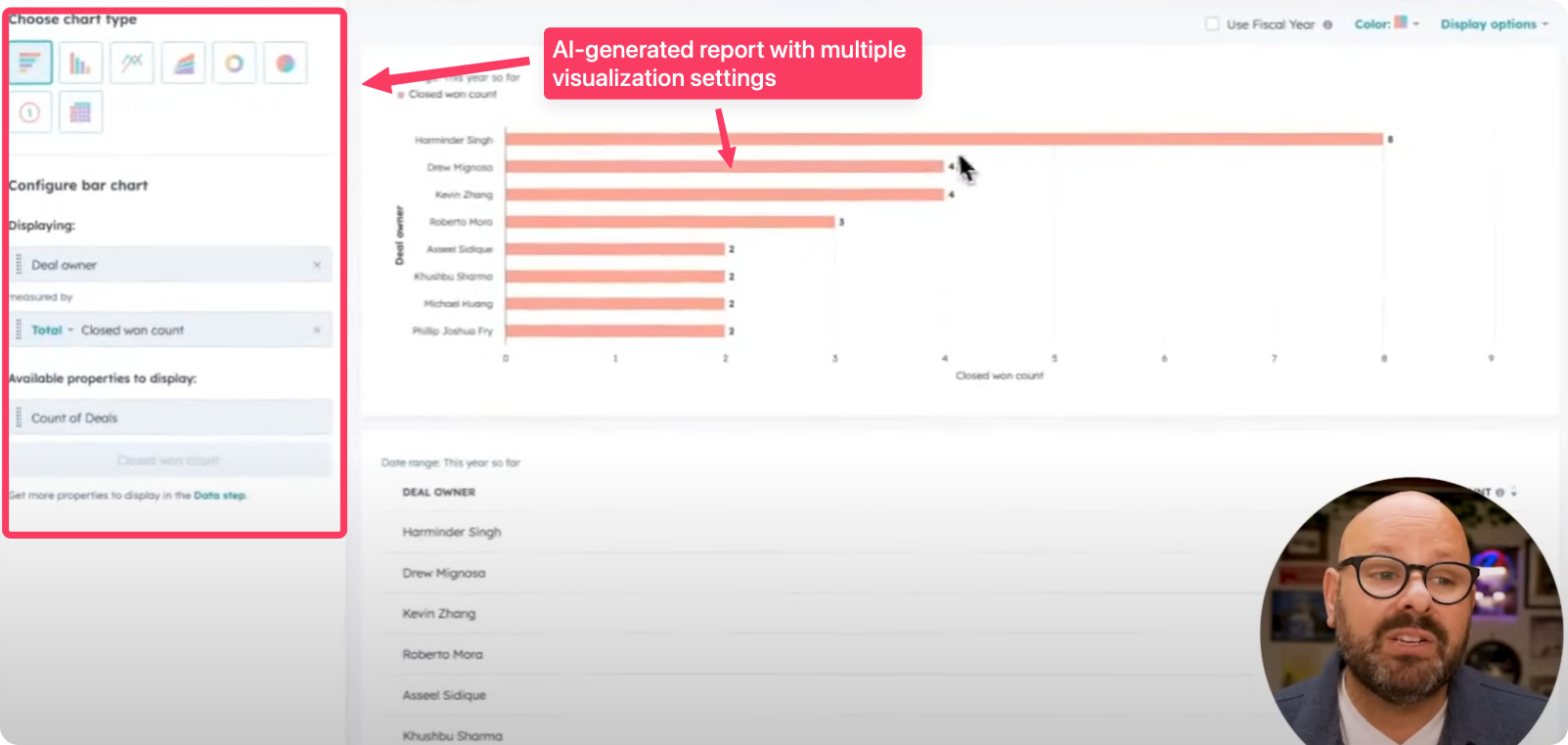
Whether you are exploring AI features in your current system or looking at an AI-native CRM, this is your chance to say goodbye to report-building headaches and give that time back to reps.
AI in prospecting
Prospecting is the part reps complain about most. 40% of salespeople say it is harder than qualifying and closing, because the research, campaign building, and follow-ups eat up hours. AI is well suited to those repetitive parts.
An AI SDR can build a list, run outreach, and even chat with prospects to book meetings, often for less than the cost of a full-time hire. You tell the tool about your business and what makes you different.
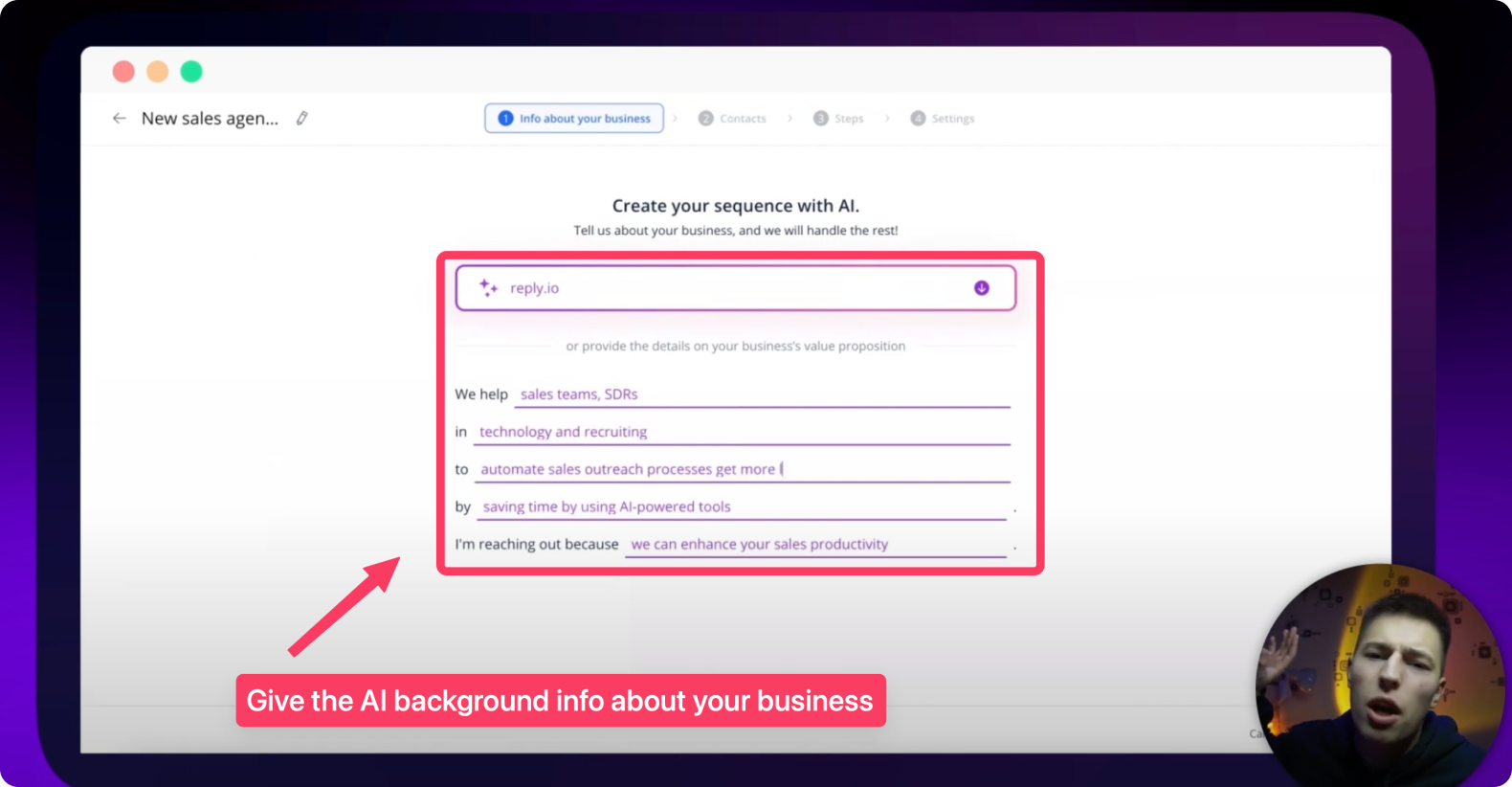
It then finds prospects who fit, with filters much like the ones you already use in a sales-navigator tool.
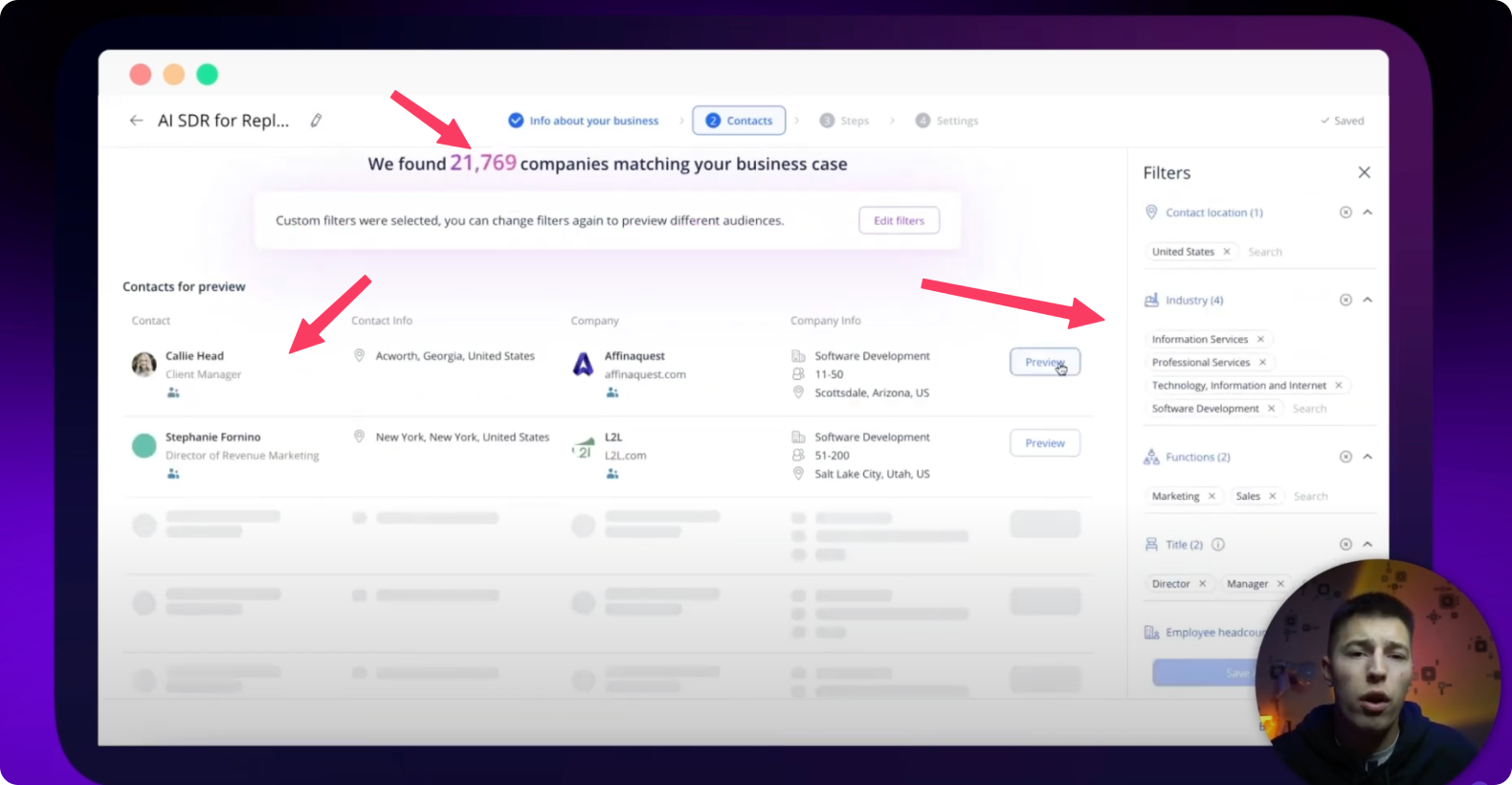
Finally it drafts personalized messages and follow-ups to reach those companies.
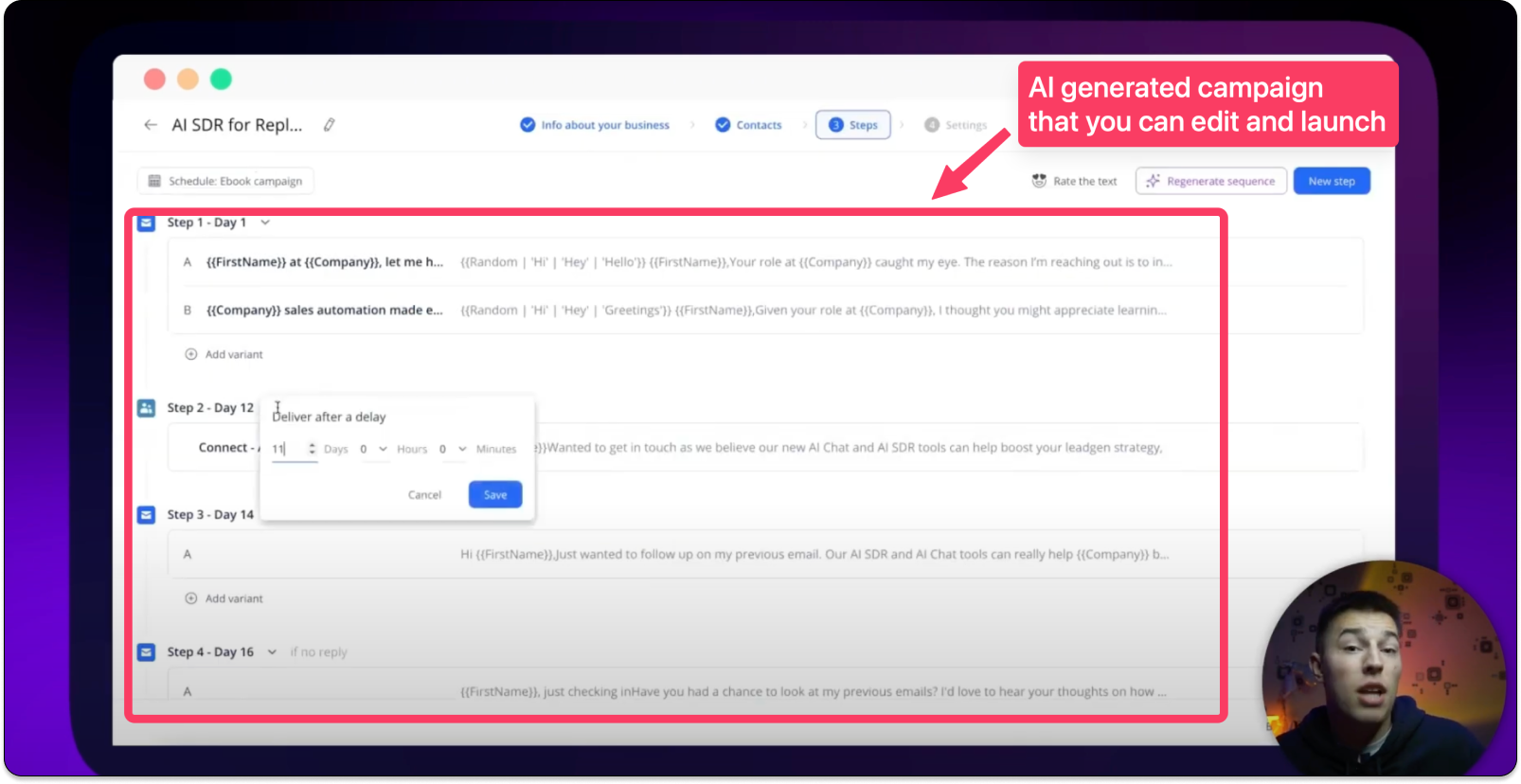
For big-ticket deals, keep a human in the loop, because personalization matters most there. But for smaller contracts under $10K to $15K, an AI assistant can handle routine outreach while your team focuses on high-value accounts and fills the calendar in a good way.
Conversation recording and analysis
Analyzing calls and giving feedback eats hours too. You have probably heard the big names: Gong, Chorus (now part of ZoomInfo), and Clari. They record calls, analyze them, and give you a clear view of the pipeline. Expect a per-seat cost and longer contracts, plus a platform fee that does not shrink as your headcount does, which is a big part of what Gong actually costs. If your budget already covers one, you can lean on it hard.
Whichever brand you choose, the value is consistent. You get call recording and analysis scored against your methodology, so reps can see whether they listened well and handled objections. You get trend and performance insights that surface patterns in how reps talk and what customers actually say, which helps you shorten the cycle and sharpen value props.
And you get a way to share findings across teams. Sales can hand marketing the real objections and language buyers use, marketing can adjust campaigns in real time, and product hears feature requests straight from the field. That feedback loop is what turns a per-seat price into a company-wide return.
Not sure the company will pay for a conversation-intelligence tool yet? A common workaround is to wire up your own lightweight version. You can use Make.com to analyze call recordings and push the insights straight to Slack or email.
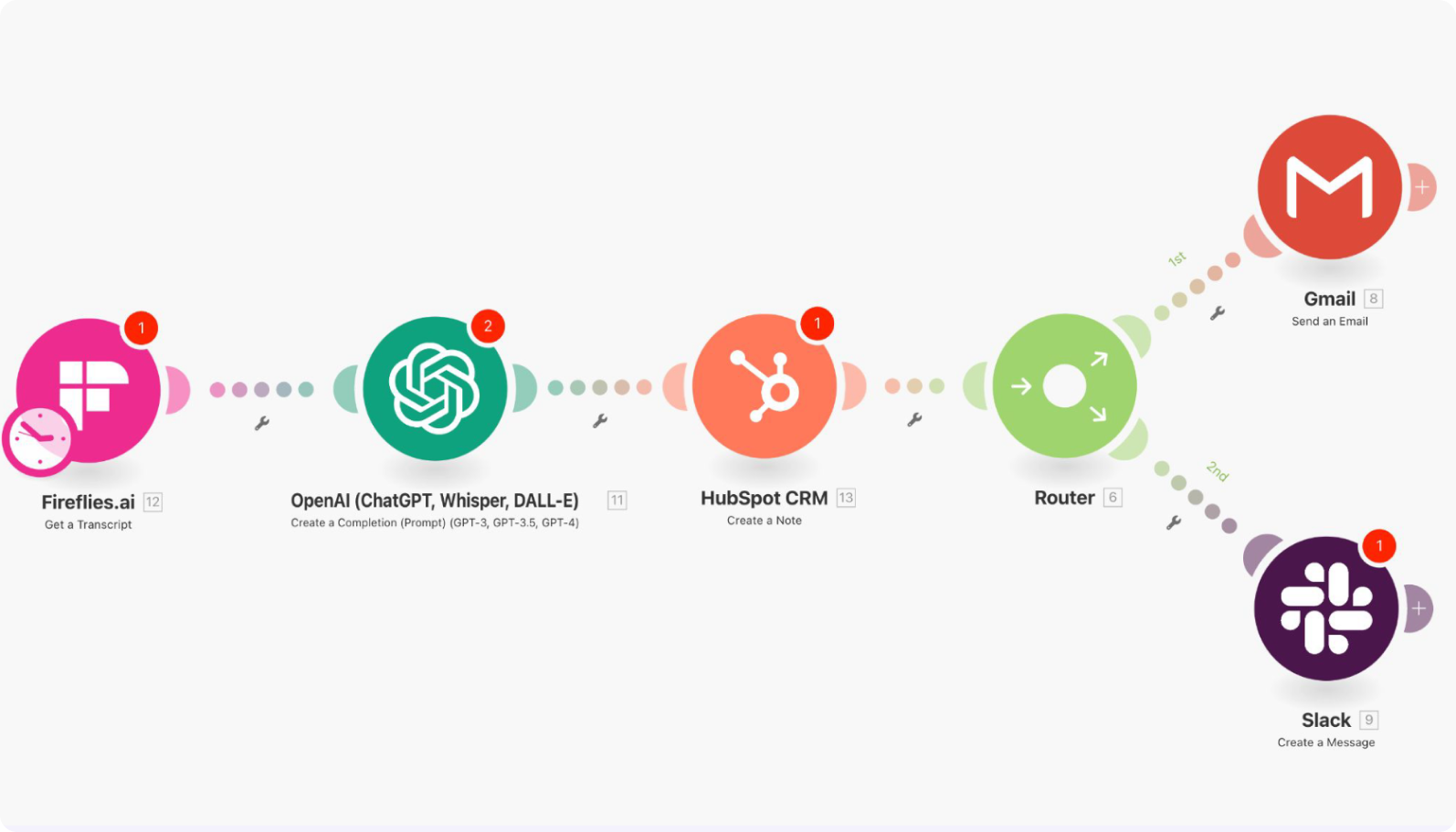
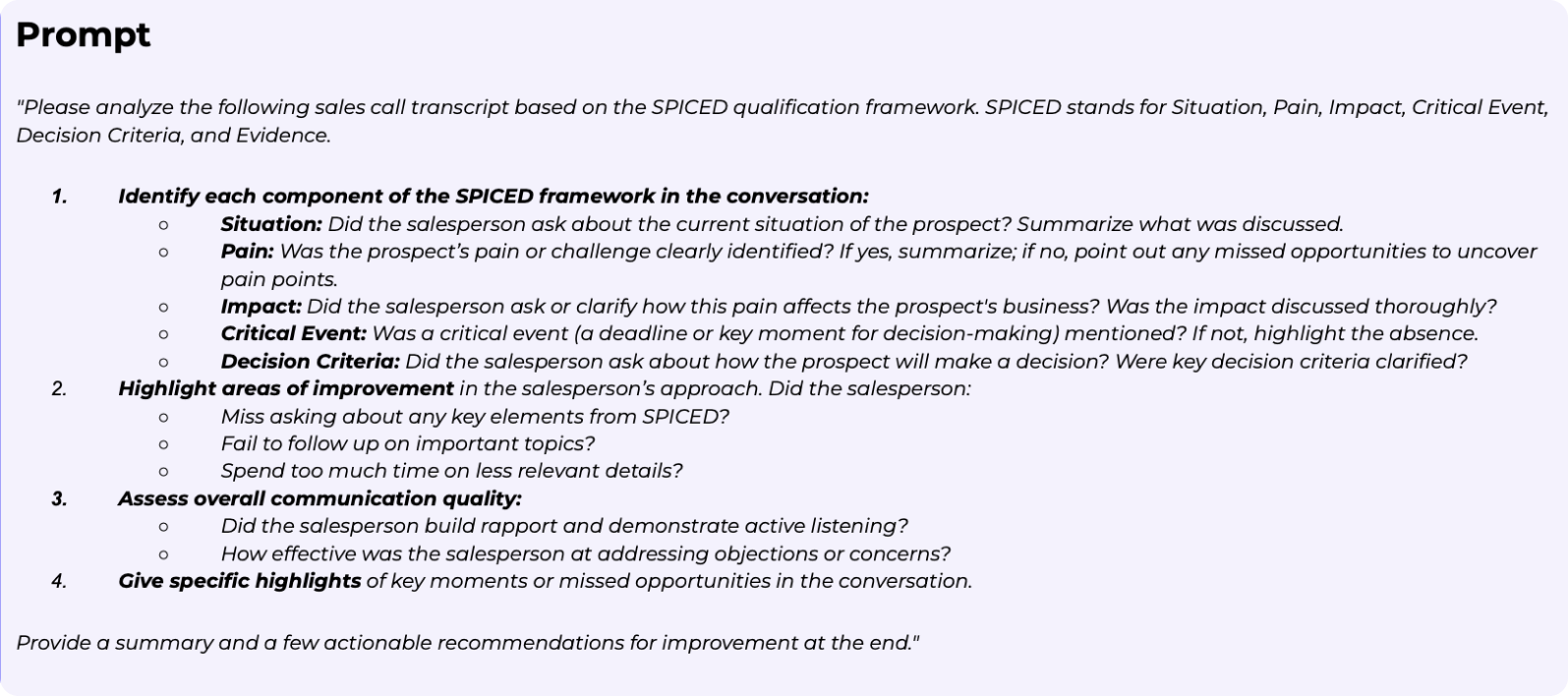
Pair that automation with a scoring prompt built on your framework. Here is one built on the SPICED qualification model, which you can adapt to whatever methodology you chose earlier.
This is also where PitchMonster fits beyond practice. Live Call Analysis scores real call recordings against the same scorecard as your role-plays, so you can see exactly where reps won, lost, or missed, then send them back to practice the moment they fumbled. That closes the loop between what happens on a real call and what a rep drills next. It is also why "improve sales team performance with call analysis" and "practice" belong in the same workflow, not two separate tools.
Writing tools
The funny thing about AI writing tools is how widely reps already use them, even the ones with an English degree. Many teams worry AI will make emails sound robotic, but you do not have to hand over the whole draft. Use it to brainstorm and polish, and keep your own voice on top.
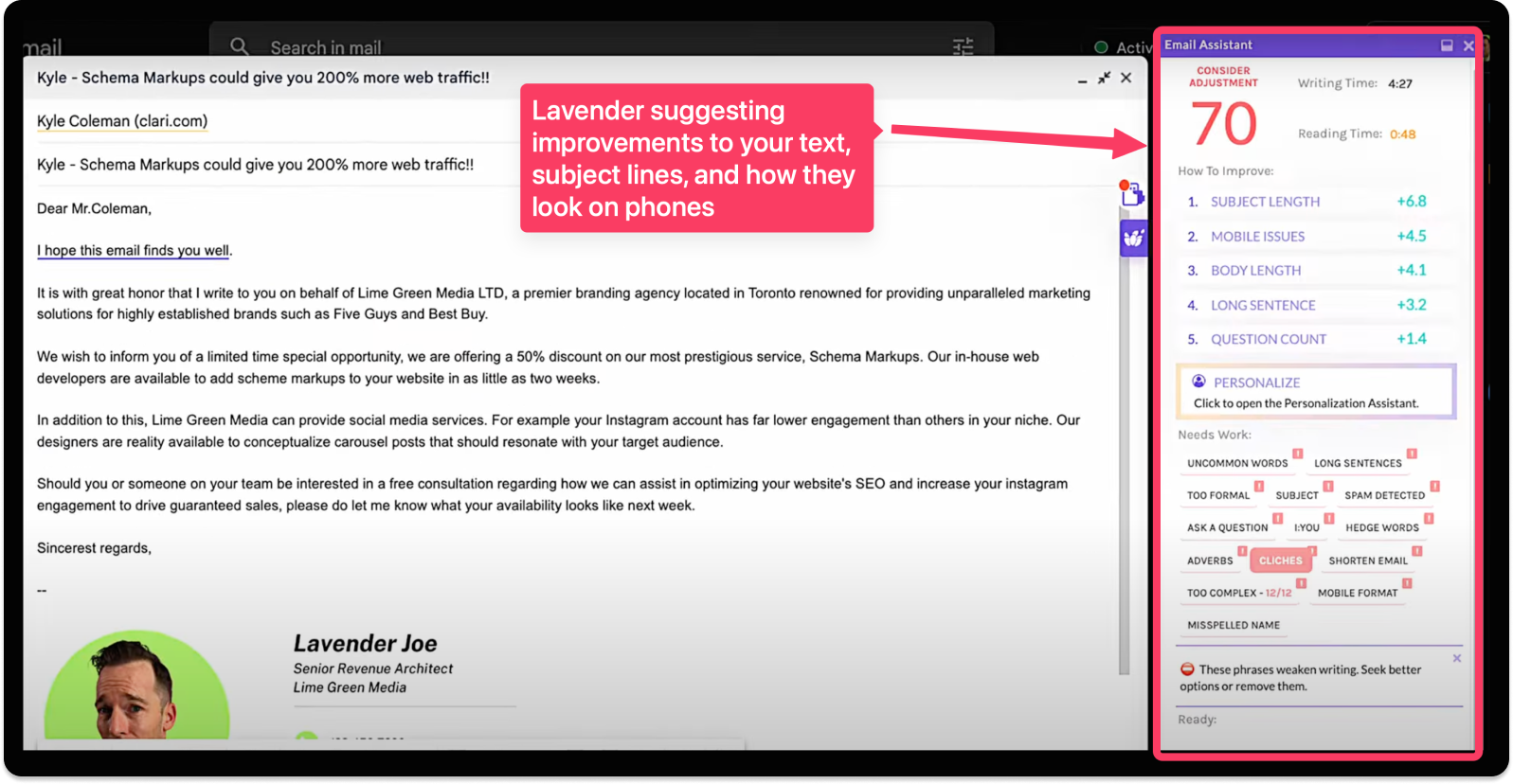
Tools worth a look include Lavender, which scores and coaches emails as you write, and Grammarly for cleanup. The rule is the same across all of them: let AI remove the busywork, not the judgment. Tools covered. But what about the most important part of building a high-performing team?
Hire the right salespeople
No strategy to improve sales team performance matters more than who you put on the team, because the wrong hire can undo every other change you make. As one of our investors told us: get great people onboard and expect great things to happen.
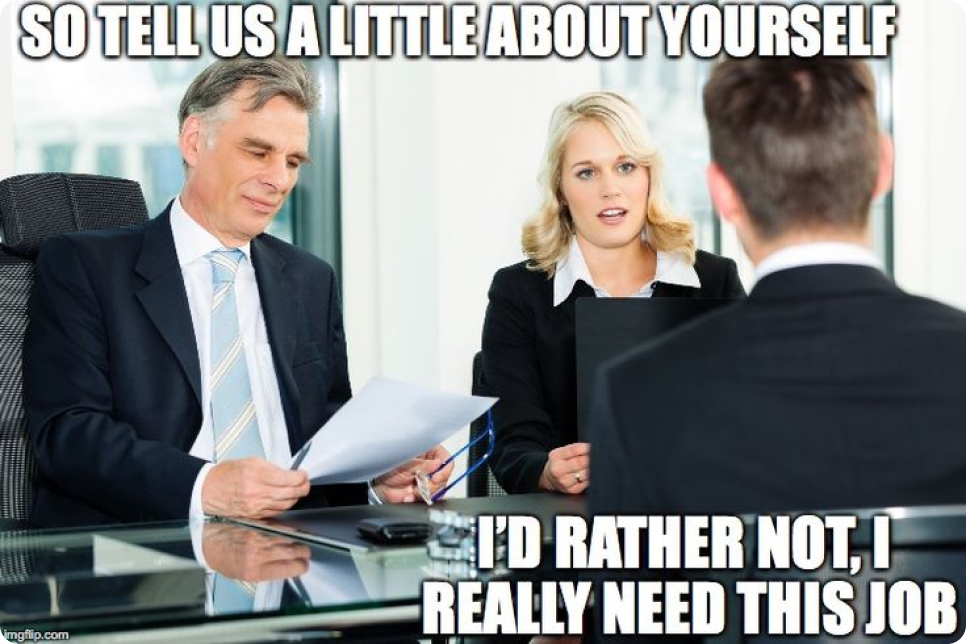
Here is the trap: we hire people who are great at selling themselves and expect the same on the job. It does not always translate. Closing a deal and being an employee are different games. When a rep closes, other teams handle satisfaction; as an employer, you live with that rep's skills and habits every day. So how do you spot someone who will actually perform? Two interview approaches help: the crowd-favorite STAR method and Mark Roberge's hiring formula, from the leader who helped grow HubSpot from zero to $100M.
The STAR technique
If you have not used STAR before, bookmark it for your next interview. It digs into how candidates handled real situations, not how they say they would.
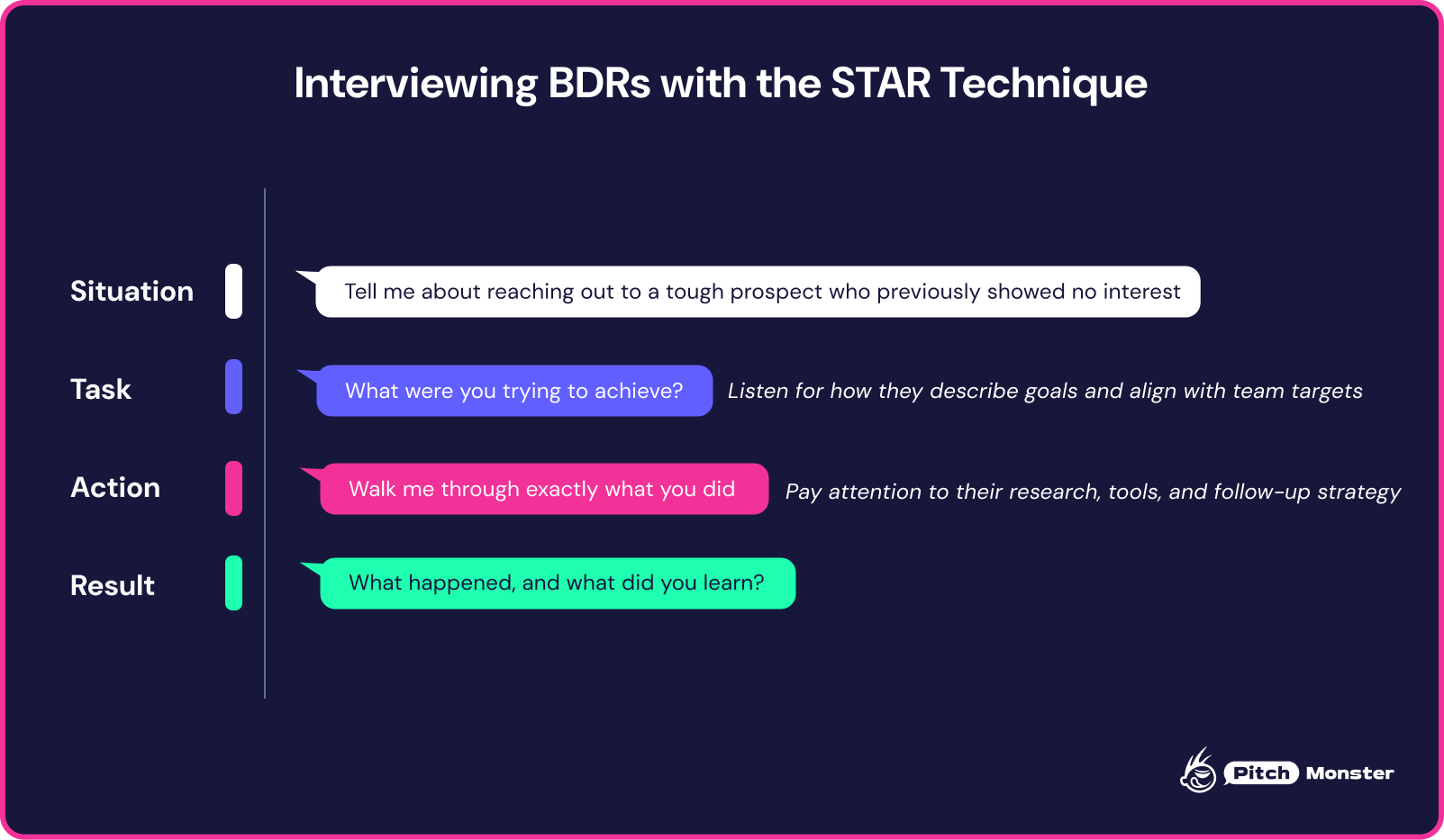
It covers four areas:
- Situation: the full who, what, when, and where
- Task: what their sales goals were
- Action: how they solved it, where the real insight lives
- Result: what they achieved, with numbers
In a BDR interview, that sounds like: "Tell me about reaching out to a tough prospect who had shown no interest." Then "What were you trying to achieve?", "Walk me through exactly what you did," and "What happened, and what did you learn?" Listen for how they describe goals, their research methods, and their follow-up. You can quickly hear whether someone is speaking from experience or improvising on the spot.
STAR is great for uncovering behavior patterns. But how do you compare candidates objectively? That is where a scorecard helps.
Sales hiring formula by Mark Roberge
In his early HubSpot days, Mark Roberge narrowed sales success down to five traits: coachability, curiosity, prior success, intelligence, and work ethic. He built a weighted interview scorecard around them to predict performance.
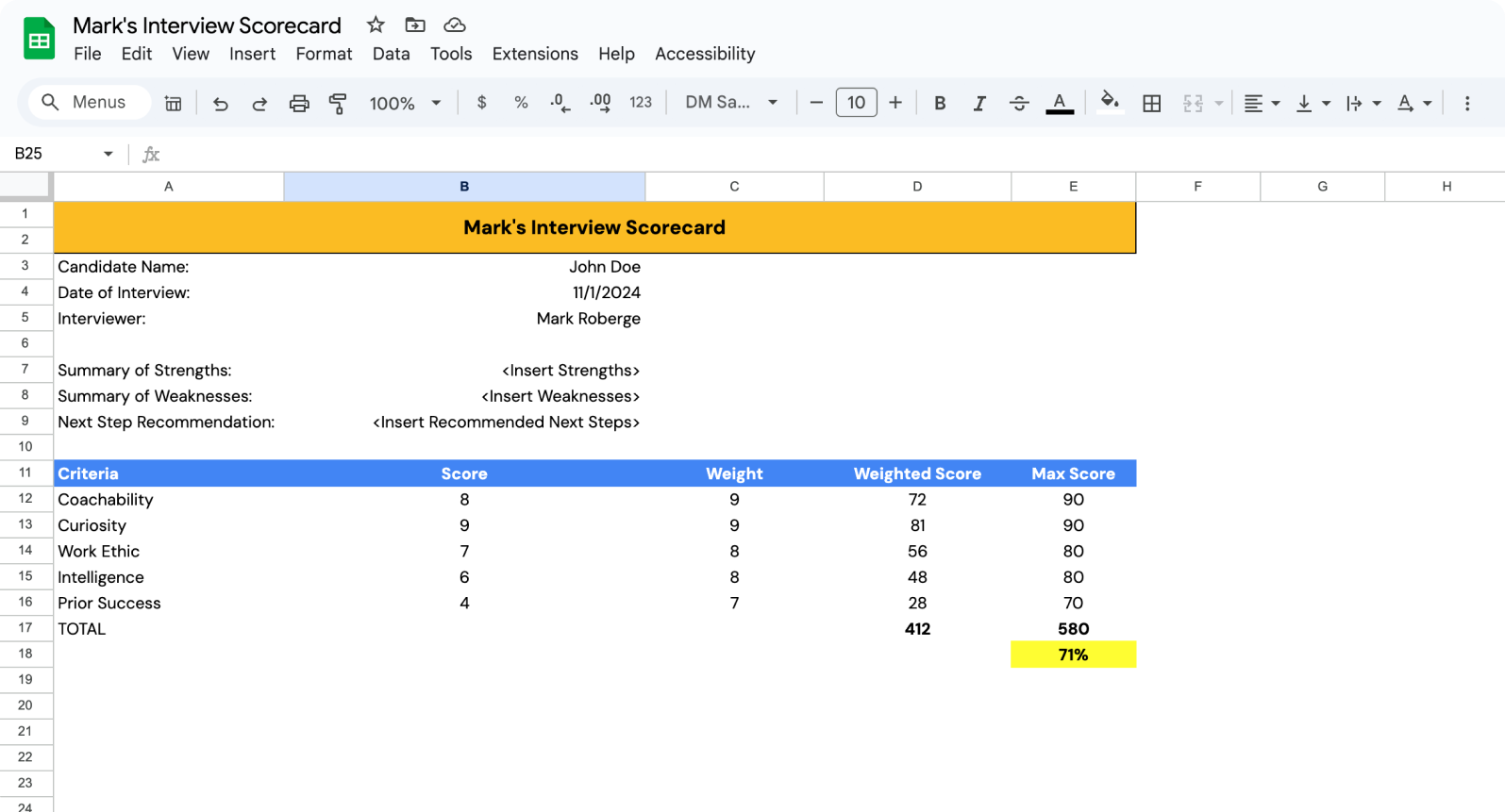
You can rebuild that scorecard in seconds. Paste a screenshot of it into an AI tool with this prompt:
Help me create a spreadsheet scorecard template I can copy into Google Sheets or Excel. Use tab or comma-separated values for easy pasting, include the columns and headers from the visual reference, and include all formulas in a separate section. Visual reference: [attach the image of the scorecard]
Here is how to assess each trait during the interview. For coachability, run a short role-play, ask the candidate to self-evaluate and suggest improvements, then watch how they apply your feedback on a second try. An AI role-play after the interview reinforces the read.
For curiosity, track the quality of their questions across the whole process, during rapport building, the role-play, and the job discussion. Sharp questions signal genuine interest in understanding customer needs. For prior success, look for top-decile results in any field, sales or not, from sports to side projects. Roberge suggests finding people who consistently land in the top 10% of whatever they do.
For intelligence, give them industry material before the interview and see how well they can explain it back, the same way they would educate a customer. For work ethic, watch their manners, response times, and effort on assignments, then reference-check with past managers. For deeper frameworks on compensation, management, and running sales experiments, Roberge's book is worth the read.
Peer-to-peer training and coaching
Nothing drives a team like reps sharing what works with each other. Once you have hired well, peer-to-peer coaching turns individual wins into team habits, and most of it costs you almost nothing to start. Here are four activities you can run this week.
Call (meeting) shadowing
Most leaders shadow new reps occasionally. Fewer do it across the whole team on a schedule, which is where the real cross-pollination happens. Build shadowing pairs with an AI assistant: feed it your reps' names and ask for matchups where each rep plays observer once and call leader once, with no duplicate pairings.
Create a call shadowing schedule table optimized for Google Sheets. Sales team members: [insert rep names]. Requirements: each rep appears exactly twice, once as Call Leader and once as Observer, with no duplicate pairings. Format as a clear table with Date/Time slot, Call Leader, Observer, and a Status/Notes column, using tabs or commas for easy spreadsheet pasting.
Here is the kind of schedule it generates:
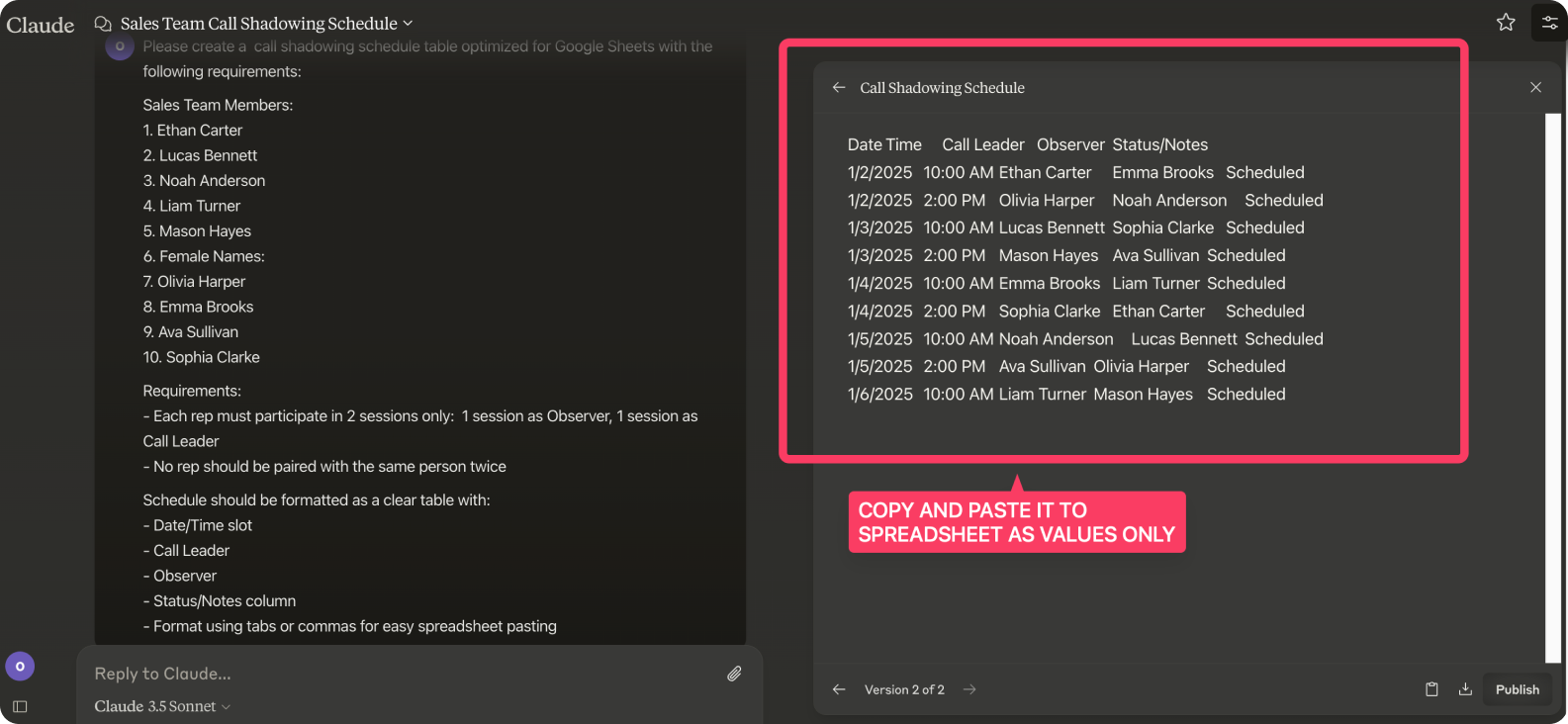
From there the loop is simple: observers take notes on the call, share feedback and discuss key moments with the rep, post the best insights in your team channel if people are comfortable with public feedback, then repeat. Random matchups keep it fresh, and the regular cadence is what lifts performance.
Deal roundtables
Business clubs do this brilliantly. Entrepreneurs share tough cases while everyone else brainstorms, with no objections, just notes and fresh perspectives.
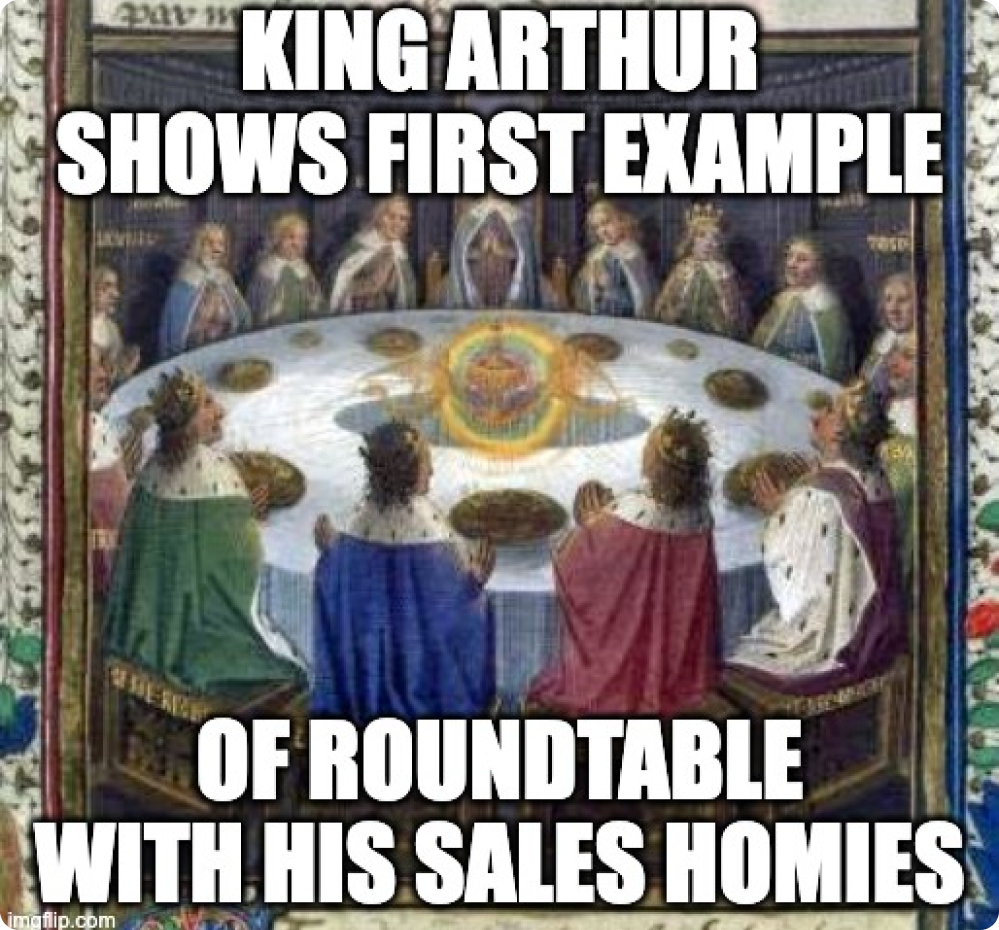
Bring it to your sales team. Run a weekly 45-minute session where one or two reps present a live deal: a quick account overview, the current challenge, and the next steps and why they matter. Give everyone five quiet minutes to think before sharing ideas. These collective sessions change how a team handles big accounts and tricky closes.
Competitor watch
What keeps salespeople up at night? Competitors. Each rep knows some bits, such as product updates, pricing changes, and marketing moves that steal deals. The trick is to pool that knowledge and update your battlecards fast.
Run a roundtable every two to four weeks for about 60 minutes. Collect competitor moves from all reps, group them by product, marketing, and pricing, and brainstorm responses. If you meet online, record and transcribe the session, let AI structure the notes, then update your playbooks and battlecards and share them with marketing and product.
Bonus: 5-minute huddles
One of the best practices I ever saw came from an early sales leader of mine: the 5-minute huddle. Twice a week, before call time started, one rep shared a quick hack with the team. It could be a subject line, an upsell tactic, or a discovery question.
It was far more valuable than doom-scrolling for random tips online, and I picked up hacks that genuinely lifted my numbers. With minimal effort from you, that is a continuous coaching machine generating insights and materials. Next up, the piece that holds it all together: culture.
Build a high-performing culture
Culture is not something you install like a tool. It takes time, and it is built from everything you do. Most sales managers would take a team with a great culture over one that is merely hitting numbers, because a strong culture drives better performance over the long run and helps reps win consistently.
Motivation and gamification
Crack motivation and you have cracked a big part of performance. Two truths about sales incentives are hard to deny: reps are driven by money, and they are competitive by nature.
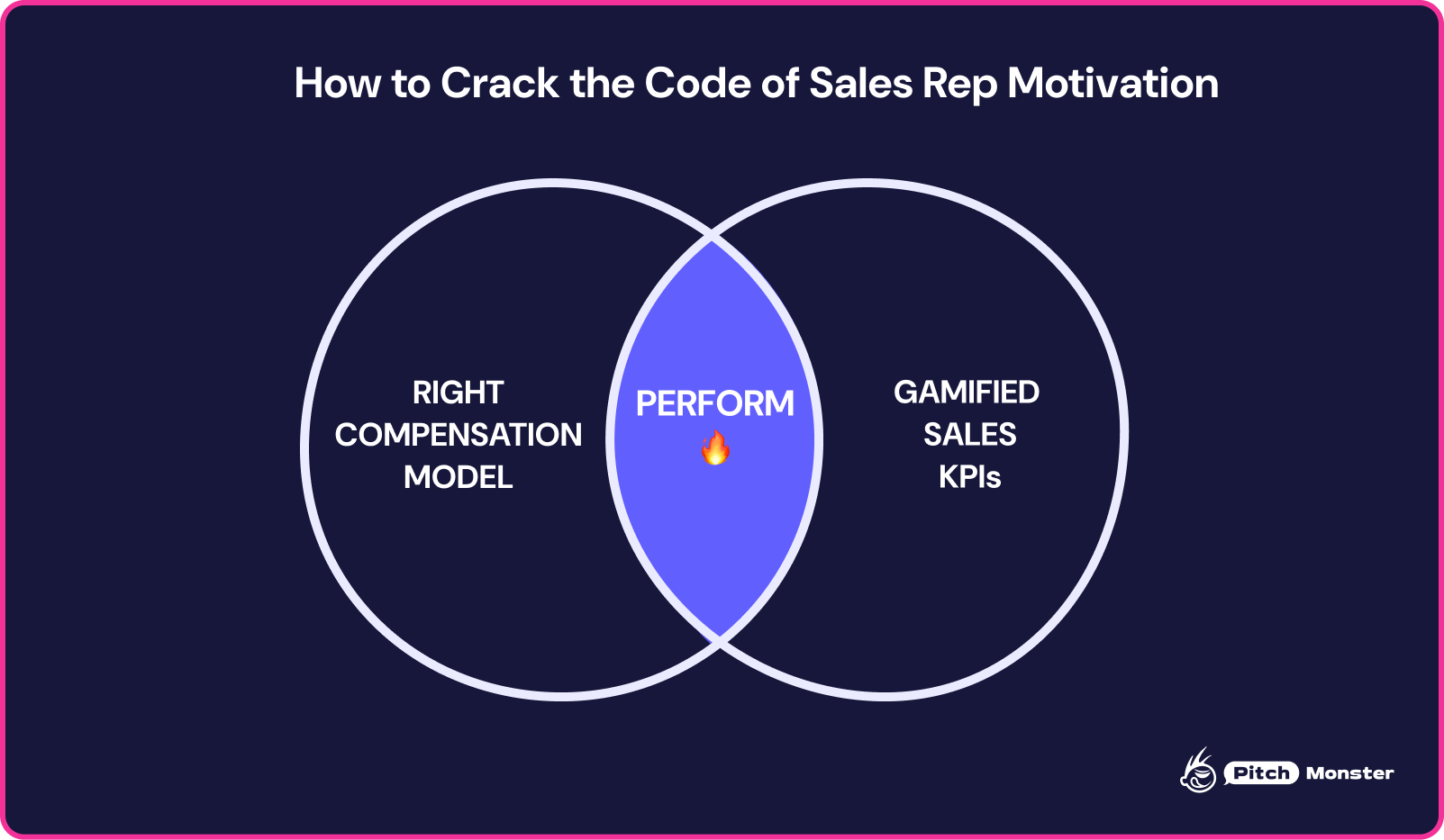
Gamifying your KPIs taps both. Here is a real example I heard at a sales conference from Ilya, a Head of Sales in a crowded EdTech market. He added prizes to the regular comp plan and ran contests over several quarters, where the team could win a new iPhone, a PlayStation, a high-end office chair, a training trip to Toronto, a MacBook, or a vacation for two.
Reps earned points by hitting targets and outperforming teammates: 3 points for a calls target, 5 for invoice goals, 20 for revenue, and 30 for being the month's top performer. Everyone's progress was tracked on a shared scoreboard.
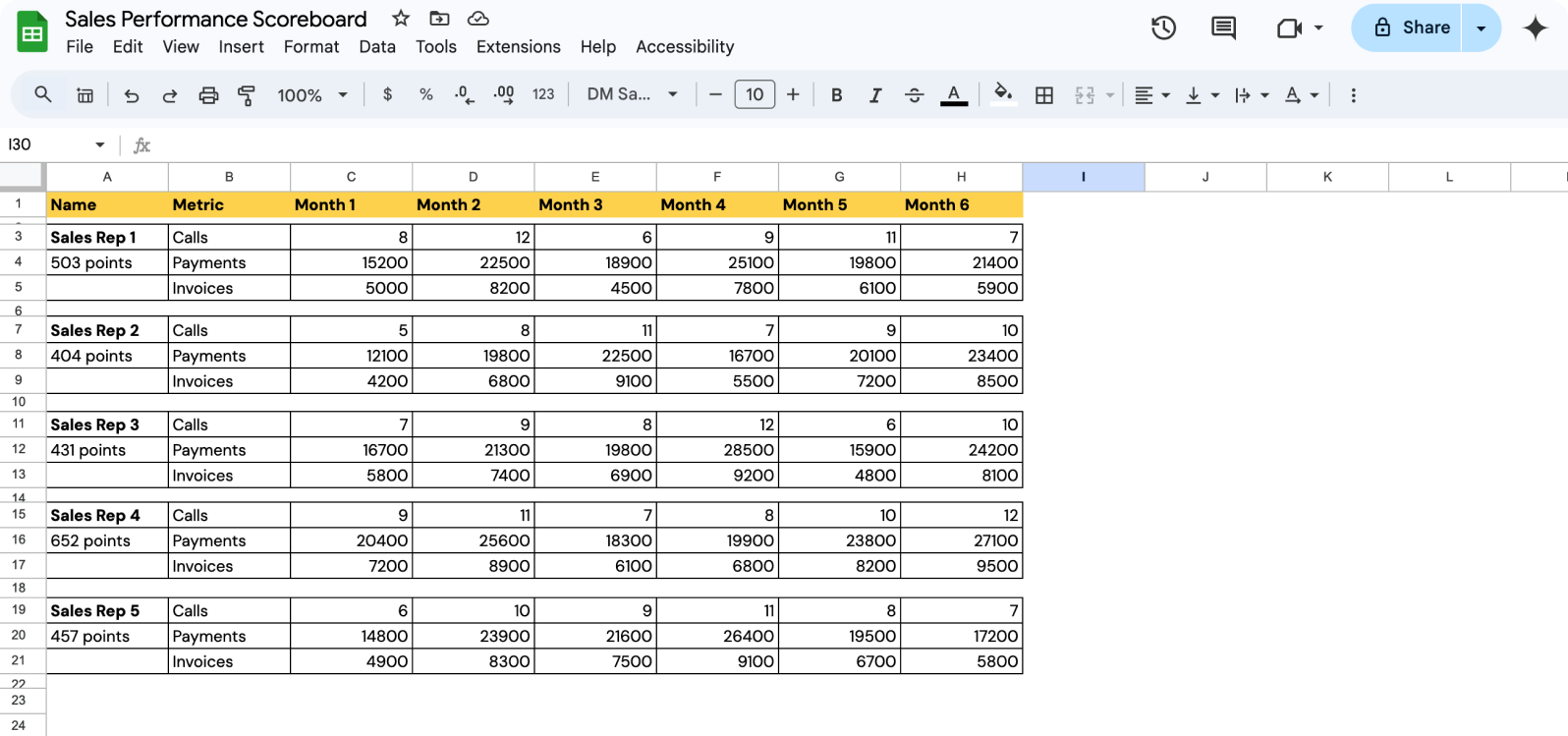
Revenue rose 26% over that stretch. Not a bad experiment. On the compensation structure itself, there is no single right answer, because it depends on your team structure, business model, and deal size.
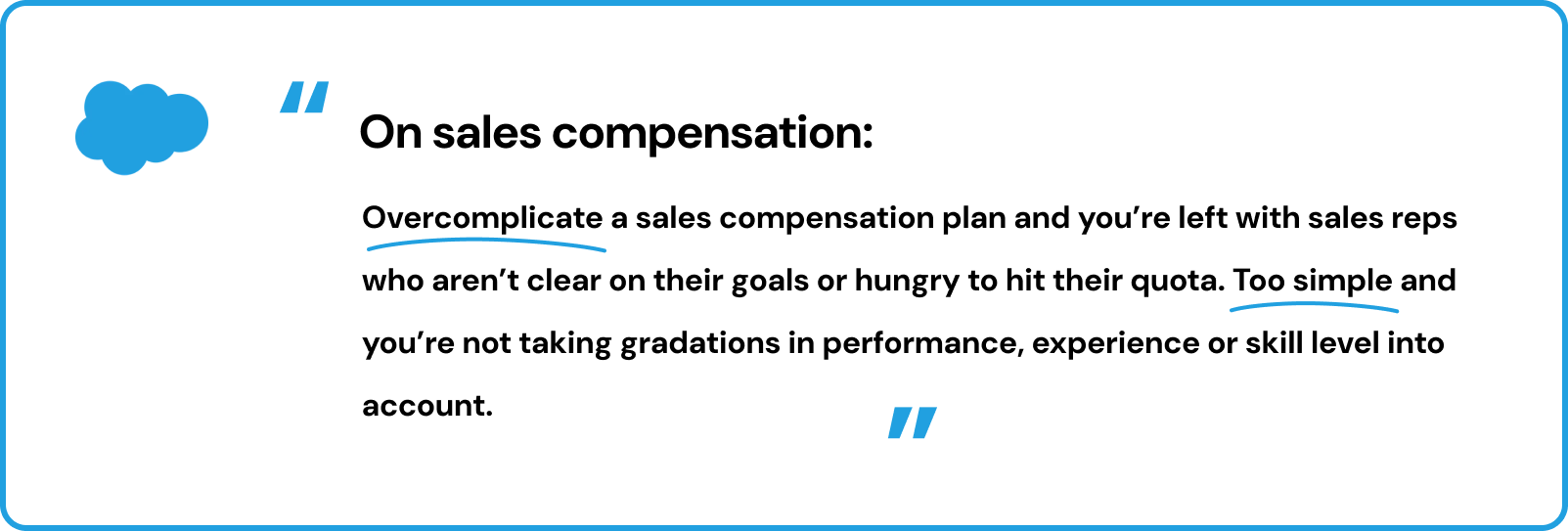
Salesforce makes the point well: a comp plan has to balance motivation with what the business can sustain. Build yours deliberately rather than copying a template, and revisit it as the team and deal sizes change.
One-on-one meetings with each team member
One-on-ones surface what dashboards cannot: the reason behind underperformance, personal challenges, hidden strengths, and fresh ideas. Reps also open up more when they see the meeting as a safe space rather than an audit.
Try this frame for your next session. Spend the first 20 minutes on a personal check-in and progress review, the next 20 on deal brainstorming, and the following 10 getting honest feedback about team and company needs. Wrap up by setting action items and next steps. Record online sessions with a notetaker like Otter.ai, let AI structure the notes, share them with the rep, and track follow-through.
Building team values
Your values show up in everything: decision-making, work ethic, and team relationships. They are the core of your culture. If you have not defined yours yet, run a simple exercise. Book a distraction-free hour, have each rep pick six core values that guide their daily decisions, build a final list together, and make it visible in the office or in review slides with team photos.
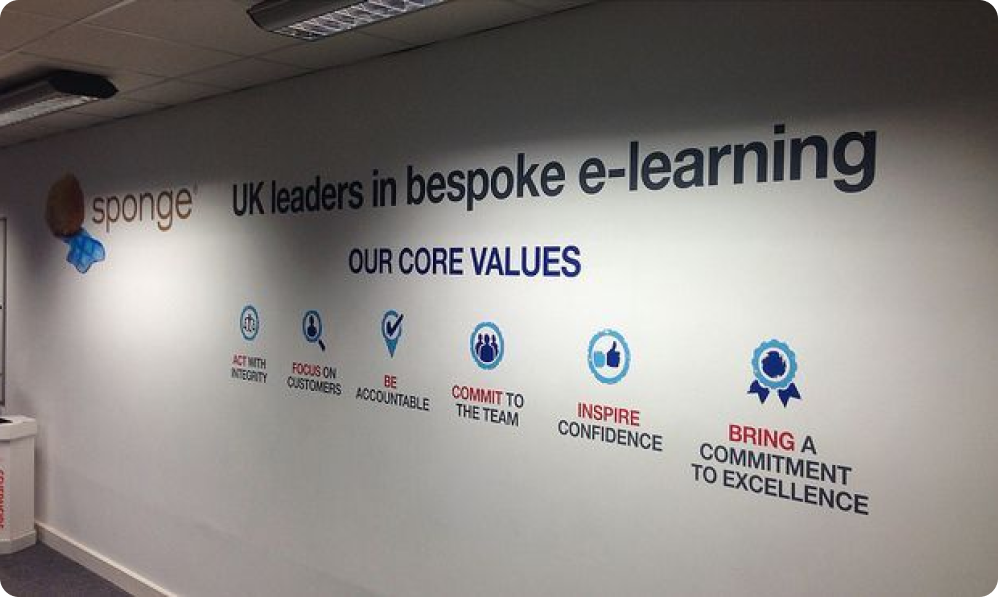
Performance is a mix of training, tools, methodology, and culture. But it starts with the people you hire and how you coach them, and that is exactly the loop this guide is built to help you run. If practice and coaching are the gap you feel most, that is the piece PitchMonster is built for, and you can see it on your own scenarios with a quick demo.
FAQ
How do you improve sales team performance?
Improve sales team performance by measuring the right metrics first, then fixing one dimension at a time: how well reps sell (quota, win rate, deal size), how long deals take (sales cycle), and how much effort each outcome costs (activity and stage conversions). The strategies that move those numbers are sales enablement, consistent role-play, a clear methodology, AI for busywork, trait-based hiring, and peer coaching backed by culture.
How do you measure sales team performance?
Measure across three dimensions. How well: quota attainment, win rate, average deal size, revenue per rep, upsell rate, and booked appointments. Time: average sales cycle length. Effort: number of calls, demos, and meetings per outcome, plus stage-to-stage conversion ratios. Track them on one dashboard so you can see which dimension is dragging results down.
What is the fastest way to improve sales team performance?
The fastest lever is consistent practice. People forget 70 to 80% of new information within two weeks, so training that is not rehearsed rarely sticks. Regular role-play, especially AI role-play that runs on demand, builds the muscle memory that shows up on real calls and shortens new-hire ramp time without adding manager hours.
How do you build a high performing sales team?
You build a high performing sales team by hiring for traits over CVs, giving reps a shared methodology and content they can find, making practice a weekly habit, and coaching against the same scorecard every time. Add a culture that rewards both results and learning, and the wins start to repeat instead of depending on one or two stars.
What is the 3-3-3 rule in sales?
The 3-3-3 rule is a simple prospecting rhythm: spend about three minutes researching a prospect, use three touchpoints across channels like phone, email, and social, and follow up three times before you move on. It keeps reps consistent without over-investing time in any single lead early in the funnel.
What is the 30-60-90 rule in sales?
The 30-60-90 rule is a ramp plan for a new sales hire. In the first 30 days they learn the product, market, and tools. By 60 days they are shadowing calls and running early-stage conversations. By 90 days they own a pipeline and hit early activity or revenue targets. It sets clear milestones so onboarding is measurable.
What are the 5 C's of sales?
The 5 C's of sales are a quick checklist for a strong seller: Curiosity to understand the buyer's real situation, Credibility to be worth trusting, Clarity in how you explain value, Commitment to following through, and Closing the ability to ask for the decision. Score reps against them in role-play, and you have a simple rubric for where each one needs work.
How to deal with burnout among reps?
Watch for early signs like dropping energy and missed targets, then talk to the person directly. A one-on-one is your best tool: it surfaces whether the cause is workload, motivation, or something outside work, so you can adjust before performance slides further.
How to handle a struggling sales rep?
Start by finding which dimension is slipping on your metrics, then match the fix to the cause. Sometimes a rep needs more role-play reps or a shot of confidence; sometimes the goals were unclear. And occasionally the fit is simply wrong on both sides, which is worth naming honestly.
Are top-performing sales reps born or made?
Made, in almost every case, especially when it comes to consistent long-term results. Talent helps at the start, but the reps who keep performing are the ones who practice, take coaching, and refine their process, which is exactly what a strong system is designed to produce.