Sales enablement tools are software platforms that give B2B SaaS reps the content, training, coaching, and data they need to sell more consistently. They handle five jobs: managing sales content, running practice and role-play, building readiness through training, analyzing live calls, and turning CRM data into a reliable forecast. Most teams run two or three of these together rather than expecting one platform to do everything well.
This guide compares the 10 best sales enablement tools and platforms for B2B SaaS in 2026. You get a side-by-side table, a full write-up on what each tool is genuinely best for, how it is priced, and the segment it fits. The decision section at the end helps you pick which one to start with based on where your team is actually losing time.
If your gap is rep readiness rather than content management, our sales enablement solution covers that slice: practice, call scoring, and coaching.
What are sales enablement tools?
A sales enablement tool is software that helps reps prepare for, run, and learn from buyer conversations. The category spans content management systems that store and recommend the right collateral, practice tools that let reps rehearse before a live call, readiness platforms that build and certify skills, conversation intelligence that analyzes recorded calls, and forecasting tools that turn pipeline data into a defensible number.
The line between a "tool" and a "platform" is blurry. Vendors like Seismic and Highspot market themselves as full sales enablement platforms because reps live in them all day. A focused product such as an AI role-play trainer is usually called a tool. Buyers searching for either term tend to want the same shortlist, which is why this list mixes both.
For B2B SaaS specifically, the pressure is real. Quota attainment has slipped across the industry, and reps spend a large share of the week on tasks other than selling. The right enablement stack claws that time back. It automates busywork, surfaces the right content in the moment, and gets new hires productive before they burn real pipeline learning on live deals.
Team size changes the answer. A 10-rep SMB usually starts with a CRM and one focused tool, because a full enterprise suite is more platform than the team can adopt. A 50 to 300-rep mid-market SaaS org typically runs a CRM plus a content platform plus a practice layer, with someone who owns enablement to keep adoption up. That is the sweet spot this guide is built for, so each entry below notes the segment it fits best rather than pretending one tool suits everyone.
Capability map for B2B SaaS teams
Use this map before you compare vendors. It keeps the stack tied to jobs instead of letting every tool claim the whole category.
Capability | What it covers | Typical tools |
|---|---|---|
Content management | Decks, one-pagers, case studies, version control, and buyer rooms | Seismic, Highspot, Showpad |
Learning | Onboarding paths, lessons, quizzes, and completion gates | Mindtickle, Trainual-style LMS tools, Seismic learning |
Sales intelligence | Account data, contact data, lead scoring, and outreach context | Apollo.io, CRM data, enrichment tools |
Digital sales rooms | Shared buyer spaces, content engagement, and mutual action plans | Highspot, Seismic, Showpad |
AI coaching | Call review, pitch feedback, and role-play coaching | PitchMonster, Gong, Allego |
Rep readiness | Practice, scorecards, manager review, and readiness gates | PitchMonster, Mindtickle, Bigtincan |
For the practice lane, start with the sales role-playing scripts your reps already need to rehearse, then decide whether software should run and score them.
The five jobs sales enablement tools do
Every tool on this list does one of these jobs well. Knowing which job you need is the fastest way to a shortlist, because a content platform will not fix slow ramp and a forecasting tool will not make reps better on calls.
- Content and asset management. Store, govern, and recommend the right deck, one-pager, or case study by deal stage and persona. Seismic, Highspot, and Showpad lead here.
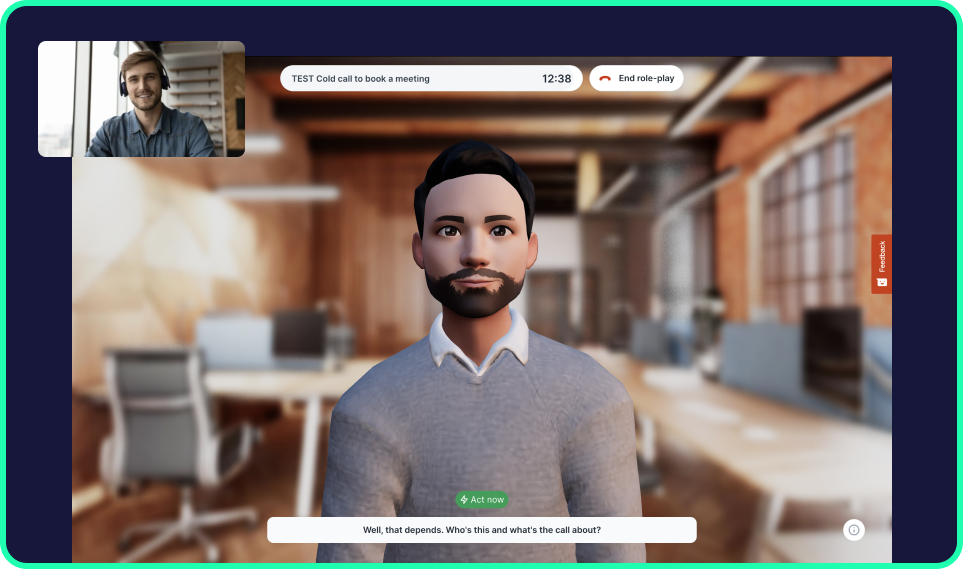
- Practice and role-play. Let reps rehearse cold calls, discovery, and demos against realistic AI buyers, then get coached before the real conversation. PitchMonster owns this job.
- Sales readiness and training. Onboard, certify, and upskill reps through structured learning paths and assessments. Mindtickle is the classic example.
- Conversation intelligence. Record, transcribe, and analyze live calls so managers coach from evidence, not memory. Gong is the standard.
- CRM and revenue data. Anchor the stack, route leads, and turn pipeline into a forecast. Salesforce and HubSpot anchor the CRM layer; Clari owns forecasting.
Most B2B SaaS teams pair a CRM with one content tool and one practice tool, then add call intelligence or forecasting as they scale. The order depends on which job is costing you the most deals right now.
Signs your B2B SaaS team needs a sales enablement tool
Spreadsheets and a shared drive work at five reps. They stop working the moment you hire, launch a new product, or open a new market. If a few of the signs below sound familiar, the manual approach is now the bottleneck.
- Ramp takes months, not weeks. New hires shadow calls and read docs, then still fumble their first real conversations. A practice layer lets them rehearse the exact moments they will face before they touch live pipeline.
- Reps cannot find the right deck. Sellers rebuild collateral or send outdated versions because nobody knows where the current one lives. Content management fixes findability and keeps everyone on brand-approved material.
- Coaching happens by memory. Managers give feedback based on what they half-remember from a ride-along, not what was actually said. Conversation intelligence puts the real call on the table.
- Messaging drifts across the team. Ten reps pitch the product ten different ways, and win rates swing with the seller, not the deal. Readiness and practice tools make the playbook consistent.
- Your forecast is a guess. Deals slip and the number surprises leadership every quarter. A revenue platform turns pipeline activity into something you can defend.
The pattern is the same across all five: the work no longer scales on human effort alone. The right tool automates the busywork and gives you data on what is actually happening, so you coach the gap instead of guessing at it. Which tool comes first depends on which sign is costing you the most, which is exactly what the decision section at the end walks through.
How we picked these tools
We work in this market every day, so this list reflects how these platforms are actually bought and used by B2B SaaS teams, not a scrape of vendor feature pages. We weighted each tool on four things that decide whether it earns a place in a real stack.
First, real market presence. Each tool shows up repeatedly across the ranking 2026 roundups, Gartner and G2 category reports, or buyer discussions, not just its own marketing. Second, a clear primary job, so the list spans content, practice, readiness, call intelligence, CRM, prospecting, and forecasting instead of ten near-identical content platforms.
Third, knowable pricing or an honest segment. Where a vendor publishes pricing, we cite it. Where pricing is custom-quote only, we say which company size it fits rather than invent a number. Fourth, fit for a 10 to 300-rep SaaS team, the sweet spot for this guide, with someone who owns training and onboarding.
Where a vendor reports customer outcomes, we attribute the claim to its source. We did not invent numbers, and figures we could not verify are described as reported customer results, not guarantees. G2 ratings are category scores as listed on G2 in mid-2026 and drift over time, so confirm the current figure before you buy.
The 10 best sales enablement tools compared
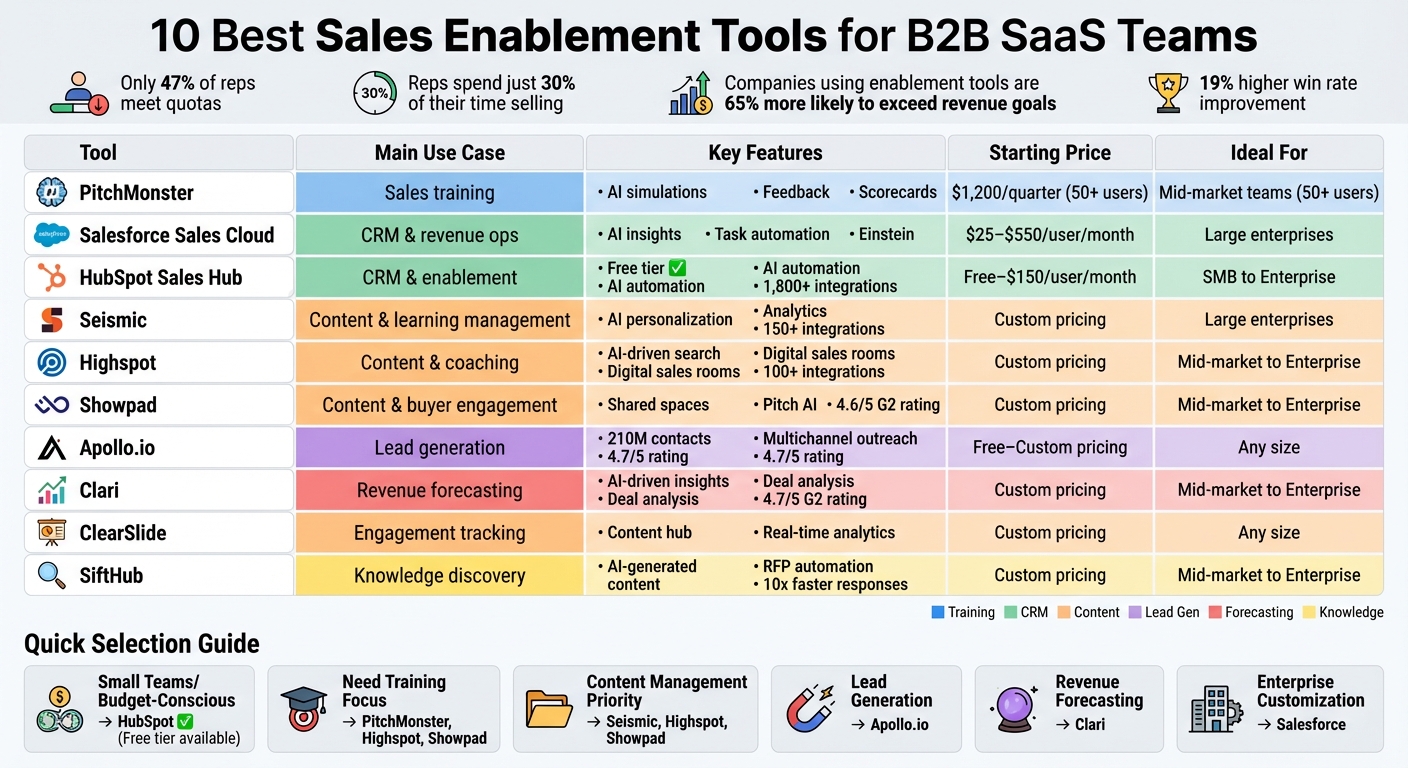
Use this table to scan the field, then read the full write-up on any tool that fits. For each one you get its primary job, the segment it fits best, how buyers rate it on G2, and how it is priced. Custom pricing means the vendor quotes per deployment, so match the primary job to your bottleneck first, then request a quote to compare like for like.
Tool | Primary job | Best-fit segment | G2 rating | Pricing |
|---|---|---|---|---|
PitchMonster | AI role-play practice and coaching | SMB to enterprise | 4.9 / 5 | Custom (by quote) |
Salesforce Sales Cloud | CRM and revenue ops | Mid-market to enterprise | 4.4 / 5 | $25-$550 / user / mo |
HubSpot Sales Hub | CRM and enablement | SMB to mid-market | 4.4 / 5 | Free-$150 / user / mo |
Seismic | Content management and learning | Enterprise | 4.7 / 5 | Custom |
Highspot | Content, training, and coaching | Mid-market to enterprise | 4.7 / 5 | Custom |
Showpad | Content and buyer engagement | Mid-market to enterprise | 4.6 / 5 | Custom |
Apollo.io | Prospecting and outreach | SMB to mid-market | 4.7 / 5 | Free-Custom |
Clari | Revenue forecasting | Mid-market to enterprise | 4.6 / 5 | Custom |
Gong | Conversation intelligence | Mid-market to enterprise | 4.8 / 5 | Custom |
SiftHub | AI RFP and deal orchestration | Mid-market to enterprise | 4.6 / 5 | Custom |
G2 ratings are category scores as listed on G2 in mid-2026 and shift over time. Custom pricing means the vendor quotes per deployment; request a quote to compare like for like. PitchMonster is quote-only; see PitchMonster pricing for your team size.
The 10 tools in detail
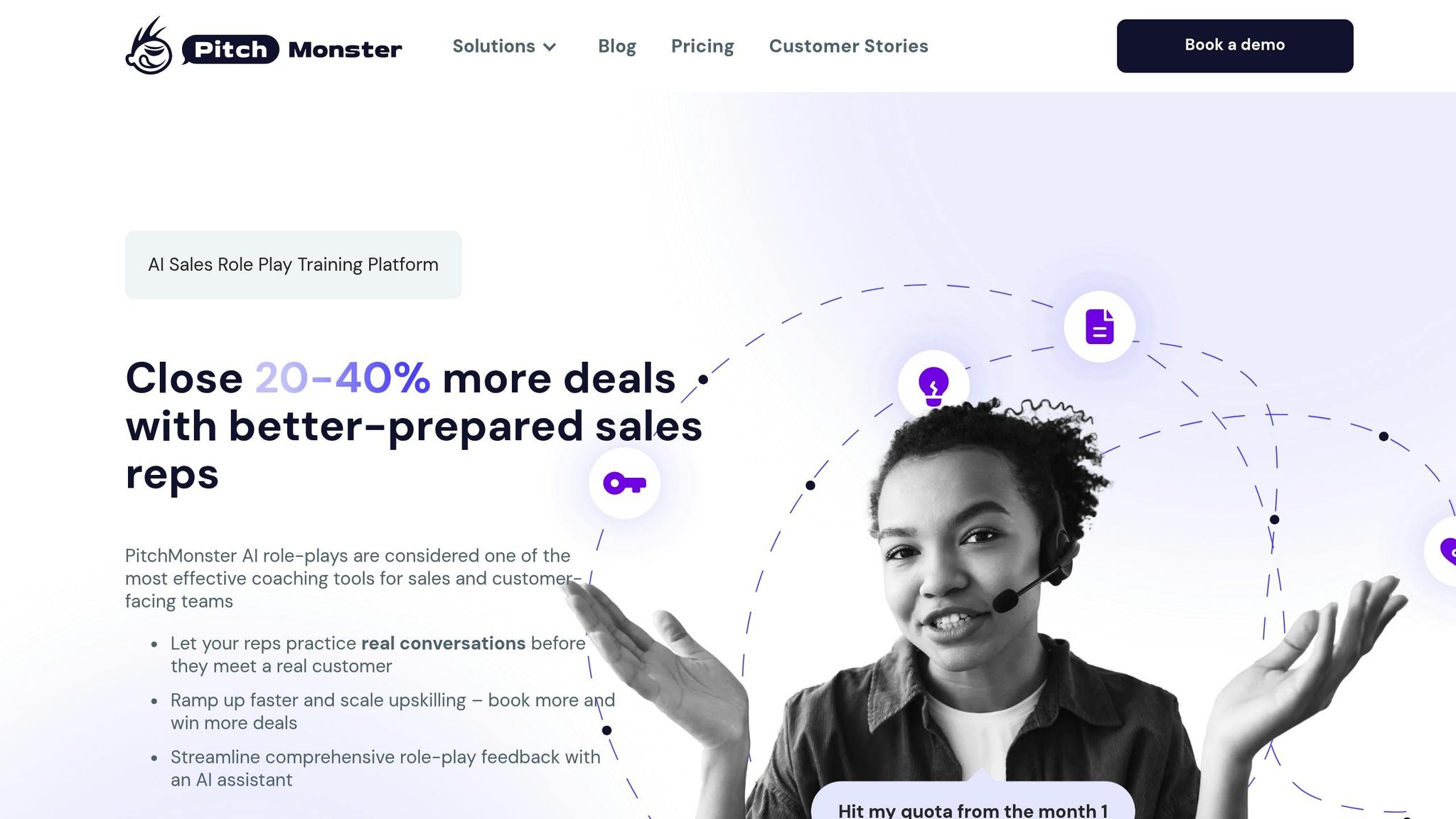
1. PitchMonster - AI Sales Role-Play and Coaching Platform
Best for: B2B SaaS teams that want reps to practice realistic conversations and get coached, not just complete courses or read content.
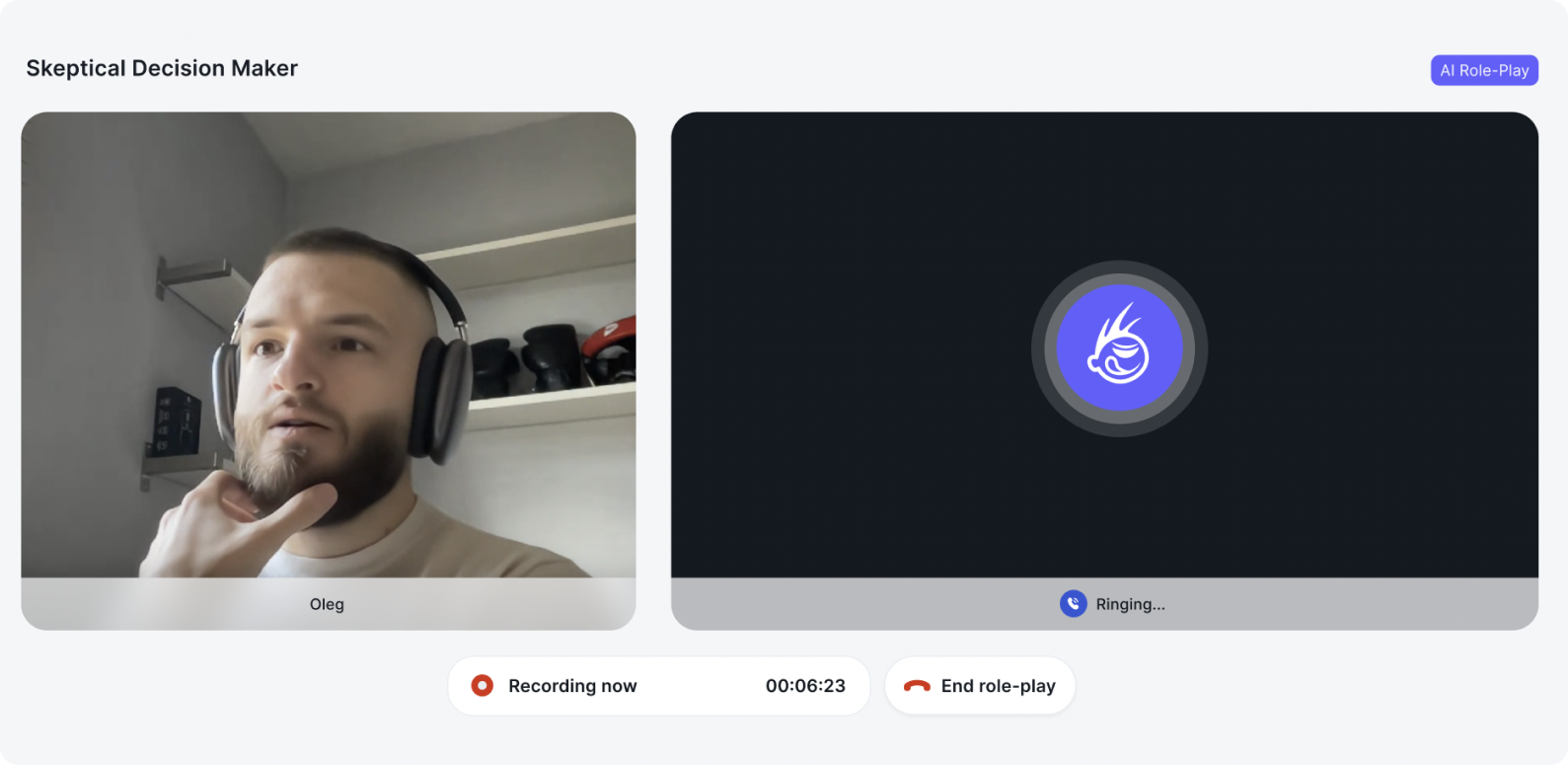
PitchMonster is an AI sales role-play platform. Reps rehearse cold calls, discovery, and demos against AI buyers that adapt and object like your real ICP, then get scored against your own playbook. Managers get the skill-gap data to coach at scale, without hiring more trainers or burning real pipeline on unready reps. It fits SMBs through enterprises running consultative, B2B motions, typically from a handful of reps up to a few hundred.
What makes it different is the coaching. Most tools on this list serve content or report scores. PitchMonster runs the full loop: realistic practice, a Socratic AI Coach that helps the rep self-diagnose, and analytics a leader can act on. It is the only tool here that pairs realistic AI buyers with a post-session Socratic AI Coach, so reps reason their way to the fix before they ever see a score. The subsections below cover how that plays out feature by feature.
It is also the only European-based platform among the leaders here, which matters for teams with GDPR alignment and EU data-residency requirements. Scores export to Salesforce, HubSpot, Gong, and Power BI, so readiness data lands in the systems RevOps already runs. Since spring 2024 it has held a 100% enterprise renewal rate, and more than 300,000 reps have trained on it across 40+ countries.
Custom AI role-plays built from your own material
Effective practice depends on scenarios that mirror real customer conversations. PitchMonster lets your team run tailored simulations, either from a template library or from scratch. Reps practice cold calls, discovery meetings, and demos in settings that closely replicate the real thing.
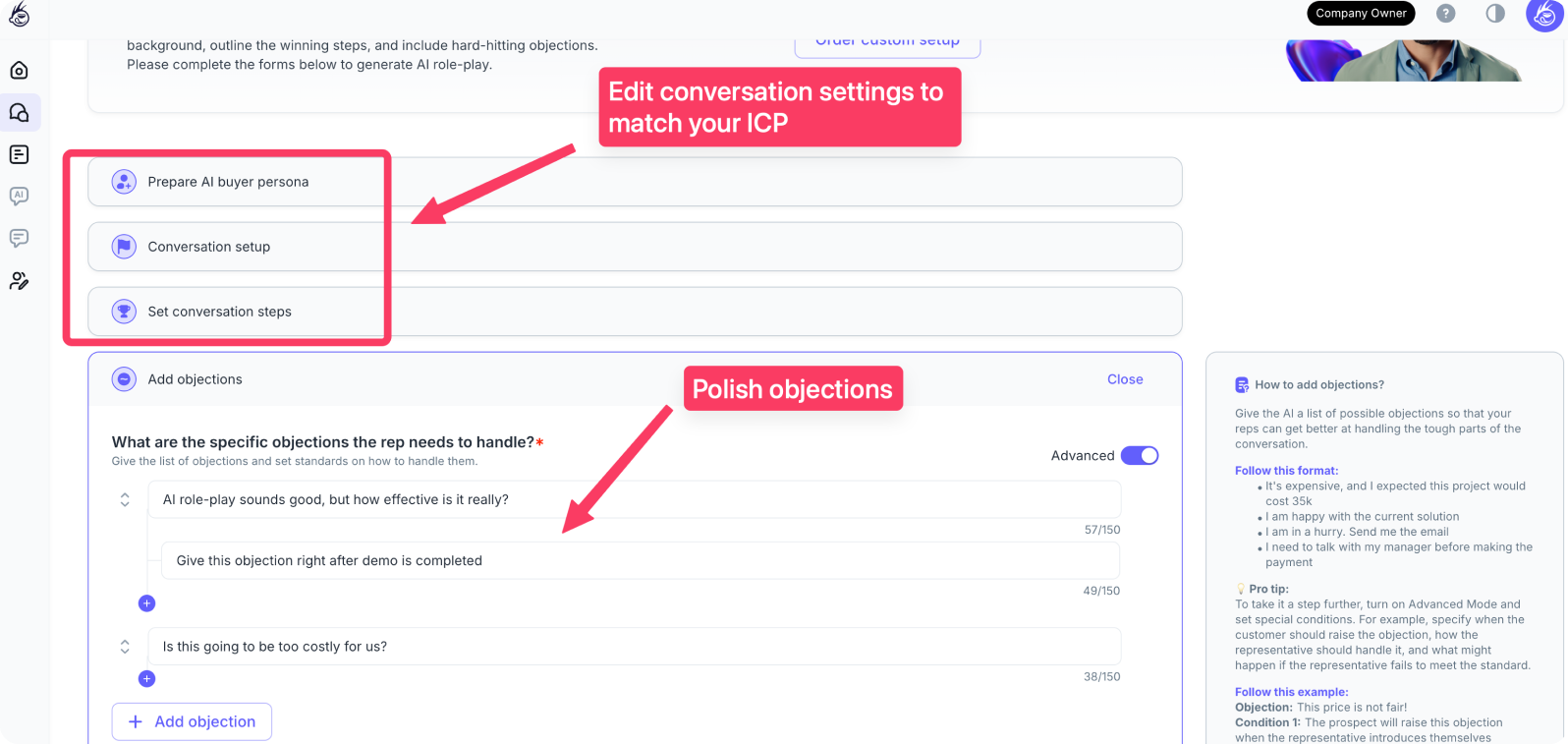
A manager can build a scenario from a call recording, product docs, or a website URL in about two minutes. There are four difficulty levels, up to and including Insane, plus 40+ customization parameters and support for 27+ languages. Ready-made role-plays cover the essentials like objection handling and talk tracks, so new hires ramp faster while top performers keep refining. Each session generates a full transcript and AI feedback, so leaders can reinforce winning behavior across the team.
Personalized role-play feedback after every session
Practice only pays off with feedback that drives improvement. After each simulation, PitchMonster delivers detailed, AI-generated insights on what the rep did well and where to adjust. Whether the goal is sharper objection handling, cleaner pitch delivery, or better talk-time balance, every session feeds the rep's growth.
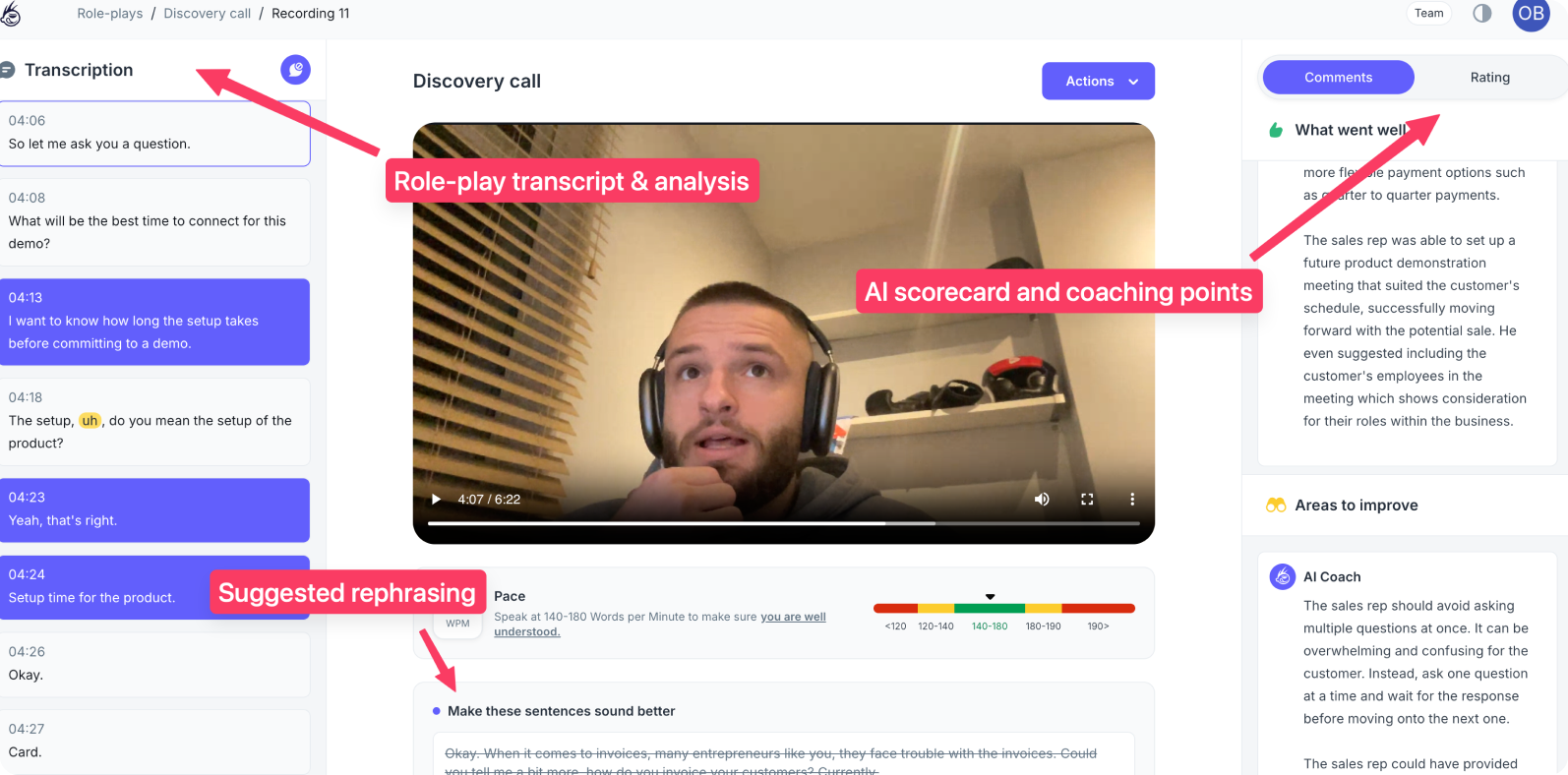
Each interaction is analyzed for the moments that matter, like pricing discussions, next-step commitments, and sentiment shifts. The platform highlights strengths and flags gaps, so leaders can tailor coaching and reinforce the behaviors that win. Sentiment and vocabulary analysis let it act as a virtual coach, building rep confidence between real calls.
Built-in AI speech coaching
Communication skills decide a lot of deals, and PitchMonster's speech coaching gives reps the feedback to sharpen them. Think of it as a "sales Grammarly." It analyzes each conversation for pacing, sentiment, and filler words, then suggests changes to phrasing and talk time.
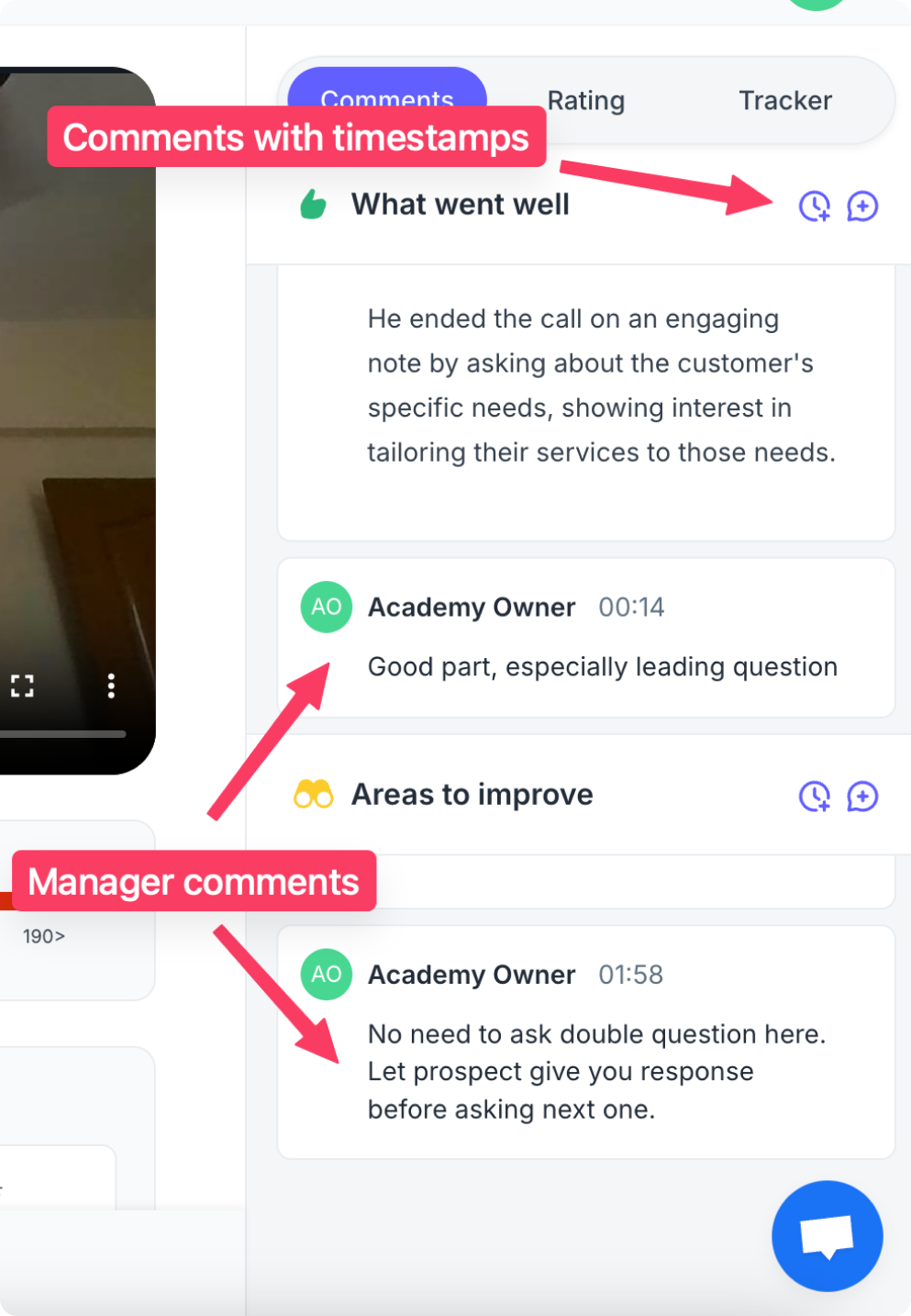
Across cold calls, discovery, and demos, the AI keeps every interaction tuned for clarity and impact. Reps get consistent, specific feedback they can apply on the next call, which builds confidence and steadily lifts performance. As one customer put it, the way we say things in our head is not often how it lands, and this is where reps hear the difference.
Create your own AI scorecard
Scoring should match how your team actually sells. PitchMonster's AI Scorecard lets leaders set evaluation criteria that fit their process, either by uploading their own metrics or starting from the scorecard library. You can assess reps on the factors that matter, like objection handling, talk time, and closing.
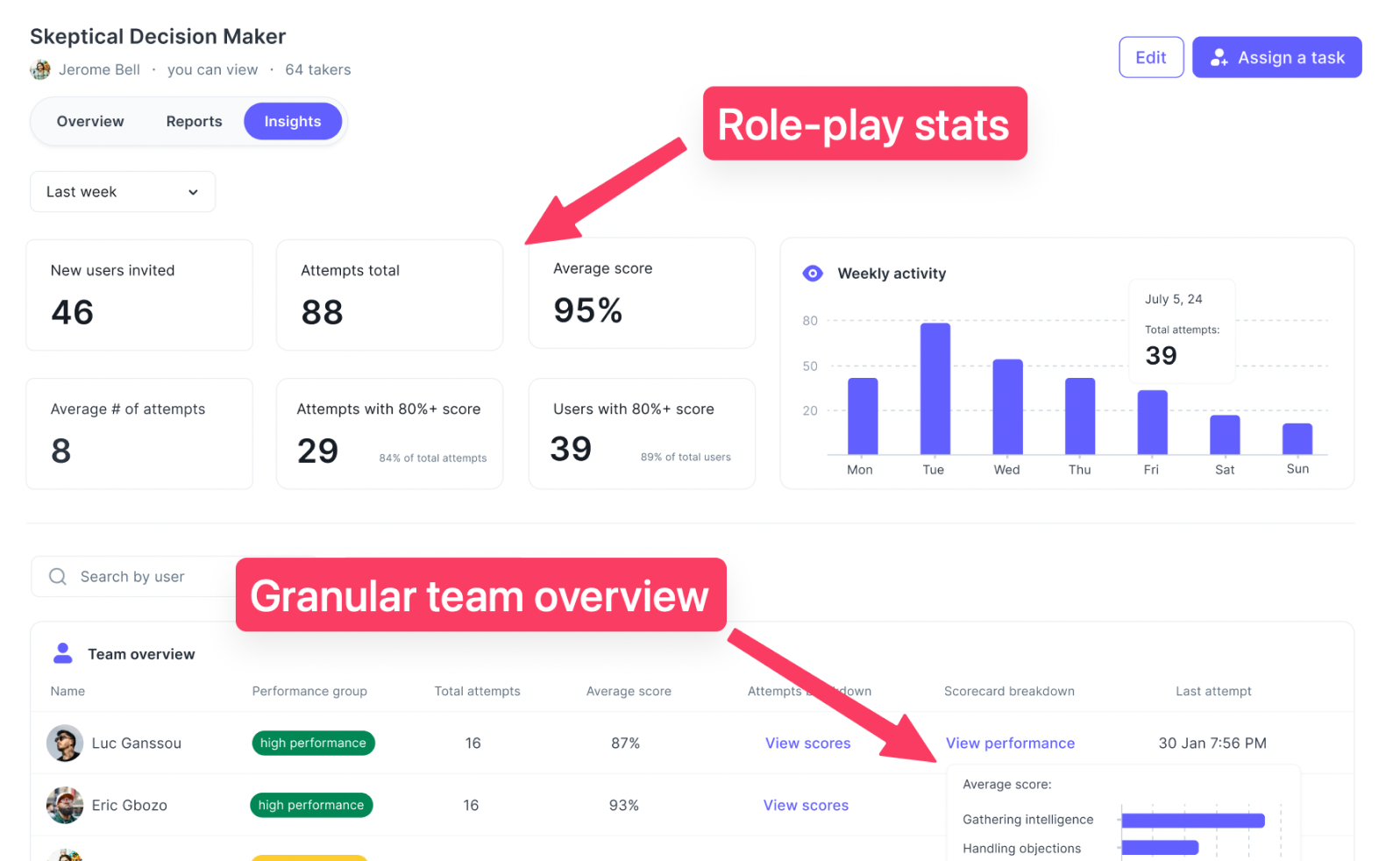
Because scoring is consistent, feedback stays objective and every rep is measured the same way. The scorecard analyzes each session automatically and produces clear scores that simplify performance reviews and surface winning behavior. The same scorecard then works on real calls through Live Call Analysis, so practice and reality are measured against one standard.
The Socratic AI Coach, the differentiator
The AI Coach is the reason teams pick PitchMonster over a straight practice tool. After each session, a Socratic AI sales trainer asks reflective questions that guide the rep to their own insight before they ever see a score. It is available 24/7, so reps can debrief on their own time. No other tool on this list does this.
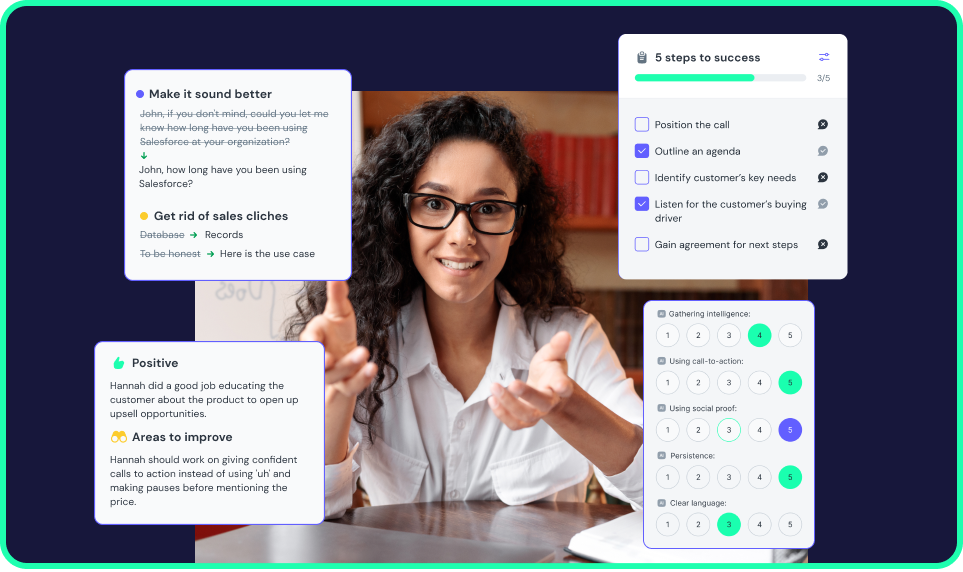
This matters because self-diagnosed lessons stick. When a rep reasons their way to what went wrong, the fix holds on the next live call in a way a handed-down score rarely does. Wendy Mateo De Perkins of One Park Financial summed up the reaction: "I think I really like the AI coach. That's definitely going to save us a lot of time."
Where it fits: SMBs to enterprises running consultative, B2B SaaS motions with a manager, team lead, or L&D owner for training. Pricing is quote-only (custom per seat), with onboarding, a dedicated CSM, and support included and no setup fees. See pricing for your team size.
Proof: Mentor Group recorded 30% faster ramp, 37% higher performance, a 28% win-rate improvement, and 2x more opportunities booked after rolling out PitchMonster.
See it on your own use case. Book a demo and run your first AI role-play, built from your product and your ICP, in about two minutes.
2. Salesforce Sales Cloud - CRM and Revenue Operations
Best for: large B2B organizations that want a single system of record with AI layered on top.
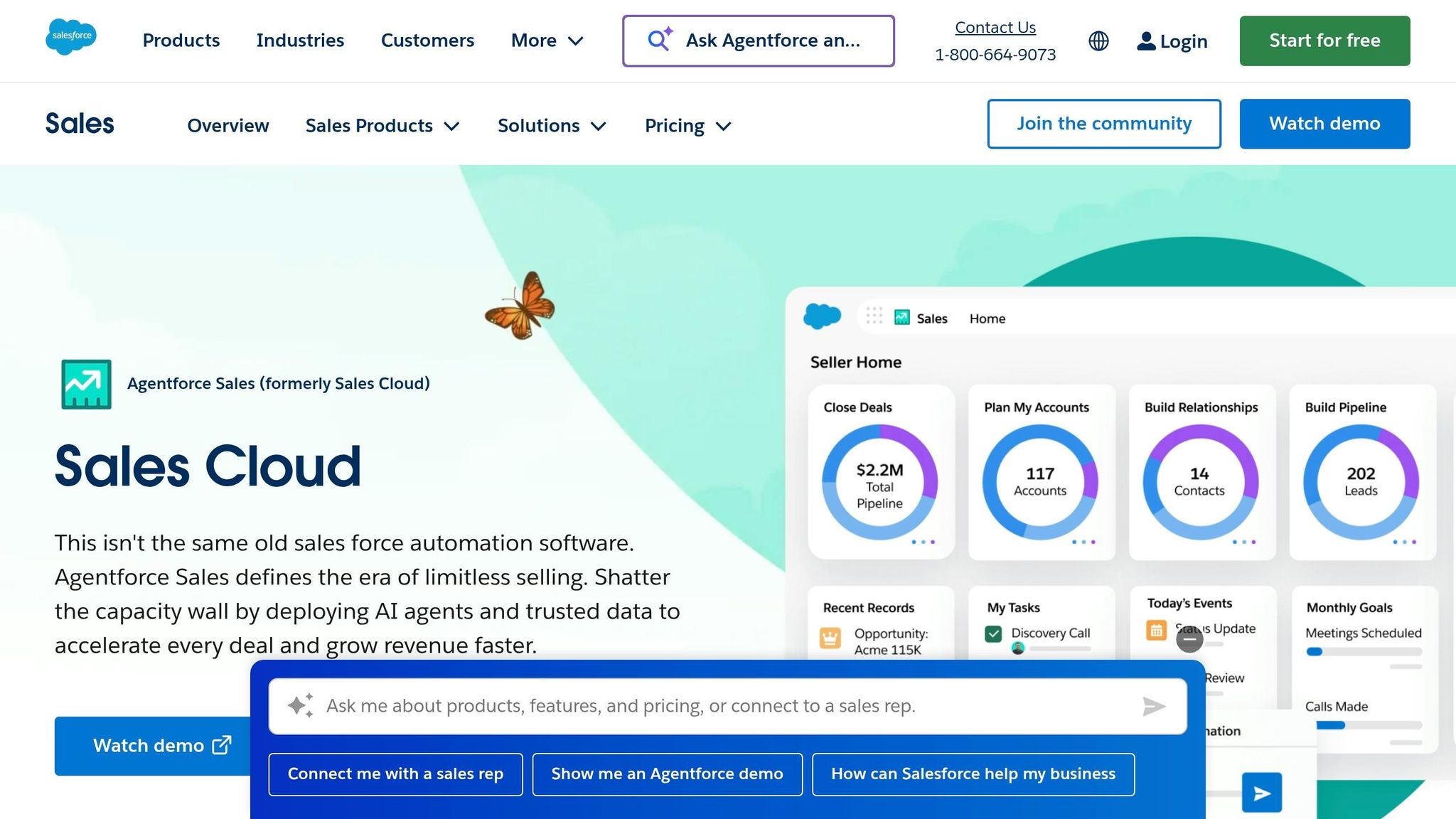
Salesforce Sales Cloud is the CRM that anchors most enterprise sales stacks. It manages leads, opportunities, and pipeline while layering on AI through Einstein and the Agentforce agents. Einstein Opportunity Scoring flags which deals are most likely to close and which are at risk, and Agentforce Sales Coach offers data-driven feedback inside the workflow.
For enablement, Sales Cloud analyzes transcribed calls to surface key moments and suggests marketing-approved content based on the buyer's stage and persona. A no-code program builder lets leaders create guides and scripts for specific plays like cross-sell or prospecting, all inside the CRM.
Where it fits: mid-market to enterprise teams that want one CRM to standardize on. Pricing starts at $25 per user per month for the Starter Suite and scales to $550 per user per month for the full AI suite. Salesforce holds a 4.4/5 on G2.
3. HubSpot Sales Hub - CRM With a Free On-Ramp
Best for: SMB to mid-market SaaS teams that want to start small and scale into enablement.
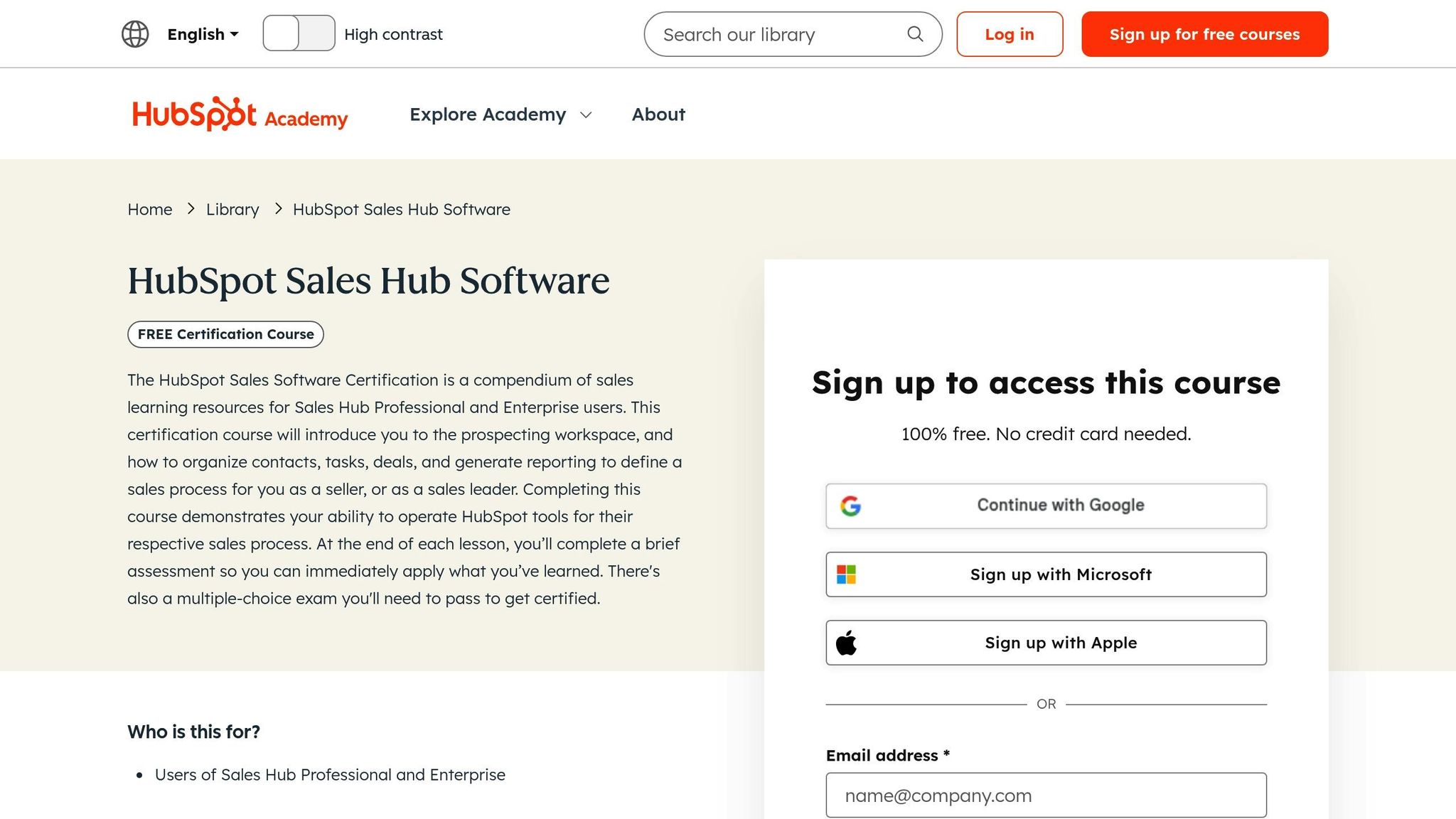
HubSpot Sales Hub pairs an approachable CRM with AI automation through its Breeze suite. The Prospecting Agent handles funnel research and personalized outreach, while AI deal predictions and lead scoring give managers a cleaner read on the pipeline. A content library tracks document engagement and recommends collateral based on lead behavior, and interactive Playbooks surface scripts and competitor notes during live calls.
The draw for B2B SaaS is the on-ramp. HubSpot starts free with basic CRM features, then moves to roughly $15 to $20 per user per month for Starter, $100 for Professional with AI forecasting, and $150 for Enterprise with conversation intelligence. Paid onboarding packages cover setup and process design.
Where it fits: SMB to mid-market teams that want to start on a free CRM and scale into enablement without ripping it out later. HubSpot earns a 4.4/5 on G2.
4. Seismic - Content Management and Learning at Scale
Best for: enterprises where content sprawl and compliance are the bottleneck.
Seismic is a content management and learning platform built for large, content-heavy sales organizations. Its Aura AI engine surfaces materials tailored to deal stage, industry, and buyer persona, so reps spend less time hunting for the right asset. LiveDocs supports real-time editing of proposals, and LiveSend tracks how buyers engage with what reps share.
On the training side, Seismic offers personalized learning paths, microlearning between meetings, and AI-driven assessments that flag skill gaps. Governance and approval workflows keep reps on the latest brand-approved content, which matters in regulated industries.
Where it fits: enterprise teams where content and compliance are the priority. Seismic uses custom enterprise pricing and holds a 4.7/5 on G2. Seismic and Highspot announced a planned merger in early 2026, so evaluate both with that in mind. For a lighter, practice-first option, see these Seismic alternatives.
5. Highspot - Content, Training, and Coaching in One System
Best for: mid-market to enterprise teams that want content, training, and coaching under one roof.
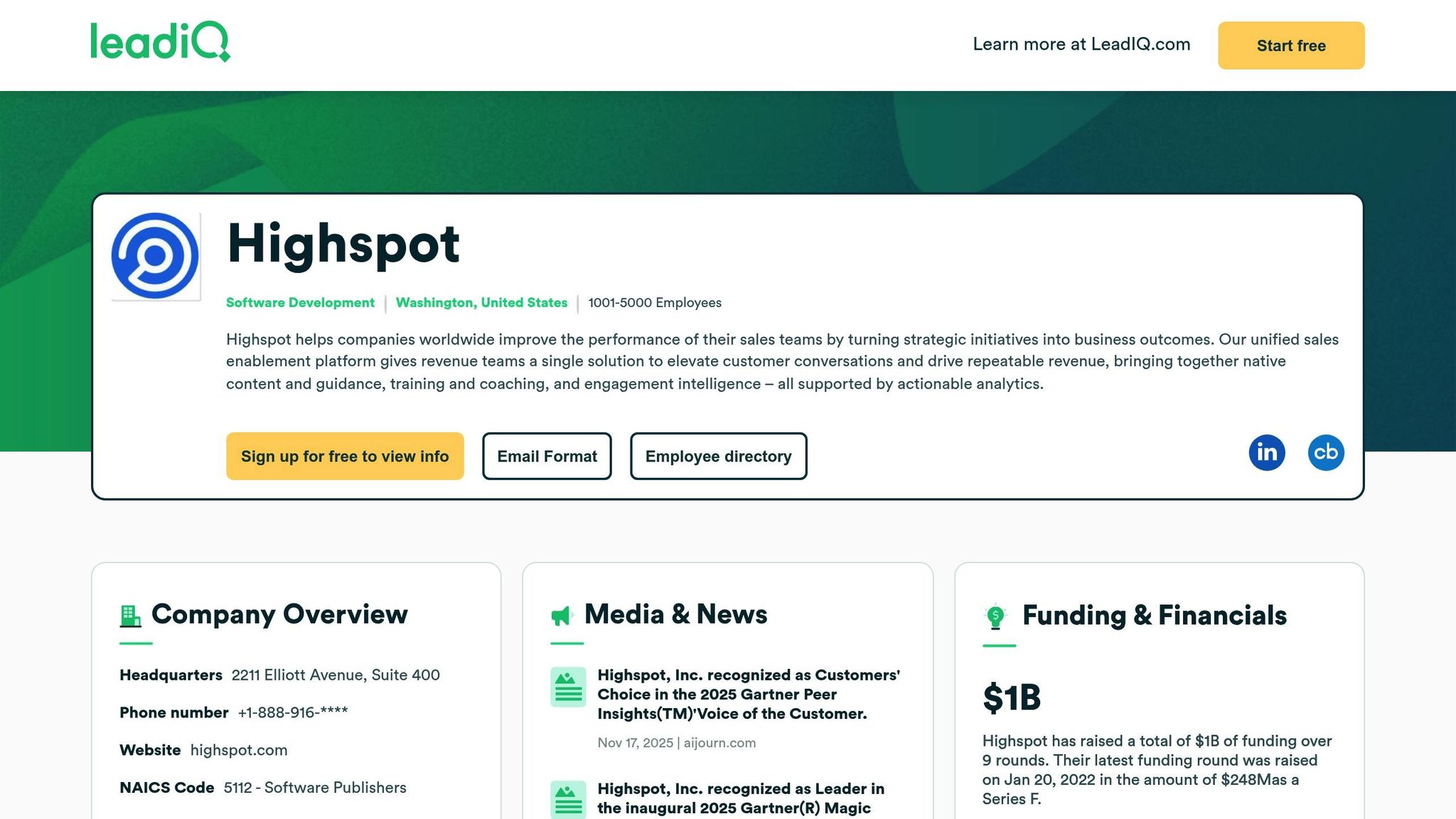
Highspot combines content management, training, and coaching in one system, powered by its Nexus AI engine. Highspot Copilot, a generative AI assistant, reviews meetings and practice pitches, surfaces coaching insights, and includes an AI Role Play feature that scores reps on clarity and confidence. The Deal Agent reads CRM and buyer signals to suggest next steps like spinning up a Digital Sales Room.
For content, Highspot recommends the most relevant material by role, deal stage, and buyer behavior, and manages version control automatically. Customers report meaningful gains in content findability and sales-play adoption, which Highspot publishes as aggregate customer figures.
Where it fits: mid-market and enterprise teams that want one platform rather than stitched-together point tools. Highspot uses custom pricing and holds a 4.7/5 on G2. Factor in the announced Seismic merger when you evaluate. For a practice-first comparison, see this Highspot alternative.
6. Showpad - Content Plus Buyer Engagement
Best for: teams selling complex or visual products that benefit from rich buyer experiences.
Showpad ties content management to sales training through its Content Hub and Coach modules. It tackles the familiar problem of reps wasting time searching for materials by connecting to existing CMS and DAM systems and importing content libraries automatically. PitchAI gives real-time feedback by comparing a rep's performance against top sellers.
Where Showpad stands out is buyer engagement for complex products. Reps create Shared Spaces, branded digital sales rooms that track engagement, and the platform supports 3D models and immersive showrooms for visual or technical sales. The Coach module adds bite-sized onboarding lessons and role-play simulations for pitch practice.
Where it fits: mid-market to enterprise teams selling products that benefit from rich, interactive buyer experiences. Showpad uses custom pricing across its Essential, Plus, and Ultimate tiers and holds a 4.6/5 on G2.
7. Apollo.io - Prospecting and Outreach
Best for: SDR-heavy B2B SaaS teams building top-of-funnel pipeline.
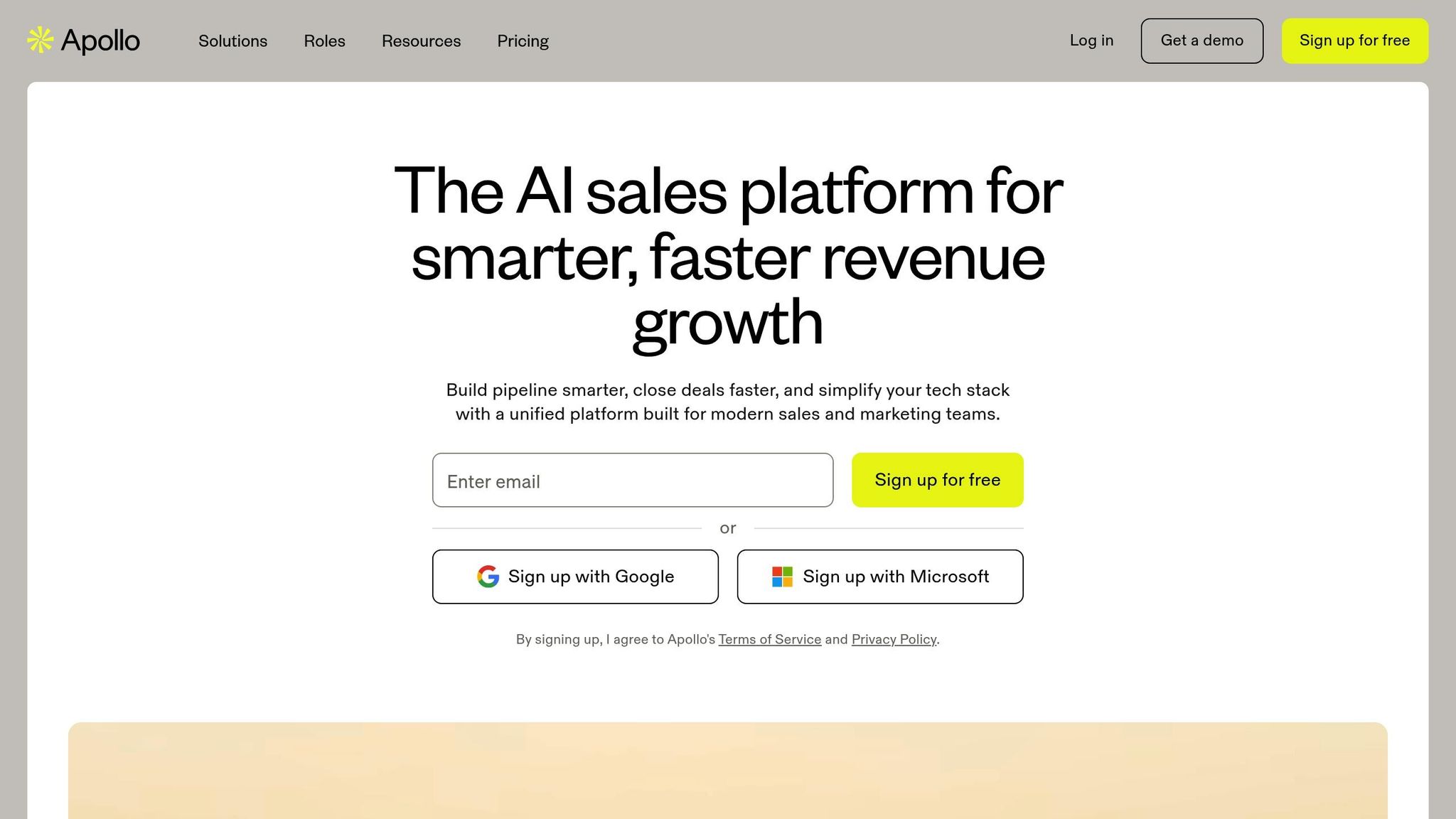
Apollo.io covers the top of the funnel, combining a B2B contact database with prospecting and outreach tools. It offers a large database of verified contacts and companies, plus Smart Sequences for multichannel follow-up and a Parallel Dialer that lets reps work through calls faster. The AI Sales Assistant drafts and rephrases outreach using live contact data.
It sits slightly outside core enablement but earns a spot because B2B SaaS SDR teams lean on it heavily to fill the top of the funnel, and it consolidates data and engagement that teams used to buy separately. Built-in conversation intelligence handles call recording and action items.
Where it fits: SMB to mid-market SDR teams that want prospecting data and outreach together rather than a content or training system. Apollo offers a free tier and scales to custom pricing, and holds a 4.7/5 on G2 across a large review base.
8. Clari - Revenue Forecasting and Pipeline
Best for: RevOps teams that need a forecast they can defend.
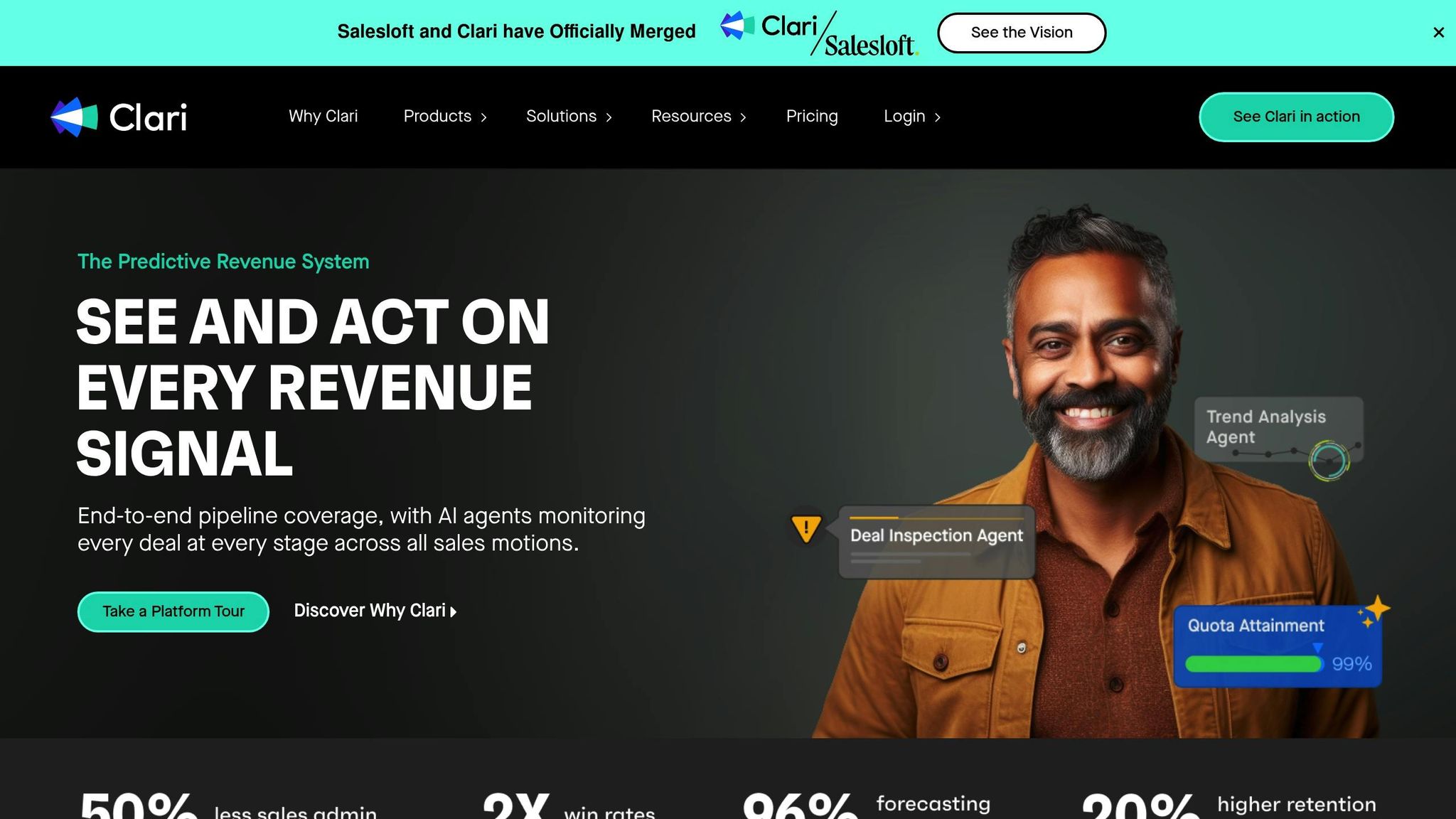
Clari is a revenue platform centered on forecasting and pipeline management. It consolidates data from CRM, email, and calendar into one view, then uses Revenue AI Agents to flag at-risk deals and surface pipeline patterns. Data autocapture syncs activity automatically, which cuts manual CRM entry and exposes the "shadow pipeline" of deals reps work but never log.
Clari is a RevOps tool, not a rep-training one. Its value is forecast accuracy and deal inspection for leaders who need a number they can stand behind. Reported customer outcomes include large jumps in forecast accuracy, which Clari publishes as case-study results.
Where it fits: mid-market to enterprise teams where the bottleneck is an unreliable forecast rather than rep skill or content. Clari uses custom pricing and holds a 4.6/5 on G2.
9. Gong - Conversation Intelligence and Deal Coaching
Best for: teams that coach from recorded calls and want data on what their best reps do.
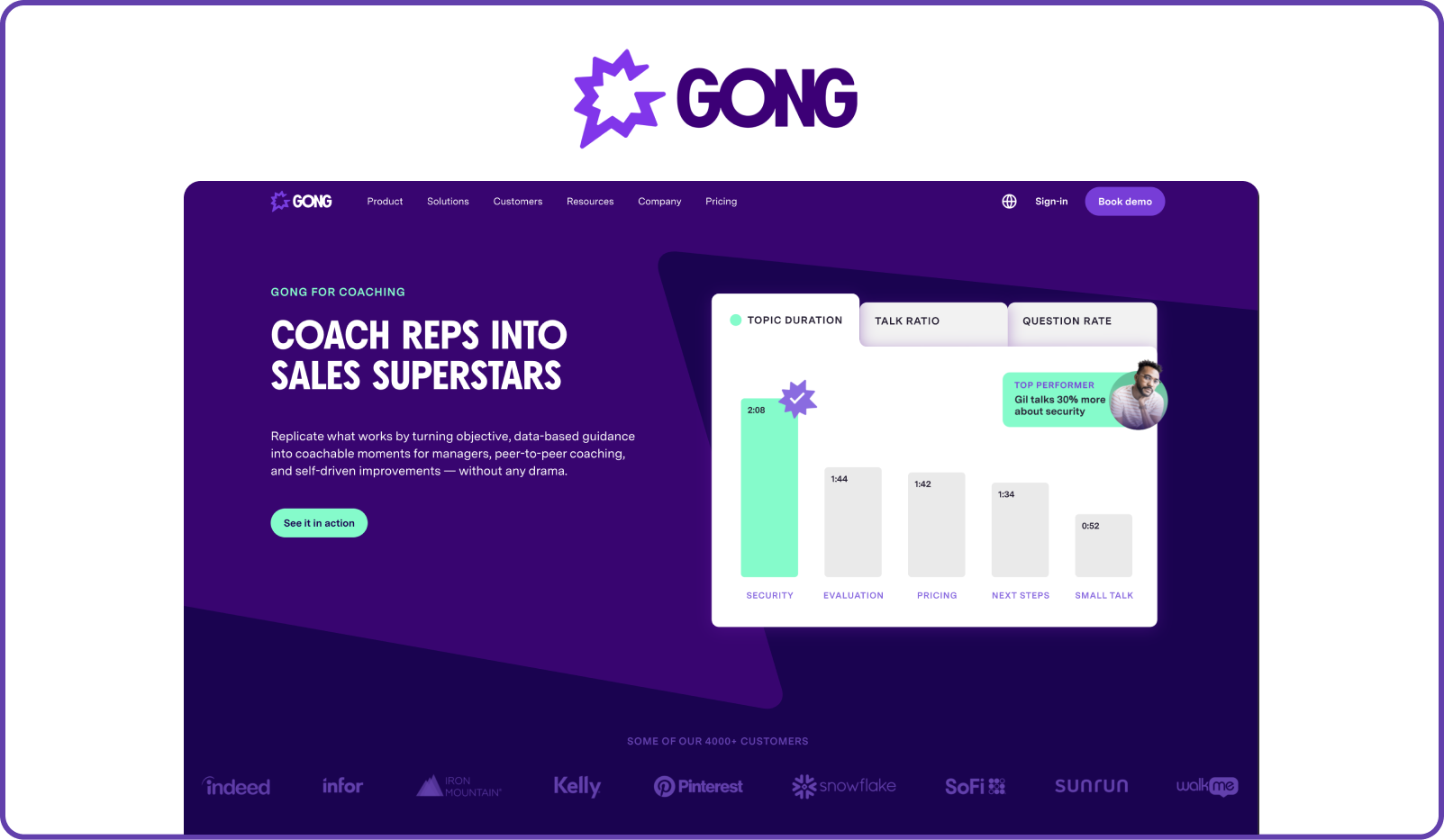
Gong is a conversation intelligence platform that records, transcribes, and analyzes sales calls to show what is actually happening in deals. It surfaces patterns across calls, like which talk tracks correlate with wins, and gives managers a way to coach from real evidence instead of secondhand notes. Deal intelligence flags risk in the pipeline based on what was said and what was not.
Gong is not a content or training platform, and it does not replace one. It pairs well with the rest of a stack: reps practice in a tool like PitchMonster, then Gong shows how those skills land on live calls. Because PitchMonster exports scores to Gong, the same scorecard logic runs across practice and reality, which makes the coaching loop tight.
Where it fits: mid-market to enterprise teams that run enough call volume to coach from. Gong uses custom pricing and holds a 4.8/5 on G2, among the highest in the category.
10. SiftHub - AI RFP and Deal Orchestration
Best for: presales, bid, and proposal teams that lose time answering RFPs and technical questions.
SiftHub is an AI RFP software and deal orchestration platform built for presales and revenue teams. It detects signals across your CRM, calls, and inbox, then generates buyer-ready responses grounded in your company knowledge. Reps stop waiting on solutions engineers for answers, and proposal teams complete RFPs and RFIs far faster while keeping responses accurate.
It sits at the technical end of enablement rather than the content or training end, so it fits teams whose bottleneck is response speed on complex deals. SiftHub is built for strict data governance, which matters for security and compliance reviews. It is a newer, more niche entrant than the platforms above, so weigh it against dedicated RFP tools like Responsive or Loopio, or the broader content platforms if governance is your main need.
Where it fits: mid-market to enterprise presales and proposal teams where RFP turnaround is the constraint. SiftHub uses custom pricing and is reviewed on Gartner Peer Insights; treat its category rating as approximate given its size.
Which sales enablement tool should you start with?
You do not buy a stack on day one. You fix the bottleneck that is costing you the most deals, prove the return, then add the next layer. Here is how to match the starting point to the problem.
If your biggest problem is... | Start with | Why |
|---|---|---|
New reps take too long to ramp | PitchMonster | Practice on demand and instant coaching cut ramp time without burning live pipeline |
Reps wing live calls and lose winnable deals | PitchMonster | AI role-play plus the AI Coach gets reps ready before the first real conversation |
Reps can never find the right deck or case study | Seismic, Highspot, or Showpad | Content recommendation and governance fix the findability problem |
You have no system of record | HubSpot (smaller teams) or Salesforce (enterprise) | A CRM is the foundation everything else plugs into |
You coach from memory, not evidence | Gong | Call intelligence shows what your best reps actually do |
Your forecast is a guess | Clari | A dedicated revenue platform makes the number defensible |
Your funnel is too thin | Apollo.io | Prospecting data and outreach build pipeline at the top |
RFPs and technical answers slow deals down | SiftHub | AI-generated, governed responses cut proposal turnaround |
For most B2B SaaS teams, the order looks like this. Get a CRM in place if you do not have one. Then pick the single layer where deals are slipping. If reps are losing deals they should win, or new hires take months to contribute, readiness is the gap, and an AI role-play tool is the fastest way to close it because reps can practice the exact moments they fumble, repeatedly, without waiting on a manager's calendar.
Whatever you start with, protect the rollout. The single biggest reason enablement tools fail is not the feature set, it is that reps never adopt them. Pick the tool that solves your sharpest problem, name an owner for it, wire it into the CRM reps already live in, and set a baseline metric before launch so you can prove the return in a quarter. A tool nobody opens returns nothing, no matter how it scores on a feature grid.
Executive buying checklist
Before you sign, write one answer for each item:
Check | Executive question |
|---|---|
Weak job | Which job is broken right now: content, learning, intelligence, rooms, coaching, or readiness? |
Current stack | Which tool already owns the CRM, content hub, call data, and forecast? |
Rollout owner | Who will run the pilot, train managers, and remove blockers? |
Adoption signal | What user behavior proves the team actually changed how it works? |
Business metric | Which metric will you review after the measurement window: ramp, win rate, cycle time, content use, or forecast accuracy? |
If the weak job is training and coaching, use the sales training software comparison. If the weak job is content suite replacement, use the Highspot alternatives and competitors guide.
PitchMonster was built for the readiness gap. Reps run realistic scenarios against AI buyers, the AI Coach helps them self-correct, and managers get skill-gap visibility they can take to leadership. If readiness is where you are losing, book a demo and we will build your first role-play library with you. For a deeper comparison of practice-focused options, see our guide to the best sales role-play tools or our roundup of the top sales training tools.
After the call
HummingDeck is a digital sales room for teams that create content elsewhere: the deck or proposal goes into a branded room with a mutual action plan, and the rep sees who opened it, which pages they read and for how long. It covers the sharing and tracking step after the call without the weight of a full enablement platform.
FAQ
What are sales enablement tools?
Sales enablement tools are software platforms that give B2B reps the content, training, coaching, and data they need to sell more consistently. They cover five jobs: content and asset management, practice and role-play, sales readiness and training, conversation intelligence, and CRM and revenue data. Most SaaS teams run two or three together rather than one tool for everything.
Which are examples of sales enablement tools?
Common examples include Seismic and Highspot for content, PitchMonster for AI role-play practice, Mindtickle for readiness, Gong for conversation intelligence, and Salesforce and HubSpot for the CRM layer. Apollo.io covers prospecting and Clari covers forecasting. The right shortlist depends on which part of your sales process has the most friction.
What is the difference between a sales enablement tool and a sales enablement platform?
The terms are often used interchangeably. In practice, a sales enablement platform is the broad content-and-readiness system reps work in daily, like Seismic or Highspot, while a sales enablement tool can mean a single-job product such as an AI role-play trainer or a forecasting app. Buyers searching for either usually want the same shortlist of vendors.
What are the 5 pillars of sales enablement?
The five pillars are content, training and coaching, technology and tools, process and enablement strategy, and measurement. Enablement tools support all five by centralizing content, running practice and coaching, giving reps data in the CRM, and reporting on what moves win rates. A tool only returns value when it maps to a pillar your team is actually weak on.
How much do sales enablement tools cost?
Pricing ranges widely. HubSpot starts free and scales to about $150 per user per month; Salesforce runs roughly $25 to $550 per user per month. PitchMonster is quote-only (custom per seat). Most content and readiness platforms like Seismic, Highspot, Showpad, and Mindtickle use custom enterprise quotes, so request pricing for a like-for-like comparison.
Do sales enablement tools actually improve win rates?
When teams adopt and use them, yes. The gains come from faster onboarding, consistent messaging, and more reps practicing before live calls. PitchMonster customer Mentor Group reported a 28% win-rate improvement and 30% faster ramp after adding AI role-play. Adoption is the real variable, so pick a tool reps will open every day.
Final recommendation
The right platform is the one that closes your biggest gap. If reps keep walking into live calls unready, lead with practice and coaching, and PitchMonster is built for exactly that: realistic AI buyers, a Socratic AI Coach that makes lessons stick, and an EU base for teams that need it. If your constraint is content findability, a platform like Seismic or Highspot fits. If it is manager visibility on live deals, Gong is the standard, and it pairs well with a practice tool.
Whatever you shortlist, prove it before you buy. Set a baseline for ramp and win rate, then run a real role-play on your own use case. Book a demo to see how your reps perform against a buyer built from your own ICP, or check pricing for your team size.